To save content items to your account,
please confirm that you agree to abide by our usage policies.
If this is the first time you use this feature, you will be asked to authorise Cambridge Core to connect with your account.
Find out more about saving content to .
To save content items to your Kindle, first ensure no-reply@cambridge.org
is added to your Approved Personal Document E-mail List under your Personal Document Settings
on the Manage Your Content and Devices page of your Amazon account. Then enter the ‘name’ part
of your Kindle email address below.
Find out more about saving to your Kindle.
Note you can select to save to either the @free.kindle.com or @kindle.com variations.
‘@free.kindle.com’ emails are free but can only be saved to your device when it is connected to wi-fi.
‘@kindle.com’ emails can be delivered even when you are not connected to wi-fi, but note that service fees apply.
In the previous chapter we discussed the importance of accurate explanations. Without explanations that are in fact accurate we cannot have genuine understanding. In this chapter we will explore whether false scientific theories can be used to generate accurate scientific explanations. Before jumping into this, let’s first briefly recall the relationship between scientific theories and scientific explanations. Scientific theories consist of laws, models, and principles. Together these components of scientific theories offer broad generalizations about the nature of the world.
Summing up, in this book we have been doing some explaining – we have answered a number of “why” and “how” questions. Along the way we have cleared up a number of common misunderstandings (see the summary that follows for a list of these). Most importantly, we have explained why science seeks to explain the world – because this is how we come to have scientific understanding of the world. Additionally, we have explained “how” science explains the world – quite often it is by way of idealizing models that allow us to generate scientific hypotheses which provide explanations of phenomena. Once we have scientific hypotheses that potentially explain some phenomenon, we utilize our ability to evaluate the explanatory merits of hypotheses to determine which explanation is best. Then, we legitimately infer that the best explanation, if it is sufficiently good in its own right, is (probably) true. This is how we come to have scientific knowledge, and it is this scientific knowledge of explanations and hypotheses that yields genuine scientific understanding of phenomena.
Even though explanation plays a central role in science, it is not enough to simply come up with explanations. Scientists (and everyone else) must also evaluate explanations. After all, it’s clear that not every explanation is a good one, as well as that some explanations are better than others. For example, evolutionary theory provides a much better explanation of the diversity of life than, say, the hypothesis that all organisms appeared at the same time in their present form. But what makes one explanation better than another? Relatedly, how can we tell which of a set of competing hypotheses provides the best explanation?
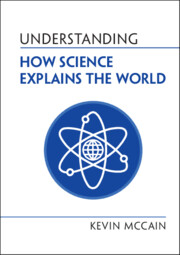
All people desire to know. We want to not only know what has happened, but also why it happened, how it happened, whether it will happen again, whether it can be made to happen or not happen, and so on. In short, what we want are explanations. Asking and answering explanatory questions lies at the very heart of scientific practice. The primary aim of this book is to help readers understand how science explains the world. This book explores the nature and contours of scientific explanation, how such explanations are evaluated, as well as how they lead to knowledge and understanding. As well as providing an introduction to scientific explanation, it also tackles misconceptions and misunderstandings, while remaining accessible to a general audience with little or no prior philosophical training.
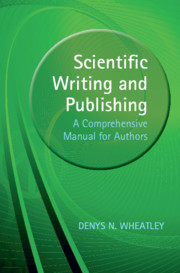
Knowing how to prepare, write and publish high-quality research papers can be challenging for scientists at all stages of their career. This manual guides readers through successfully framing and presenting research findings, as well as the processes involved in publishing in learned journals. It draws on the author's wealth of practical experience, from working in academic research for over 40 years and teaching scientific writing in over 20 countries, to gaining insights as a journal editor. Well-written and logical, it provides clear step-by-step instructions to enable readers to become more effective at writing articles, and navigating difficulties related to journal submission, the review process, editing and publication. It comprehensively covers themes such as publication ethics, along with current topics including Open Access publishing and pre-print servers. This is a useful, user-friendly guide for graduate students, early career scientists, and more experienced researchers, particularly in the life and medical sciences.
The final stages of getting a paper into shape for submission relies on checking its English presentation (or getting help in doing this). The main author revises the paper to reach a final draft. The role of the co-authors is discussed, including the sequence of their names. Conflicts of interest must be considered here. Setting out the paper in clear sections and subsections is stressed as it makes the paper easier for editor and reviewers to follow. The need for a letter of submission is considered.
The chapter indicates our reasons for publishing, the framework of a communication, how to introduce the topic and put forward a hypotheses before considering each of the conventional sections of a paper. It also emphasizes that the sequence in how a paper is compiled section by section will not be the order given here.
This chapter emphasizes the fact that an author starts drafting a paper by compiling the results, the experimental findings (data) that have the evidence to support (or refute) the hypothesis under test. It emphasizes the need for selection to be fair considering positive, negative and neutral data, the order and logic in dealing with the sequence of presentation of the data, and how every experiment needs tight controls. Statistical issues are discussed.
The authors will consider the reasons for writing papers, their mindset, and then are given an outline of the whole process involved from setting out to the final publishing of an article. This is an overview given a simply as possible to the whole task ahead of them.
Journals all have different ways of presenting papers. Authors are made aware of the main issues in ensuring that the MS to be submitted complies with the journal publisher's requirements. There are many items to check before a paper is submitted, such that a checklist ought to be drawn up. The different ways of approaching submission, nowadays mainly on 'electronic gateways', are discussed. The types of files that are acceptable and how to upload them is covered.
Authors are made aware in this chapter of the nature of peer reviewing, its very positive and its often negative side. The relationship between the author,editor and peer reviewers can be stressful and instruction is given in how to deal with them. Reporting methods can differ, and the level of detailed comment differs widely.The author is given advice on how to handle the problems this three-way exchange.The nature of rebuttal is considered. Abuse of the peer-reviewing system and its anonimity are discussed.
The cardinal points – 12 in all – focus the authors on what primarily must be kept in mind when going through the whole business of preparing and publishing a paper. The last words deal with the need for the paper to be presented in the best idiomatic English. This leads on to giving references that cover different aspects of writing and publishing a paper, including that of the best use of language.
Authors have to be made aware of copyright which protects publications from misuse by other interested parties. It deals with national and international aspects of copyright, how personal identities must be carefully protected, how to seek permission to copy other works, how long copyright remains in place, and where to seek help when issues arise.
A published paper is presented so that the author can see how it will finally appear. Annotations are added to draw attention to many different items, particularly where the publisher will put in information pertaining to its place in the scientific literature. Fonts, sizes, columns and other layout features as well as the sequence of presentation are highlighted.
The one feature of a paper that needs to draw attention of potential readers is its Title. The importance of this being very carefully worded is stressed. The chapter also covers the small sections of a paper that give information about the authors, their affiliations, which author is dealing with correspondence, the contributions of co-authors, any conflicts of interest, who to acknowledge and how to prepare reference lists. It mentions how in this electronic age papers can be tagged using a 'DOI'.