To save content items to your account,
please confirm that you agree to abide by our usage policies.
If this is the first time you use this feature, you will be asked to authorise Cambridge Core to connect with your account.
Find out more about saving content to .
To save content items to your Kindle, first ensure no-reply@cambridge.org
is added to your Approved Personal Document E-mail List under your Personal Document Settings
on the Manage Your Content and Devices page of your Amazon account. Then enter the ‘name’ part
of your Kindle email address below.
Find out more about saving to your Kindle.
Note you can select to save to either the @free.kindle.com or @kindle.com variations.
‘@free.kindle.com’ emails are free but can only be saved to your device when it is connected to wi-fi.
‘@kindle.com’ emails can be delivered even when you are not connected to wi-fi, but note that service fees apply.
Many biological systems can be explored by computer simulation: an imitation of the behavior of the system over time, done by running a computer program. Computer simulations are also termed in-silico experiments, paraphrasing the terms in-vitro and in-vivo. Computer simulation in biology can be used to replace or complement some tedious and costly lab experiments. It enables conducting numerous “experiments” under various conditions, at a scale that is infeasible experimentally.
The term image processing refers to the manipulation or analysis of digital images. While manipulation alters the image in some way to make it more meaningful or informative, analysis merely extracts information from the image without changing its pixels. This chapter describes some very basic notions in image processing, namely segmentation, morphological operators such as erosion and dilation and noise reduction, and labeling. Image processing is really a whole field of expertise, involving rather sophisticated mathematical methods. This chapter aims to familiarize the reader with the field, setting the ground for further exploration of this fascinating topic.
Images are used extensively nowadays. With the digital revolution, we easily generate, send, and observe images, all at a very low cost. Images are also used extensively in biological research and in the medical clinic. Biological images are studied mainly in basic science research, mostly at the cellular and molecular level. Medical images are used for clinical purposes, and focus on the tissue and organ level. Both kinds of images are often complicated and heterogeneous, and analyzing them requires sophisticated computational techniques. The goal of these techniques is to extract meaningful knowledge about the image content. For example, the automated identification of objects in the image (such as cells, intracellular components, or a cancer tumor), tracking cells, organelles, or cancer cells in consecutive video frames, or phenotype identification by object properties (size, light intensity, shape, etc.). Images also require large volumes of storage, raising the need for efficient compression algorithms, in order to store them.
In this part of the book, we will introduce the basics of the programming language Python (chapter 1), and learn how to use it efficiently, taking into consideration a program’s running time and memory allocation requirements (chapter 2). Later on, Python programs will accompany every topic presented throughout this book.
In many contexts, we are required to handle a large collection of objects in a way that supports inserting a new object, finding if an object is present, and possibly deleting an object. These operations typically appear in a series of arbitrary length. We want all these operations to be done as efficiently as possible. Consider a search engine (and its underlying infrastructure) like Google or Bing. One makes a query (e.g., “who is the King of Asteria”) and gets a response in about 945,000 results (0.44 seconds). One of the basic techniques behind such efficient implementations of search is called hashing.
In this chapter, we study another common string-related problem – pattern matching. Suppose we want to find a given sequence motif, or pattern, in a genome or protein, where the pattern is not unique. In other words, the pattern has more than a single possible matching sequence. To that end, we will introduce the fundamental notion of regular expressions, and their use to solve this problem. In addition, we will discuss the closely related notion of finite state machines (FSM), another basic concept in computer science.
Forensic DNA analysis plays a central role in the judicial system. A DNA sample can change the course of an investigation with immense consequences. Because DNA typing is recognized as the epitome of forensic science, increasing public awareness in this area is vital. Through several cases, examples and illustrations, this book explains the basic principles of forensic DNA typing, and how it integrates with law enforcement investigations and legal decisions. Written for a general readership, Understanding Forensic DNA explains both the power and the limitations of DNA analysis. This book dispels common misunderstandings regarding DNA analysis and shows how astounding match probabilities such as one-in-a-trillion are calculated, what they really mean, and why DNA alone never solves a case.
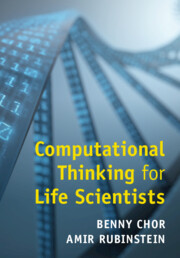
Computational thinking is increasingly gaining importance in modern biology, due to the unprecedented scale at which data is nowadays produced. Bridging the cultural gap between the biological and computational sciences, this book serves as an accessible introduction to computational concepts for students in the life sciences. It focuses on teaching algorithmic and logical thinking, rather than just the use of existing bioinformatics tools or programming. Topics are presented from a biological point of view, to demonstrate how computational approaches can be used to solve problems in biology such as biological image processing, regulatory networks, and sequence analysis. The book contains a range of pedagogical features to aid understanding, including real-world examples, in-text exercises, end-of-chapter problems, colour-coded Python code, and 'code explained' boxes. User-friendly throughout, Computational Thinking for Life Scientists promotes the thinking skills and self-efficacy required for any modern biologist to adopt computational approaches in their research with confidence.
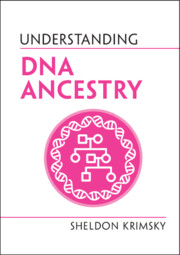
DNA ancestry companies generate revenues in the region of $1bn a year, and the company 23andMe is said to have sold 10 million DNA ancestry kits to date. Although evidently popular, the science behind how DNA ancestry tests work is mystifying and difficult for the general public to interpret and understand. In this accessible and engaging book, Sheldon Krimsky, a leading researcher, investigates the methods that different companies use for DNA ancestry testing. He also discusses what the tests are used for, from their application in criminal investigations to discovering missing relatives. With a lack of transparency from companies in sharing their data, absent validation of methods by independent scientists, and currently no agreed-upon standards of accuracy, this book also examines the ethical issues behind genetic genealogy testing, including concerns surrounding data privacy and security. It demystifies the art and science of DNA ancestry testing for the general reader.
When individuals sign on to a DNA ancestry test, they understand that the company will undertake an analysis of certain segments of their genome, called ancestry information markers (AIMs). These segments can, under proper analysis, reveal their genetic descent from certain regions of the world.
Over a period of 20 years, family genetic genealogy, through the purchase of consumer ancestry testing kits, has been one of the fastest growing family activities of this generation. Citing data from the International Society of Genetic Genealogy, the Washington Post reported in 2017 that eight million people worldwide were involved with recreational genomics. It is estimated that by 2019 about 25 million people had signed up for a DNA ancestry test offered by one of the dozens of companies that have entered this marketplace. The kits are sent to a person’s home with return packaging that includes a reservoir for depositing saliva or swabs for sampling cheek cells. The MITTechnology Review predicted that by 2021 there would be 100 million consumers of ancestry DNA services.
Most human genetic diversity is found within populations rather than between populations. Scientists have reported that any two individuals within a particular population are as different genetically as any two people selected from any two populations in the world. Given this finding, how can science use a small percentage of genetic diversity between populations as markers of ancestral origins?