To save content items to your account,
please confirm that you agree to abide by our usage policies.
If this is the first time you use this feature, you will be asked to authorise Cambridge Core to connect with your account.
Find out more about saving content to .
To save content items to your Kindle, first ensure no-reply@cambridge.org
is added to your Approved Personal Document E-mail List under your Personal Document Settings
on the Manage Your Content and Devices page of your Amazon account. Then enter the ‘name’ part
of your Kindle email address below.
Find out more about saving to your Kindle.
Note you can select to save to either the @free.kindle.com or @kindle.com variations.
‘@free.kindle.com’ emails are free but can only be saved to your device when it is connected to wi-fi.
‘@kindle.com’ emails can be delivered even when you are not connected to wi-fi, but note that service fees apply.
Low methane (CH4) emissions from sheep fed forage rape (Brassica napus) might be related to low ruminal pH value. In this study, sodium carbonate (Na2CO3: SC) was supplemented to the diet to alter ruminal pH for evaluation of its role in CH4 emissions from sheep fed forage rape. Fourteen intact and eight fistulated Romney sheep were adapted to forage rape over 32 days and then randomly allocated to one of two groups: diets supplemented with SC or not (control). Methane emissions were measured from intact sheep in seven experimental periods. In parallel, ruminal pH and fermentation characteristics were assessed using the fistulated sheep. In the first (P01) and the second (P02) periods, none of the sheep received SC to examine the baseline CH4 emissions. The P01 period was used as a covariate for analysis of gas emission measurements in subsequent measurement periods. Sodium carbonate was offered at 5% of the forage DM in P03 and P04, increased to 8% in P05 and P06 to assess the effect of pH increase on CH4 emissions and stopped in P07 to assess if the CH4 emissions reverted to values similar to those measured before the supplementation started. Methane yield (g/kg forage DM intake) was similar for the sheep in both groups during P02 and P03, but sheep supplemented with SC in the diet emitted 36%, 49% and 30% more CH4 per unit of forage DM intake than those in the control group during P04, P05 and P06, respectively. Emissions returned to similar levels when SC supplementation was ceased in P07. Ruminal pH was 0.412 to 0.565 units higher in SC supplemented sheep than for the control group during the SC treatment periods. Based on the lack of an immediate response in CH4 emissions to the supplementation of SC in P03, the positive responses in P04 to P06 and the rapid disappearance of the response after supplementation with SC stopped in P07, we propose a new hypothesis that ruminal pH effects on CH4 emissions are possibly through medium-term changes in microbial and methanogenic communities in the rumen, rather than a direct, short-term impact on methanogens per se. In conclusion, SC supplemented to the forage rape diet of sheep increased rumen pH, leading to an increase in CH4 emissions. Low ruminal pH in sheep fed forage rape explains, at least partially, the reported low CH4 emissions from sheep fed with this forage crop.
Tail biting is a welfare and economical concern in modern pig production. One common preventive measure used throughout the world is tail docking, which is generally considered one of the most effective methods for limiting tail biting. However, tail docking is a painful mutilation and systematic tail docking is not allowed in the EU. Therefore, the aim was to compare pig behaviour and the prevalence of tail biting in finishing pigs with intact tails housed in two different pen designs under Danish commercial conditions. PEN1 was a traditional Danish pen and PEN2 was inspired by Swedish finisher pen design and had a larger proportion of solid floor area (PEN1: 1/3 and PEN2: 2/3), reduced group size (PEN1: 15 and PEN2: 12), increased space allowance per head (PEN1: 0.7 m2 and PEN2: 0.89 m2) and straw allocated on the floor (PEN2) whereas straw was provided in a straw rack in PEN1. Tail damage observations were carried out daily by the stockperson and every 2 weeks one trained research technician assessed tail damages according to a tail scoring system. Tail lesions were observed in 51% of PEN1 and in 11% of PEN2 (P < 0.001). PEN1 had higher prevalence of tail damages than PEN2 (23% v. 5%, P < 0.001). Behavioural observations were carried out by the use of video recordings. Pigs in PEN2 tended to spend more time on tail-directed behaviour than pigs in PEN1 (P = 0.07), whereas pigs in PEN1 tended to spend more time on ear-directed behaviour (P = 0.08). Pigs in PEN2 spent more time on straw-directed behaviour compared to pigs in PEN1 (P < 0.001). Pen design did not affect time spent on other penmate-directed behaviour. In addition, the level of welfare between the two pen designs was compared using the Welfare Quality® protocol. PEN2 received an overall score of ‘excellent’ while PEN1 scored ‘enhanced’. PEN2 scored higher on all principles besides ‘good health’, where PEN1 scored better on lameness and wounds. The main measurements accounting for the differences were water supply, huddling, tail biting, social behaviour and fear of humans. In conclusion, the combination of increased space allowance, increased area of solid flooring, straw allocated onto the floor and reduced group size (PEN2) resulted in fewer tail damaged pigs and a better overall welfare assessment, despite a tendency for more tail-directed behaviour.
Melatonin treatment in adult cashmere goats can increase cashmere yield and improve cashmere fibre quality by inducing cashmere growth during cashmere non-growth period, of which time cashmere goats are in the mid and late stages of lactation. However, whether melatonin treatment in adult cashmere goats affects their offspring’s growth performance remains unknown. Therefore, the objectives of the current study were to determine the effects of melatonin treatment in adult cashmere goats on cashmere and milk production performance in dams and on hair follicle development and subsequent cashmere production in their offspring. Twenty-four lactating Inner Mongolian Cashmere goat dams (50 ± 2 days in milk, mean ± SD) and their single-born female offspring (50 ± 2 days old, mean ± SD) were randomly assigned to one of two groups supplemented with melatonin implants (MEL; n = 12) or without (CON; n = 12). The melatonin implants were subcutaneously implanted behind the ear at a dose of 2 mg/kg live weight on two occasions – 30 April and 30 June 2016. The results demonstrated that melatonin treatment in adult cashmere goats increased cashmere production and improved cashmere fibre quality as indicated by greater cashmere yield, longer cashmere fibre staple length, finer cashmere fibre diameter and thicker cashmere fibre density. The milk fat content was higher in MEL compared with CON cashmere goats. The daily yields of milk production, milk protein and milk lactose were lower in MEL compared with CON cashmere goats. Serum melatonin concentrations were greater, serum prolactin concentrations were lower and milk melatonin concentrations and yields were greater in MEL compared with CON cashmere goats. With regard to offspring, there were no differences in cashmere yield, fibre staple length, fibre diameter and fibre density at yearling combing, and the primary and secondary hair follicles population and maturation between treatments. In conclusion, melatonin treatment in adult cashmere goats during cashmere non-growth period is a practical and an effective way in cashmere industry as indicated by not only increasing cashmere yield and improving cashmere fibre quality in adult cashmere goat dams but also having no impairment in hair follicle development and the subsequent cashmere production in their single-born offspring.
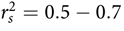
Access to an outdoor range has many potential benefits for laying hens but range use can be poor due to factors only partly understood. Techniques to monitor individual range use within commercial flocks are crucial to increase our understanding of these factors. Direct observation of individual range use is difficult and time-consuming, and automatic monitoring currently relies on equipment that is difficult to use in an on-farm setting without itself influencing range use. We evaluated the performance of a novel small, light and readily portable light-based monitoring system by validating its output against direct observations. Six commercial houses (2000 hens/house) and their adjacent ranges were used, three of which were equipped with more structures on the range than the others (to determine whether cover would influence monitoring accuracy). In each house, 14 hens were equipped with light monitoring devices for 5 discrete monitoring cycles of 7 to 8 consecutive days (at 20, 26, 32, 36 and 41 weeks of age). Light levels were determined each minute: if the reading on the hen-mounted device exceeded indoor light levels, the hen was classified as outside. Focal hens were observed directly for 5 min/hen per week. Accuracy (% of samples where monitoring and direct observations were in agreement) was high both for ranges with more and with fewer structures, although slightly better for the latter (92% v. 96% ± 1 SEM, F1,19 = 5.2, P = 0.034). Furthermore, accuracy increased over time (89%, 94%, 95%, 98% ± 1 SEM for observations at 26, 32, 36 and 41 weeks, respectively, F3,19 = 3.2, P = 0.047), probably due to progressively reduced indoor light levels resulting from partial closing of ventilation openings to sustain indoor temperature. Light-based monitoring was sufficiently accurate to indicate a tendency for a greater percentage of monitored time spent outside when more range structures were provided (more: 67%, fewer: 56%, SEM: 4, $\chi_1^2 = 2.9$, P = 0.089). Furthermore, clear and relatively consistent individual differences were detected. Individuals that were caught outside at the start of the experiment ranged more throughout its duration (caught outside: 72%, caught inside 51%, SEM: 4, $\chi_1^2 = 10.0$, P = 0.002), and individual range use was correlated between monitoring cycles (for adjacent monitoring cycles: $r_s^2 = 0.5-0.7$, P < 0.0001). This emphasizes the importance of studying range use on an individual level. In conclusion, our light-based monitoring system can assess individual range use accurately (although accuracy was affected by house characteristics to some extent) and was used to show that both cover availability and individual characteristics affected range use.
Relationships play a very important role in studies on quantitative genetics. In traditional breeding, pedigree records are used to establish relationships between animals; while this kind of relationship actually represents one kind of relatedness, it cannot distinguish individual specificity, capture the variation between individuals or determine the actual genetic superiority of an animal. However, with the popularization of high-throughput genotypes, assessments of relationships among animals based on genomic information could be a better option. In this study, we compared the relationships between animals based on pedigree and genomic information from two pig breeding herds with different genetic backgrounds and a simulated dataset. Two different methods were implemented to calculate genomic relationship coefficients and genomic kinship coefficients, respectively. Our results show that, for the same kind of relative, the average genomic relationship coefficients (G matrix) were very close to the pedigree relationship coefficients (A matrix), and on average, the corresponding values were halved in genomic kinship coefficients (K matrix). However, the genomic relationship yielded a larger variation than the pedigree relationship, and the latter was similar to that expected for one relative with no or little variation. Two genomic relationship coefficients were highly correlated, for farm1, farm2 and simulated data, and the correlations for the parent-offspring, full-sib and half-sib were 0.95, 0.90 and 0.85; 0.93, 0.96 and 0.89; and 0.52, 0.85 and 0.77, respectively. When the inbreeding coefficient was measured, the genomic information also yielded a higher inbreeding coefficient and a larger variation than that yielded by the pedigree information. For the two genetically divergent Large White populations, the pedigree relationship coefficients between the individuals were 0, and 62 310 and 175 271 animal pairs in the G matrix and K matrix were greater than 0. Our results demonstrated that genomic information outperformed the pedigree information; it can more accurately reflect the relationships and capture the variation that is not detected by pedigree. This information is very helpful in the estimation of genomic breeding values or gene mapping. In addition, genomic information is useful for pedigree correction. Further, our findings also indicate that genomic information can establish the genetic connection between different groups with different genetic background. In addition, it can be used to provide a more accurate measurement of the inbreeding of an animal, which is very important for the assessment of a population structure and breeding plan. However, the approaches for measuring genomic relationships need further investigation.
Both blood- and milk-based biomarkers have been analysed for decades in research settings, although often only in one herd, and without focus on the variation in the biomarkers that are specifically related to herd or diet. Biomarkers can be used to detect physiological imbalance and disease risk and may have a role in precision livestock farming (PLF). For use in PLF, it is important to quantify normal variation in specific biomarkers and the source of this variation. The objective of this study was to estimate the between- and within-herd variation in a number of blood metabolites (β-hydroxybutyrate (BHB), non-esterified fatty acids, glucose and serum IGF-1), milk metabolites (free glucose, glucose-6-phosphate, urea, isocitrate, BHB and uric acid), milk enzymes (lactate dehydrogenase and N-acetyl-β-D-glucosaminidase (NAGase)) and composite indicators for metabolic imbalances (Physiological Imbalance-index and energy balance), to help facilitate their adoption within PLF. Blood and milk were sampled from 234 Holstein dairy cows from 6 experimental herds, each in a different European country, and offered a total of 10 different diets. Blood was sampled on 2 occasions at approximately 14 days-in-milk (DIM) and 35 DIM. Milk samples were collected twice weekly (in total 2750 samples) from DIM 1 to 50. Multilevel random regression models were used to estimate the variance components and to calculate the intraclass correlations (ICCs). The ICCs for the milk metabolites, when adjusted for parity and DIM at sampling, demonstrated that between 12% (glucose-6-phosphate) and 46% (urea) of the variation in the metabolites’ levels could be associated with the herd-diet combination. Intraclass Correlations related to the herd-diet combination were generally higher for blood metabolites, from 17% (cholesterol) to approximately 46% (BHB and urea). The high ICCs for urea suggest that this biomarker can be used for monitoring on herd level. The low variance within cow for NAGase indicates that few samples would be needed to describe the status and potentially a general reference value could be used. The low ICC for most of the biomarkers and larger within cow variation emphasises that multiple samples would be needed - most likely on the individual cows - for making the biomarkers useful for monitoring. The majority of biomarkers were influenced by parity and DIM which indicate that these should be accounted for if the biomarker should be used for monitoring.
Shearing during the latter half of pregnancy is a common practice to improve flock health and productivity. Previous studies have demonstrated that shearing pregnant ewes at mid or late pregnancy is associated with an increase in lamb birth weight. In the present study, we used singleton Polypay × Dorset pregnant sheep, to investigate the potential roles of placental function and changes in maternal metabolism in underlying this increased birth weight response. Two groups were randomly established and blocked at enrollment by animal BW, body condition score and subcutaneous adipose tissue depth. The groups were shorn (SH; n = 18) or not (C; n = 20) at gestational day (GD) 107 ± 1 (mean ± SEM). Weekly maternal plasma samples were collected between shearing and birth, but only six samples were assayed for progesterone, pregnancy-associated glycoproteins (PAG1), glucose and non-esterified fatty acids (NEFAs). At birth, sex, birth weight, and newborn body mass index (BMI) were recorded. Maternal BW during mid- to late-pregnancy was similar between groups. Shearing resulted in increased lamb birth weight and BMI (P < 0.05) regardless of fetal sex but did not affect the maternal concentration of PAG1 or progesterone from GDs 100 to 142. After shearing (GD100) and up to lambing, shorn females had higher circulating glucose concentrations (P < 0.05), but not NEFA, compared to the control group. Maternal circulating PAG1, progesterone, glucose or NEFA concentration across pregnancy did not differ according to lamb sex. Across pregnancy, birth weight was positively associated with PAG1 (P < 0.001), but not with progesterone concentrations. In conclusion, weight and BMI at birth were higher in both sexes upon shearing in singleton pregnancies. Despite PAG1 being associated with birth weight, late-pregnancy shearing did not alter the placental endocrine response. Whether other placental factors are altered upon shearing and may influence the increase in birth weight and BMI remain to be investigated.
Conservation of animal genetic resources requires regular monitoring and interventions to maintain population size and manage genetic variability. This study uses genealogical information to evaluate the impact of conservation measures in Europe, using (i) data from the Domestic Animal Diversity Information System (DAD-IS) and (ii) a posteriori assessment of the impact of various conservation measures on the genetic variability of 17 at-risk breeds with a wide range of interventions. Analysis of data from DAD-IS showed that 68% of national breed populations reported to receive financial support showed increasing demographic trends, v. 51% for those that did not. The majority of the 17 at-risk breeds have increased their numbers of registered animals over the last 20 years, but the changes in genetic variability per breed have not always matched the trend in population size. These differences in trends observed in the different metrics might be explained by the tensions between interventions to maintain genetic variability, and development initiatives which lead to intensification of selection.
Significant differences in the estimation of amino acid requirements exist between the available factorial methods. This study aimed to compare current factorial models used to estimate the individual and population standardised ileal digestible (SID) lysine (Lys) requirements of growing pigs during a 26-day feeding phase. Individual daily feed intake and BW data from 40 high-performance pigs (25-kg initial BW) were smoothed by linear regression. Body weight gain was constant (regression slope not different from 0) for all the pigs. The CV of the SID Lys requirements ranged from 22% at the beginning of the trial to 8% at the end. The population Brazilian tables (BT-2017) and National Research Council (NRC-2012) SID Lys requirements for the average pig were 16% higher than the average requirement estimated by the individual precision-feeding model (IPF), but similar to the estimated for the population assuming that population requirements are those of the 80th-percentile pig of the population (IPF-80). Meaning that, the IPF-80, BT-2017, and NRC-2012 models would yield similar recommendations when pigs are group-fed in conventional multi-phase systems. Additionally, the IPF-80 estimates are independent of the phase length, whereas the BT-2017 and NRC-2012 models use average population values in the middle of the feeding phase for the calculations and therefore, conventional requirement estimations decrease as the length of the feeding phase increases. In conclusion, the BT-2017 and NRC-2012 methods were calibrated for maximum population responses, which explains why these methods yield higher values than those estimated for the average pig by the IPF model. This study shows the limitations of conventional factorial methods to estimate amino acid requirements for precision-feeding systems.
It is difficult to separate an age-dependent fall in nitrogen use efficiency (NUE; N balance/N intake) in growing ruminants from a progressively decrease in animal protein requirements over time. This study examined the effect of dietary protein content on N partitioning, digestibility and N isotopic discrimination between the animal and its diet (Δ15Nanimal-diet) evaluated at two different fattening periods (early v. late). Twenty-four male Romane lambs (age: 19 ± 4.0 days; BW: 8.3 ± 1.39 kg) were equally allocated to three dietary CP treatments (15%, 17% and 20% CP on a DM basis). Lambs were reared with their mothers until weaning, thereafter housed in individual pens until slaughter (45 kg BW). During the post-weaning period, lambs were allocated twice (early fattening (30 days post-weaning) and late fattening (60 days post-weaning)) to metabolic cages for digestibility and N balance study. When diet CP content increased, the average daily gain of lambs increased (P < 0.05) while the age at slaughter decreased (P = 0.01), but no effect was observed on feed efficiency (P > 0.10). Diet CP content had limited effect on lamb carcass traits. Higher fibre digestibility was observed at the early v. late fattening period (P < 0.001). The N intake and the urinary N excretion increased when diet CP content increased (P < 0.001) and when shifting from early to late fattening period (P < 0.001). Faecal N excretion (P = 0.14) and N balance (P > 0.10) were not affected by diet CP content. Nitrogen digestibility increased (P < 0.001) as the diet CP content increased and on average it was greater at late v. early fattening period (P = 0.02). The NUE decreased (P = 0.001) as the diet CP content increased and as the lamb became older (P < 0.001). However, the age-dependent fall in NUE observed was lower at high v. low dietary CP content (CP × age interaction; P = 0.04). The Δ15Nanimal-diet was positively correlated (P < 0.05) with N intake (r = 0.59), excretion of faecal N (r = 0.41), urinary N (r = 0.69) and total manure N (r = 0.64), while negatively correlated with NUE (r = −0.57). Overall, the experiment showed NUE was lower in older lambs and when lambs were fed high diet CP content, and that Δ15Nanimal-diet was a useful indicator not only for NUE but also for urinary N excretion, which is a major environmental pollution factor on farm.
Strongyle infection is an important issue in horse breeding. It impairs horse health and performance, with young horses being the most sensitive. Strongyle control has long relied on the systematic use of chemical treatments. However, expanding anthelmintic resistance among strongyles calls for alternative options. Mixed grazing is assumed to reduce strongyle load on the pasture as the result of a dilution effect. This has been shown in small ruminants grazing with cattle, but the putative benefits of co-grazing between horses and cattle have not yet been evaluated. Here, we conducted field surveys and face-to-face interviews on 44 farms from two contrasted saddle-horse production areas, Normandy and northern Massif Central, to compare equine strongyle management practices between specialized systems and mixed horse-cattle systems. Our goals were (i) to quantify breeders’ awareness of the putative benefits associated with the co-grazing of horses and cattle, (ii) to establish whether mixed farming was associated with different strongyle management strategies and (iii) to test whether strongyle egg excretion was reduced in horses grazed with beef cattle. Every breeder relied on systematic calendar treatments, and only 8 out of the 23 mixed breeders were aware that co-grazing of horses with cattle could be used as part of their strongyle control strategy. Management practices were similar across both systems in Normandy. In Massif Central, mixed breeders formed a distinct cluster from their specialized counterparts: deworming was less frequent and stocking density was higher in mixed farms, while specialized breeders seemed more willing to integrate herd and plot management into control strategies. Faecal egg counts measured in horses from Massif Central were significantly reduced when horses were grazed with cattle. This was the result of an increased reliance on macrocyclic lactones in mixed farms (P < 0.01) and a significant dilution effect (P < 0.01). When considering a subsample of horses treated with macrocyclic lactones only, young horses grazed with cattle had 50% fewer strongyle eggs excreted in their faeces than horses grazed in equine-only pastures (P < 0.01). This is the first evidence of the benefits of mixed grazing with cattle as an alternative to control strongyle infection in horses, although this promising alternative remains largely unknown by horse breeders.
Europe’s roadmap to a low-carbon economy aims to cut greenhouse gas (GHG) emissions 80% below 1990 levels by 2050. Beef production is an important source of GHG emissions and is expected to increase as the world population grows. LIFE BEEF CARBON is a voluntary European initiative that aims to reduce GHG emissions per unit of beef (carbon footprint) by 15% over a 10-year period on 2172 farms in four large beef-producing countries. Changes in farms beef carbon footprint are normally estimated via simulation modelling, but the methods current models apply differ. Thus, our initial goal was to develop a common modelling framework to estimate beef farms carbon footprint. The framework was developed for a diverse set of Western Europe farms located in Ireland, Spain, Italy and France. Whole farm and life cycle assessment (LCA) models were selected to quantify emissions for the different production contexts and harmonized. Carbon Audit was chosen for Ireland, Bovid-CO2 for Spain and CAP’2ER for France and Italy. All models were tested using 20 case study farms, that is, 5 per country and quantified GHG emissions associated with on-farm live weight gain. The comparison showed the ranking of beef systems gross carbon footprint was consistent across the three models. Suckler to weaning or store systems generally had the highest carbon footprint followed by suckler to beef systems and fattening beef systems. When applied to the same farm, Carbon Audit’s footprint estimates were slightly lower than CAP’2ER, but marginally higher than Bovid-CO2. These differences occurred because the models were adapted to a specific region’s production circumstances, which meant their emission factors for key sources; that is, methane from enteric fermentation and GHG emissions from concentrates were less accurate when used outside their target region. Thus, for the common modelling framework, region-specific LCA models were chosen to estimate beef carbon footprints instead of a single generic model. Additionally, the Carbon Audit and Bovid-CO2 models were updated to include carbon removal by soil and other environmental metrics included in CAP’2ER, for example, acidification. This allows all models to assess the effect carbon mitigation strategies have on other potential pollutants. Several options were identified to reduce beef farms carbon footprint, for example, improving genetic merit. These options were assessed for beef systems, and a mitigation plan was created by each nation. The cumulative mitigation effect of the LIFE BEEF CARBON plan was estimated to exceed the projects reduction target (−15%).
The emerging paradigm in contemporary healthcare, precision medicine, is widely seen as a revolutionary approach to both clinical treatment and overall health promotion. Precision models are making use of the most up-to-date technological advancements – such as genomics and ‘big data’ processing – in an effort to tailor healthcare to each individual. Yet the list of hurdles to successful implementation of precision medicine is no secret. Among the challenges, it was recently suggested in this journal that we must change the ‘mindset’ of patients, practitioners and the wider public (McGonigle, 2016). And while precision medicine indeed demands a significant shift, we must not understate the extent of the overhaul required. In particular, I argue, against McGonigle's suggestion, that the ethical challenges regarding participant contributions cannot be tackled by relying upon existing models of incentivized blood banking or organ donation. Instead, the success of precision medicine requires a wholescale change in mindset.
Artificial intelligence (AI) is one of the most significant fields of development in the current digital age. Rapid advancements have raised speculation as to its potential benefits in a wide range of fields, with healthcare often at the forefront. However, amidst this optimism, apprehension and opposition continue to strongly persist. Oft-cited concerns include the threat of unemployment, harm to the doctor–patient relationship and questions of safety and accuracy. In this article, we review both the current and future medical applications of AI within the sub-speciality of cancer genomics.
The research has shown the interesting contributions of shearing in mid-gestation on the performance of lambs from birth to weaning. Other studies have reported that shearing at early pregnancy influences the development of the placenta and lamb live weight at birth. However, there was a lack of information on the effect of early-prepartum shearing on the behavior of the offspring from weaning onward. This study evaluated the effect of shearing ewes at 50 days of gestation on the growth, reproductive behavior and response to a gastrointestinal parasite challenge in the female offspring from weaning to 18 months old. Fifty-seven Polwarth female lambs were used, 22 being singles and 35 twins born to ewes either shorn at 50 days of pregnancy (PS, n = 23) or shorn at 62 days postpartum (U, control, n = 34) resulting in four subgroups: single lambs born to PS ewes (n = 8), born to U ewes (n = 14), twin lambs born to PS ewes (n = 15) or born to U ewes (n = 20). All progeny were managed together under improved pasture with a minimum forage allowance of 6% live weight on dry basis. Body weight, body condition score and fecal eggs count were recorded every 14 days from weaning to 18 months of age. Concentrations of progesterone were measured weekly (from 4 to 10 months of age and from 14 to 18 months of age) to establish the onset of puberty. Ovulation rate at an induced and a natural heat (545 ± 1.0 and 562 ± 1.0 day old) was recorded. Prepartum shearing did not affect the age at puberty or the ovulation rate of female offspring, but those born as singles were more precocious ( P = 0.03) and heavier ( P = 0.02) at puberty than twin born lambs. Both the average value of parasite egg count ( P = 0.0 7) and the Famacha index ( P = 0.02) for the entire study period were lower in lambs born to prepartum shorn ewes than those born to postpartum shorn ewes. In conclusion, shearing at 50 days of gestation did not affect the growth or the reproductive behavior of female offspring. However, female lambs born from ewe shorn during gestation showed a better response to the parasitic challenge, and further research is required to confirm this.
Plantain and chicory are interesting forage species since they present good nutritional quality and are more resistant to drought than many temperate grasses. The fatty acid (FA) profile in milk and meat is related to a growing concern for the consumption of healthy foods, that is, with a lower content of saturated FA, higher polyunsaturated FA (PUFA) and a favourable n-6 : n-3 FAs ratio. Our objective was to evaluate the FA content in ewe’s milk and lamb’s meat fed a plantain–chicory mixture (PCH) or a grass-based permanent sward (GBS) dominated by perennial ryegrass. Eighteen Austral ewes in mid-lactation were allocated to PCH and GBS treatments. Milk samples were obtained during September (spring). Thirty weaned lambs were finished on both treatments from November to December (7 weeks), slaughtered and their meat sampled. Fat from milk and meat samples was extracted and stored until analysed by gas chromatography. Milk fat from GBS was higher than from PCH (P < 0.05) in C18:0 (11 385 v. 5874 mg/100 g FA), 9c-18:1 (15 750 v. 8565 mg/100 g FA), 11 t-18:1 (4576 v. 2703 mg/100 g FA) and 9c,11 t-18:2 (1405 v. 921 mg/100 g FA) and lower in 18:2n-6 (827 v. 1529 mg/100 g FA) and 18:3n-3 (943 v. 1318 mg/100 g FA) FA. Total mono-unsaturated FA was higher in GBS than PCH (P < 0.05). Meat fat from PCH swards presented a higher (P < 0.05) content than GBS for 18:2n-6 (46.8 v. 28.2 mg/100 g FA), linolenic (24.6 v. 14.2 mg/100 g FA), polyunsaturated FA (119.7 v. 73.4 mg/100 g FA), n-6 (65.9 v. 40.8 mg/100 g FA) and n-3 (53.8 v. 32.5 mg/100 g FA), respectively. No effect of treatment (P > 0.05) was detected for 9c-18:1 (283.9 v. 205.8 mg/100 g FA), 11 t-18:1 (26.2 v. 19.3 mg/100 g FA) and 9c,11 t-18:2 (10.1 v. 7.6 mg/100 g FA), for PCH and GBS. These results suggest that grazing a PCH mixture results in a higher concentration of PUFA in ewes’ milk and in lambs’ fat, as compared to a GBS sward.
