To save content items to your account,
please confirm that you agree to abide by our usage policies.
If this is the first time you use this feature, you will be asked to authorise Cambridge Core to connect with your account.
Find out more about saving content to .
To save content items to your Kindle, first ensure no-reply@cambridge.org
is added to your Approved Personal Document E-mail List under your Personal Document Settings
on the Manage Your Content and Devices page of your Amazon account. Then enter the ‘name’ part
of your Kindle email address below.
Find out more about saving to your Kindle.
Note you can select to save to either the @free.kindle.com or @kindle.com variations.
‘@free.kindle.com’ emails are free but can only be saved to your device when it is connected to wi-fi.
‘@kindle.com’ emails can be delivered even when you are not connected to wi-fi, but note that service fees apply.
This study describes the reproductive systems of male and female Johngarthia lagostoma, a land crab endemic to South Atlantic oceanic islands, focusing on spermatozoa production and storage. Specimens from Trindade Island (Brazil) were analysed for anatomy, histology, and histochemistry. The male system includes a pair of tubular testes showing different stages of spermatogenesis and spermiogenesis, leading to mature spermatozoa. These move to the anterior vas deferens (AVD), which has proximal and distal portions, the latter containing coenospermic spermatophores surrounded by secretion type I, reactive to proteins and acidic and neutral polysaccharides. The median (MVD) and posterior (PVD) vas deferens produce type II (strongly protein-reactive) and type III (weakly protein-reactive) secretions. Accessory glands between the MVD and PVD produce the same secretions plus a secretion type IV, reactive to neutral polysaccharides. These mix with the spermatophores and other vas deferens secretions, increasing the PVD’s secretion volume, crucial for the initial release of spermatophores into the seminal receptacle. The female reproductive system features voluminous seminal receptacles connected to the ovary, comprising mesodermal and ectodermal regions classified as ventral-type connection. Plugs and sperm packets are absent, with the seminal receptacles filled with free spermatozoa, suggesting dehiscence occurs shortly after sperm transfer. The influence of male and female secretions on this process is suggested, alongside their roles in sperm maintenance and fertilization facilitation.
Myostatin (MSTN), a member of the transforming growth factor-β superfamily, negatively regulates skeletal muscle growth in vertebrates. In teleosts, gene duplication has produced mstn1 and mstn2 paralogues, which often differ in structure and expression. This study compares mstn1 and mstn2 in two high-value mariculture-relevant carangids of the Indo-Pacific region, Trachinotus mookalee and Trachinotus blochii. We report, for the first time, the complete gene structures of mstn1 and mstn2 in T. mookalee (3777 bp from Tm-mstn1 and 2075 bp from Tm-mstn2) and describe their counterparts in T. blochii (3836 bp from Tb-mstn1 and 2147 bp from Tb-mstn2). Notably, mstn1 and mstn2 shared only ∼53% sequence identity within the same species. Interestingly, we noted a CA-repeat tandem sequence in intron 2 (35 bp in Tm-mstn1 and 47 bp in Tb-mstn1), providing a potential microsatellite marker. Promoter analysis suggested more complex transcriptional regulation in T. blochii, with a greater number of transcription factor binding sites (47 vs. 43) and E-box motifs (4 vs. 2). Predicted miRNA binding site revealed both shared (14) and species-specific sites (two sites in Tm-mstn1, and one in Tb-mstn1), indicating differential post-transcriptional regulation. These molecular differences were verified through differential mstn1 expression, with higher mstn1 expression in T. blochii muscle, which might be the reason for the enhanced muscle growth in T. mookalee. The mstn2 expression patterns supported its role in neuroendocrine and reproductive regulation. Overall, this study provides new molecular insights into species-specific growth differences and highlights the functional divergence of mstn genes in marine carangids.
A range of sizes of eight sea urchin species in the Family Echinometridae (Echinostrephus aciculatus, Heliocidaris erythrogramma, Colobocentrotus atratus, Heterocentrotus mamillatus, Heterocentrotus trigonarius, Echinometra mathaei, Echinometra lucunter, and Echinometra vanbrunti) were digitized and their shapes decomposed using elliptical Fourier analysis to quantify shape differences. Coefficients of sines and cosines of harmonics were used in a principal components analysis to show the separation of species. The principal component analysis shows the Echinometridae shape morphospace with the greatest separation of Echinostrephus and Colobocentrotus from other species. Major loadings were related to morphological measurements: height/diameter, lift of the oral surface above the substrate, and position of the ambitus to height. All species showed an increase in height/diameter with size, but only some species showed a correlation of oral lift or position of the ambitus with Fourier coefficients.
The mudskipper Boleophthalmus dussumieri (Teleostei, Gobiiformes, Oxudercidae) is an amphibious goby native to the Indian Ocean, from Kuwait Bay and Persian Gulf to the northeast of the Arabian Sea and the western coast of India. This study reports on the first record of B. dussumieri in the Atlantic Ocean, based on morphological and molecular evidence. A single specimen was collected in September 2024 in São Marcos Bay, on the coast of the state of Maranhão (Brazilian Amazon Coast). This is the second exotic species of oxudercid goby reported for the coast of Maranhão, possibly accidentally introduced through ballast water discharge.
The colonial ascidian Didemnum vexillum (Carpet Sea Squirt) is globally established as a non-native species with diverse negative impacts. A second Didemnum species, D. pseudovexillum, was described in 2020, living alongside D. vexillum and virtually indistinguishable from it in external appearance. It is not known whether this second species has environmental and economic impacts similar to those of D. vexillum, nor whether it should be regarded as native or non-native in Europe. Early records were from four sites, all in or adjacent to marinas, in north-west France, the Mediterranean coast of Spain and the east coast of Italy. Here, an occurrence of D. pseudovexillum in a seagrass bed in south-west England is reported, identified by both sequencing of the cytochrome c oxidase subunit 1 gene (COI) and examination of internal morphology. Separate studies collected and identified specimens of D. vexillum/pseudovexillum from 11 marinas on the English and Welsh coasts, and D. pseudovexillum was not found amongst these. Only two pre-2020 didemnid COI sequences now referrable to D. pseudovexillum have been found in the BOLD System and GenBank databases (these records being from Mediterranean Spain in 2013); this suggests that the species is a relatively recent addition to the European fauna from an unrecognized existing range.
Egg masses of Aplysia depilans consist of long and intertwined strings containing numerous capsules with eggs. Light microscopy stains and transmission electron microscopy revealed four layers in the gelatinous sheath that encircled and aggregated the chain of egg capsules. The outermost layer has a fluffy structure. The second, third, and fourth layers consisted of reticulated matrices with different densities. The second and third layers were divided into 5‒6 strata each. The fourth and innermost layer of the gelatinous sheath has a higher density and no visible stratification. This layer glues the tightly packed capsules to one another and to the outer layers of the gelatinous sheath. The thin wall of the capsules is formed by a homogeneous and highly electron-dense material. Inside the capsules, the eggs or embryos were bathed in an electron-lucent aqueous medium. Bacteria and diatoms were the most abundant microorganisms on the surface of egg strings. Bacteria penetrate the gelatinous sheath and appear to be involved in the degradation of the upper strata, but were never found inside the egg capsules. Metagenomic analysis revealed a large taxonomic diversity of bacteria associated with egg masses of A. depilans. Although 15 phyla could be recognized, the families Flavobacteriaceae (Bacteroidota), Lentisphaeraceae (Lentisphaerota), and Rhodobacteraceae (Pseudomonadota) represented 67.9% ± 11.6% of the relative abundance in the microbiome of the egg string samples. The presence of genera capable of decomposing polysaccharides, such as Tenacibaculum and Cellulophaga, supports the idea that bacteria are responsible for the degradation of the gelatinous layers of the egg strings.
Three motor sledges were taken on Captain Robert Falcon Scott’s expedition to Antarctica in 1910. They performed poorly, making only small contributions to the polar journey and making no contribution to the expedition’s scientific programme.
The motor sledges have received little attention from historians and researchers. No definitive work has been published. The purpose of this article is to provide an authoritative, reliable and complete history of Scott’s Antarctic motor sledges.
This article studies Belton Hamilton’s concept for a “chain track” vehicle, then traces its development path through two prototype vehicles and two snow trials in Norway. The outcomes of the snow trials and associated recommendations are reviewed. The article then considers Scott’s detailed plans to reach the South Pole and his instructions to the Motor Party in pursuit of that goal. Four major problems that prevented the motor sledges from satisfying Scott’s instructions are identified.
Several conclusions are drawn. It is apparent that the vehicles were flawed from the outset by poor engineering decisions about track design, engine power and carburetion/airflow. It is unlikely that experimentation or minor refinement in the Antarctic would have produced vehicles reliable enough to make a major contribution to the polar journey.
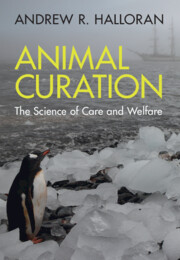
Animal curation is a vital and evolving discipline that integrates science, policy, and hands-on care to ensure the highest standards of animal welfare. As the role of zoos, aquaria, sanctuaries, and research facilities expands beyond exhibition to conservation and education, the management of animals under human care has become increasingly scientific. This book provides a comprehensive guide to the organisation, policies, and procedures essential for effective animal care programs. It emphasises evidence-based practices in husbandry, veterinary care, and facility management while prioritising both animal well-being and staff safety. Through detailed chapters and real-world case studies, readers will explore species-specific needs, ethical considerations, and regulatory compliance. Designed for students and professionals in animal science, welfare, and conservation, this book moves beyond basic care, focusing on the concept of 'thriving' rather than mere survival. It is an essential resource for shaping the future of animal management and welfare.
Cock-tailed Tyrant Alectrurus tricolor (Vieillot, 1816), a Vulnerable South American grassland specialist, is facing substantial habitat loss due to land-use change by agricultural and forestry expansion. This study aims to assess the current distribution and suitable habitat availability for Cock-tailed Tyrant using species distribution modelling (SDM) and recent distributional data from the Global Biodiversity Information Facility (GBIF). Occurrence data from 1,583 records, mapped by season and habitat type, were used to generate a MaxEnt model with a high predictive accuracy (AUC = 0.974). Results revealed three main distributional clusters: one in Brazil, another spanning Mato Grosso do Sul, Paraguay and north-eastern Argentina, and a separate group in the Bolivian lowlands. Seasonal analysis found no significant distributional shifts, supporting previous findings of the species’ non-migratory behaviour. Key environmental contributors to habitat suitability included ecoregion type, precipitation, and vapour pressure. The predicted suitable habitat covers approximately 177,753 km². These findings underscore the urgent need for conservation efforts focusing on critical grassland habitats, particularly within the Cerrado, Southern Cone Mesopotamian grasslands, and Beni savanna biomes. Sustainable land-use practices, grassland restoration, and periodic habitat reassessments are essential to preserve Cock-tailed Tyrant populations and support the biodiversity of South American grasslands.
The family Kogiidae, comprising the pygmy sperm whale (Kogia breviceps) and the dwarf sperm whale (K. sima), represents some of the least-known cetaceans worldwide. Their small size, deep-diving behaviour, and elusive surface activity result in very few live sightings, particularly in the North Atlantic Ocean. Here, we report two significant observations from the Azores in July 2025: a group of six K. breviceps, the largest reported group size of this species, and a confirmed sighting of K. sima off Pico Island – representing only the sixth record for the archipelago. Photographic evidence and expert validation confirmed the identification of K. sima based on body proportions. We also review records of both species, including other live encounters and strandings, across the Macaronesian archipelagos (Azores, Madeira, Canary Islands, and Cape Verde). Together, our observations and synthesis document an exceptional group size for K. breviceps, emphasise the rarity of K. sima in the region, and highlight the value of whale-watching platforms and citizen science for monitoring elusive cetaceans.
To reveal the community structuring mechanism of the pebble interstitial macrofauna, we examined the community structure and its relationship with abiotic environmental factors on a pebble beach in Honshu, central Japan (northwest Pacific). Throughout the year-round survey, we found 66 species from 18 classes in 9 phyla, most of which were either endemic or undescribed species. This is a noticeably higher species diversity compared to the common theory (quite low biodiversity) for pebble beaches and also indicates independence from other environments. Moreover, the communities were divided into five groups through clustering, which were significantly explained by sediment particle size and tidal level using RDA (Redundancy Analysis). However, their interpretabilities were moderate, suggesting that the community structure was moderately controlled by environmental factors. This could be owing to the optimization of the benefit of interspecific ecological niche isolation and the cost of recovering from the disturbance. Consequently, the present study reveals the presence of diverse and unique macrobenthic communities that inhabit the pebble beach environment in Japan and are controlled by the abiotic environmental characteristics of microhabitats.
The cold, low carbon dioxide (CO2) conditions of the Pleistocene epoch fundamentally structured ecosystems, profoundly influencing the evolutionary trajectory of Homo sapiens and other large mammals. Although often considered uniquely stable, the Holocene is more usefully viewed as just another Pleistocene interglacial interval that was naturally trending towards a renewed glacial phase. However, rapid anthropogenic greenhouse gas emission rates have reversed this trajectory and might have now foreclosed the prospect of returning to cyclic glacial climates for millennia. A large set of flora and fauna has benefited from low CO2 conditions, which we define as low-CO2 dependents. By elevating atmospheric CO2 concentrations beyond levels seen for millions of years, we have accelerated global warming beyond the adaptive capacities of many species and ecosystems. African savannas and grasslands are particularly relevant in this context because this was the environment in which the human species evolved. These biomes have been previously maintained by fire and carbon scarcity but are now experiencing woody encroachment driven by rising CO2. The resultant global reforestation further threatens biodiversity adapted to open ecosystems, while rewilding initiatives must therefore pair prehistoric analogues with explicit climate-fitness tests that anticipate mid-century CO2 trajectories. Addressing these complex challenges requires both targeted local interventions and systemic policy reforms, grounded in a pragmatic recognition of the transient nature of the Holocene. Recognising the transience of any single baseline allows conservation and agriculture to plan for a dynamic, overshoot-prone future.
Shortages of kerosene, used to cook food and melt ice for drinking water on the Terra Nova Expedition of 1910–13, hastened the death of Captain Robert Falcon Scott and his three remaining companions in March 1912. Various explanations for the losses have been proposed, but no definitive account has been published. This article aims to provide a reliable, authoritative and complete history of Scott’s kerosene shortages.
A review of primary expedition records (personal journals in particular) has been undertaken, assembling information about fuel shortages and related matters, and identifying and evaluating seven potential explanations for shortages. The evidence indicates that many of the potential explanations are inconsistent with trusted historical evidence, and that one appears to be based upon a widespread misinterpretation of Scott’s diary. The prevalent explanation is a complex interplay of facts, omissions, distractions and fiction, traceable to an Editor’s Note in the expedition’s official book “Scott’s Last Expedition.”
This article identifies four significant factors that contributed to fuel shortages: an intentional reduction of their fuel allowance in some depots by one third, their reduced speed of travel on later barrier stages, unseasonably cold weather and the unplanned use of fuel to cook pony meat.
This short report provides the first observations of deep-sea corals belonging to the class Octocorallia and order Antipatharia surveyed during the KM24-03 Leg 2 cruise in the waters around Minamidaito and Kitadaito Islands in Okinawa, Japan between approximately 200 and 1,000 m. It also lists and illustrates the specimens that were collected. Based on field observations, deep-sea corals occupied the niches inside and around caves and crevices, as well as non-cave environments such as flat seabeds and slopes. Our morphological and phylogenetic analyses of the collected specimens revealed the presence of Callogorgia cf. korema, Pleurocorallium inutile, and Acanthopathes undulata. We provide the first documentation of deep-sea corals found in this area, as well as extend the known geographic distribution of these species. In particular, the black coral A. undulata, which until now has only been reported from the western and central Pacific Ocean, is reported for the first time in the northwestern Pacific. Our preliminary findings warrant further investigation and more stringent protection of the deep-sea species and habitats found in the waters around these karstic islands from anthropogenic impacts, perhaps with inclusion in regional Marine Protected Areas.
Host specificity in symbionts is a key factor driving their phylogenetic diversification. However, since the host utilization of symbionts can be influenced by environmental heterogeneity and the presence of potential hosts, a careful evaluation is necessary to clearly determine the host specificity. Stylochoplana parasitica is an acotylean flatworm that inhabits the mantle groove of the intertidal chiton Liolophura japonica around Japan. The Stylochoplana flatworms, including this species, are suggested to have evolved host specificity that has influenced their phylogenetic divergence. In this study, host specificity was examined based on field and laboratory observations. A field survey revealed that S. parasitica was exclusively found on L. japonica and not on the sympatric chiton Acanthochitona defilippii. A laboratory experiment confirmed that S. parasitica selectively attached to L. japonica, with significantly fewer individuals attaching to A. defilippii. These results suggest that the host specificity of S. parasitica is not shaped by environmental factors, but is likely the result of host adaptation. This study emphasizes the importance of combining field surveys and laboratory experiments in evaluating host specificity.
During a biodiversity survey conducted in the Gulf of Izmit (Sea of Marmara, Türkiye), 87 individuals of bat star Asterina stellifera, whose native distribution is along the South Atlantic coasts of South America and Africa, were identified. The population seems to be well adapted to a mixed substrate composed of coarse sand, silt, and shell fragments of Mytilus galloprovincialis between 4 and 8 meters of depth range. DNA barcoding of the mitochondrial cytochrome c oxidase subunit I (COI) gene showed over 99% identity with the National Center for Biotechnology Information (NCBI) GenBank sequences from South America, indicating the possible origin and shipping as the mode of introduction. This is the first record of this species outside of its native range.
Sea urchins can have considerable ecological impacts on benthic habitats through grazing and bioerosion and many are exploited as fisheries resources. Of the abundant temperate sea urchins, Centrostephanus tenuispinus is among the least studied. We determined the reproductive seasonality of C. tenuispinus off western Australia at Hall Bank where a high density (2.94 ± 0.14 individuals m−2) of small to medium size (66.23 ± 0.24 mm mean test diameter) urchins has been found to suppress macroalgae recruitment and facilitate hard coral dominance of the benthos and at Minden Reef where, typical of most reefs in the region, a low density (0.14 ± 0.01 individuals m−2), larger sized (100.69 ± 0.45 mm) population occupies a habitat dominated by dense macroalgae. Centrostephanus tenuispinus exhibited a clear synchronized annual reproductive cycle. Gametogenesis began in autumn coincident with lowering sea water temperature and decreasing day length and spawning occurred in late winter and spring. The larger urchins from Minden Reef had significantly larger gonads and a higher % GSI (percentage gonadosomatic index) value than Hall Bank Reef. % GSI increased significantly at both sites between winter and summer, but the magnitude of the increase was much greater at Minden Reef (76%) compared to Hall Bank (10%). The results indicate that both populations have the same reproductive cycle but raise questions about the relative contribution the two populations make to the reproductive output of the species in southwestern Australia.