To save content items to your account,
please confirm that you agree to abide by our usage policies.
If this is the first time you use this feature, you will be asked to authorise Cambridge Core to connect with your account.
Find out more about saving content to .
To save content items to your Kindle, first ensure no-reply@cambridge.org
is added to your Approved Personal Document E-mail List under your Personal Document Settings
on the Manage Your Content and Devices page of your Amazon account. Then enter the ‘name’ part
of your Kindle email address below.
Find out more about saving to your Kindle.
Note you can select to save to either the @free.kindle.com or @kindle.com variations.
‘@free.kindle.com’ emails are free but can only be saved to your device when it is connected to wi-fi.
‘@kindle.com’ emails can be delivered even when you are not connected to wi-fi, but note that service fees apply.
Consciousness is one of the most "inconvenient" objects of psychological research. This chapter outlines the basic challenges for a theory of consciousness in order to suggest a direction in which contemporary psychology may develop and discusses the scope of these challenges. It provides a reconstruction of Lev Vygotsky's conception of consciousness in its evolution throughout his scholarly life. The chapter gives the main definitions of consciousness in Vygotsky's works. It describes the different ideas on consciousness in the general context of Vygotsky's cultural-historical theory. The chapter presents a critical analysis of the theory of consciousness from the perspective of its own "zone of proximal development" and its contemporary relevance. The analysis of Vygotsky's theory of consciousness shows that the perspectives of this theory are enormous, but they remain mere perspectives to date because the theory is still at the initial stage of its development.
Lev Vygotsky proposed that psychology should go beyond immediate experiences; psychology is about processes hidden from direct observation. In Vygotskian cultural-historical psychology scientific activity is understood as study of the world that is based simultaneously on method and methodology. The aim of cultural-historical psychology is to describe directly non-observable psychological structures that underlie manifest behavior. This chapter contains several examples to prove that there is no one-to-one correspondence between the sensory world and reality and even less so between sensory-based and semiotic representations. It discusses one example that follows from application of methodological principles of the cultural-historical approach at the relatively local level of theory-building. Cultural-historical psychology is structural-systemic. Finally, the chapter discusses the two issues at a more local level, that of internalization and that of lexical assumption. Structural-systemic cultural-historical methodology rejects the unidirectional '(cultural) environment-determines-mind' account of the development of mind.
This chapter presents the collaboration between the protagonists of the author's story, the film director Sergei Eisenstein and the psychologists Alexander Luria and Lev Vygotsky and their German colleague Kurt Lewin. The untraditional ideas of an artist interested in psychology, psychoanalysis, and anthropology inspired these psychologists, and vice versa, and this new relationship between them resulted in a new psychological theory of art. The idea of expressive movement as the emotional appearance of affect in body movement was important for several theater schools. Eisenstein declared that expressive movements on stage were always conflicted movements, a conflict between reflex and inhibition, urge and will formed the foundation of his "bi-mechanics". He looks for an analogous primary conflict in art, which he calls the "basic problem" (Grundproblem), the first title of his book. Vygotsky's concept of inner speech influenced Eisenstein's reflections on constructing inner monologue in film.
Lev Vygotsky proposed that psychology should go beyond immediate experiences; psychology is about processes hidden from direct observation. In Vygotskian cultural-historical psychology scientific activity is understood as study of the world that is based simultaneously on method and methodology. The aim of cultural-historical psychology is to describe directly non-observable psychological structures that underlie manifest behavior. This chapter contains several examples to prove that there is no one-to-one correspondence between the sensory world and reality and even less so between sensory-based and semiotic representations. It discusses one example that follows from application of methodological principles of the cultural-historical approach at the relatively local level of theory-building. Cultural-historical psychology is structural-systemic. Finally, the chapter discusses the two issues at a more local level, that of internalization and that of lexical assumption. Structural-systemic cultural-historical methodology rejects the unidirectional '(cultural) environment-determines-mind' account of the development of mind.
This chapter presents the ideas and notions that formed cultural-historical psychology. It first introduces Humboldt's theory of language, itself embedded in the philosophy of language of German Romanticism. Describing the nature of language, According to Humboldt, a concept is generated by tearing it off from the "moving mass of ideas". A first "migration" of the Humboldtian inner form is seen in his pupil Heymann Steinthal, whose psychologization of Humboldt's philosophy of language and of the inner form was important for its survival, foremost in Eastern Europe. After this brief look at Steinthal, the chapter discusses the adoption of Humboldt-Steinthal by Potebnia, transferring also the notion of inner form to the East. The last part of the chapter is devoted to Vygotsky, a critical reader of Potebnia, who nevertheless stayed within the tradition opened by Humboldt's language philosophy.
Luria's preoccupation with "Romantic Science" was an idiosyncrasy, or extraneous to the vision of science that animated him from his earliest work to his last. The terms "classical" and "romantic", with regard to certain basic attitudes or orientations to sciences originated with the German scholar Max Verworn, and Luria adopted his terms, and adapted them to his own ends. Luria's own clinical experience, to which he is absolutely faithful, as well as his reading of the great nineteenth-century clinicians, provides an overwhelming demonstration of the opposite danger-the danger of reductionism. Luria sees such reductionism as the very essence of twentieth-century science, at least in medicine, physiology, and psychology. The constructions of physical science, or biology, may be lyrical, but are impersonal and theoretical. The final function of psychoanalysis is to allow "constructions" of human nature, with particular reference to the "psychodynamics" involved.
Lev Vygotsky's cultural-historical psychology is a "grand theory" that attempts to provide a unifying approach for the discipline of psychology. This chapter introduces Vygotsky's cultural-historical psychology without oversimplifying the theoretical ideas but at the same time making his sometimes complex ideas accessible. Vygotsky traces the development of various forms of speech from external social speech through to internal private speech to show how humans develop the ability to master themselves, to control and regulate their own mental functions. The significance of Vygotsky's psychological tools is that they provide a bridge between the development of human culture and the cultural development of the human child. According to Vygotsky, the potential concept is a "pre-intellectual formation arising very early in the development of thinking". Vygotsky identified different structures or kinds of generalization that arise during the course of development of concepts.
This chapter begins by providing a theoretical foundation for conceptualizing learning disabilities and the methodology of remediation, based on the Vygotsky-Luria cultural-historical theory of development of the higher mental functions and its applications. It then reviews certain important aspects of the Vygotsky-Luria neuropsychological approach and its applications in the diagnosis and remediation of learning disabilities. The chapter stresses the usefulness of Vygotsky's theory of dynamic and systemic localization of higher psychological functions to the science-based advancement of the practice of developmental clinical neuropsychology and school neuropsychology. The chapter describes three important types of learning disabilities and discusses the conditions for optimal strategy of remediation, and the use of numerical sequences in the remediation of executive functions. The uneven development of higher mental functions can be seen in the widely used assessment of mental functioning by psychologists all over the world namely, Wechsler intelligence tests.
Consciousness is one of the most "inconvenient" objects of psychological research. This chapter outlines the basic challenges for a theory of consciousness in order to suggest a direction in which contemporary psychology may develop and discusses the scope of these challenges. It provides a reconstruction of Lev Vygotsky's conception of consciousness in its evolution throughout his scholarly life. The chapter gives the main definitions of consciousness in Vygotsky's works. It describes the different ideas on consciousness in the general context of Vygotsky's cultural-historical theory. The chapter presents a critical analysis of the theory of consciousness from the perspective of its own "zone of proximal development" and its contemporary relevance. The analysis of Vygotsky's theory of consciousness shows that the perspectives of this theory are enormous, but they remain mere perspectives to date because the theory is still at the initial stage of its development.
This chapter traces the nature-nurture controversy in the classical version of cultural-historical psychology and its modern derivatives. It explores many different derivative developments rooted in the work of Lev Vygotsky and his contemporaries and focuses on the interconnected work of Piotr Galperin, Daniil Elkonin, Vasily Davydov, and their colleagues. Both Galperin and Elkonin were in close and productive collaboration with Vygotsky in the early 1930s. The Vygotsky-Galperin-Elkonin work on teaching-learning and development and with particular emphases on the role of cultural tools in these processes was continued in Davydov's 'developmental teaching theory', which pertains to types of generalization in instruction. The central concept of the developmental teaching theory is that of the learning activity. Learning activity in its narrow meaning includes educational practices and experiences that are designed to empower a young learner and to stimulate his capacity to remain a learner for life.
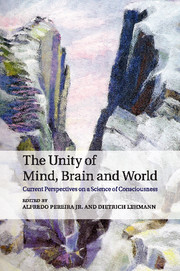
Issues concerning the unity of minds, bodies and the world have often recurred in the history of philosophy and, more recently, in scientific models. Taking into account both the philosophical and scientific knowledge about consciousness, this book presents and discusses some theoretical guiding ideas for the science of consciousness. The authors argue that, within this interdisciplinary context, a consensus appears to be emerging assuming that the conscious mind and the functioning brain are two aspects of a complex system that interacts with the world. How can this concept of reality - one that includes the existence of consciousness - be approached both philosophically and scientifically? The Unity of Mind, Brain and World is the result of a three-year online discussion between the authors who present a diversity of perspectives, tending towards a theoretical synthesis, aimed to contribute to the insertion of this field of knowledge in the academic curriculum.
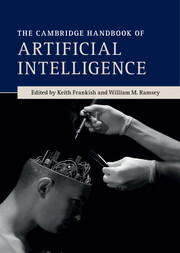
Artificial intelligence, or AI, is a cross-disciplinary approach to understanding, modeling, and creating intelligence of various forms. It is a critical branch of cognitive science, and its influence is increasingly being felt in other areas, including the humanities. AI applications are transforming the way we interact with each other and with our environment, and work in artificially modeling intelligence is offering new insights into the human mind and revealing new forms mentality can take. This volume of original essays presents the state of the art in AI, surveying the foundations of the discipline, major theories of mental architecture, the principal areas of research, and extensions of AI such as artificial life. With a focus on theory rather than technical and applied issues, the volume will be valuable not only to people working in AI, but also to those in other disciplines wanting an authoritative and up-to-date introduction to the field.
This chapter concerns the symbolic artificial intelligence (AI). Both technological and psychological AI employ the full range of AI methodologies, Good Old-Fashioned AI (GOFAI) included. The GOFAI methodology employs programmed instructions operating on formal symbolic representations. It is well suited to the binary, serial nature of the von Neumann digital computer. More accurately, evolutionary programming was initially developed within GOFAI, and is often used in a GOFAI context, although it can also be used for evolving connectionist networks. The major strengths of GOFAI are its abilities to model hierarchy and sequential order, to allow for precision in problem solving, and to represent specific propositional contents. GOFAI planning is even important in video games and Hollywood animation, for example, to prevent the virtual reality characters from bumping into one another. Invisibility is only one reason why GOFAI's successes go largely unsung.