To save content items to your account,
please confirm that you agree to abide by our usage policies.
If this is the first time you use this feature, you will be asked to authorise Cambridge Core to connect with your account.
Find out more about saving content to .
To save content items to your Kindle, first ensure no-reply@cambridge.org
is added to your Approved Personal Document E-mail List under your Personal Document Settings
on the Manage Your Content and Devices page of your Amazon account. Then enter the ‘name’ part
of your Kindle email address below.
Find out more about saving to your Kindle.
Note you can select to save to either the @free.kindle.com or @kindle.com variations.
‘@free.kindle.com’ emails are free but can only be saved to your device when it is connected to wi-fi.
‘@kindle.com’ emails can be delivered even when you are not connected to wi-fi, but note that service fees apply.
Invasive predators can have wide-ranging effects on invaded ecosystems and identifying the prey spectra and preferences of invaders are important steps in assessing their potential impacts on native biota. In this study, we investigated prey preferences of two invasive crab species (Hemigrapsus sanguineus and Hemigrapsus takanoi) that recently invaded Europe's shores and compared them with preferences of native shore crabs (Carcinus maenas) of similar size. In laboratory experiments, all three crab species preferred animal over algal prey. In general, sessile mussels (Mytilus edulis) were preferred over motile amphipods (Gammarus locusta) by all three crab species but amphipod predation was lower in the invasive compared with the native crabs. For the two invasive crab species, this pattern was the same in treatments where prey was offered separately (no-choice treatments) or simultaneously (choice treatments), while for the native crabs, mussel preference disappeared in choice treatments. The general preference of mussels by all three crab species suggests that local invasions of crabs most likely lead to increased competition among crabs. In addition, given that local densities of invasive crabs are often much higher than those of native crabs, predation pressure on native mussels can be expected to strongly increase at invaded sites. In contrast, local predation pressure on amphipods may be less affected by the crab invasions. Further field studies are needed to establish the magnitude of competition and predation pressure exerted by the invaders under natural conditions.
Saccular otolith shape and size were analysed for the first time in 120 adult individuals of D. vulgaris collected from two localities, the Bizerte and Ghar El Melh lagoons (north-east Tunisia). The objectives were (1) to examine the specific inter- and intra-individual variation in the otolith shape using elliptical Fourier analysis combined with measures of length (LO), width (WO) and area (AO); (2) to use the otolith shape and size analysis as a phenotypic-based approach to discriminate the stock structure of this species in the two localities to investigate whether they represent two separate stocks to inform on appropriate management procedures; and (3) to test for biases resulting from potential fluctuating asymmetry (FA) in the otolith size on the discrimination of stock structure. Discriminant function analysis performed with the normalized elliptical Fourier descriptors coefficients showed statistically significant differences (P < 0.0001) in the otolith contour shape, i.e. asymmetry, either between the left and right sides or between the same sides (left-left and right-right) within and among individuals of the two localities. Besides, a significant asymmetry (P < 0.05) was found in WO and AO among individuals within the Bizerte locality and in WO only within the Ghar El Melh locality. Moreover, significant FA was observed in the otolith size parameters among individuals of the two localities. This significant asymmetry detected in the otolith shape, as well as in the size due to FA, within and among individuals of D. vulgaris collected from the Bizerte and Ghar El Melh localities confirms that the two stocks could be discriminated from each other and should be managed separately. This asymmetry is discussed in light of the instability of development caused either by environmental stress associated with the variation in water temperature, salinity, depth, feeding conditions and pollutants that have led to abnormalities in the development of individuals or by the presence of poor living conditions for the larvae resulting from unfavourable environments.
Understanding the structure and richness of natural communities is a fundamental goal of marine ecology, and foundation species such as large macroalgae have a disproportionate role in structuring biodiversity. However, high-resolution information on assemblages associated with macroalgae is lacking for many species and regions. Saccorhiza polyschides is a warm-temperate kelp with a relatively short lifespan (12–18 months), large thallus and bulbous holdfast offering habitat for diverse assemblages. In the UK, S. polyschides populations are thought to have proliferated recently. Here, we quantified the density and habitat structure provided by S. polyschides along a gradient of wave exposure within Plymouth Sound, and examined the composition and diversity of associated faunal assemblages. Density varied significantly between sites but not by wave exposure, while biometric measurements were generally highly variable. Senescing holdfasts from sporophytes offered valuable habitat, with high abundance and richness of associated assemblages, although these varied markedly between sporophytes and sites. Faunal abundance, taxon richness and diversity were significantly higher at fully exposed sites than at moderately exposed sites. Internal volume of holdfasts was positively correlated with faunal abundance and taxon richness. We recorded more than 27 distinct taxa and up to ~600 individuals within a single holdfast. Taxa included three fish species, including a novel observation of the pipefish Nerophis lumbriciformis. Further work is needed to examine seasonality in habitat structure and associated diversity patterns but our study demonstrates that even remnant holdfasts from decaying sporophytes represent a valuable microhabitat that may provide shelter, protection and food during winter.
Phtytoplankton group composition determined by microscopy was compared with high performance liquid chromatography (HPLC) derived from pigment signatures in surface water samples taken bi-weekly and monthly between October 2018 and September 2019 in the Golden Horn Estuary (Sea of Marmara). A total of 80 eukaryotic phytoplankton taxa belonging to eight algal classes were identified in surface water during the study period. Forty-three taxa (54%) were diatoms, 29 taxa (36%) were dinoflagellates and eight taxa (10%) were other phytoflagellates. The average contribution of diatoms to total phytoplankton abundance decreased considerably (41 to 25%), while the average contribution of dinoflagellates and other phytoflagellates increased markedly (59 to 75%) from the lower to the middle estuary. Chlorophyll-a and seven other group-specific pigments, including fucoxanthin, peridinin, chlorophyll-c1 + c2, alloxanthin, 19′-hexanoyloxyfucoxanthin, 19′-butanoyloxyfucoxanthin and divinyl chlorophyll-a were identified in the study area. The relative contribution of the major phytoplankton groups to chlorophyll-a was estimated on three different initial ratio matrices by CHEMTAX. The results obtained were compared with those from microscopic examination. It was concluded that the CHEMTAX method was not accurate enough to characterize the phytoplankton community in the Golden Horn Estuary ecosystem and microscopic analysis was essential to determine the major contributing species to chlorophyll-a.
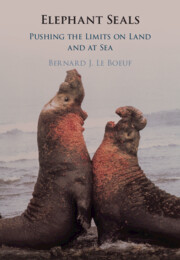
How did the elephant seal survive being driven to the brink of extinction in the nineteenth century? What variables determine the lifetime reproductive success of individual seals? How have elephant seals adapted to tolerate remarkable physiological extremes of nutrition, temperature, asphyxia, and pressure? Answering these questions and many more, this book is the result of the author's 50-year study of elephant seals. The chapters cover a broad range of topics including diving, feeding, migration and reproductive behavior, yielding fundamental information on general biological principles, the operation of natural selection, the evolution of social behavior, the formation of vocal dialects, colony development, and population changes over time. The book will be a valuable resource for graduate students and researchers of marine mammal behavior and reproductive life history as well as for amateur naturalists interested in these fascinating animals.
In the study, we compare the shell shape morphometrics in four species of neritid gastropods (Nerita fulgurans, Nerita tessellata, Nerita peloronta and Nerita versicolor), collected in Accra Beach (Barbados Island). We tested the hypothesis that the morphometric ratios can be used as a tool in the taxonomic determination among these four species of neritids. For this we determine the morphometric ratios from the external (length, height, width) and internal (shell aperture length, shell aperture width) measures. A principal component analysis (PCA) was used to determine which ratios were significant, and subsequently the proposed hypothesis was tested using the Kruskal–Wallis test. The morphometric ratios AW/H and AL/L were decisive in distinguishing the four species of neritids studied. In this study, the hypothesis of the efficacy of the use of shell morphometric ratios as an instrument in taxonomic studies was corroborated for the four species. Due to its low cost, this methodology can be applied in the recognition of species that have lost their external characteristics such as operculum, spire or colour and also in the identification of fossil specimens.
Lichens are a well-known symbiosis between a host mycobiont and eukaryote algal or cyanobacterial photobiont partner(s). Recent studies have indicated that terrestrial lichens can also contain other cryptic photobionts that increase the lichens’ ecological fitness in response to varying environmental conditions. Marine lichens live in distinct ecosystems compared with their terrestrial counterparts because of regular submersion in seawater and are much less studied. We performed bacteria 16S and eukaryote 18S rRNA gene metabarcoding surveys to assess total photobiont diversity within the marine lichen Lichina pygmaea (Lightf.) C. Agardh, which is widespread throughout the intertidal zone of Atlantic coastlines. We found that in addition to the established cyanobacterial photobiont Rivularia, L. pygmaea is also apparently host to a range of other marine and freshwater cyanobacteria, as well as marine eukaryote algae in the family Ulvophyceae (Chlorophyta). We propose that symbiosis with multiple freshwater and marine cyanobacteria and eukaryote photobionts may contribute to the ability of L. pygmaea to survive the harsh fluctuating environmental conditions of the intertidal zone.
Responses of corals to seawater acidification have been extensively studied. Sensitivity varies widely between species, highlighting the need to avoid extrapolation from one to another to get an accurate understanding of coral community responses. We tested the responses of seven coral species (Acropora cytherea, Acropora hyacinthus, Acropora pulchra, Leptastrea pruinosa, Montipora grisea, Pavona cactus, Pocillopora verrucosa) from the Mo'orea lagoon to a 48-day exposure to three pH scenarios (pH 7.95, 7.7 and 7.3). Tissue necrosis, mortality, growth rates, photophysiological performances and colour index were recorded. Few significant differences were noted between pH 7.95 and 7.7, but species-specific responses were observed at pH 7.3. While our data do not allow identification of the mechanisms behind this diversity in response between species inhabiting the same environment, it can exclude several hypotheses such as local adaptation, skeletal type, corallum morphology or calcification rate as sole factors determining coral sensitivity to pH.
In the previous chapters we have discussed how to succeed in obtaining resources by attempting to be quicker (race) or stronger (fight) than competitors. The third principle tactic to cope with competition for resources is to share them, which involves conceding a quota to competitors. This may prove to be a better choice than either racing or fighting, particularly if these tactics are too costly or unprofitable because of limited competitiveness, or due to concordance of fitness interests (Frank 2003; Taborsky et al. 2016). Sharing can also be favoured if coordinating or cooperating with other individuals increases the value of a resource, or helps to produce resources (Clark & Mangel 1986; Garfinkel & Skaperdas 2007; e.g. in cooperative hunting: Packer & Ruttan 1988; Dumke et al. 2018). Cooperation often guarantees the most efficient use of resources, because of synergistic effects (Maynard Smith 1982b; Queller 1985; Hauert et al. 2006; Gore et al. 2009; Cornforth et al. 2012; Van Cleve & Akcay 2014; Corning & Szathmary 2015). For instance, if several individuals coordinate to capture a prey that is normally difficult or risky to hunt on their own, each individual predator may gain more food at lower cost. Similarly, raising offspring in a group may allow individuals to specialize in different tasks, such as tending young, warding off predators and supplying resources, which enhances the efficiency of offspring care.
Humans exhibit a rare life history in which females stop reproducing midway through life. Only a handful of other wild mammals exhibit a similar menopausal life history. The theory of kin selection suggests that post-reproductive survival can be favoured where older females confer fitness benefits on their offspring (the grandmother hypothesis). Numerous studies have shown that older females do help to boost the fitness of their offspring, but such helping benefits are too small to favour reproductive cessation in humans at the observed age of 40–50 years old. Recent models of ‘kinship dynamics’ suggest that reproductive conflict between generations is a missing factor in the evolution of post-reproductive lifespan. The models further suggest that humans and some cetaceans are predisposed to the evolution of menopause as a consequence of their unusual, and distinct, patterns of mating and dispersal, providing an explanation for the strange taxonomic distribution of this trait. Tests of these models in humans support the predicted effect of demography on patterns of kinship and provide evidence of intergenerational reproductive conflict in some societies. Recent tests of the models in a wild population of another menopausal mammal, the killer whale, have found strong support for the model predictions. Studies of the family conflict in other long-lived mammals can shed new light on how the unusual human life history evolved.
The previous chapter examined the factors that shape the evolution of competitive behaviour, focusing primarily on forms of scramble competition or racing to consume or exploit resources. Competition also occurs between individuals that interact repeatedly – what we term social conflict – which may lead to the evolution of more complex strategies of competition. In some circumstances, individuals may be selected to put their differences aside and work together as a team to outcompete other teams. Such transitions from outright conflict to cooperation have been called ‘major transitions in evolution’. The theory of major transitions tries to explain how and why many forms of life have become more complex over time, from self-replicating molecules to animal societies. Understanding how major transitions occur requires an explanation of how individual conflicts of interest can be suppressed for the good of the group. Many of the major transitions in evolution happened billions or hundreds of millions of years ago, and are difficult to study. However, a recent major transition occurred with the evolution of cooperative animal societies from solitary ancestors, and hence these societies are tractable systems to investigate how strategies of conflict and cooperation coevolve. This chapter explores the forms of conflict that arise in cooperative societies, and the social behaviours that individuals use to shift the resolution of conflict in their own favour, from aggression and escalated fighting to more subtle forms of negotiation. We show how selection can lead to the suppression of competition and peaceful resolution of conflict among social partners, uniting their fitness interests and paving the way for the final stage of a major transition, the evolution of a new, higher level of biological complexity.
Competition for resources is the fundamental process generating selection on social behaviour. Individuals compete with family members, with other conspecifics, and with the members of other species for food, shelter and other resources that are essential for survival and reproduction. Conspecifics also compete for access to social partners and mates, and hence selection acting on strategies of social competition is particularly intense (West-Eberhard 1979). However, competition is not simply a repellent force in the lives of organisms, driving them apart; it is often a social attractor, bringing individuals together and setting the stage for social evolution. In particular, where resources such as food and mates are clumped in the environment or predictable in time, competition has the effect of drawing individuals together into aggregation and possible social interaction, selecting for strategies that maximize fitness by exploiting, parasitizing, following, or even cooperating with other individuals of the same or different species.