To save content items to your account,
please confirm that you agree to abide by our usage policies.
If this is the first time you use this feature, you will be asked to authorise Cambridge Core to connect with your account.
Find out more about saving content to .
To save content items to your Kindle, first ensure no-reply@cambridge.org
is added to your Approved Personal Document E-mail List under your Personal Document Settings
on the Manage Your Content and Devices page of your Amazon account. Then enter the ‘name’ part
of your Kindle email address below.
Find out more about saving to your Kindle.
Note you can select to save to either the @free.kindle.com or @kindle.com variations.
‘@free.kindle.com’ emails are free but can only be saved to your device when it is connected to wi-fi.
‘@kindle.com’ emails can be delivered even when you are not connected to wi-fi, but note that service fees apply.
Social life demands complex strategies for coordinating and competing with others. In humans, these strategies are supported by rich cognitive mechanisms, such as theory of mind. Theory of mind (i.e., mental state attribution, mentalizing, or mindreading) is the ability to track the unobservable mental states, like desires and beliefs, that guide others’ actions. Deeply social animals, like most nonhuman primates, would surely benefit from the adept capacity to interpret and predict others’ behavior that theory of mind affords. Yet, after forty years of investigation, the extent to which nonhuman primates represent the minds of others remains a topic of contentious debate. In the present chapter, we review evidence consistent with the possibility that monkeys and apes are capable of inferring others’ goals, perceptions, and beliefs. We then evaluate the quality of that evidence and point to the most prominent alternative explanations to be addressed by future research. Finally, we take a more broadly phylogenetic perspective, to identify evolutionary modifications to social cognition that have emerged throughout primate evolutionary history and to consider the selective pressures that may have driven those modifications. Taken together, this approach sheds light on the complex mechanisms that define the social minds of humans and other primates.
The seminal work on mirror self-recognition, theory of mind, and ape-language abilities beginning in the 1960s has stimulated a recent, significant body research on the cognitive abilities of animals. Because of their greater genetic, morphological, and neuroanatomical similarities with humans, research on cognition in nonhuman primates has held a particular fascination from scientific and public perspective. In this chapter, we present a summary of recent studies by our research group on the general intelligence of chimpanzees. We further present data on (1) the contribution of genetic and non-genetic factors in explaining individual variation in cognitive performance in the chimpanzees and (2) phenotypic, genetic, and environmental associations found between chimpanzee cognition and neuroanatomical organization. We end by discussing limitations in the study of cognition and emphasize the need to include individual as well as grouped data in the reporting of results. We also offer some suggestions for future research that would provide new insight into the evolution of human unique cognitive abilities.
Mental time travel involves remembering personal past events (i.e., episodic memory) and thinking about future ones (i.e., future thinking). Despite empirical evidence showing that animals might be capable of mental time travel, some still remain skeptical about this issue. The aim in this chapter will be to reflect on the concept of episodic memory and future thinking as well as on the experimental approaches used in comparative psychology to study these abilities. A critical analysis of both the conceptualization of mental time travel and the experimental paradigms will be provided. I will finish by questioning the extent to which the sense of past has been addressed in this type of research and by suggesting lines of future research.
Replication is an important tool used to test and develop scientific theories. Areas of biomedical and psychological research have experienced a replication crisis, in which many published findings failed to replicate. Following this, many other scientific disciplines have been interested in the robustness of their own findings. This chapter examines replication in primate cognitive studies. First, it discusses the frequency and success of replication studies in primate cognition and explores the challenges researchers face when designing and interpreting replication studies across the wide range of research designs used across the field. Next, it discusses the type of research that can probe the robustness of published findings, especially when replication studies are difficult to perform. The chapter concludes with a discussion of different roles that replication can have in primate cognition research.
The difference between humans and other primates has often been attributed to humans’ unique ability to learn language and more specifically, represent complex sequential and grammatical structures. Even in the case of language-trained apes, the animals are severely limited in how they put together strings of their learned symbols. This led to theories that this limitation is due to animals’ inability to represent the complex sequential and grammatical patterns needed for language. However, work testing the types of sequences and artificial grammars that nonhuman primates can represent has come a long way. Studies have shown that like humans, nonhuman primates can represent adjacent dependencies, ordinal sequences, and algebraic patterns. Until recently, the types of sequential structures attested in nonhuman animals have been limited to these linear sequences. However, recent work has shown that even in some of the most complex forms of grammatical structures, long-distance dependence and recursive sequences are within the limits of the nonhuman mind.
When George John Romanes published his book Animal Intelligence in 1882, marking for many the beginning of the study of comparative cognition, he devoted chapter 17 to the mental life of “Monkeys, Apes, and Baboons.” His subsequent experiments on the mental powers of zoo chimpanzees would be published in Science (Romanes, 1889) and Nature (Romanes, 1890). Around the turn of the last century, Edward Thorndike of Columbia University and A. J. Kinnaman of Clark University conducted laboratory studies on the intelligence of capuchin and rhesus monkeys, respectively. Thus, from psychology’s earliest days as an experimental science, nonhuman primate cognition was a focus of interest and investigation. Many of the best-known and most influential psychologists in history – names like Watson, Yerkes, Köhler, Harlow, Lashley, Hebb, Premack, Rumbaugh, and countless others – made significant contributions to our understanding of learning and cognition through studies of monkeys and apes. Although the history of cognitive research with nonhuman primates is too long and too rich to be reviewed exhaustively in one chapter, the present introduction will highlight significant research themes and important milestones across the history of primate cognition research. The goal of this review is to show how contemporary comparative cognition research is intricately connected to its history, and how our understanding of primate cognition shows cumulative progress across the last 140 years of inquiry.
Cognition is the use of information to solve problems, and the evolution of cognition is the natural history of the application of problem-solving capacities to adaptive problems. The ecological contexts in which primates apply their cognitive capacities vary substantially, and therefore the specific problems pertaining to fitness – finding mates, finding food, predator avoidance, and so forth – elicit systematic patterns of comportment through these different environments. A central debate in comparative cognition concerns the degree to which cognitive abilities are shaped by natural selection: this is the question of whether any given problem-solving skill reflects the application of domain-general or domain-specific cognitive capacities. The debate over whether the demands of foraging or the complexity of the social environment exerts the greater force on brain evolution and behavior exemplifies that the kinds of questions that can be asked about cognitive evolution significantly depend on one’s prior commitment to the domain-specificity of adaptive behavior. It remains a relatively open question whether there are cognitive specializations for navigating the physical world that are qualitatively distinct from specializations for navigating the social world. There is a panoply of investigative methods for eliciting problem-solving behavior in captive populations of primates, but there is also an emerging tension between proponents of ecological and internal validity, respectively. Here, I will argue that artificial, captive environments are, nevertheless, ecologically comprised and that the study of captive animals follows a long tradition of perturbation studies in ethology. I will finish with a number of case studies of primate cognition from both wild and captive environments.
A review by the ManyPrimates project confirmed long-standing beliefs about the field of primate cognition. Namely, research is driven by a handful of species, often from the same study site, and inferences are limited by small sample sizes. However, the review did not address another common practice in primate cognition: sampling only adults. Whereas adult data have been useful for comparisons to human literature for understanding cognitive abilities on an evolutionary timescale, these studies do not allow investigators to ask questions about the developmental processes underlying primate cognition. The purpose of this secondary systematic review was to provide a state of the field on developmental primate cognition by answering the following questions about recent publications using the ManyPrimates dataset: (1) how often investigators sampled infants and/or juveniles separately from adults; (2) when infants and/or juveniles were included with adults, how often was age analyzed statistically; (3) how often were studies longitudinal; (4) what topics have been studied; and (5) what techniques have been used. Results revealed that the typical recent primate cognition study did not incorporate development. Practical challenges that may preclude investigators from pursuing developmental research questions in primate cognition are discussed with recommendations to guide future research.
How do nonhuman primates process information about their social and physical world, and how do they make decisions? To address this question, research in the tradition of ethology and behavioral ecology aims to uncover how animals behave under ecological and evolutionarily valid conditions. By combining detailed observations of behavior in the wild with field experimentation, such studies have shed light on what primates know about predators, their home ranges and food sources, and their social environment. A second research stream takes non-naturalistic experiments into freely moving groups of wild or captive primates to test social learning, problem-solving skills, and motivation. Finally, captivity-based studies address a wide range of questions, using an array of different methodological approaches, often with the aim to explore the limits of the animals’ abilities. This chapter compares the strengths and the limitations of the different research streams and proposes an integrative approach to developing a profound understanding of primate cognition.
Empathy, the capacity to share and understand others’ states, is crucial for facilitating enduring social relationships and managing ingroup and outgroup dynamics. Despite being at the center of much scrutiny and debate in human research, the evolutionary foundations of empathy remain relatively opaque. Moreover, inconsistencies remain regarding definitions and theoretical models, leading to discrepancies in how to systematically represent and address empathy and understand its evolutionary basis. As a complex, multidimensional phenomenon, certain components of empathy are likely to be evolutionarily ancient whereas others may be more derived. As our closest living relatives, nonhuman primates provide an opportunity to explore the evolutionary origins of empathy and its subcomponents. Due to the rich diversity of primate societies, we can comparatively study evidence of affective responding and empathic behavior within the context of different social dynamics and organization. Although studies have been conducted on individual primate species, especially the great apes, direct species comparisons are rare. Here we examine the literature investigating evidence for empathy among primates focusing on its underlying affective and cognitive components. In reviewing the literature, we also highlight species that need more coverage to enhance our overall understanding of how empathy has evolved within the primate order.
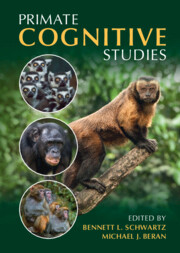
What is the purpose of studies of primate cognition, and how should one best study primate cognition? This book answers those questions, and it highlights some of the most recent and compelling evidence regarding the cognitive abilities of primate species. This book describes the goals of studying primate cognition (historically, and in the present), and how such studies teach us about the minds of our closest living relatives, as well as about our own minds. Primate cognitive studies illustrate important aspects of the origins of human cognition, and they provide a measure of connectedness between humans and other primates. Topics range across nearly all those typically seen in a book of human cognition: perception, representation, categorization, memory, decision-making, communication and language, numerical cognition, metacognition, and theory of mind, among others. This book also describes the varied setting in which primates can be studied, and the range of experimental and observational approaches that are typically used. Some authors address questions about the ethics of working with nonhuman primates, as well as the concerns that have emerged about replication and reproducibility of results that are reported in primate cognitive research.
We review the main ecological and socio-cognitive hypotheses explaining the origin and evolution of tool use in primates. Whereas it is clear that recent studies have deepened our understanding of tool use in several domains, a more integrated approach will be necessary to further advance the field and place this information into a broader evolutionary context. We suggest a combined Comparative Socio-ecological and Developmental Approach (CSDA), which incorporates phylogenetic and ontogenetic perspectives with the ecological and socio-cognitive drivers of tool use as a means to clarify the integrated mechanisms that promote the emergence and maintenance of tool-using skills in primates, including humans.
We report for the first time the effects of vehicle traffic and beachgoer trampling on macrobenthic communities of Amazonian sandy beaches. Sampling was performed during four consecutive months with different beach use intensity in 2017 (before, during vacation, and two months after the vacation period) on three contrasting beaches with regard to disturbance (Urban: Atalaia; Intermediate: Farol-Velho; and Protected: Corvinas) in the intertidal zone along two equidistant transects at seven equidistant sampling stations from the high-tide water mark to the swash zone. At each sampling station, four biological and sediment samples were randomly collected. Also, in each station, the sediment compaction was determined using a manual penetrometer. Physical sediment variables remained constant over time in all beaches, whereas differences were found in sediment compaction over the months. Macrobenthic community differences in density and richness among months were observed at Atalaia and Farol-Velho beaches. In contrast, Corvinas beach remained constant throughout the study period. Furthermore, the vulnerability of the polychaetes Thoracophellia papillata, Scolelepis squamata and Paraonis sp. indicates that they might be potential indicators of recreational activity impact.
Sea urchins have important effects on marine ecosystems such as rocky shores and coral reefs across the world. However, species diversity and molecular phylogeny of most echinoid taxa are poorly known in Iran. In this study, the phylogenetic relationships of one of the most abundant species of the genus Echinometra in the Persian Gulf were examined. Echinoids were collected from the intertidal zone of Qeshm Island and Lengeh Port on March and December 2017. Morphological criteria based on valid identification keys combined with molecular analysis of a fragment of the mitochondrial cytochrome c oxidase subunit I (COI) protein-coding gene were used to delineate Echinometra species. Our analyses showed that all specimens (N = 15) belong to Echinometra sp. EZ. Tree topologies indicated that our individuals from two sampling sites formed a distinct monophyletic clade with E. sp. EZ, demonstrating high support values. This is the first phylogenetic analysis of E. sp. EZ from Iran.
Maintenance of eukaryotic microalgae strains for the long term is generally carried out using serial subculture techniques which require labour, time and cost. Cryopreservation techniques provide long-term storage of up to years for numerous microorganism strains and cell cultures. Ssu930ijn vbvbhnn8;l,n is related to a successfully designed mass and heat transfer balance throughout the cell. In this study, optimization of the cryopreservation process was carried out for two commercially used microalgal strains. The parameters to be optimized were DMSO percentage (0–25%), incubation time (1–15 min) and cryopreservation term (7–180 days) using a central composite design (CCD). Long-term storage up to 123.17 and 111.44 days corresponding to high cell viabilities was achieved for Chlorella vulgaris and Neochloris texensis, respectively. Generated models were found to be in good agreement with experimental results. The study also revealed holistic results for storage of microalgal strains in a stable state for industrial applications.
Researchers have studied non-human primate cognition along different paths, including social cognition, planning and causal knowledge, spatial cognition and memory, and gestural communication, as well as comparative studies with humans. This volume describes how primate cognition is studied in labs, zoos, sanctuaries, and in the field, bringing together researchers examining similar issues in all of these settings and showing how each benefits from the others. Readers will discover how lab-based concepts play out in the real world of free primates. This book tackles pressing issues such as replicability, research ethics, and open science. With contributors from a broad range of comparative, cognitive, neuroscience, developmental, ecological, and ethological perspectives, the volume provides a state-of-the-art review pointing to new avenues for integrative research.