Refine search
Actions for selected content:
961 results in Property Law
Acknowledgements
-
- Book:
- The Right to Buy?
- Published by:
- Bristol University Press
- Published online:
- 05 April 2022
- Print publication:
- 31 May 2016, pp viii-viii
-
- Chapter
- Export citation
References
-
- Book:
- The Right to Buy?
- Published by:
- Bristol University Press
- Published online:
- 05 April 2022
- Print publication:
- 31 May 2016, pp 169-178
-
- Chapter
- Export citation
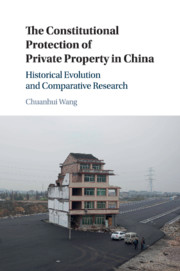
The Constitutional Protection of Private Property in China
- Historical Evolution and Comparative Research
-
- Published online:
- 05 February 2016
- Print publication:
- 25 January 2016
Contents
-
- Book:
- The Constitutional Protection of Private Property in China
- Published online:
- 05 February 2016
- Print publication:
- 25 January 2016, pp vii-viii
-
- Chapter
- Export citation
3 - The private property protection in China's constitutions
-
- Book:
- The Constitutional Protection of Private Property in China
- Published online:
- 05 February 2016
- Print publication:
- 25 January 2016, pp 45-97
-
- Chapter
- Export citation
5 - Unjustcompensation
-
- Book:
- The Constitutional Protection of Private Property in China
- Published online:
- 05 February 2016
- Print publication:
- 25 January 2016, pp 176-245
-
- Chapter
- Export citation
Glossary
-
- Book:
- The Constitutional Protection of Private Property in China
- Published online:
- 05 February 2016
- Print publication:
- 25 January 2016, pp xiv-xiv
-
- Chapter
- Export citation
Dedication
-
- Book:
- The Constitutional Protection of Private Property in China
- Published online:
- 05 February 2016
- Print publication:
- 25 January 2016, pp v-vi
-
- Chapter
- Export citation
7 - Concluding remarks and suggested reform measures
-
- Book:
- The Constitutional Protection of Private Property in China
- Published online:
- 05 February 2016
- Print publication:
- 25 January 2016, pp 301-322
-
- Chapter
- Export citation
Acknowledgements
-
- Book:
- The Constitutional Protection of Private Property in China
- Published online:
- 05 February 2016
- Print publication:
- 25 January 2016, pp xi-xiii
-
- Chapter
- Export citation
6 - Ineffective procedural and institutional mechanisms
-
- Book:
- The Constitutional Protection of Private Property in China
- Published online:
- 05 February 2016
- Print publication:
- 25 January 2016, pp 246-300
-
- Chapter
- Export citation
2 - Privateproperty and its constitutionalisation
-
- Book:
- The Constitutional Protection of Private Property in China
- Published online:
- 05 February 2016
- Print publication:
- 25 January 2016, pp 11-44
-
- Chapter
- Export citation
4 - The symbolisedpublic interest
-
- Book:
- The Constitutional Protection of Private Property in China
- Published online:
- 05 February 2016
- Print publication:
- 25 January 2016, pp 98-175
-
- Chapter
- Export citation
Cases and incidents
-
- Book:
- The Constitutional Protection of Private Property in China
- Published online:
- 05 February 2016
- Print publication:
- 25 January 2016, pp xv-xviii
-
- Chapter
- Export citation
Foreword
-
- Book:
- The Constitutional Protection of Private Property in China
- Published online:
- 05 February 2016
- Print publication:
- 25 January 2016, pp x-x
-
- Chapter
- Export citation
Index
-
- Book:
- The Constitutional Protection of Private Property in China
- Published online:
- 05 February 2016
- Print publication:
- 25 January 2016, pp 340-355
-
- Chapter
- Export citation
Bibliography
-
- Book:
- The Constitutional Protection of Private Property in China
- Published online:
- 05 February 2016
- Print publication:
- 25 January 2016, pp 323-339
-
- Chapter
- Export citation
Copyright page
-
- Book:
- The Constitutional Protection of Private Property in China
- Published online:
- 05 February 2016
- Print publication:
- 25 January 2016, pp iv-iv
-
- Chapter
- Export citation
Contents
-
- Book:
- The Constitutional Protection of Private Property in China
- Published online:
- 05 February 2016
- Print publication:
- 25 January 2016, pp ix-ix
-
- Chapter
- Export citation
1 - Introduction
-
- Book:
- The Constitutional Protection of Private Property in China
- Published online:
- 05 February 2016
- Print publication:
- 25 January 2016, pp 1-10
-
- Chapter
-
- You have access
- HTML
- Export citation
