To save content items to your account,
please confirm that you agree to abide by our usage policies.
If this is the first time you use this feature, you will be asked to authorise Cambridge Core to connect with your account.
Find out more about saving content to .
To save content items to your Kindle, first ensure no-reply@cambridge.org
is added to your Approved Personal Document E-mail List under your Personal Document Settings
on the Manage Your Content and Devices page of your Amazon account. Then enter the ‘name’ part
of your Kindle email address below.
Find out more about saving to your Kindle.
Note you can select to save to either the @free.kindle.com or @kindle.com variations.
‘@free.kindle.com’ emails are free but can only be saved to your device when it is connected to wi-fi.
‘@kindle.com’ emails can be delivered even when you are not connected to wi-fi, but note that service fees apply.
This chapter extends the assignment-variable-based analysis of headed relative constructions in Chapter 6 to quantifier phrases with nonrelative complements. Crosslinguistic diachronic, morphological, and syntactic data are examined in support of a generalized D+XP analysis. Applications of the assignment-quantificational syntax/semantics for quantifier phrases include phenomena with “specificity,” contextual domain restriction, and distinctions between modifier (“free R”) readings and argument (“inherent R”) readings of genitives. The treatment of donkey pronouns in Chapter 6 is extended to bound-variable readings, reflexives, and other types of apparent non-c-command anaphora, such as with genitive binding and inverse linking. The account’s distinction between trace-binding and pronoun-binding is exploited in a speculative account of weak crossover.
This chapter is reserved for issues that surfaced in previous chapters but for some reason or other could not be discussed there in any detail. On the one hand, the chapter looks at the framework outlined in Chapter 2 from a wider perspective. It is argued that the presence of two contrasting mechanisms is suggestive of a dual process model of the kind described in work on discourse analysis, neurolinguistics, and social psychology. On the other hand, the chapter shows that whereas the pathways leading to grammaticalization are highly constrained, those leading to the rise of discourse markers are almost unlimited. Further topics discussed in the chapter concern the structure of constituent anchored discourse markers and the role played by imperative forms in the rise of discourse markers. Finally, the chapter also looks into the role of a more marginal category of discourse-structuring devices, namely that of fillers or "hesitation markers."
The development of discourse markers is commonly believed to be a language-internal process. In this chapter it is demonstrated, however, that new discourse markers quite commonly also arise in situations of language contact. A range of borrowing processes are discussed, showing in particular that the borrowing process may extend across countries and continents. The Spanish discourse marker entonces "then, therefore, thus," for example, spread from Europe to Central and South America, Africa, and the Pacific Ocean area.
This chapter develops an approach to questions as sets of possible answers, with answers now construed as sets of assignments (possibilities). Type-driven movement of the question operator introduces quantification over assignments. Compositional derivations are provided for various types of shifting phenomena, such as in yes/no questions, wh questions, “interrogative flip,” and conditional and correlative questions. Additional topics for discussion include D-linking and weak crossover with wh words; commonalities among interrogative, conditional, and correlative clauses; and comparisons among expressions analyzed as choice-function pronouns throughout the book (wh words, relative words, indefinites, anaphoric proforms, names).
This chapter summarizes the findings presented in the book. As demonstrated in the preceding chapters, the rise of discourse markers is the result of a more complex process involving two separate mechanisms, namely grammaticalization and cooptation. It is argued that the framework used in the book offers an explanation of why discourse markers have the grammatical properties they do.
In this chapter, the framework proposed in Chapter 2 is applied to the history of Japanese. The discourse markers studied are dakedo, demo, douride, ga, jijitsu, sate, and wake. The findings presented are in support of the hypothesis proposed in Section 1.5, according to which discourse markers are the joint product of two separate mechanisms, with each of the mechanisms accounting for specific properties of discourse markers.
This chapter introduces key elements of the basic syntax and semantics. Topics of discussion include the treatments of compositional semantic value, assignment functions and variables for assignments, pronouns and traces, and quantification in object language and metalanguage. A preliminary compositional semantic derivation is provided.
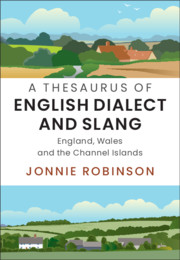
A thesaurus of present-day vernacular English from Berwick-upon-Tweed to the Channel Islands, this unique record of everyday English celebrates established regional dialects, emerging new varieties and colloquial forms young and old. Based on a prestigious nationwide survey, BBC Voices Recordings, it documents the linguistic landscape of England, Wales and the Channel Islands in the 21st century, and includes over 3000 separate entries, drawn from over 200 locations across the country. Each entry contains information about the term's origins, location and the social distribution of its users. With links to original sound files and cross-references to complementary dictionary sources, it is an authoritative reference work for academic linguists, but its accessible presentation also makes it suitable for creative audiences and non-specialist language enthusiasts seeking authentic, up-to-date information on British English dialect and slang, and for English language teachers and learners as an invaluable educational tool.
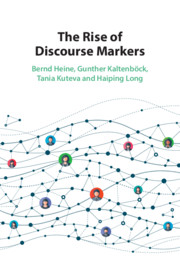
Discourse markers constitute an important part of linguistic communication, and research on this phenomenon has been a thriving field of study over the past three decades. However, a problem that has plagued this research is that these markers exhibit a number of structural characteristics that are hard to interpret based on existing methodologies, such as grammaticalization. This study argues that it is possible to explain such characteristics in a meaningful way. It presents a cross-linguistic survey of the development of discourse markers, their important role in communication, and their relation to the wider context of sociocultural behaviour, with the goal of explaining their similarities and differences across a typologically wide range of languages. By giving a clear definition of discourse markers, it aims to provide a guide for future research, making it essential reading for students and researchers in linguistics, and anyone interested in exploring this fascinating linguistic phenomenon.
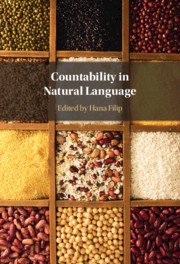
This book focuses on current theoretical and empirical research into countability in the nominal domain, and to a lesser extent in the verbal domain. The presented state-of-the-art studies are situated within compositional semantics combined with the theory of mereology, and draw on a wealth of data, some of which have hitherto been unknown, from a number of typologically distinct languages. Some contributions propose enrichments of classical extensional mereology with topological and temporal notions as well as with type theory and probabilistic models. The book also presents analyses that rely on cutting-edge empirical research (experimental, corpus-based) into meaning in language. It is suitable as a point of departure for original research or material for seminars in semantics, philosophy of language, psycholinguistics and other fields of cognitive science. It is of interest not only to a semanticist, but also to anybody who wishes to gain insights into the contemporary research into countability.
The contribution of our paper is thus twofold. First, it documents the phenomenon of the singulative operation in the Galilee dialect of Palestinian Arabic. Second, we show that the singulative operator is predictably constrained in what nouns it applies to, and that the output of the operation varies depending on the properties of the denotation of the input noun - whether it denote liquids, granular substances, solid matter or a collection of individuals. To the best of our knowledge, while the singulative operation is recognized as part of Modern Standard Arabic grammar as well in at least some dialects, this kind of systematic semantic mapping between denotation of the input and denotation of the output has not yet been carried out before.