To save content items to your account,
please confirm that you agree to abide by our usage policies.
If this is the first time you use this feature, you will be asked to authorise Cambridge Core to connect with your account.
Find out more about saving content to .
To save content items to your Kindle, first ensure no-reply@cambridge.org
is added to your Approved Personal Document E-mail List under your Personal Document Settings
on the Manage Your Content and Devices page of your Amazon account. Then enter the ‘name’ part
of your Kindle email address below.
Find out more about saving to your Kindle.
Note you can select to save to either the @free.kindle.com or @kindle.com variations.
‘@free.kindle.com’ emails are free but can only be saved to your device when it is connected to wi-fi.
‘@kindle.com’ emails can be delivered even when you are not connected to wi-fi, but note that service fees apply.
This chapter is about semantic annotation, discussed from formal and computational perspectives. Annotation is viewed as a scholarly technique or methodology. This chapter explains what annotation was in general and is now, how annotation has gradually developed and become applicable to the automatic building of larger data in language, and what applications semantic annotation aims at and what principles govern the modeling of semantic annotation schemes. There are two governing principles discussed: the partiality and situatedness of information to be annotated. I also mention the use of machine learning techniques for the automatic annotation of language data, which is represented either in a textual form or in a graphic form.
This chapter introduces a concrete syntax. It is ideally isomorphic to an abstract syntax that specifies a semantic annotation scheme, while providing a format for representing annotation structures. This format can represent them either in a serialized way from left to right, or in graphic images or tabular forms with linking arrows. Representation formats may vary, depending on kinds of the use of annotation. Human readers, for instance, prefer tabular formats especially for illustrations or demonstrations. For the purposes of merging, comparing, or exchanging various types of annotations or different annotations of the same type, graphs are considered useful. In this chapter, I introduce a graphic annotation format, called GrAF, for linguistic annotation. For the construction of larger corpora, however, there are practical computing reasons to prefer a serialization of annotations. For the serialized representation of annotation structures, this chapter mainly discusses two formats: (i) XML and (ii) pFormat, a predicate-logic-like representation format, which represents annotation structures in a strictly serial (linear) manner by avoiding embedded structures.
In Chapter 9, I introduce eXTimeML, an extended variant of ISO-TimeML, with three extensions. (i) Temporal measure expressions are annotated as part of generalized measure: e.g., 30 hours. (ii) Quantified temporal expressions are annotated as part of generalized quantification: e.g., every day. (iii) Adjectives and adverbs are annotated as modifiers of nouns and verbs, respectively: e.g., daily, never. Temporal measures and temporal quantifiers are treated as part of generalized measures and quantifiers. I then illustrate how the representation language of ABS applies to each of these extensions in eXTimeML by deriving appropriate (logical) semantic forms from the well-formed annotation structures of temporal measures, quantifiers, and modifiers. Semantic forms are then interpreted with respect to admissible models, constrained by the formal definitions of logical predicates such as twice or three thousand.
In this chapter, I introduce the four types of category path: static, dynamic, oriented, and projected, while characterizing them for the interpretation of path-related information in language. Static paths are finite paths with two endpoints, but neither of the endpoints is identified intrinsically as the start or the end of a path. Dynamic paths are trajectories caused by motions. Oriented paths are simply directed to some goals and may not reach the goals. Projected paths are virtual or intended, which are not actually traversed but devised in the mind of a human or rational agent. To discuss their characteristic features in formal terms, I introduce Pustejovsky and Yocum’s (2013) axioms on motions and derive a corollary based on them. This corollary relates a mover to an event-path. I then show how the movement link (moveLink) is reformulated to link a mover to a motion-triggered event-path with the relation traverses. I also analyze the notions of orientation and projection with respect to the frames of reference, either absolute, relative, or intrinsic, while showing how these frames apply to the annotation and interpretation of oriented or projected paths.
This chapter works toward the specification of a dynamic annotation scheme, called dSpace. It extends the scope of ISO-Space to the domains of space and time over motions by being amalgamated with ISO-TimeML. In dSpace, various types of temporal relations interact with spatial relations. The temporal dimension characterizes various types of paths and motions anchored to each location on the paths; dSpace also generalizes the notion of paths by classifying them into four types: static, dynamic, projected, and oriented, while introducing a relational link, called pathLink, over paths with various relation types such as meet and deviate.
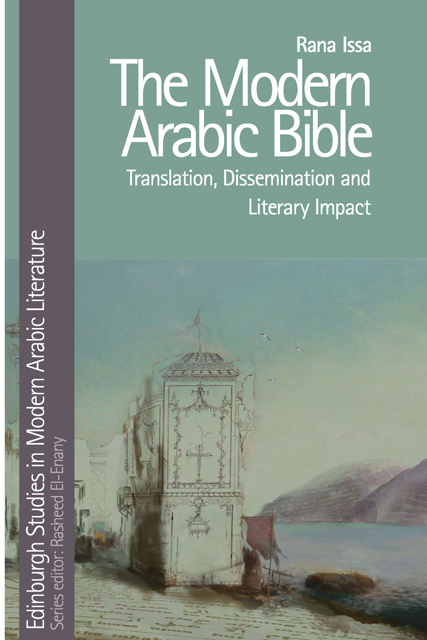
This innovative study compares nineteenth-century Arabic translations of the Bible to determine how it emerged as a foundational text of Arab modernity. Bible translation gained global traction through the work of Anglophone Christian missionaries, who made an attempt at synchronising translated Bibles in world languages by laying down strict guidelines and supervising the processes of translation and dissemination. By engaging with the intellectual beginnings of two local translators, Butrus al-Bustani (1819-1883) and Ahmad Faris al-Shidyaq (1804-1887), as well as their subsequent contributions to Arabic language and literature, this book questions to what extent they complied with the missionaries' strategy in practice. Based on documents from the archives of Bible societies that tell the story of two key nahda versions of the text, we come to understand how colonial pressure was secondary to the process of incorporating the Bible into the nahda project of rethinking Arabic.
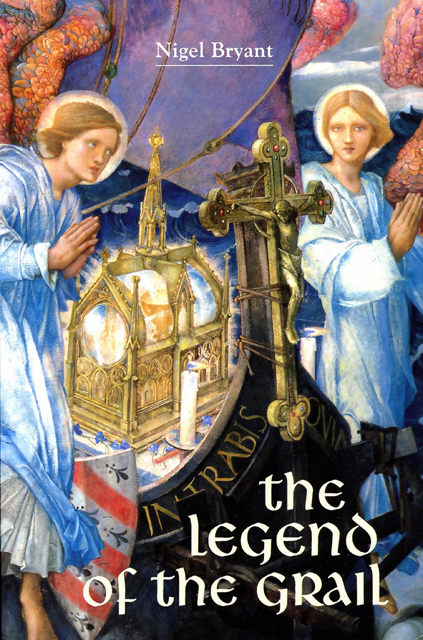
A single, consistent and accessible narrative of the Grail story, constructed from the principal motifs and narrative strands of all the original Grail romances.
This book examines the history of modern Arabic Bible’s translation as one of the key discursive spaces that shaped our inquiries into the problem of modernity. As this book argues, the Bible provides an ideal example for the study of translation temporally. Through a comparison of Western missionary protagonists, and the local translators Butrus al-Bustani (1819–83) and Ahmad Faris al-Shidyaq (1804–87), I explore translation through its temporal dimensions in order to illuminate the earliest beginnings of some of the ideas about the past that we carry today. I claim that translation’s temporalities entangle the Bible with modernity and set standards for how to write, transfer, publish and read books. I further propose that translation’s temporalities are not just located in Walter’s Benjamin’s definition of translation as the ‘afterlife’ of a particular text, but also include larger temporal processes that are mediated in how the Bible came to be perceived as a quintessentially modern text in the nineteenth century. By turning to the Bible to explore the changes in the perception of Arabic language and literature in modernity, I suggest that a literary history from a translational perspective cannot be subordinated to the linguistic – as is often proposed in translation studies and its current deployments of the concept of ‘untranslatability’. I turn to conceptual history and its temporal focus and borrow the theory of ‘multiple temporalities’ into translation studies in order to suggest that the discourse of modernity is a linguistic response to, and intervention into, the transformations in the political economy of globalisation that can be exemplified in many objects, including the Bible and its transformation into an exchange commodity. In the Modern Arabic Bible, I argue that translation performed a synchronistic labour and that this labour resulted in identifying these practices with modernity. Through this book, I aim to pursue this claim about modernity’s synchronising work towards the entanglements that reveal the negotiation of a common modernity that is nevertheless incommensurable with itself, with only relative standards of measurement.
The task of studying translation thus becomes the key to unlocking how ideologies of language and literature responded to as well as shaped the historical context. In this sense, I select details that reveal how the Bible was produced as an exchange commodity.