To save content items to your account,
please confirm that you agree to abide by our usage policies.
If this is the first time you use this feature, you will be asked to authorise Cambridge Core to connect with your account.
Find out more about saving content to .
To save content items to your Kindle, first ensure no-reply@cambridge.org
is added to your Approved Personal Document E-mail List under your Personal Document Settings
on the Manage Your Content and Devices page of your Amazon account. Then enter the ‘name’ part
of your Kindle email address below.
Find out more about saving to your Kindle.
Note you can select to save to either the @free.kindle.com or @kindle.com variations.
‘@free.kindle.com’ emails are free but can only be saved to your device when it is connected to wi-fi.
‘@kindle.com’ emails can be delivered even when you are not connected to wi-fi, but note that service fees apply.
This chapter offers an overview of the history of human migration, conditions pertaining to past migrations, and the types of evidence that allow their study. The importance of scales of time and space is illustrated by ‘standing still’ for a thousand years at a busy crossroads in Europe, and observing the emergence of new social forms. How can these observations help to anticipate and formulate responses to contemporary population movements?
Christian actors and institutions in the Pacific have taken to integrating themes of climate change, sea-level rise, and migration into their religious discourses and practices. Here what interests me is the deliberate reception, processing, and incorporation of the climate change cum migration problematic into the Christian governing practice. Foucault's conception of governmentality – how political power is exercised in the modern era – supplies the analytical instrumentarium for exploring this practice. A series of official declarations by Pacific churches, as well as three case studies from different regions of Oceania (Fiji, Kiribati, and Papua New Guinea), offer a window into the relationship between Christianity, forced migration, and climate change. I examine how Christian churches and actors now position themselves in the conflicted terrain of climate change and displacement as moral authorities and indispensable mediators on the local, national, and international levels.
This chapter offers an overview of the history of human migration, conditions pertaining to past migrations, and the types of evidence that allow their study. The importance of scales of time and space is illustrated by ‘standing still’ for a thousand years at a busy crossroads in Europe, and observing the emergence of new social forms. How can these observations help to anticipate and formulate responses to contemporary population movements?
This chapter addresses traditional Inuit societies and their responses to climatic changes. It is argued that, due to the Arctic region's island-like status concerning environment, climate, geography, and cultural history, and due to an interdisciplinary Arctic research tradition, this region is particularly favourable to study and learn from, with regard to societies and climate change. Moreover, it is argued that societal response to climate fluctuations is best understood in an intergenerational time perspective and at large geographical scales, as can be provided in the deep archaeological time-scale within the Arctic world. From recent fieldwork in north-east Greenland, this area's prehistory is discussed in relation to climate change. This case is followed by a discussion of four aspects of Inuit prehistory of the eastern Arctic that are considered crucial to the Inuit adaptation and success during the centuries, i.e. (1) the initial Thule culture migration into the eastern Arctic; (2) breathing-hole sealing technology; (3) snow house technology; and (4) Inuit long-distance travels in the eighteenth century. In the chapter it is concluded that the Inuit did not invent new strategies or technologies in relation to stress induced e.g. by climate change. Instead they relied on an inherent flexibility in their living and being in the Arctic, involving high mobility and frequent migrations at the individual level, which enabled them to overcome crises caused by social conflicts as well as environmentally dependent changes. Further, it is concluded that the Inuit had an ability to creatively integrate technologies and life-ways resulting from their cultural encounters, e.g. with people from the Late Dorset culture, European whalers, and Moravians, that were successfully employed when climatic-induced environmental changes affected their life and societies.
Projections of sea-level rise generally imply that Pacific low-lying reef and atoll islands will be subject to considerable environmental changes, gradually diminishing their habitability. As a result, the option of abandoning the islands either through increased migration and/or relocation has been proposed as a potential adaptation strategy. Drawing on insights from Solomon Islands, this chapter explores how outlying island communities both historically and recently have engaged in human mobilities and partial relocations beyond the islands and in what ways these practices form active and deliberate adaptation strategies. Based on findings, it is argued that moving people into new locations as a response to climate change could have large socio-cultural, economic, and environmental consequences, potentially creating new vulnerabilities for the communities involved. Thus, any required future relocation of communities must be planned carefully, in order to select appropriate destinations for resettlement, and to guarantee long-term ownership or user rights to land and other resources in order to secure people's livelihood opportunities.
This chapter explains the likely consequences of proposals to resettle large numbers of people away from the Pacific Islands for the people left behind. It does this by describing the effects of large-scale migration away from the small island state of Niue, which is a very good analogue from which lessons for other islands can be drawn.
The chapter begins by examining the discourse on large-scale migration as a solution to save the people of the Pacific Islands from the impacts of climate change. The discourse of draining the people from these remote island backwaters of the world persists even though understanding of vulnerability and adaptation to climate change in the Pacific Islands remains extremely limited. In this discourse there is little concern for the needs and rights of migrants, and no consideration of the consequences of such movements for those people who cannot or do not wish to move. It is this latter issue that this chapter examines.
There has been large-scale migration from Niue since 1971, to the extent that 80 per cent of the people born in Niue now live in New Zealand. There are six principal effects of this depopulation on those who remain on the island, namely that it leads to: distortions in markets; obsolescent political and administrative institutions; a hyper-concentration of social capital; increased demands on labour; difficulties in defining and maintaining that which is ‘traditional’; and an erosion of Niuean identity.
Based on this examination, the chapter argues that migration is likely to be an impact of climate change as much as it is to be an adaptation. Mitigation and adaptation must therefore be the preferred strategies, although there may be scope for carefully managed labour migration as part of a suite of adaptation strategies.
This chapter presents an empirical study examining the relationship between environmental stress and rural–urban migration in northern Ethiopia. It begins with an exploration of the evolution of the debate on ‘environmental refugees’, arguing that, more than anything else, this debate has constituted a battle for discursive legitimacy. From this perspective the chapter uses case studies from northern Ethiopia to show that mobility forms an important social response to environmental stress, but notes that it does so because of the socio-political and economic context in which such stress occurs, rather than in spite of it. To this end case studies from northern Ethiopia will be used to challenge the conception of migration as a failure to adapt and/or as a strategy inevitably pursued at the end point of vulnerability. In so doing the chapter will argue that migration represents a strategic livelihood option, only enacted when the contexts (social, economic, and political) structuring other livelihood options mean that it makes sense to do so. Here the chapter will argue for the politicization and historical location of mobility decisions taken in a context of environmental stress. Specifically the chapter argues that it is micro-scale, socio-political, and economic contexts which determine whether migration is enacted in response to the imperatives generated by macro-scale processes of environmental stress. The chapter closes with a reflection on the implications of these findings for policy.
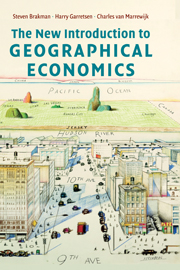
Geographical economics starts from the observation that economic activity is clearly not randomly distributed across space. This revised and updated introduction to geographical economics uses the modern tools of economic theory to explain the who, why and where of the location of economic activity. The text provides an integrated, first-principles introduction to geographical economics for advanced undergraduate students and first-year graduate students, and has been thoroughly revised and updated to reflect important developments in the field, including new chapters on alternative core models and policy implications. It presents a truly global analysis of issues in geographical economics using case studies from all over the world, including North America, Europe, Africa and Australasia, and contains many computer simulations and end-of chapter exercises to encourage learning and understanding through application.
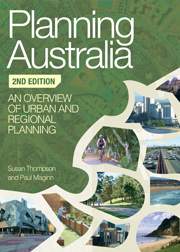
Planning Australia provides a comprehensive introduction to the major issues and activities that constitute urban and regional planning in Australia today. Incorporating contemporary theory and practice, it contextualises planning in terms of its theoretical, ideological and professional foundations. The book adopts an interdisciplinary approach to the subject, underpinned by the principles of sustainability and social equity. It canvasses the history of the discipline, its relationship to broader governance structures and its legislative framework. Fully revised and updated, this edition features new chapters on healthy planning and transport planning. Written in an accessible style and richly illustrated with instructive case study examples, Planning Australia is an indispensable resource for students, practitioners and decision-makers, as well as anyone interested in the history and future of planning in Australia.
Space and nature have long been the concerns of human geography, bound up with a strong sense of the importance of place. Understanding how society changes entails understanding the geography of social change. In this new reader, the editors argue for a new way of looking at the relationship between society and its spatial organization, between society and nature, and between the interdependence and unique character of places. First, through a selection of material ranging from the changing geography of class cultures, gender relations, city structures, state power to the processes of international law, the readings demonstrate that neither space nor society can be understood independently of the other. Social change involves spatial change and spatial change affects social organization. The two sides of the relation mediate a geography of change. Second, a number of the articles explore the relation between society and nature, and demonstrate that that, too involves a continuous and changing interrelationship. Nature cannot be understood outside of its social interpretation and use; equally nature, the environment, has an impact upon the quality and future of our lives. Third, this collection presents an approach to the geography of place which has methodological implications for all those in social science who are concerned with the central problem of appreciating the of outcomes without losing sight of general processes of chance. To grasp the dynamic relation between society, space and nature is important not only for human geography, but for all the social sciences. Geography Matters! brings together a wide range of articles, from both geographers and non-geographers. It addresses a series of economic, political and cultural issues from a geographical angle that will put the social distinctiveness of place back on the agenda for all the social sciences.
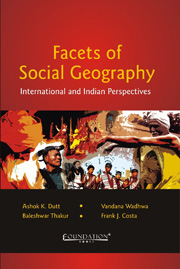
Facets of Social Geography: International and Indian Perspectives provides a breadth of information on the nature, scope, history and evolution of social geography along with a good representation of approaches and techniques used in this field. It discusses both conceptual and empirical approaches, and traditional and emergent social geography themes including art and culture, urbanism and crime, social institutions of caste, class and religion, gender, disability, activism, feminism, social planning, enterprise zones, social and economic inequities, post-colonialism, post-modernism and development of quantitative, qualitative and mixed methods. India's social structure based on centuries-old Karma principles and a four-level caste system are dealt with in this book to help unravel the country's social geography. This book is a felicitation volume in honour of Allen G. Noble, Distinguished Professor Emeritus of Geography and Planning at the University of Akron, Ohio, USA. A result of the collective effort of 40 leading national and international scholars, it is an excellent addition to the current stock of knowledge and will be of interest to geographers, sociologists, demographers, urban and regional planners and policy-makers.
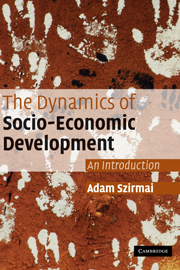
Why are poor countries poor and rich countries rich? How are wealth and poverty related to changes in nutrition, health, life expectancy, education, population growth and politics? This modern, non-technical 2005 introduction to development studies explores the dynamics of socio-economic development and stagnation in developing countries. Taking a quantitative and comparative approach to contemporary debates within their broader context, Szirmai examines historical, institutional, demographic, sociological, political and cultural factors. Key chapters focus on economic growth, technological change, industrialisation, agricultural development, and consider social dimensions such as population growth, health and education. Each chapter contains comparative statistics on trends from a sample of twenty-nine developing countries. This rich statistical database allows students to strengthen their understanding of comparative development experiences. Assuming no prior knowledge of economics the book is suited for use in inter-disciplinary development studies programmes as well as economics courses, and will also interest practitioners pursuing careers in developing countries.
There have been remarkable differences amongst the countries in the two American continents regarding various facets of international migrants. Countries vary in terms of admission of migrants into their territories, recognition of their contribution in economic development, perceptions of people about the immigrants of different nationalities, providing them opportunities for integration into the mainstream society and devising political instruments for ‘migration management’.
Distinct waves of migration to different countries of the Americas were largely induced by the interaction of several push and pull factors, with very few common features. Countries in North America, for example, which were dominated by the large influx of white Europeans throughout the nineteenth century and the first half of the twentieth century, started welcoming people from Asia, mainly from China and India, to fulfill their manpower requirements after World War II (Martin and Midgley 1999). This policy shift in the destination countries has resulted in transforming the composition of the migrant population from sending countries like India. The erstwhile low-skilled people who went to work on large agricultural farms and lumber mills were replaced by enlarging cohorts of the highly skilled, working mainly in the services sector and other knowledge professions (Khadria 1999; Lal 2006). In contrast, Indian migrants in many of the South American countries are still clustered in low and semi-skilled occupations. Majority of them are poorly educated and do not possess the kind of occupational and professional skills required to improve their ranks in the host societies. Due to this apparent lack of human capital, and consequent low occupational profile, they are not able to hold the kind of positions that many other people of Indian origin enjoy in the countries of North America. Quite different from these two continents, Indian migration to the Caribbean, which started with the colonial emergence of plantations and economic opportunities for jobseekers during the nineteenth century, especially after the abolition of slavery in the 1830s, is much older.