To save content items to your account,
please confirm that you agree to abide by our usage policies.
If this is the first time you use this feature, you will be asked to authorise Cambridge Core to connect with your account.
Find out more about saving content to .
To save content items to your Kindle, first ensure no-reply@cambridge.org
is added to your Approved Personal Document E-mail List under your Personal Document Settings
on the Manage Your Content and Devices page of your Amazon account. Then enter the ‘name’ part
of your Kindle email address below.
Find out more about saving to your Kindle.
Note you can select to save to either the @free.kindle.com or @kindle.com variations.
‘@free.kindle.com’ emails are free but can only be saved to your device when it is connected to wi-fi.
‘@kindle.com’ emails can be delivered even when you are not connected to wi-fi, but note that service fees apply.
Recent discussion, academic publications and many of the national exhibitions relating to the Great War at sea have focussed on capital ships, Jutland and perhaps U-boats. Very little has been published about the crucial role played by fishermen, fishing vessels and coastal communities all round the British Isles. Yet fishermen and armed fishing craft were continually on the maritime front line throughout the conflict; they formed the backbone of the Auxiliary Patrol and were in constant action against-U-boats or engaged on unrelenting minesweeping duties. Approximately 3000 fishing vessels were requisitioned and armed by the Admiralty and more than 39,000 fishermen joined the Trawler Section of the Royal Naval Reserve. The class and cultural gap between working fishermen and many RN officers was enormous. This book examines the multifaceted role that fishermen and the fish trade played throughout the conflict. It examines the reasons why, in an age of dreadnoughts and other high-tech military equipment, so many fishermen and fishing vessels were called upon to play such a crucial role in the littoral war against mines and U-boats, not only around the British Isles but also off the coasts of various other theatres of war. It will analyse the nature of the fishing industry's war-time involvement and also the contribution that non-belligerent fishing vessels continued to play in maintaining the beleaguered nation's food supplies.
The Geography of Strabo is the only surviving work of its type in Greek literature, and the major source for the history of Greek scholarship on geography and the formative processes of the earth. In addition, this lengthy and complex work contains a vast amount of information on other topics, including the journey of Alexander the Great, cultic history, the history of the eastern Mediterranean in the first century BC, and women's history. Modern knowledge of seminal geographical authors such as Eratosthenes and Hipparchos relies almost totally on Strabo's use of them. This is the first complete English translation in nearly a century, and the first to make use of recent scholarship on the Greek text itself and on the history of geography. The translation is supplemented by a detailed discussion of Strabo's life and his purpose in writing the Geography, as well as the sources that he used.
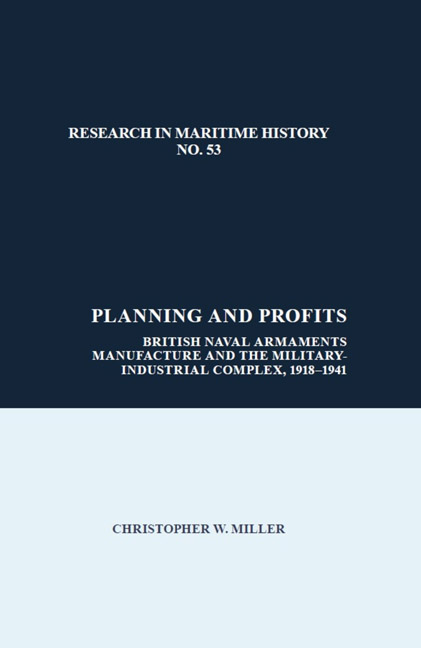
In a time of great need for Britain, a small coterie of influential businessmen gained access to secret information on industrial mobilization as advisers to the Principal Supply Officers Committee. They provided the state with priceless advice, but, as "insiders" utilised their access to information to build a business empire at a fraction of the normal costs. Outsiders, in contrast, lacked influence and were forced together into a defensive "ring" or cartel – which effectively fixed prices for British warships. By the 1930s, the cartel grew into one of the most sophisticated profiteering groups of its day.This book examines the relationship between the private naval armaments industry, businessmen, and the British government defence planners between the wars. It reassesses the concept of the military-industrial complex through the impact of disarmament upon private industry, the role of leading industrialists in supply and procurement policy, and the successes and failings of government organisation. It blends together political, naval, and business history in new ways, and, by situating the business activities of industrialists alongside their work as government advisors, sheds new light on the operation of the British state.This is the story of how these men profited while effectively saving the National Government from itself.
This book collects seventeen previously published essays by John Armstrong concerning the British coastal trade. Armstrong is a leading maritime historian and the essays provided here offer a thorough exploration of the British coastal trade, his specialisation, during the period of industrialisation and technological development that would lead to modern shipping. The purpose is to demonstrate the whether or not the coastal trade was the main carrier of internal trade and a pioneer of the technical developments that modernised the shipping industry. Each essay makes an original contribution to the field and covers a broad range of topics, including the fluctuating importance of the coastal trade and size of the coastal fleet over time; the relationship between coastal shipping, canals, and railways; a comparison between the coastal liner and coastal tramp trade; the significance of the river Thames in enabling trade; coastal trade economics; maritime freight rates; the early twentieth century shipping depression; competition between coastal liner companies; and a detailed study of the role of the government in coastal shipping. The book also contains case studies of the London coal trade; coastal trade through the River Dee port; and the Liverpool-Hull trade route. It contains a foreword, introduction, and bibliography of Armstrong's writings. There is no overall conclusion, except the assertion that coastal shipping plays a tremendous role in British maritime history, and a call for further research into the field.
This volume collects a series of reports from maritime historians across Europe, aiming to provide a coherent historical trajectory of the lives of European sailors and their dealings with the maritime labour market; the reports were presented at The Hague's 1994 conference, 'European Sailors, 1570–1870.' The core areas discussed in the first half of the volume include: the national maritime labour market; the international maritime labour market; working conditions for sailors; and career patterns. The second half features reports detailing the sailing history of a selection European countries:- the Netherlands; England; Scotland; Britain as a whole; Iceland; Norway; Finland; Denmark; Germany; Belgium; France; and Spain. Each report responds to a set of questions distributed by the commissioning editors, so that the data from each country can be compared and contrasted. Questions considered include the number of sailors represented in the navy, mercantile, marine, or whaling industries; the socio-economic background of sailors; wage details; recruitment policies; strikes; mutinies; and career mobility amongst sailors. The volume provides an overview of the history of sailors to enable a strengthening of data in the field of maritime history as it continues to develop and extend.
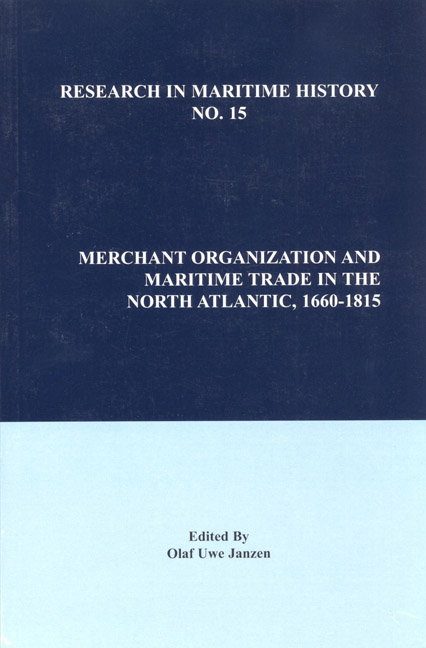
This book presents the challenges faced by maritime merchants operating in the North Atlantic in the early modern period, and examines the opportunities, aspirations, and methods utilised in the pursuit of profitable trade. The book collects nine essays and a reflective conclusion, which cumulatively explore the major themes of trade within empires; growth of trade; new initiatives within trade empires; government initiatives in relation to maritime mercantile trade; merchant migration; and changes in international trade. The book attempts to provide scholarly insight and perspectives into early modern economic life, through the maritime mercantile activities of various European and North American nations.
Shows how extensive the naval power of Islamic states was, charts the rise and fall of Islamic navies, and outlines the various wars and campaigns in which Islamic navies were involved.
Taken as a whole the British fishing industry boomed in the years preceding the outbreak of the Great War, and 1913, the last full year of peace, proved no exception. Most previous performance indicators in both the steam trawling and herring fisheries – the leading sectors in this dynamic trade – were surpassed. Total fish landings at British ports that year were well over the 16 million cwt (800,000 ton) mark, attracting revenue of more than £10 million.
Whether judged by the size and sophistication of its fish processing, catching, or distributive sectors, the British fishing industry led the world. Flotillas of middle and distant water steam trawling fleets, working principally from the ports of Hull, Grimsby, Aberdeen, Fleetwood, Shields, and Milford Haven, took white fish from as far afield as fishing grounds off the Faroe Islands, Iceland, or the Barents and the Irish and North Seas as well as the English Channel and beyond. Most of their catch was destined for home markets and intended to satisfy a seemingly insatiable domestic demand, particularly from the burgeoning fried fish and chip trade. Meanwhile, large fleets of drifters voyaged up and down the coast intent on exploiting the immensity of herrings which shoaled in great quantities at different times in various seas off the British Isles. Much of the herring catch was processed by the highly mobile (and mainly Scottish) curing gangs which followed the drifters, and although some fish was smoked for domestic consumption as kippers, vast quantities were salt cured, packed in barrels, and exported to markets across immense areas of central and eastern Europe. The number of fishermen and boys regularly and occasionally employed in England and Wales in sea fisheries in 1913 were 37,870 and 7,512 respectively, while the total figures for Scotland were 38,262. Those regularly or occasionally employed in the catching sector of the United Kingdom's fishing industry, including the Isle of Man and the Channel Islands, was just under 100,000 in 1913. Many, many thousands more worked in the processing and distributive branches.
During the first half of 1914 there was every prospect that the prosperity of recent years would be maintained throughout the twelve months and, indeed, when Britain declared war on 4 August, many sectors of the trade were still working at full stretch.
In the Edwardian era, by the time of the Dogger Bank incident in October 1904, Britain was not only the world's leading military and mercantile maritime nation, it also possessed the largest and most sophisticated fishing industry the world had ever known. Tens of thousands of fishermen worked from many hundreds of fishing stations – large ports and small villages alike – scattered all around the country's long coastline. The rich waters surrounding the British Isles were home to countless species of fish, many of which were taken by different groups of fishermen in a diversity of locations using a bewilderingly varied range of catching equipment and craft. But although the British fish trade was both complex and considerable it was by this time dominated by two well capitalised and seemingly modern sectors: these were the trawl and herring fisheries, and both employed very large numbers of Edwardian fishermen and fishing vessels.
The Trawling Sector
Trawlers were thus named because they deployed trawls: these were large bag-shaped nets which were towed, or rather dragged, along the seabed. Their catches of white fish – cod, haddock, and the like – were destined primarily for the home market. The British trawling trade had expanded markedly since the mid-nineteenth century when the construction of the national railway network had provided swift and reliable access to inland markets. Railways had transformed the market for perishable foods and in the process helped make fresh white fish an article of cheap mass consumption in many burgeoning inland industrial towns and cities, a much-needed source of protein and a wholesome meal for many working-class families. Somewhere, some time in the following decades, some genius – and no one really knows who – had put fish with chips and created what became a national institution.
Initially, the trawlers deployed by this flourishing trade were wooden-hulled sailing vessels, often owned by the skipper or by very small companies, but from the early 1880s these craft were rapidly displaced by steel-hulled ships fitted with triple expansion steam engines. By the end of Victoria's reign, only Lowestoft in Suffolk and Brixham in Devon retained substantial fleets of sailing trawlers and their replacement elsewhere by the more expensive but far more efficient steam trawlers had been accompanied by a radical reorganisation of this branch of the fish trade.
German Minefields and Minesweeping Operations in the North Sea and Beyond
In early spring 1915, there were about 238 minesweeping vessels in service in the seas around the British Isles. Except for some gunboats and hired paddle steamers, the majority of these were fishing vessels, at that time trawlers, their crews mainly fishermen, and their domestic sphere of operations still primarily focused on the east coast of England. Although there were about 63 minesweepers sailing out of Scottish ports, many providing protection for the Grand Fleet and other Royal Navy surface ships, and a total of around 34 craft covering the western ports or the English Channel eastwards to Portsmouth, most of the remainder were based at key eastern ports from North Shields down to Dover (Table 1).
Whilst other vessels had already been despatched for minesweeping work off the Dardanelles, the disposition of these flotillas of fishermen and hired fishing vessels reflected the main areas of German minelaying off the coasts of Britain in the first year of the war. Significant operations had recently taken place off the eastern side of the Dogger Bank and further substantial activities were soon undertaken. Presumably, such offshore minefields were primarily targeted at heavy Royal Navy warships sweeping through the North Sea or engaged in chasing German warships towards Heligoland and the like. Further minelaying operations, directly involving the cruiser Hamburg supported by various other vessels including battle cruisers, were carried out around 18 May. Whilst these were under way, four British civilian fishing trawlers working in the North Sea – the King Charles of Grimsby and the Euclid, Duke of Wellington, and Titania from Hull – were captured and then sunk by German torpedo boats; their crews taken back to Germany as prisoners, presumably to keep the minelaying operations secret. Before the end of the month these trawlermen had been incarcerated in Ruhleben internment camp just outside of Berlin.
Typically, these minefields were often discovered in tragic fashion, although not usually by large warships: the fishing vessels Angelo and Sabrina, owned by Hellyers of Hull, for example, probably foundered on mines laid off the Dogger Bank on 21 May, just three days after the Hamburg's lethal voyage. The following month the steam trawler Dovey was lost on yet another such field, this one laid some 50 miles east by south of Spurn Head.
Whilst the kernel of the Trawler Reserve had been created prior to the war, born of the perceived need to develop a defensive force capable of dealing with the threat of offensive enemy minelaying, the idea of extending its operations into other, often more overtly aggressive spheres of action had evidently not been anticipated, and certainly not planned for, to any considerable degree. But, as we have seen in Chapter 2, within a few weeks of the opening of hostilities, large numbers of additional fishing vessels and fishermen were quickly recruited by the Admiralty, not only for defensive minesweeping duties but also for a range of other, often more directly belligerent activities. By early 1915, less than six months into the war, the nature and range of these additional frontline operations, of what was for all intents and purposes a new and improvised navy, were becoming somewhat more clearly defined.
The opening months of the war had seen quite extensive activities by enemy surface minelaying vessels and submarines off the British coast. Such operations were also thought at the time to provide a means of allowing spies to make covert landings in the country. General instructions issued to Auxiliary Patrol units stationed around the British coasts in early 1915 were specifically focused on dealing with these threats, not only by trying to prevent such incursions occurring in the first place but also by ensuring the harassment, capture, or destruction of the enemy vessels involved.
To carry out such duties, each district took into account the local geography and regional strategic priorities when formulating operational plans. Vessels operating in the Orkney and Shetland Archipelago, for example, not only had to anticipate enemy attacks in and around the hugely important Grand Fleet base at Scapa Flow, but were also required to sink or harass U-boats voyaging westwards by way of the top of Scotland, most notably through the Fair Island Gap. By spring 1915, many Orkney duties were being carried out by a fleet of eight yachts and 72 armed trawlers, supported by a few drifters. These vessels were divided amongst three patrol areas based on Kirkwall, Stromness, and Longthorpe, known respectively as the Northern, Western, and Southern Patrols.
By January 1918, the German minelaying assault on the waters around the British Isles and elsewhere had seemingly passed its peak. In part, this was probably due to the growing effectiveness of British countermeasures; and perhaps partly because it was increasingly difficult for the Germans to maintain such high levels of mine production, given the pressing demands of other military priorities. But while there were clear indications that fewer mines were being deployed than had been the case some six months earlier, an evident focus on more specific objectives can be discerned from a study of minelaying activities during the last year of the war.
Whilst the seaways in the Harwich area, as well as the waters adjacent to a few other British ports, continued to be strewn with mines deposited principally by Flanders Flotilla U-boats still operating from the Belgian ports of Zeebrugge and Ostend, the minelaying submarines of the High Seas Flotilla increasingly concentrated their efforts on three other specific dimensions of maritime activity considered to be of crucial strategic importance to Britain. First, the High Seas Flotilla pursued a programme of intensive minelaying off the coasts of the Netherlands, to disrupt and damage convoy traffic to and from the United Kingdom through these waters; these voyages were known to those involved as the ‘beef trip’. The second area on which they invested a great deal of their effort encompassed the inner waters of the Firth of Forth and the tracks taken by the Scandinavian convoys. Finally, between the months of March and September 1918, the Germans expended considerable amounts of their precious time and scarce resources on a complex plan intended to finally ensnare the Grand Fleet. This involved the laying of a great barrier of mines out in the North Sea on a 45-mile radius from Bell Rock.
Although there was a diminution in German minelaying off other coasts of the British Isles, such activities did not completely cease. On 21 February 1918, for example, a cluster of mines was deposited in the seas about one and a half to two and a half miles north-east of the River Tyne by the UC-49, presumably to try and sink a battleship returning northwards to its Scottish base after refit in north-east England.