Refine search
Actions for selected content:
1706 results in Science handbooks
9 - From Science to Engineering and Business
- from Part II - Industry and Related Occupations
-
-
- Book:
- Successful Careers beyond the Lab
- Published online:
- 25 May 2017
- Print publication:
- 07 June 2017, pp 104-113
-
- Chapter
- Export citation
16 - Skills, Networks and Luck
- from Part III - The Public Sector
-
-
- Book:
- Successful Careers beyond the Lab
- Published online:
- 25 May 2017
- Print publication:
- 07 June 2017, pp 191-197
-
- Chapter
- Export citation
3 - Career Enlightenment for the 21st Century
- from Part I - Career Services’, Recruiters’ and Students’ Viewpoints
-
-
- Book:
- Successful Careers beyond the Lab
- Published online:
- 25 May 2017
- Print publication:
- 07 June 2017, pp 25-33
-
- Chapter
- Export citation
7 - Lessons from Evolution on How to Build a Business
- from Part II - Industry and Related Occupations
-
-
- Book:
- Successful Careers beyond the Lab
- Published online:
- 25 May 2017
- Print publication:
- 07 June 2017, pp 80-91
-
- Chapter
- Export citation
22 - A Career in Science Radio and Podcasting
- from Part V - A Life on Camera
-
-
- Book:
- Successful Careers beyond the Lab
- Published online:
- 25 May 2017
- Print publication:
- 07 June 2017, pp 257-264
-
- Chapter
- Export citation
27 - Environmental Policy, Politics and Science – Not Always an Easy Ride
- from Part VI - Science Communication, Teaching, Ethics and Environmentalism
-
-
- Book:
- Successful Careers beyond the Lab
- Published online:
- 25 May 2017
- Print publication:
- 07 June 2017, pp 317-327
-
- Chapter
- Export citation
Copyright page
-
- Book:
- Successful Careers beyond the Lab
- Published online:
- 25 May 2017
- Print publication:
- 07 June 2017, pp iv-iv
-
- Chapter
- Export citation
Part III - The Public Sector
-
- Book:
- Successful Careers beyond the Lab
- Published online:
- 25 May 2017
- Print publication:
- 07 June 2017, pp 167-208
-
- Chapter
- Export citation
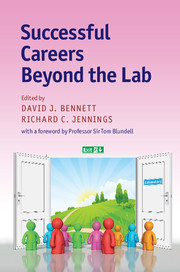
Successful Careers beyond the Lab
-
- Published online:
- 25 May 2017
- Print publication:
- 07 June 2017

Get Funded: An Insider's Guide to Building An Academic Research Program
-
- Published online:
- 19 May 2017
- Print publication:
- 13 April 2017
Dedication
-
- Book:
- Get Funded: An Insider's Guide to Building An Academic Research Program
- Published online:
- 19 May 2017
- Print publication:
- 13 April 2017, pp v-vi
-
- Chapter
- Export citation
4 - Getting Started and Marketing Your Research
-
- Book:
- Get Funded: An Insider's Guide to Building An Academic Research Program
- Published online:
- 19 May 2017
- Print publication:
- 13 April 2017, pp 72-106
-
- Chapter
- Export citation
Index
-
- Book:
- Get Funded: An Insider's Guide to Building An Academic Research Program
- Published online:
- 19 May 2017
- Print publication:
- 13 April 2017, pp 274-277
-
- Chapter
- Export citation
6 - Making Contact and Communicating with Program Managers and Program Directors
-
- Book:
- Get Funded: An Insider's Guide to Building An Academic Research Program
- Published online:
- 19 May 2017
- Print publication:
- 13 April 2017, pp 145-191
-
- Chapter
- Export citation
Contents
-
- Book:
- Get Funded: An Insider's Guide to Building An Academic Research Program
- Published online:
- 19 May 2017
- Print publication:
- 13 April 2017, pp vii-xii
-
- Chapter
- Export citation
1 - Introduction
-
- Book:
- Get Funded: An Insider's Guide to Building An Academic Research Program
- Published online:
- 19 May 2017
- Print publication:
- 13 April 2017, pp 1-8
-
- Chapter
-
- You have access
- HTML
- Export citation
9 - You’re on Your Way
-
- Book:
- Get Funded: An Insider's Guide to Building An Academic Research Program
- Published online:
- 19 May 2017
- Print publication:
- 13 April 2017, pp 270-273
-
- Chapter
- Export citation
8 - Cautions and Other Concerns
-
- Book:
- Get Funded: An Insider's Guide to Building An Academic Research Program
- Published online:
- 19 May 2017
- Print publication:
- 13 April 2017, pp 254-269
-
- Chapter
- Export citation
5 - Know Where the Money Is
-
- Book:
- Get Funded: An Insider's Guide to Building An Academic Research Program
- Published online:
- 19 May 2017
- Print publication:
- 13 April 2017, pp 107-144
-
- Chapter
- Export citation
2 - A Brief History of Research Funding in the United States
-
- Book:
- Get Funded: An Insider's Guide to Building An Academic Research Program
- Published online:
- 19 May 2017
- Print publication:
- 13 April 2017, pp 9-24
-
- Chapter
- Export citation
