To save content items to your account,
please confirm that you agree to abide by our usage policies.
If this is the first time you use this feature, you will be asked to authorise Cambridge Core to connect with your account.
Find out more about saving content to .
To save content items to your Kindle, first ensure no-reply@cambridge.org
is added to your Approved Personal Document E-mail List under your Personal Document Settings
on the Manage Your Content and Devices page of your Amazon account. Then enter the ‘name’ part
of your Kindle email address below.
Find out more about saving to your Kindle.
Note you can select to save to either the @free.kindle.com or @kindle.com variations.
‘@free.kindle.com’ emails are free but can only be saved to your device when it is connected to wi-fi.
‘@kindle.com’ emails can be delivered even when you are not connected to wi-fi, but note that service fees apply.
By examining German university medicine between 1750 and 1820, this book presents a new interpretation of the emergence of modern medical science. It demonstrates that the development of modern medicine as a profession linking theory and practice did not emerge suddenly from the revolutionary transformation of Europe at the opening of the nineteenth century, as Foucault and others have argued. Instead, Thomas H. Broman points to cultural and institutional changes occurring during the second half of the eighteenth century as reshaping both medical theory and physician's professional identity. Among the most important of these factors was the emergence of a literary public sphere in Germany between 1750 and 1800, a development that exposed medical writing to new discourses such as Jena Romanticism and created the stage on which would be played out the bitter medical controversies of the 1790s.
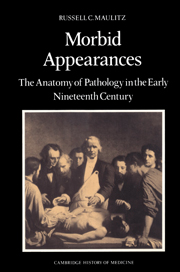
When we consider how the scientific revolution came to medicine, we often think of the rise of the great laboratory disciplines of the nineteenth century. Often overlooked in these accounts, however, is the role of clinical medicine and its important early branch, pathology. Morbid Appearances traces the emergence in France and England of this important medical tradition. Dr. Maulitz shows how the pathology of tissues came to occupy a central position in the teaching and research of French medical luminaries such as Bichat, Bayle, and Laennec, and he describes how the new pathology helped shore up the fortunes of the Paris medical faculty and the medicine of the 'Paris Hospital'. The author also details the efforts of Thomas Hodgkin, Robert Carswell, and others to import the new science of pathology to Great Britain - and he shows how their efforts to assign a place for pathological anatomy in their own medical culture met with rather mixed success.
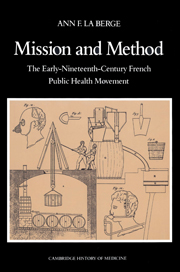
In Mission and Method Ann La Berge shows how the French public health movement developed within the socio-political context of the Bourbon Restoration and July Monarchy, and within the context of competing ideologies of liberalism, conservatism, socialism, and statism. The dialectic between liberalism, whose leading exponent was Villerme, and statism, the approach of Parent-Duchatelet, characterized the movement and was reflected in the tension between liberal and social medicine that permeated nineteenth-century French medical discourse. Professor La Berge also challenges the prevalent notion that the British were the leaders in the nineteenth-century public health movement and set the model for similar movements elsewhere. She argues that an active and influential French public health movement antedated the British and greatly influenced British public health leaders.
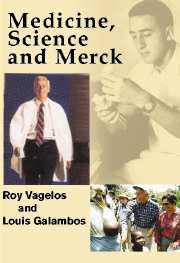
In Medicine, Science, and Merck, the authors trace the careers of a son of Greek immigrants as he mastered three professions and ultimately became the Chief Executive Officer of America's most admired corporation - the multinational, pharmaceutical giant, Merck and Co., Inc. As the authors show, there was hope even for a wise-cracking kid living through the hard times of the 1930s. Education brought out the scholar in Roy Vagelos, who left his family's small restaurant to attend the University of Pennsylvania, Columbia's Medical School, and Massachusetts General Hospital in Boston. At NIH, he mastered biochemistry; at Washington University he became a distinguished science administrator; and at Merck, he headed the pharmaceutical industry's most innovative laboratory and then became its CEO. Throughout, he never lost touch with his family values, his intense desire to help others, or his faith in the partnership principle and the competition that makes it work.
We are all agreed that your theory is crazy. The question that divides us is whether it is crazy enough to have a chance of being correct.
Niels Bohr
Writing research proposals is an integral, although perhaps the least favorite, part of doing science. In an academic environment, the financial resources for carrying out the research come, to a large extent, from external sources. Similarly, in an industrial environment, research proposals are often the means by which a researcher must convey to management the value of supporting a project. Proposals thus are essential for securing research funding, but they are important for other reasons as well. Having research proposals funded shows that your research stands up to peer review, that it has the qualities judged worthy of receiving financial support, and that you are able to communicate research plans in a compelling way. It thus constitutes a sign of professional expertise in job applications and often is considered of critical importance in decisions regarding tenure and promotion. Research grants can sometimes be transferred along with the individual when switching to a new university. Bringing in already-existing research funds can positively influence the decision to make a job offer to the holder of those grants. Research grants thus not only provide the financial means to carry out research, they increase the market value of scientists applying for a job or seeking tenure or promotion.
The brick walls are there for a reason. They're not there to keep us out. The brick wallls are there to give us a chance to show how badly we want something.
Pausch, 2008
Seldom is the path toward success in research either straight or fully charted in advance. Stumbling blocks abound in any research. In this chapter we cover some of the common ones and offer suggestions for steps in conducting research aimed at minimizing their harm and even turning them to advantage.
BEING CONFUSED BECAUSE OF LACK OF DIRECTION
Research can be a confusing activity. Your research plan might be poorly formulated; worse, you might have no plan at all. At times you cannot understand intermediate results of your studies; data that you've recorded might conflict with a theory you developed, or two different lines of reasoning that both seem to make sense give different answers.
The first source of confusion, in which the work basically lacks direction, is clearly a negative one and needs to be fixed early on. Any of a variety of factors can have caused this state of stagnation. Perhaps you have not yet settled on a research topic or you have decided on one but the choice is insufficiently specific to get started on the research. You can avoid this pitfall by being aggressive in choosing and refining a research topic quickly. General considerations when choosing the research topic were given in Chapter 3.
In the theoretical physics community there are many more people who can answer well-posed questions than there are people who can pose the truly important questions. The latter type of physicist can invariably also do much of what the former can do, but the reverse is certainly not true.
Zee, 2003
Many scientists (and non-scientists as well) live under the impression that they don't know much about research topics that lie outside those that occupy them on a daily basis. We often feel like a blank sheet of paper when it concerns such research topics. Perhaps we know more about various areas than we think. The path to ferreting out aspects that we do and don't know is lined with questions. For example, both of us authors are geophysicists, and (an understatement) we don't know much about biomedical research. Yet if we take a topic such as cell therapy, several statements (correct or incorrect, naïve or otherwise) about this area of research can readily bring a number of questions to our lay minds. A line of thinking might go as follows.
In cell therapy one seeks to modify the genetic material of cells in a body in order to correct the deviant behavior that causes a disease. The genetic material is stored in large molecules called DNA. Viruses modify the genetic material of cells. […]
Time is all you have. And you may find one day that you have less than you think.
Pausch, 2008
“I just don't have enough time to do all that I need to do.” This complaint has become almost the mantra of life in modern society. The fretting expressed here invariably leads to a state of physical and emotional stress that is often detrimental to the well-being of both our professional and personal lives. Key words in the mantra are [not] enough time, need, and just. The problem is not that there is not enough time – the time allotted to any individual in life is fixed (but unknown in advance). Therefore, most truly, we each have just the right amount of time for whatever it is that we choose to do in our lives. Rather than there not being enough time for all that we need to do, the problem is that we want to do too many things in a given amount of time. It's a matter of choice. The word just in the mantra suggests that we have no choice in the matter. The key message in this chapter, however, is that we do have that choice.
SETTING PRIORITIES
This brings us to the central point of time management. Given the finite amount of time available, we have essentially two ways to reduce the feeling of having insufficient time – by choosing our activities carefully and by working efficiently.
Whatever your current stage in graduate or even undergraduate study, like it or not, sooner or later you will have to work for a living – as if you haven't been working throughout your graduate school career. So, at some point the moment arrives to apply for a job. Much of what is covered in this chapter is the nuts and bolts of the job-application process aimed at a successful outcome of that process – securing a position that is right for you. But, more than just a tutoring of what to do and what not to do in applying for a job, the chapter aims to share our thoughts on subtle matters you might not otherwise think of but can expect to encounter along the way. Much of how to proceed and what to expect in applying for a job is common to careers in both academia and industry, but we shall also highlight differences.
As indicated in Chapter 14, the first job in an academic environment is likely to be a temporary position as a postdoc. Even then, soon enough the task of applying for a job will appear on the horizon, this time perhaps for a tenure-track faculty position. In industry, life-long employment with a single company used to be common, but this has changed considerably in the ever-more-dynamic world of today.
There are many books on the market with advice for graduate students and other researchers. Some are listed here in various categories.
General advice for graduate students:
Bloom, D.F., Karp, J.D., & Cohen, N. (1998). The Ph.D. Process, A Student's Guide to Graduate School in the Sciences. New York: Oxford University Press.
This is the book for every graduate student in the physical sciences to read.
Bolker, J. (1998). Writing your Dissertation in Fifteen Minutes a Day. New York: Henry Holt and Company LLC.
Booth, W.C., Williams, J.M., & Coulomb, G.C. (2003). The Craft of Research, 2nd edn, Chicago: University of Chicago Press.
Davis, G.B. & Parker, C.A. (1997). Writing the Doctoral Dissertation. New York: Barron's Educational Series Inc.
Feibelman, P.J. (1993). A Ph.D. is Not Enough! A Guide to Survival in Science. Cambridge MA: Perseus Publishing.
Medawar, P.B. (1979). Advice to a Young Scientist. Basic Books.
http://www.basicbooks.com.
Peters, R.L. (1997). Getting What You Came For, The Smart Student's Guide to Earning a Master's or Ph.D., revised edn, New York: Farrar, Straus and Giroux.
The scientific method:
Gauch, H.G., Jr. (2003). Scientific Method in Practice. Cambridge, UK: Cambridge University Press.
Goldstein, I.F. & Goldstein, M. (1984). The Experience of Science. New York: Plenum Press.
Our task is to communicate experience and ideas to others.
Niels Bohr
WHY COMMUNICATE?
The most basic answer to the question “why communicate?” is simply that scientists are human beings, and communication is one of the defining characteristics of being human. More specifically, here we elaborate on the value, both to individual scientists and to their profession, of communicating the findings of research.
Likely, a major factor that initially drew you into and has kept you in your chosen scientific career is the simple joy of intellectual discovery, of uncovering new ideas about how the physical world works. For many highly capable scientists, the internal satisfaction they experience in such discovery is reward enough. It is time-consuming and can be laborious, indeed burdensome, to detour from the scientific pursuit to share one's findings with others, through either publication in peer-review journals or presentation at conferences. Painful as it might be to devote energy to that detour, for several reasons expect communication of results to be of great value to you both personally and professionally. More broadly, publication is the breath of life for future progress in the sciences.
As emphasized in the next section, communication is difficult, and effective communication, whether in writing or delivered orally, is especially difficult. There must be some reward for taking such pains to share what you have been doing. Potential personal rewards are many.
As I embark on my career as a [biomedical] scientist, I willingly pledge that I will represent my scientific profession honorably, that I will conduct my research and my professional life in a manner that is always above reproach, and that I will seek to incorporate the body of ethics and moral principles that constitute scientific integrity into all that I do.
I will strive always to ensure that the results of my research and other scientific activities ultimately benefit humanity and that they cause no harm.
With this affirmation, I pledge to acknowledge and honor the contributions of scientists who have preceded me, to seek truth and the advancement of knowledge in all my work, and to become a worthy role model deserving of respect by those who follow me.
Craig et al., 2003
Just as for all activities in life, research has its principles and standards of conduct necessary to ensure that it be carried out in an honest and honorable manner. Such principles and standards, which may collectively constitute or define the “ethics” of an activity, too often are neither objectively nor well defined. This, however, by no means makes them less important than the Federal and State laws that are used in our society to distinguish between behavior that is acceptable and that which is not. In this chapter, we offer a synopsis of what we consider to be the ethics of research, some examples being quite subtle.
If you don't know where you are going, any road will take you there.
Lewis Carroll, 1832–1898
It's a dream until you write it down; then it's a goal.
Simon, 1998
It's difficult to imagine embarking on a journey, adventure, activity – any endeavor – without having a goal, however vague that goal might be. Even if you don't study a map before going on a road trip, you at least think to put gas in the car. Goals for a holiday might be explicit or implicit, and they can range from short term to intermediate and somewhat long. A career in science, starting from your period in graduate school and continuing into a life of research, is a journey, a long one. Much more so than for a holiday journey, the thoughtful setting of explicit goals is of crucial importance for a successful career in research and for success in the research itself. By success, we mean here the achievement of valuable contributions in your field, accomplished with a good deal of pleasure and a minimum of needless pain and time wasted.
Goals give direction to our actions. By clearly choosing and defining goals, we provide a focus for action needed to arrive at a hoped-for destination or outcome. Defining goals not only helps in creating a mental commitment to take certain action, it also enables us to formulate a plan of attack toward reaching the desired ends.
The material presented in this book lends itself well for a course for beginning graduate students. Such students are under time pressure when starting their research and taking courses in their chosen discipline. For this reason our best experience has been in teaching the course as a single-semester, 1-credit course, which amounts to approximately 15 classroom sessions. This appendix gives a sample curriculum aimed at offering instructors ideas for elements that could be included in such a course. The curriculum includes homework assignments that roughly follow the chapters in this book, but doing all assignments is unnecessary and might make the workload unacceptably high. The suggested homework is intended to inspire instructors' ideas for helpful exercises.
Our experience is that it is best to teach the course to classes no larger than about 20 students. The material is conveyed most effectively in a discussion format rather than as a lecture that offers relatively little opportunity for student participation. Some topics covered are likely to touch on personal issues; many students find it easier to pose questions and share personal views and dilemmas in a small group.
Class 1. What the course and science are about. Since the course is most effective when there is ample discussion, it is important that students feel comfortable in the group. It is helpful for students to have the opportunity to introduce themselves in class and mention, for example, what they hope to learn in this course and any personal issues or questions they would like to share.
Throughout their careers, scientists work with others. This is particularly so for students during their time in graduate school. As a graduate student, among those with whom you can expect to interact variously throughout your graduate-school career – your academic adviser, faculty members on your thesis committee, other faculty members from both within and outside your home department, fellow students, and scientists elsewhere whose work and ideas can be of value to you – it is your academic adviser (thesis adviser) who can be expected to influence most directly the course, for good or ill, of your graduate experience. In Chapter 3 we discussed the many choices that researchers, in particular, beginning graduate students, must make in order to focus their research and, for graduate students, to complete their educational and research program in a reasonable amount of time. The choice of the adviser and the related choice of a research topic are essential not only for the successful completion of graduate studies, they can also influence the way in which the academic career develops, and even the course of one's subsequent scientific career. In order to make informed choices, it is necessary to understand the roles – both academic and personal – of the scientific adviser, with whom you can expect to spend many hours. We describe those roles in this chapter, along with the related role of the thesis committee.
Publications are the primary means for distributing, establishing, and archiving scientific results. The decision to hire or promote somebody is often based to a large extent on the number and quality of publications that the individual has written. Because, typically, the number of copies of a journal article that are printed is orders of magnitude larger than the number of thesis copies made, papers in technical journals are of much larger value to the scientific community than are theses. Because most graduate students must prepare and defend a thesis, the best of both worlds for them exists in graduate programs that both encourage students to publish their research work during the course of their studies and allow them to use their published or submitted papers, perhaps in an adapted form, as chapters in their thesis. For all the above reasons, scientific publications are of great importance. In this chapter we suggest questions to contemplate prior to writing a paper, steps to take during the submission and review process, and actions to consider while the paper is in press and afterward.
BEFORE YOU START WRITING
Before writing a manuscript you need to decide in which journal you intend to publish your work. The choice of journal for publication can be of crucial importance. Among other reasons, this decision can influence the tone and content of the paper, its length, and the format you use.
The career in science for which graduate school prepares you could take many different possible shapes. Depending on your field, opportunities exist for stimulating and rewarding work in either industry or academia. In this chapter we outline different types of scientific careers, the sorts of choices to be made, and considerations worth keeping in mind when making these choices. Be mindful, however, that none of the choices carves the direction of your career in stone; that direction can and quite likely will change over the course of time. Even though changes are possible later in your career, greater effort is often required to make the transition later rather than earlier on. Planning ahead can help create favorable conditions, but don't expect that you can plan for every eventuality. Expect the unexpected in life if for no other reason than that you could well discover that your outlook, ambitions, and circumstances change with time.
Because the range of career possibilities available is so wide, varied, and fundamentally personal, the general topic of career choice is complex. Moreover, types of career choices change with time as society changes. Recent and up-to-date information on the scientific career can be found in the journal Science Careers, issued by the American Association for the Advancement of Science (AAAS). The American Association of University Professors (AAUP) has a website that covers important career issues in higher education, and Appendix A lists further reading on the topic of the scientific career.