To save content items to your account,
please confirm that you agree to abide by our usage policies.
If this is the first time you use this feature, you will be asked to authorise Cambridge Core to connect with your account.
Find out more about saving content to .
To save content items to your Kindle, first ensure no-reply@cambridge.org
is added to your Approved Personal Document E-mail List under your Personal Document Settings
on the Manage Your Content and Devices page of your Amazon account. Then enter the ‘name’ part
of your Kindle email address below.
Find out more about saving to your Kindle.
Note you can select to save to either the @free.kindle.com or @kindle.com variations.
‘@free.kindle.com’ emails are free but can only be saved to your device when it is connected to wi-fi.
‘@kindle.com’ emails can be delivered even when you are not connected to wi-fi, but note that service fees apply.
What exactly is the paranormal? The term comes from the Greek prefix para meaning ‘beyond’. Hence, the paranormal is beyond normal. It has been equated with ‘weird things’, pseudoscience, the supernatural and a great deal more. But what exactly is it?
Carl Sagan takes one approach when he lists the items which can, in his view, be investigated as part of the paranormal. He lists several dozen phenomena, starting with ‘astrology, the Bermuda Triangle, “Big Foot” and the Loch Ness Monster’ (Sagan 1997, p. 208) and ending with ‘innumerable cases of acute credulity by newspapers, magazines and television specials and news programs’ (Sagan 1997, p. 209).
Sagan's list is very inclusive, and he also manages to make it quite funny. A problem may occur to the reader, though: why those beliefs in particular? And, if we only use a list like Sagan's, what if other possible forms of paranormality appear? How do we decide what should go on the list? Sagan gives us no guide, no way of deciding what is and what is not paranormal.
Clearly, what we need is some sort of definition. Here is a skeptic's definition of the paranormal. David Marks defines it as follows: ‘as related to psychic research, faculties and phenomena that are beyond “normality” in terms of cause and effect as currently understood’ (Marks 2000, p. 28).
And here is a believer's definition. JB Rhine is the founder of modern parapsychology.
We have seen that paranormal belief can have extremely dire effects. The deaths of Caleb Moorhead and Liam Williams-Holloway were both, in part at least, probably caused by the paranormal beliefs of their parents. We also saw that a young woman's credulous approach to paranormal beliefs made her vulnerable to a ‘clairvoyant’ who relieved her of large amounts of money. We have also seen that many skeptics have concerns about the suffering caused by some paranormal claims, and the threat they pose to science.
This suggests an important dimension to scepticism, an ethical perspective, and we will look at this more closely in this chapter. The implication is that in some cases skepticism may not simply be a useful set of intellectual tools, but an approach to human affairs that can have profoundly beneficial effects. If this is so, then we should be able to discern some concern within skepticism for right and wrong conduct. That is, skepticism has an ethical dimension, giving us guidance about right and wrong conduct. We will begin by asking a rather surprising question: can it be unethical to hold certain beliefs? As we will see, some very serious thinkers argue that this is so. We will also look at some aspects of skeptical behaviour and will try to sketch an outline of a skeptical ethic.
A major approach to ethics is termed ‘consequentialism’ and it focuses on the consequences – the results – of particular courses of action.
In the previous chapter, we looked at the key principles of modern skepticism. Between them, they provide a foundation for a skeptical outlook on the paranormal and, as we shall see, on the world generally. However, if the reader tries to apply these concepts directly to the paranormal, there is likely to be disappointment. The ideas are far too general to apply to most paranormal claims. For example, Sagan's balance states that the evidence must be sufficiently strong to justify an extraordinary belief.
But how does one decide exactly what the evidence is, or whether it is strong enough? The general statements give little guidance. Clearly, another step is needed between the general skeptical principles and the actual paranormal claims. For any claim, the skeptic has to understand the main ideas involved in the claim, the main skeptical ideas that can be brought to bear, and the evidence which is involved. There is no shortcut or easy way, although some approaches are better than others. We will call this new set of ideas ‘intermediate concepts’ as they stand between general skeptical principles and the amazing range of paranormal claims.
Paranormalists who approach me are often disappointed. They proffer some sort of evidence (‘My friend saw a UFO!’, or similar) and expect me to be able to demolish the claim there and then, or else to concede that the claim is justified. In fact, of course, this is impossible.
We have seen that skepticism is a powerful tool in evaluating paranormal claims. We have started with a set of important skeptical principles, and have argued that these are crucial in grasping the nature of the argument. Between them, the burden of proof, Occam's razor and Sagan's balance provide the kernel of a skeptical approach to all aspects of the paranormal.
In addition, we have seen that a range of intermediate concepts are needed to link the general principles with the paranormal claim. For example, claims that an alternative therapy can cure diseases – with an amazing story of how someone was cured – can lead to discussion in terms of the placebo effect, and the need for double-blind controlled experiments to see whether the treatment actually works. The burden of proof is clearly on the claimant. Since the claim is an amazing one, Sagan's balance suggests that the quality of evidence must be extremely high. Finally, if the placebo effect can explain the results, there is no need for the paranormal explanation at all. In this way, thinking about the paranormal can be revolutionised by the use of these basic principles, and the intermediate concepts.
Paranormal ideas are only a small fraction of all ideas in the world. In this chapter we ask an important question: have skeptical approaches any value outside the field of the paranormal?
This book has its genesis in a lengthy period I spent in hospital in 2001. The illness was painful – and I had a near-death experience – but as I recovered, I spent weeks reviewing my own life and the inevitable coming of my own demise. So, I asked myself, what did I want to do with the time that was left? Experiences of this kind are common among middle-aged men, and can lead to monumentally foolish decisions. I claim no special wisdom, but my change of course seems to have been completely beneficial.
I had acquired a great deal of respect for the skeptical movement, especially in the way it had helped stop the creation scientists from infiltrating education in my home state of Queensland, and so I conceived the idea of a course in skepticism at Griffith University. On being released from hospital I began to plan such a course. To my surprise, no one at the university objected to such a radical change in my teaching. When it was taught, the course was a great success. Numbers rapidly rose to unprecedented heights and the enthusiasm and involvement of the students was greater than I had ever witnessed.
There were some reasonable books in the area, I found, but none which quite fitted the course. I decided to do things the hard way and write my own. I was greatly helped in this by study leave from Griffith University in 2005.
We will now look at the third term in the book's title: skepticism. As with science and the paranormal, we will begin with the intellectual aspects of skepticism. Then, just as we did with science and the paranormal, we will ask how skepticism is rooted in modern society. Because there is a long history involved, we will look at some important historical figures here, and move to the modern movement in Chapter four.
Some aspects of skepticism can be traced back to thinkers more than two thousand years ago. As we will see, some of these ancient skeptics had something in common with modern skepticism, but in general their aims were rather different. Still it is worthwhile to look at the approaches of the ancient philosophers. Their ideas helped form the modern movement, and their thoughts are often fresh, vital and relevant today.
This is not a complete history of skepticism, and it does not mention all of the people who called themselves skeptics. The aim is simply to highlight some of the most important thinkers and exactly what they contributed to modern skepticism. We will start with a simple question: exactly what do we mean?
WHAT EXACTLY IS SKEPTICISM?
If we look at almost any definition of skepticism (or scepticism) in a dictionary, we will find one recurring element: the idea of doubt. Skeptics, we are told, doubt the truth of propositions. They may also doubt religious belief.
Let us begin with a few stories. All are rather startling, and all make a point crucial for this book. In the UK a few years ago four jurors were involved in the trial of a man for murder. One weekend they became drunk, and decided to use an Ouija board. They would contact the spirits of the murder victim and ask who had committed the crime. In the light of the spirits' replies, the jurors had no hesitation in finding the defendant guilty. The Court of Appeal was not impressed with this method of deliberation, and threw out the verdict (Sydney Morning Herald 2001).
Next, we will look at the deaths of two young boys in New Zealand. According to prominent medical authorities, both could probably have been saved. Caleb Moorhead was six months old when he died. His parents, Deborah Ann Moorhead and Roby Jan Moorhead were Seventh Day Adventists and also vegans (which meant that they did not eat meat, fish or dairy products). Caleb was suffering from a vitamin B12 deficiency. The parents received many warnings about what would happen, but stuck to their principles – Caleb's mother said that conventional medicine was ‘Satan's way’ (Guardian 2002) and the parents did not change their son's diet. Caleb died in March 2001 of bronchopneumonia, caused by the lack of an easily injected vitamin (Stickley 2002).
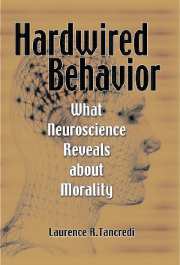
This book explores the impact of neuroscience research over the past 20 or more years on brain function as it affects moral decisions. Findings show that the mind and brain are very close, if not the same, and that the brain 'makes' the mind. This is bringing about a change of focus from examining mental activity (mentalism) to the physical activity of the brain (physicalism) to understand thinking and behavior. We are discovering that the physical features of the brain play the major role in shaping our thoughts and emotions, including the way we deal with 'moral' issues. This book sets out the historical framework of the transition from 'mentalism' to 'physicalism', shows how the physical brain works in moral decisions and then examines three broad areas of moral decision-making - the brain in 'bad' acts, the brain in decisions involving sexual relations, and the brain in money decision-making.
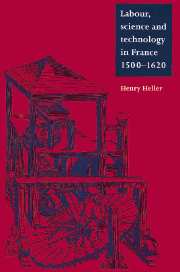
For a generation, the history of the ancien régime has been written from the perspective of the Annales school, with its emphasis on the role of long-term economic and cultural factors in shaping the development of early modern France. In this detailed 1995 study, Henry Heller challenges such a paradigm and assembles a huge range of information about technical innovation and ideas of improvement in sixteenth-century France. Emphasising the role of state intervention in the economy, the development of science and technology, and recent research into early modern proto-industrialisation, Heller counters notions of a France mired in an archaic, determinist mentalité. Despite the tides of religious fanaticism and seigneurial reaction, the period of the religious wars saw a surprising degree of economic, technological and scientific innovation, making possible the consolidation of capitalism in French society during the reign of Henri IV.
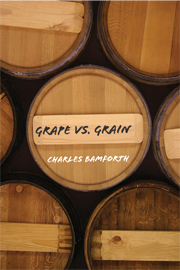
Why is wine considered more sophisticated even though the production of beer is much more technologically complex? Why is wine touted for its health benefits when beer has more nutrition value? Why does wine conjure up images of staid dinner parties while beer denotes screaming young partiers? Charles Bamforth explores several paradoxes involving beer and wine, paying special attention to the culture surrounding each. He argues that beer can be just as grown-up and worldly as wine and be part of a healthy, mature lifestyle. Both beer and wine have histories spanning thousands of years. This is the first book to compare them from the perspectives of history, technology, the market for each, and the effect that they have on human health and nutrition.
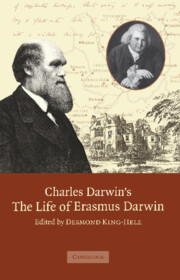
Charles Darwin's book about his grandfather, The Life of Erasmus Darwin, is curiously fascinating. Before publication in 1879, it was shortened by 16%, with several of the cuts directed at its most provocative parts. The cutter, with Charles's permission, was his daughter Henrietta - an example of the strong hidden hand of meek-seeming Victorian women. Originally published in 2003, this first unabridged edition, edited by Desmond King-Hele, includes all that Charles originally intended, the cuts being restored and printed in italics. Erasmus Darwin was one of the leading intellectuals of the eighteenth century. He was a respected physician, a well-known poet, a keen mechanical inventor, and a founding member of the influential Lunar Society. He also possessed an amazing insight into the many branches of physical and biological science. Most notably, he adopted what we now call biological evolution as his theory of life, 65 years prior to Charles Darwin's Origin of Species.
Scientists and 'anti-scientists' alike need a more realistic image of science. The traditional mode of research, academic science, is not just a 'method': it is a distinctive culture, whose members win esteem and employment by making public their findings. Fierce competition for credibility is strictly regulated by established practices such as peer review. Highly specialized international communities of independent experts form spontaneously and generate the type of knowledge we call 'scientific' - systematic, theoretical, empirically-tested, quantitative, and so on. Ziman shows that these familiar 'philosophical' features of scientific knowledge are inseparable from the ordinary cognitive capabilities and peculiar social relationships of its producers. This wide-angled close-up of the natural and human sciences recognizes their unique value, whilst revealing the limits of their rationality, reliability, and universal applicability. It also shows how, for better or worse, the new 'post-academic' research culture of teamwork, accountability, etc. is changing these supposedly eternal philosophical characteristics.
In the very successful and widely discussed first volume in the Golem series, The Golem: What You Should Know About Science, Harry Collins and Trevor Pinch likened science to the Golem, a creature from Jewish mythology, a powerful creature which, while not evil, can be dangerous because it is clumsy. In this second volume, the authors now consider the Golem of technology. In a series of case studies they demonstrate that the imperfections in technology are related to the uncertainties in science described in the first volume. The case studies cover the role of the Patriot anti-missile missile in the Gulf War, the Challenger space shuttle explosion, tests of nuclear fuel flasks and of anti-misting kerosene as a fuel for airplanes, economic modeling, the question of the origins of oil, analysis of the Chernobyl nuclear disaster, and the contribution of lay expertise to the analysis of treatments for AIDS.
Future Imperfect describes and discusses a variety of technological revolutions that might happen over the next few decades, their implications and how to deal with them. Topics range from encryption and surveillance through biotechnology and nanotechnology to life extension, mind drugs, virtual reality and artificial intelligence. One theme of the book is that the future is radically uncertain. Technological changes already begun could lead to more or less privacy than we have ever known, freedom or slavery, effective immortality or the elimination of our species, and radical changes in life, marriage, law, medicine, work and play. We do not know which future will arrive, but it is unlikely to be much like the past. It is worth starting to think about it now.
Is the world warming due to the Greenhouse Effect?Can nuclear weapon arsenals be relied upon without periodic testing?Is the world running out of oil?What action should be taken against an outbreak of foot-and-mouth or BSE?Why can't scientists provide certain answers to these and many other questions?The uncertainty of science is puzzling. It arises when scientists have more than one answer to a problem or disagree amongst themselves. In this engaging book, Henry Pollack guides the reader through the maze of contradiction and uncertainty, acquainting them with the ways that uncertainty arises in science, how scientists accommodate and make use of uncertainty, and how in the face of uncertainty they reach their conclusions. Taking examples from recent science headlines and every day life, Uncertain Science … Uncertain World enables the reader to evaluate uncertainty from their own perspectives, and find out more about how science actually works.
Is the universe around us a figment of our imagination? Or are our minds figments of reality? In this refreshing new look at the evolution of mind and culture, bestselling authors Ian Stewart and Jack Cohen eloquently argue that our minds necessarily evolved inextricably within the context of culture and language. They go beyond conventional reductionist ideas to look at how the mind is the response of an evolving brain trying to grapple with a complex environment. Along the way they develop new and intriguing insights into the nature of evolution, science and humanity.
Conflict, sadly, is part of our everyday life; experienced at home, in the workplace, on our TV screens. But is it an inevitable part of the fabric of our existence? In this volume, eight experts examine conflict at many levels, from the workings of genes to the evolution of galaxies. Evolutionary biologist David Haig examines why we disagree with ourselves, and psychologist Simon Baron-Cohen asks whether differences between the average male and female mind must necessarily lead to misunderstanding. Anthropologist Richard Wrangham explores why chimpanzees and humans have evolved to kill, while archaeologist Barry Cunliffe examines the roots of warfare. Political scientist Lisa Anderson analyses conflict in the Middle East, and broadcaster Kate Adie reflects on television reporting of war. The book concludes with industrial economist William Brown's discussion of conflict in labour relations, and an exploration of the creative and destructive effects of cosmic violence by physicist P. C. W. Davies.
In this book, first published in 2006, seven internationally renowned writers address the theme of Power from the perspective of their own disciplines. Energy expert Mary Archer begins with an exploration of the power sources of our future. Astronomer Neil Tyson leads a tour of the orders of magnitude in the cosmos. Mathematician and inventor of the Game of Life John Conway demonstrates the power of simple ideas in mathematics. Screenwriter Maureen Thomas explains the mechanisms of narrative power in the media of film and videogames, Elisabeth Bronfen the emotional power carried by representations of life and death, and Derek Scott the power of patriotic music and the mysterious Mozart effect. Finally, celebrated parliamentarian Tony Benn critically assesses the reality of power and democracy in society.
Over the past 500 years, the average length of a human life in the developed world has more than doubled while the maximum has remained essentially unchanged. We have eliminated or greatly reduced most of the traditional causes of mortality, including mass killers such as smallpox, measles, influenza, and complications of childbirth. But old age remains incurable and always lethal.
Why? On the face of it, aging looks like poor design. We have been selected by evolution for reproductive success; the longer you live without serious aging, the longer you can keep producing babies. Even if you are no longer fertile, staying alive and healthy allows you to help protect and feed your descendants.
The obvious answer is that if nobody got old and died there would be no place for our descendants to live and nothing left for them to eat. But that confuses individual interest with group interest; although group selection may have played some role in evolution, it is generally agreed that the major driving force was individual selection. If I stay alive, all of my resources go to help my descendants; insofar as I am competing for resources, I am competing mostly with other people's descendants. Besides, we evolved in an environment in which we had not yet dealt with other sources of mortality, so even if people did not age they would still die, and on average almost as young. In traditional societies, only a minority lived long enough for aging to matter.