To save content items to your account,
please confirm that you agree to abide by our usage policies.
If this is the first time you use this feature, you will be asked to authorise Cambridge Core to connect with your account.
Find out more about saving content to .
To save content items to your Kindle, first ensure no-reply@cambridge.org
is added to your Approved Personal Document E-mail List under your Personal Document Settings
on the Manage Your Content and Devices page of your Amazon account. Then enter the ‘name’ part
of your Kindle email address below.
Find out more about saving to your Kindle.
Note you can select to save to either the @free.kindle.com or @kindle.com variations.
‘@free.kindle.com’ emails are free but can only be saved to your device when it is connected to wi-fi.
‘@kindle.com’ emails can be delivered even when you are not connected to wi-fi, but note that service fees apply.
South Africa was one of the countries having its own nuclear bombs as a deterrent force. In fact it was the only African country having this capability. The ‘weapons grade’ HEU (Highly Enriched Uranium)235 was manufactured during a secret nuclear programme and it total this yielded enough material to produce a number of nuclear bombs. It was an open secret that Israel has actively supported this program. The South African Air Force had two military aircraft suitable for the launch of their nuclear weapons: the English Electric Canberra and the Blackburn S.50 Buccaneer.
Already in 1948 an Atomic Energy Board was established with as final result a nuclear research laboratory near Pretoria in the early sixties. The research also included uranium enrichment. When the international political situation in Africa was such that, just like Israel, the very existence of the ‘white’ South African republic became under pressure the enrichment of weapons grade uranium was started. It was the intention to build up a typical ‘Cold War’ style deterrent force to give a very clear message to neighbouring countries not to start any military adventures against South Africa. Although preparations were made for a nuclear test explosion in the Kalahari desert in the summer of 1977 this never took place under heavy international pressure.
In spite of this there was enough U235 material enriched to produce a number of nuclear bombs. These would have been delivered by specially modified versions of the English Electric Canberra and the Blackburn S.50 Buccaneer. However, also nuclear ballistic missiles were at that stage under active development. The South African nuclear bombs were estimated to have a yield of 10 to 18 KT. The bomb had, when fully assembled, a length of 1.8 m and a diameter of 63.5 cm with a weight of 900-1000 kg.
South Africa ended its nuclear weapons programme in 1989. All the bombs (six constructed and one under construction) were dismantled and South Africa acceded to the Treaty on the Non-Proliferation of Nuclear Weapons when South African Ambassador to the United States Harry Schwarz signed the treaty in 1991. On 19 August 1994, after completing its inspection, the International Atomic Energy Agency (IAEA) confirmed that one partially completed and six fully completed nuclear weapons had been dismantled.
The S.2A was the original Royal Navy S.2 adapted for continuous use from land by the R.A.F. with minor modifications only and with more powerful Rolls Royce Spey engines. A number of S.2A’s were later converted into S.2B’s.
The S.2B was the version exclusively built for the R.A.F. It had a somewhat higher all-up weight, a strengthened undercarriage and an enlarged bomb bay, making a distinctive bulge under the fuselage. It could carry additional fuel in this enlarged bomb bay. Although the catapult hold-back was removed, it still had an arrester hook and folding wings. Most machines could be fitted with four underwing Martel missiles. In total the R.A.F. received 46 machines that were built and delivered between 1973 and 1977. Another three (XZ430 to XZ432) were supplied to the Ministry of Defence for various weapon trials. The S.2C was a small batch of eight S.2B aircraft modified back to S.2A standards for use by the Fleet Air Arm. The S.2D was basically a small batch of nine S.2B for the Fleet Air Arm adapted to be equipped with the Martel.
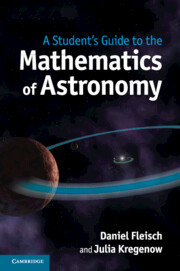
The study of astronomy offers an unlimited opportunity for us to gain a deeper understanding of our planet, the Solar System, the Milky Way Galaxy and the known Universe. Using the plain-language approach that has proven highly popular in Fleisch's other Student's Guides, this book is ideal for non-science majors taking introductory astronomy courses. The authors address topics that students find most troublesome, on subjects ranging from stars and light to gravity and black holes. Dozens of fully worked examples and over 150 exercises and homework problems help readers get to grips with the concepts in each chapter. An accompanying website features a host of supporting materials, including interactive solutions for every exercise and problem in the text and a series of video podcasts in which the authors explain the important concepts of every section of the book.
When the Gulf war started, only the operational R.A.F. squadrons, nos. 12 and 208 and no. 237 OCU still had Buccaneers on their strength and many of the 60 still in service after the metal fatigue problem was solved were by that time already retired. The few remaining Royal Navy Buccaneers were retired some years earlier and replaced by the Sea Harrier (which is now also phased out!). In spite of the successes in the Gulf War, the Buccaneer was withdrawn from service and replaced with the Tornado. By mid-1993 no. 208 Squadron had become the only operational user of the type. The last Buccaneers were withdrawn in March 1994 when 208 Squadron was disbanded. The three Buccaneers from the Ministry of Defence flying at the R.A.E. for weapons were used until 1985. They were: XV344, XW987 and XW988.
XV344 went to Farnborough, where it still is on static display. XW987 and XW988 were withdrawn from flying status in 1985 and acquired by aviation enthusiast Mike Beachy Head in South Africa. Both were still in airworthy conditions and received in South Africa the civil registration ZU-BCR and ZU-AVI. They were operated by Thunder City in Cape Town, together with Buccaneer S.2B XW986 (ZU-NIP) in the airshow circuit, but in 2011 all three machines were offered for sale when Thunder City closed its gates because of the bad economic prospects. ZU-NIP is currently owned by Ian Pringle. It is still in airworthy condition as has flown at an airshow in February 2012 together with ZU-BCR! All three Buccaneers are still offered for sale!
Versions and production list
The first three NA.39 prototypes XK486- XK488 were purely intended for aerodynamic research and were in fact ‘flying shells’ without any military equipment. XK489 and XK490 were already navalized with folding wings and an arrester hook. Further they carried provisions for future armament testing and a modified nose for radar testing. XK491 and the first NA.39 pre-production aircraft were fitted with autopilot, and an enlarged nose for the final operational radar system All Buccaneers were produced at the Blackburn production facilities at Brough, near Kingston-upon-Hill.
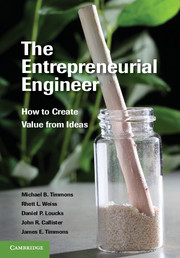
Authors, educators and successful entrepreneurs wrote this textbook with the primary goal of maximising your chance of entrepreneurial success. It is designed to encourage those wanting to start a business and those who have already begun. It includes guidance, instruction and practical lessons for the prospective entrepreneur. The book focuses on early stage financing of a start-up company, beginning with an emphasis on constructing an effective business plan, including writing techniques to help convey your message, and preparing solid financial statements. This 'why' and 'how' of writing a business plan is followed by recommendations on raising outside capital. Important topics include developing your marketing strategy, recruiting and managing creatives and managers, and retaining effective employees. Legal structures, negotiation strategies, and economic evaluation of opportunities are also discussed. The book concludes with a chapter on project management. It includes many engineering economy topics, sufficient for those taking the FE exam.
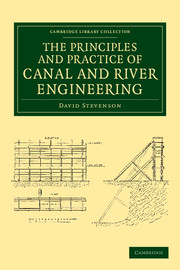
One of the leading figures in the age of great engineers, David Stevenson (1815–86) was the son of a lighthouse builder, and while studying at Edinburgh University he was already gaining experience at his father's side. It is for his lighthouses and works of inland navigation that he is best remembered: he designed Britain's most northerly lighthouse and worked on improving navigation on rivers such as the Dee, the Forth and the Clyde. His article on inland navigation for the Encyclopaedia Britannica was published separately in 1858, and was revised and updated for this second edition in 1872. Although Stevenson acknowledges that the age of the canal has been superseded by the age of the railway, he maintains that there is much to learn from the older technology. Illustrated with cross-sections and plans, this work will be of interest to readers seeking to explore the history of Britain's industrial infrastructure.
Fourteen Buccaneers S.1 from the preproduction were evaluated by No.700Z Sq. at Lossiemouth. XK531 and XK532 were the first to arrive in March 1961 but by the end of this year also XK533-XK535 arrived, soon followed by the all-white painted XK535. They were all extensively test flown. The first operational squadron flying with the Buccaneer was No. 801 at Lossiemouth. They received the first operational production S.1’s in July 1962 and soon embarked on board of the aircraft carrier Ark Royal. Later they were transferred to the aircraft carrier Victorious. No. 809 squadron was the second one equipped with the Buccaneer S.1, based at Lossiemouth. Later it was re-formed into No. 736 squadron acting as an operational training centre for Buccaneer crews. No.800 Sq. was the third and last squadron to be equipped with the Buccaneer S.1. They were stationed on board of the aircraft carrier Eagle and later on the Ark Royal. The total number of Buccaneer S.1 built was 60, including the prototypes and development machines. The last S.1 left the production line in December 1963. Although fully operational, the Buccaneer S.1 had as most important shortcoming that its two De Havilland Gyron Junior engines of 3221 kg thrust each provided not enough power for take off at maximum fuel load from an aircraft carrier. To solve this problem temporary a number of S.1’s was used as a tanker to fuel-up the other Buccaneers in flight shortly after take off. Final solution was a version with more powerful engines; the Buccaneer S.2. Concluding we can say the Buccaneer S.1 never fully met its expectations and it had a relatively short operational career at the Royal Navy when all machines were permanently grounded after two crashes in December 1970. Except for a few machines used as museum piece or gate guard and some S.1’s being converted into S.2 versions, most were soon scrapped.
The Buccaneer S.2
Plans for re-engining the Buccaneer already existed in 1959. As new engine the Rolls Royce Spey was finally selected. It was the same type as used in the De Havilland/B.A.C. Trident airliner. It would fit reasonably well into the Buccaneer airframe without the need for extensive re-designing. The Spey, with designation RB.168-1A was a two-spool bypass engine offering 4990 kg thrust, some 40% more than the Gyron Junior.
The fuselage of the Buccaneer was designed using Whitcomb’s area rule technique, which had the effort of reducing drag while travelling at high subsonic and transonic speeds, and gave rise to the characteristic curvy “Coke bottle” shape of the fuselage. The majority of the airframe and fuselage was machined from solid casting to give great strength to endure the stress of low level operations. Considerable effort went into ensuring that metal fatigue would not be a limiting factor of the Buccaneer’s operational life even under the formidable conditions imposed of continuous low level flight. A large split air brake was built into the tail cone of the aircraft. The hydraulically operated air brake formed two leaves that could be opened into the air stream to quickly decelerate the aircraft. The style of air brake chosen by Blackburn was highly effective in the dive-attack profile that the Buccaneer was intended to perform, as well as effectively balancing out induced drag from operating the BLC system. It featured a variable incidence tail-plane that could be trimmed to suit the particular requirements of low-speed handling or high-speed flight; the tail-plane had to be high mounted due to the positioning and functionality of the Buccaneer’s air brake. The wing design of the Buccaneer was a compromise between two requirements: a low aspect ratio for gust response and high aspect ratio to give good range performance. The relatively small wing was suited to high-speed flight at low altitude; however, a small wing did not generate sufficient lift that was essential for carrier operations. Therefore, BLC (Boundary Layer Control) was used upon both the wing and horizontal stabilizer, having the effect of energising and smoothing the boundary layer airflow, which significantly reduced airflow separation at the back of the wing, and therefore decreased stall speed, and increased effectiveness of trailing edge control surfaces including flaps and ailerons. For use on aircraft carriers the complete nose and tail sections could be swivelled 180°. Reason for this was that the aircraft had to fit in the aircraft carrier’s lift.
When the NA.39 was ordered as a new attack plane for the Royal Navy, a landbased version was also offered to the R.A.F. as a replacement for the Canberra bomber. However, at that time they showed no interest since they had selected the B.A.C. TSR-2. It had Mach 2+ capability and could operate both at low and high altitude. Even when the TSR-2 was cancelled in 1965 the R.A.F. still was not interested since they regarded the General Dynamics F-111K as the best alternative. However, when also plans to acquire the F-111K were cancelled in January 1968 it meant the Canberra still was not replaced! Blackburn/Hawker Siddeley had already earlier submitted a further development of the Buccaneer (Project P.150). It could reach supersonic speeds thanks to a thinner wing and re-heated jet engines. It also had up-dated navigation/attack systems (from the TSR-2) but even after cancellation of the TSR.2 the Blackburn project was not accepted. With the cancellation of the F-111K order, the R.A.F. did not have a suitable modern attack plane!
Reluctantly, an order was placed for 26 Buccaneer S.2B’s for the R.A.F. (XW525- XW550). In addition the R.A.F. agreed to take over a number of Royal Navy S.2’s after some minor modification designating these as the S.2A. The first S.2A delivered was XV350 which made its first flight in this modified form on 11 February 1969. Later on another twenty S.2B’s were ordered for the R.A.F. with another three supplied for weapon trials at R.A.E. Bedford. The last S.2B was delivered in January 1977.
The S.2B could be easily distinguished by a bulge below the fuselage to accommodate an enlarged fuel tank of 1932 l (425 UK gal.) in the bomb bay. Other changes included up-to-date R.A.F. avionics and a strengthened undercarriage. It had a higher all-up weight of 28,123 kg. Although the catapult hold-back was removed the arrester hook and folding wings were retained to avoid additional re-design work. Of course the arrester hook was not used, but the R.A.F. Buccaneers regularly used the wing folding mechanism for efficient parking. The following R.A.F. squadrons were equipped with the Buccaneer:
- No. 12 Squadron (Honington)
- No. 15 Squadron (Laarbruch, Germany)
- No. 16 Squadron (Laarbruch, Germany)
- No. 208 Squadron (Honington and Lossiemouth)
- No. 216 Squadron (Honington and Lossiemouth)
- No. 237 OCU at Lossiemouth/Honington used the S.2A and S.2B for conversion training.
In the United Kingdom Buccaneer S.2 XX885 is being rebuilt to flying condition by Hawker Hunter Aviation. It was granted UK CAA permission to fly in April 2006. A number of Buccaneers in the UK are in fast taxiing condition and several more are being rebuilt to taxiing condition. The following complete aircraft are still existing:
Except for the 36 Buccaneers as listed above there are a number of Buccaneer nose sections, fuselage/wing sections and other components in possession of various public and private owners.
As standard armament for attack of enemy targets the Buccaneer carried under its wings four Martel air-to-surface missiles. The Martel was developed jointly by the Anglo-French companies Hawker-Siddeley and Matra. It went into operational service at both countries. The French Armee de l’Air used their Mirage III as a launching platform. Basically there were two versions of the Martel. The missile designated as AS.37 was fitted with a device homing on the radar installation of enemy ships and anti-aircraft batteries. A different version designated as AJ.168 had for homing to its target a nose-mounted TV camera. Externally the two versions could be easily distinguished by the shape of their nose cone. The Martel (an abbreviation for Missile-Anti-Radiation-TELevision) was a weapon with a length of 4.18 m, a diameter of 0.4 m and a weight of 550 kg. It was powered by a two-stage rocket motor with solid propellant and was fitted with cruciform small wings with a span of 1.2 m and had a maximum range of 60 km. Once fired it cruised to its target with a speed of some 1000 km/h (Mach 0.9). It was armed with an armour-piercing explosive load of 150 kg with a proximity fuse. The Buccaneer used the Martel until it was replaced by the Sea Eagle.
Sea Eagle
For attacks on enemy ships British Aerospace (‘BAe Dynamics’) developed a missile more or less in the same class as the French Exocet. The weapon had a length of 4.24 m, cruciform wings with a span of 1.2 m, a body diameter of 0.4 m and a total weight of 580 kg. It carried an explosive load of 230 kg PBX (Polymer- Bound-Explosive) and was semi-armour piercing. It was powered by a small paraffin-burning turbojet and was inertial-guided with active radar homing. Just like the French Exocet it was a sea-skimming weapon, and as such much more difficult to intercept than the Martel. Its load was regarded as sufficient to sink or disable a large military vessel like an aircraft carrier and its systems were protected against jamming or decoys.
It was operated both by Royal Navy and R.A.F. and it was also exported to Saudi Arabia and India. Just like the Martel it flew at subsonic speeds (up to Mach 0.9). However, it had a much larger range than the Martel: more than 110 km with a flight duration of almost seven minutes.
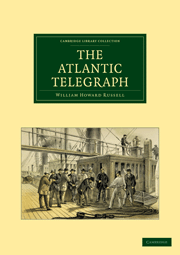
In 1866, William Howard Russell (1820–1907) published this work, the official account of the July 1865 expedition on board the Great Eastern to lay a cable along the Atlantic Ocean floor between Valentia, Ireland, and Foilhummerum Bay in Newfoundland. It is illustrated with 26 lithographs of watercolours by Robert Dudley, who also travelled with the expedition. The cable, constructed by the Telegraph Construction & Maintenance Company, was designed to create a communications bridge between North America and Europe, enabling telegrams to be sent and received within minutes, when previously messages could be sent only by ship. The 1865 expedition was the fourth attempt to lay the cable, and although after 1200 miles the cable broke and was lost in the ocean, an expedition the following year was finally successful. This lively account of a pioneering attempt will appeal to anyone with an interest in the history of technology.