To save content items to your account,
please confirm that you agree to abide by our usage policies.
If this is the first time you use this feature, you will be asked to authorise Cambridge Core to connect with your account.
Find out more about saving content to .
To save content items to your Kindle, first ensure no-reply@cambridge.org
is added to your Approved Personal Document E-mail List under your Personal Document Settings
on the Manage Your Content and Devices page of your Amazon account. Then enter the ‘name’ part
of your Kindle email address below.
Find out more about saving to your Kindle.
Note you can select to save to either the @free.kindle.com or @kindle.com variations.
‘@free.kindle.com’ emails are free but can only be saved to your device when it is connected to wi-fi.
‘@kindle.com’ emails can be delivered even when you are not connected to wi-fi, but note that service fees apply.
This written version of a plenary to the Language Testing Research Colloquium relates research into second language speaking task performance to language testing. A brief review of models of communicative competence and of speaking is provided. Then, two major areas within testing are discussed: the concepts of difficulty and ability for use. The next section covers research into spoken task-based performance, covering effects from task conditions, and from task characteristics. In addition, the measurement of such performance is described and briefly compared with performance rating in testing. Then, the final section relates the task research findings to language testing. A framework for testing spoken performance is outlined, and the general claim made that effective sampling through tests, in order to generalise to real-world performance, can usefully draw on findings from second language task research, as well as the distinction between Conceptualiser and Formulator processes.
This paper explores the question of what matters and what is made to matter — the ethics of encounters in the intimate entwining of ontology and epistemology. Within an ethics based on matter and mattering, it explores the evolving symbiotic entanglement of humans with each other and with non-human beings, who, with us, make up the world. Our complex symbiotic relationality is discussed in relation to the limiting force of neoliberalism, where all that matters is economic growth and productivity. It asks what hope there is for the survival of the planet, when so many humans, including politicians of almost every stripe, have lost the capacity to think outside the neoliberal box. As things stand, as one scientist observed, it is as if we have a medical, terminal diagnosis, and, although there is a cure, we choose to ignore it. It asks what are those cures and explores the possibility that we humans might learn to respond — to be response-able to our planet, in its state of terminal distress.
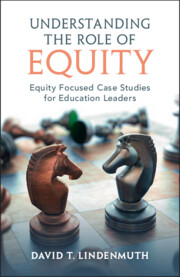
Leaders at both school and district levels need to understand the complexities of equity and its role in order to support their students and staff and to avoid the pitfalls that their colleagues have become victims to due to a lack of knowledge and perspective. Beginning with a foundational understanding surrounding the multifaceted aspects of equity in the school setting, this book supports the researched practitioner with resources and tools to explore policies, practices, and daily decisions that occur as a result. The hands-on approach of case study analysis, followed by the factual review of “what happened” in the actual scenarios, allows for a self-reflective examination of individual decision making and insight concerning what pitfalls to avoid and/or expect. The reflective practice that each leader must strive to perform during their ongoing leadership journey is supported with an introduction to additional theories and subsequent learning concepts.
The Kigali Amendment introduced a new family of chemical compounds, which do not contribute to stratospheric ozone depletion but present a high global warming potential, under the watch of the Montreal Protocol in 2016. Earlier this year, a press note from the World Meteorological Organization entitled “Ozone layer recovery is on track, helping avoid global warming by 0.5°C” caught our attention because of the wrong conclusions that can be potentially drawn by laypersons due to an apparent linkage of ozone depletion and global warming problems. Public communication of the Montreal Protocol since the Kigali Amendment should be more careful than ever to avoid lessening the social perception of the threat of climate change, particularly considering that society already has a distorted representation of these problems, assuming causal relations between ozone depletion and climate change, that could lead to unfounded optimism towards the climate crisis.
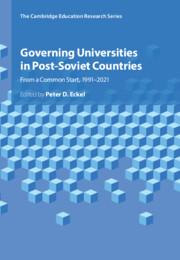
University governance is an essential but complex phenomenon, even in countries where institutional-level governance has a long and strong tradition. After the dissolution of the USSR, each of the 15 former Soviet countries developed their own university governance system and this groundbreaking book explores how these countries evolved from the 'common start' of a unified and tightly controlled higher education system, to shaping their own paths in higher education. Each chapter explores a different country, allowing university governance models to be compared and contrasted. The countries provide examples of a variety of different governance models – state-extended, academic focused, internal/external and civic – and the book highlights the advantages and disadvantages of each relative to their context. It also presents innovative frameworks to understand governance effectiveness in terms of autonomy, competition, and capacity. It is essential reading for researchers, students, and policy makers. This title is also available as open access on Cambridge Core.
Who should speak for children in applied linguistics research? Should it be only adults, or is there room for children's perspectives and views as well? This pioneering book brings their voices to the forefront and shows that listening to children can open up new possibilities to conduct research with children rather than just on them. It covers a range of possibilities, from simply asking for children's perspectives to increasing levels of active participation, including adult-child partnerships as well as child-led research. Examples taken from the interdisciplinary literature illustrate what is feasible to achieve in different contexts, and both benefits and challenges are discussed, alongside the most pressing ethical dilemmas. A new, alternative framework for researching with children is promoted, which invites teachers and researchers to consider a wider range of roles that children can play, and encourages them to find their own opportunities when it comes to research involving children.
Student development theory (SDT) is a diverse corpus of academic and popular psychology with real-world application to the maturation of college and university students. It originated during the campus upheavals of the 1960s as part of a collective effort to reconcile restive students to mass higher education and modern technological society. Then, in the 1970s, SDT was implemented and refined by an ambitious generation of student affairs professionals eager for institutional influence and academic legitimacy. By providing an animating moral and intellectual purpose to the bureaucratic sundering of student affairs divisions from academic affairs divisions, SDT abetted a lasting institutional and cultural change in the organization of the modern university circa 1970. As a discourse of therapeutic empowerment, SDT has had an enduring influence on the daily practice of student affairs administration in the five decades since.
In this article, I examine efforts to rewrite school history in Putin's Russia, efforts whose precedents in Russia can be traced back to the nineteenth century. I explore this process from the perspective of recent scholarship on ‘collective future thinking’ and demonstrate how a particular feeling – anxiety – shaped Russian and Soviet efforts to change history textbooks. I describe those created in Russia, focusing on their future component and the emotional message accompanying them. In contrast to some other countries, where narratives may be revised or replaced by new ones in accordance with the development of societies and political regimes, in Russia, there is evidence that previous narrative templates continue to coexist. The state may privilege one or another narrative primary in response to emotional pressures, and in some cases, this pushes people towards aggression and even death. I argue that anxiety about the future has forced the current Russian regime to initiate a school history rewriting in the midst of the Russia-Ukraine war, allowing the state to use collective memory to convince people to engage in a brutal conflict.
In a Kimberley place-based cultural story, Dangaba is a woman whose Country holds poison gas. Her story shows the importance of cultural ways of understanding and caring for Country, especially hazardous places. The authors contrast this with a corporate story of fossil fuel, illustrating the divergent discourses and approaches to place. Indigenous and local peoples and their knowledge, cultures, laws, philosophies and practices are vitally important to Indigenous lifeways and livelihoods, and critically significant to the long-term health and well-being of people and place in our locality, region and world. We call for storying and narratives from the pluriverse of sociocultural voices to be a meaningful part of environmental education and to be implemented in multiple places of learning. To know how to hear, understand and apply the learnings from place-based story is to know how to move beyond a normalised worldview of separation, alienation, individualism, infinite growth, consumption, extraction, commodification and craving. To know how to see, feel, describe and reflect upon experience, concepts and practice is to find ways to move towards radical generosity, mutuality of becoming, embodied kinship, wisdom, humility and respect.
“Songspirals are a university for us, they are a map of understandings” (Gay’wu Group of Women, 2019, p. 33).
This paper is authored by Bawaka Country, acknowledging Country’s ability to teach and share. Country is homeland and place. Country is everything and the relationships that bring everything to life. Country is knowledge. This paper is shaped and enabled by songspirals. Songspirals are sung and cried by Yolŋu people in north east Arnhem Land, Australia, to awaken Country, to make and remake the life-giving connections between people and place.
The Goŋ-gurtha songspiral leads this paper, showing us how a Yolŋu Country-led pedagogy centres Country’s active agency by learning through, with, and as Country. This pedagogy shares with us the ongoing connections within and between generations to ensure that knowledge remains strong and that sharing is done the right way, according to Yolŋu Rom, Law/Lore. This learning is predicated on relationality and responsibility. It is a more-than-human learning in which human knowing is decentred and Country is knowledgeable. It is a learning which recognises and respects its limits and it is a learning in which the ongoing sovereignty of Yolŋu people is front and centre.
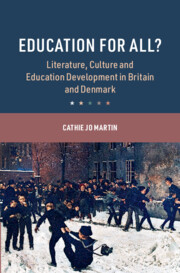
Why did Denmark develop mass education for all in 1814, while Britain created a public-school system only in 1870 that primarily educated academic achievers? Cathie Jo Martin argues that fiction writers and their literary narratives inspired education campaigns throughout the nineteenth-century. Danish writers imagined mass schools as the foundation for a great society and economic growth. Their depictions fortified the mandate to educate all people and showed neglecting low-skill youth would waste societal resources and threaten the social fabric. Conversely, British authors pictured mass education as harming social stability, lower-class work, and national culture. Their stories of youths who overcame structural injustices with individual determination made it easier to blame students who failed to seize educational opportunities. Novel and compelling, Education for All? uses a multidisciplinary perspective to offer a unique gaze into historical policymaking. This title is part of the Flip it Open Programme and may also be available Open Access. Check our website Cambridge Core for details.
Recently, we have been witnessing the emergence of scholarly interest and professional advocacy efforts centering on systemic, intersectional, fluid, and contextualized inequalities and dynamic hierarchies constructed by essentialized and idealized (non)native speakerhood (speakerism/speakering) and its personal and professional implications for English language teaching (ELT) profession(als). This critical literature review aims to portray, examine, and guide the existing scholarship focusing on a myriad of issues related to ELT professionals traditionally conceptualized as “native” and “non-native” English-speaking teachers. We come to a working conclusion that (non)native speaker/teacherhood is an epistemologically hegemonic, historically colonial, contextually enacted (perceived and/or ascribed), and dynamically experienced socio-professional phenomenon intersecting with other categories of identity (e.g., race, ethnicity, country of origin, gender, religion, sexuality/sexual orientation, social class, schooling, passport/visa status, and physical appearance, among others) in making a priori connections and assertions about individuals as language users and teachers and thereby forming discourses and practices of (in)equity, privilege, marginalization, and discrimination in ELT.
Interest in second language (L2) speech comprehensibility, or listeners’ perceived ease or difficulty of understanding a given utterance, has seen continual growth since Munro and Derwing's (1995) seminal publication in Language Learning. While recognizing the body of knowledge that has developed in the 25 plus years since Munro and Derwing's study, in the present paper we look to the future as we consider what an active and informative research agenda might look like for the next 10–15 years. In this regard, we propose four primary areas of future research, including a need to: (1) extend inquiry beyond a primary focus on L2 English speech, (2) explore comprehensibility more thoroughly as a social construct, (3) investigate the effects of more targeted task manipulations, and (4) delve deeper into the effects of comprehensibility-oriented instruction. We additionally discuss the need for more replication in L2 comprehensibility research while also promoting several scholarly disciplines we feel can greatly inform future research, such as task-based literature.