To save content items to your account,
please confirm that you agree to abide by our usage policies.
If this is the first time you use this feature, you will be asked to authorise Cambridge Core to connect with your account.
Find out more about saving content to .
To save content items to your Kindle, first ensure no-reply@cambridge.org
is added to your Approved Personal Document E-mail List under your Personal Document Settings
on the Manage Your Content and Devices page of your Amazon account. Then enter the ‘name’ part
of your Kindle email address below.
Find out more about saving to your Kindle.
Note you can select to save to either the @free.kindle.com or @kindle.com variations.
‘@free.kindle.com’ emails are free but can only be saved to your device when it is connected to wi-fi.
‘@kindle.com’ emails can be delivered even when you are not connected to wi-fi, but note that service fees apply.
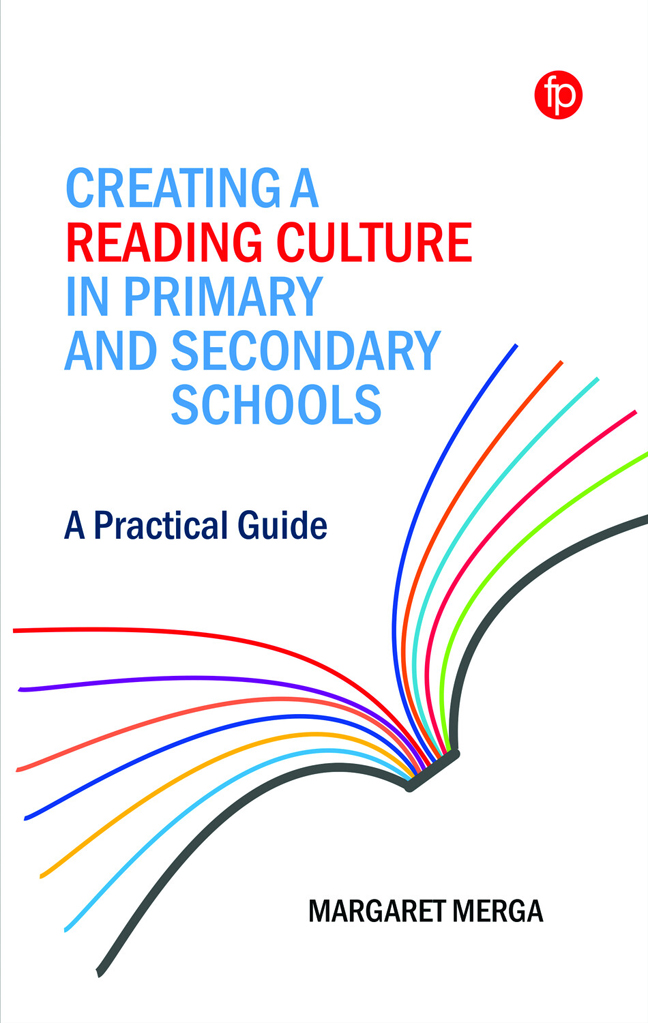
Did your school encourage a life-long love of reading? Children who identify as readers are three times more likely to have good mental wellbeing. A reading culture that permeates a school can transform it into a space where reading is supported, encouraged, normalised and valued. Creating a Reading Culture in Primary and Secondary Schools will help teachers and librarians to: advocate for the importance of a whole-school reading culture with recent research in this field; select from a number of research-supported strategies underpinning a whole-school reading culture to tailor your school's approach according to resourcing and priorities; develop a clear trajectory for building and sustaining stakeholder engagement and resourcing, including securing external funding for related initiatives; and plan and manage a multi-faceted approach to enable real change within your school.
Drawing on the author's internationally-recognised experience in this field, this book will be essential reading for anyone looking to develop reading in schools.
For years, computer-assisted language learning (CALL) has thrived as an interdisciplinary subfield, linking applied linguistics and educational technology. Despite its significance and a number of syntheses, CALL research has not yet undergone a comprehensive scientometric synthesis. This study synthesizes CALL research over a period of 42 years by employing a scientometric analysis of sources and document co-citation analyses. Scopus was used to retrieve original articles with a timespan limit from 1980 to 2021. Our records identified 4,631 articles representing CALL-based research, which were published in 63 peer-reviewed journals and collectively contained 186,589 references. The findings indicate that CALL research is supported by robust theoretical frameworks, grounded in socio-cultural and second language acquisition theories. Our research findings have revealed several significant clusters of interest within the realm of CALL, with a pronounced focus on writing among CALL scholars. Additionally, the study identified emerging research areas such as mobile-assisted language learning, synchronous computer-mediated communication, and data-driven learning in CALL literature. Notably, “CALL-core” journals exhibited high productivity, with Language Learning & Technology, Computer Assisted Language Learning, and Computers & Education standing out as top-ranked journals in terms of the Hirsch index (h-index) and co-citation. Suggestions for future research are outlined in the conclusion.
This paper explores Chalmers and Glasziou's (2009) notion of ‘research waste’ from healthcare research to examine what it can offer the field of applied linguistics. Drawing on examples from both disciplines, we unpack Macleod et al.'s (2014) five research waste categories: (1) asking the wrong research questions, (2) failing to situate new research in the context of existing research, (3) inefficient research regulation/management, (4) failing to disseminate findings, and (5) poor research reporting practices. We advance this typology to help applied linguists identify and reduce avoidable research waste and improve the relevance, quality, and impact of their research.
The purpose of this article is to investigate the interactional strategies that secondary school EFL learners use during telecollaboration with interlocutors from a different cultural and linguistic background. Its novelty lies in the educational level and cultural contexts explored as well as in the goal of examining whether frequency of strategy use may depend on the interlocutor and, if so, what the relevant factors are for such variation. The study focuses on two projects in which 10 participants from one Bulgarian school and 18 partners from two schools in Spain took part in dyadic synchronous videoconferences discussing culture-related topics. Data were collected via video recordings, field observations, semi-structured interviews, and questionnaires. The article presents both descriptive statistics and qualitative analysis of the communicative behavior of three case study students interacting with different telecollaborative partners. We found that the participants demonstrate differences in interactional behavior and utilize strategies with varying frequency depending on their interlocutor. The results also reveal crucial factors in the design of telecollaborative educational projects if learners are to successfully implement skills of discovery and interaction in real time.
In this article, which is based on my AAAL 2023 plenary talk, I argue that researchers may be contributing to widening the never-ending gap between research and practice. At least, there is such a possibility given that researchers, including myself, have rarely investigated their own beliefs and practices related to classroom teaching. In the first part, I overview research of the research–practice relationship and problematize the epistemological clash between two groups of professionals, that is, teachers and researchers. In the second part, I focus on researchers as a profession who have significant potential in contributing to education. In the third part, I share concrete ways of tackling researchers' obstacles in communicating with practitioners if, and when, they wish to be useful for real-world education, including: (a) adjusting the nature of research, and (b) improving communication methods. In conclusion, I propose a model in which the research–practice relationship can be more equitable, effective, and mutually beneficial.
Science exploration plays a vital role in children's lives as they make sense of the world around them. Now in its fifth edition, Science in Early Childhood complements the recently updated Early Years Learning Framework (EYLF) and the Australian Curriculum: Science. It offers a comprehensive introduction to the essential elements of science learning and teaching for pre-service teachers and early childhood professionals. This edition has been revised to closely align with the EYLF and Australian Curriculum: Science. It includes more content on sustainability – a rapidly growing area in early childhood science – and a stronger focus on Aboriginal and Torres Strait Islander perspectives. Each chapter includes case studies, reflection questions and practical tasks which help to bridge the gap between theory and practical applications of new concepts. Supplementary resources are available online for instructors. Science in Early Childhood is an invaluable resource for pre-service teachers and early childhood professionals.
Experiences that take place in virtual reality (VR) become part of users’ autobiographical memory. As memories can impact users’ self-perception, personal beliefs, and social interactions, storyliving in VR narratives can be used to manipulate memory and mould users’ self according to the preferences of the VR narrative creators. Poland's Ministry of Culture and National Heritage has, in recent years, generously invested in the production of VR films that depict events from the Polish historical canon. VR is a spatial technology that positions users ‘inside’ a virtual storyworld and leverages users’ sense of body position and movement to enhance memory and a sense of presence. Three dimensions of presence – self, social, and spatial – are relevant to understanding the role of VR in the politics of memory. The article interrogates a recent Polish VR production, Wiktoria 1920 (2020, dir. Tomasz Dobosz), and argues that VR representations exploit a sense of presence to shape users’ memory, perspective, and emotions in relation to the past.
Autobiographical memories show a temporal pattern with relatively many events recalled from the recent past (recency) and from adolescence to early adulthood (reminiscence bump), and very few events recalled from the first few years of life (childhood amnesia). The current study examined a temporal pattern for external memory – information stored outside of one's brain. Three survey studies asked participants to choose which age(s) in their life they would most want to keep photos from, supposing they had many photos from every year. Participants chose 1 year of photos in Study 1, which sampled undergraduates (N = 499, median age = 19), and in Study 2, which sampled online participants using stratified age brackets (N = 252, age range 18–82). Participants chose 3 years of photos in Study 3, which sampled online participants over 40 using stratified age brackets (N = 240, age range 40–93). Participants’ choices largely showed preferences for time periods likely to be well remembered (recency and the reminiscence bump). Qualitative coding of participants’ reasons for their choices showed common themes, such as positive emotions, connections to other people and pets, life milestones, personal growth, and school. Results suggest that in the case of photos, external memory served to mostly enhance or enrich internal memory and less often to compensate for internal memory.
For over forty years, presidents of the Summer School Association of Queen’s University wrote annually to teachers across Canada, encouraging them to attend summer courses for credit toward a bachelor of arts. In the 1920s, presidents’ messages associated attendance with societal progress and the professionalization of teaching. In the 1930s, such messages linked attendance with personal growth and career development. In the 1940s and 1950s, they linked attendance with having an enjoyable summer vacation. This article analyzes how and why these messages evolved and argues that the underlying structure of the messages remained consistent: they were means through which Queen’s Summer School Association presidents marked symbolic boundaries between more and less professional teachers. This article contributes to our understanding of the social history of teacher education by interpreting a unique primary data source to explore the participation of teachers themselves in the construction of symbolic boundaries marking professional status.
Most studies of sex education center on local Anglo-Euro-American contexts, tracing the origin of sex education to a coordinated response to the spread of venereal diseases. These neglect the circumstances in which sex education developed in the developing world between the 1950s and 1980s: a growing collective anxiety about rising birth rates that culminated in the adoption of population control measures. This paper examines the “glocal” history of population-centered sex education in the developing world in the 1960s and 1970s, through the case study of Singapore. Examining the emergence of the first sex education curriculum in post-independence Singapore between 1966 and 1973, I argue that population-centered sex education that emerged in Singapore was intimately connected with global population politics. Analysis of how the policy was formulated shows that the Singapore state reacted to both domestic and global concerns. In connecting local developments to global contexts, this paper gestures toward the possibilities of studying the global history of population-centered sex education.
Conversational remembering entails that people engage in recalling past experiences, which may themselves have been shared. Conversational remembering comes with social benefits for the person telling the narrative and the one receiving it (e.g., developing and strengthening friendships, fostering entertainment, and consolidating group identity). COVID-19 lockdowns have significantly affected social interaction, including face-to-face interactions where conversational remembering occurs. The aim of this study was to explore how WhatsApp group messages supported conversational remembering in a large group of friends living in Buenos Aires where a complete lockdown was established between 19 March 2020 and 6 November 2020. To accomplish such aim, we conducted a mixed-methods longitudinal study. The data consisted of 32,810 WhatsApp group messages collected over a period of 700 consecutive days, from 13 April 2019 to 13 March 2021. Our study shows that WhatsApp group messages enabled group members to keep connected during the COVID-19 lockdown period. This occurred by remembering together situations, events, and actions associated with the group's identity. The use of WhatsApp group messages may have represented an adaptive collective behaviour in response to changes in global social norms.
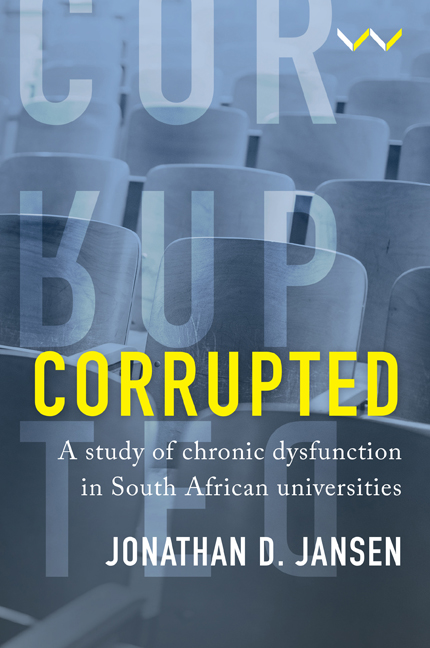
In South African higher education, the images of dysfunction are everywhere. Year after year, often in the same set of universities; the problem of routine instability seems insoluble. The financial, academic and reputational costs of ongoing dysfunction are high, especially for those universities caught-up in the never-ending struggle to overcome apartheid legacies. Any number of explanations have been ventured, including a lack of resources, shortage of capacity, rural location, corrupt officials, and endemic conflict. Corrupted takes a deeper look at dysfunction in an attempt to unravel the root causes in a sample of South African universities. At the heart of the problem lies the vexed issue of resources or, more pertinently, the relationship between resources and power: who gets what, and why? Whatever else it aspires to be-commonly, a place of teaching, learning, research and public duty - a university in an impoverished community is also a rich concentration of resources around which corrupt staff, students and those outside of campus all vie for access.
Taking a political economic approach, Jonathan Jansen describes the daily struggle for institutional resources and offers accessible, sensible insights. He argues that the problem won't be solved through investments in 'capacity building' alone because the combination of institutional capacity and institutional integrity contributes to serial instability in universities. Rather, durable solutions would include the depoliticisation of university councils and appointments of academics with integrity and capacity to manage and lead these fragile institutions.
Transition from primary to secondary school is an often challenging milestone in the lives of all students. Although existing research provides insight into transition for students with autism spectrum disorder (ASD), research that considers transition from the perspective of students with ASD and concomitant intellectual giftedness (IG) appears scant. This paper contributes to narrowing this gap by providing insight into the experiences of 21 students with ASD and concomitant IG who had already transitioned to secondary school. Data gathered from focus group discussions revealed that this particular cohort of students experienced difficulties in gaining social acceptance by same-age peers and were unequipped to meet the expectations of secondary school teachers and an increased workload, which intensified their transition experience. These findings highlight that this cohort of students requires specific preparation and support to transition to secondary school, which was not occurring.
Schools have an increased focus on implementing schoolwide initiatives (e.g., multi-tiered systems of support; MTSS) to address risk factors related to dropping out. These interventions can involve multiple domains, including academic, behavioural, and social and emotional supports. Although researchers suggest that schoolwide interventions are effective, school staff may need help implementing various content (e.g., academic, behaviour) domains into a cohesive plan. This preliminary study focused on nine schools in the Midwestern United States that implemented schoolwide interventions as part of a statewide technical assistance approach. The research included using survey and extant data for all students to determine the connections between schoolwide interventions, school improvement, and student outcomes. Schools in this study that were higher on both school improvement and MTSS implementation had, in general, better student outcomes associated with predictors of dropping out of school. These findings indicate that school improvement and MTSS may be mutually beneficial enterprises that help school staff address factors related to dropping out.
This chapter gives an overview of the concepts of diversity, equity and inclusion in the context of Kazakhstan. It gives an exposition of developments regarding the process of implementing inclusive education in Kazakhstan. A historical policy context is mapped out. The chapter uses Ainscow’s lever of change approach to highlight how inclusion has evolved in aspects of conceptualisation, curriculum, policy development, teacher practices, beliefs and attitudes, schools, leadership, non-governmental organisations (NGOs) and communities. One of the lessons drawn from the review is that despite efforts and plans to make the system more equitable and inclusive, the conditions for inclusive education have not been met. There is a need to revise policies regarding student placement and practices in teaching and learning. While curriculum reforms were implemented, less effort seems to have been invested in preparation of pre-service teachers. The fact students with disabilities and special needs are integrated into the mainstream means more training for school leaders on managing inclusive schools is needed.
This chapter examines the policy learning that has taken place during the process of piloting the per-capita funding formula and the school-board governance models in Kazakhstan. It draws on evidence from policy documents, secondary data sources and the primary data from collaborative research by the Nazarbayev University Graduate School of Education (NUGSE) and the University of Cambridge (2019–2020) and the NUGSE research project for 2021–2023 focused on country-wide implementation of per-capita school funding. The chapter describes the process of piloting this funding and documents how school principals perceive this new approach and the new mandated policy of appointing their boards of trustees. This research concludes that the piloting of the per-capita funding model and scaling up this reform affirm the importance of time and an ongoing policy evaluation for enabling policy learning and achieving improved policy outcomes. Hence, every phase of piloting this funding resulted in some new understanding of this model among school principals. In addition, they gained knowledge about the boards of trustees’ role in school improvement.
This chapter looks at how the Nazarbayev Intellectual Schools (NIS) departments aimed to modernise the NIS curriculum and provide a pilot for shaping the national reform of the whole school system. The chapter also includes a critical self-reflection on the strengths and weaknesses of the reform process and learnings since. This includes reactions to the changes in civil society.
This chapter presents results of the local implementation of the Renewed Content of Education (RCE) in schools in one large urban city. In line with the focus of Part III, the authors discuss how educational policy translates through the system via regional authorities to schools, teachers, parents and students in the city. They draw on data collected in three mainstream, non-selective schools located in different districts of the city. These schools varied in terms of their numbers of pupils, and each school’s developmental history, students, parents and community composition. The main research instruments used for data collection were semi-structured interviews and focus group discussions with school principals, vice-principals, teachers, parents and students. The key purpose was to gain participants’ perspectives on the value of the RCE and their judgements and reaction to the educational innovations in their schools. The authors discuss the role of administrative support and collaboration and some unique features of the implementation process, such as work in clusters of schools and how this and other strategies fostered the implementation of these educational innovations.