To save content items to your account,
please confirm that you agree to abide by our usage policies.
If this is the first time you use this feature, you will be asked to authorise Cambridge Core to connect with your account.
Find out more about saving content to .
To save content items to your Kindle, first ensure no-reply@cambridge.org
is added to your Approved Personal Document E-mail List under your Personal Document Settings
on the Manage Your Content and Devices page of your Amazon account. Then enter the ‘name’ part
of your Kindle email address below.
Find out more about saving to your Kindle.
Note you can select to save to either the @free.kindle.com or @kindle.com variations.
‘@free.kindle.com’ emails are free but can only be saved to your device when it is connected to wi-fi.
‘@kindle.com’ emails can be delivered even when you are not connected to wi-fi, but note that service fees apply.
Finally, Chapter 17 refers to an important aspect of the role of any EC professional – ongoing professional learning. This chapter discusses reflective practice and critical reflection as a means of ensuring that EC professionals review and monitor their own practice and understand how this practice affects children’s learning outcomes. Tools such as reflective journals and professional portfolios are discussed. The theoretical aspects of EC professionals’ pedagogical content knowledge, content knowledge and pedagogical knowledge are explored.
The aim of this paper is to investigate the usefulness of examples that show typical learner errors in online pedagogical dictionaries of English for the accuracy of error correction as well as immediate and delayed retention of usage. The optimal positioning of examples of errors in entries is also researched. In an online experiment, participants did a sentence correction exercise with the help of purpose-built monolingual dictionary entries, where the provision and positioning of examples showing errors were controlled. Two test versions were created, which differed only in the presence of examples of errors in the entries. Usage retention was observed immediately after the test and two weeks later. The results indicate that it is worthwhile to include examples of errors in online learners’ dictionaries because they contribute greatly to the retention of usage in the long run. They also help to rectify errors, though the effect is not statistically significant. The positioning of examples showing errors in entries has no influence on error correction accuracy or usage retention. The study reveals examples of errors to be a valuable induction-oriented stand-alone dictionary component placed outside warning boxes, which typically include explicit grammar rules and promote deduction.
Chapter 2 provides the reader with an overview of the policy landscape and the documents that are influential in EC science provision. Attention is focused on Australia’s national curriculum framework for early childhood professionals – Belonging, Being and Becoming: The Early Years Learning Framework for Australia (AGDE, 2022). The relevance of the EYLF in relation to teaching science in the early years is explained, concluding with the identification of science outcomes for children within the framework. The relevance of the EYLF in relation to teaching science in the early years is explained, concluding with the identification of science outcomes for children within the framework. The voices of EC professionals are highlighted to illustrate how those working in the field are engaging with the framework.
The impetus to engage in partnerships in education can be interpreted as a rational response to the demands, constraints and effects of neoliberalism and globalisation. This is first because neoliberalism constructs the ideal agent as perpetually self-actualising an entrepreneurial and corporatised subjectivity. Substantive engagement with the commercial world and its actors through varied forms of partnership is an obvious way to operationalise this work and realise its product (Hay and Kapitzke, 2009). Partnership working exemplifies neoliberalism in a second way too. When the state privileges knowledge about education and its leadership and management that is generated by partners at the ‘chalk-face’ or ‘service-user’ level of practice, it implicitly marginalises expert knowledge generated in universities and local authorities or districts. Such expertise may be disregarded as overly bureaucratic or as representative of so-called ‘producer capture’. This thinking arguably underpins much of the recent turn to so-called system leadership (see Courtney and McGinity, 2022). Here, as in other products of partnerships, the outcome may be constructed as ‘an “organic” development initiated at the grassroots level’ (Griffiths et al, 2009, p 197), yet in fact differs little from that desired by the state. Third, some partnerships are explicitly a function not just of neoliberalism but of privatisation. These arrangements, called ‘public-private partnerships in education (ePPP)’ (Verger, 2012, p 110), are the preferred mechanism of the World Bank and other supranational organisations for increasing privatisation in education systems internationally for purposes including enhancing provision and access, raising learning outcomes and introducing incentives (Verger, 2012). ePPP function, on the one hand, exogenously through providing a mechanism through which private-sector actors occupy roles and provide services in education. On the other hand, they function endogenously through privileging corporatised ways of acting and thinking, as well as corporatised understandings of educational purposes in those already working in education.
Globalisation also tends to produce partnerships. It does this first through invoking a deterritorialised relationship between abstract policy concepts, for example, between global competitiveness and education. Second, globalisation discursively privileges the attainment of a relationship between such concepts in policy and practice.
Similar to spatial policy analysis, which theorises space in terms of epistemology rather than a geographical/territorial fixity, scalar policy analysis is the study of the importance of scale to the socio-political work of maintaining relations across time and space through creative practices of mediation, translation, assemblage, recontextualisation and hybridisation. Here, scales such as transnational, national, regional and local can be theorised in dynamic terms as ‘parts of multiple scalar and (also de-)territorial transformations, in which governmental power is constantly created or (de-)stablised’ (Hartong, 2018, p 2). This has given rise to a very specific field of study – the ‘politics of scale’ – which seeks to make sense of socio-political crises and developments both global and (sub)national from the perspective of scalar practices that shape the way in which discrete objects, relations and actors are held together and made to influence each other. Political economy scholars working in the field of scalar policy research, for example, note that scalar practices, such as globalisation or neoliberalism, work by enabling the interests and actions of elite groups of transnational actors to pursue new means of capital accumulation and class power through the rescaling or upscaling of work and consumption (see Harvey, 2005). Scalar practices, in other words, ‘establish and stabilise unequal relations within the capitalist world system’ (Kaiser and Nikiforova, 2008, p 539).
Here scalar practices refer to a variety of discursive and non-discursive techniques used by different actors and organisations to achieve political and economic ends through new forms of ‘territorialisation, place-making and network formation’ (Pemberton and Searle, 2016, p 78), be they governments using ‘scale’ to reimagine regional and local projects and spaces that accommodate the shift to governance or social-movement activists using ‘scale’ to facilitate interaction and coordination between subnational, national and international actors. As Fraser (2010) argues, different actors and organisations articulate and produce scale ‘to create some sort of advantage, to establish associations, connections, or solidarities across social divides, or to represent their interests (to be heard or seen) amidst oppressive or otherwise difficult conditions’ (p 332).
In policy studies that draw on a positivist epistemology, time is treated as an objectively existing, fixed and independent variable. Pralle (2006) exemplifies this perspective through research into how and why interest-group conflicts alter in terms of their patterns of engagement and their strategies. Pralle (2006) argues that as time passes, opposing groups in a conflict are more likely to move from an expansion versus containment to a direct-engagement model. DeLeo (2016) adopts a similar framing in noting that the ‘imposition of time constraints can heighten conflict’ (p 6). Writing of his own work, but arguably with wider resonance across positivist-informed policy studies, DeLeo (2016) describes time as ‘both an important context – a frame … as well as a potential catalyst’ (p 7). Nonetheless, there are limits in this framing to the malleability of time; even the tactics of ‘extending deadlines or “buying time” ‘ (DeLeo, 2016, p 16) do not move time from being an independent variable into socially constructed terrain.
There is, however, a significant literature in policy studies which, through its post-positivist epistemologies, constructs time and temporality as contextually experienced, ‘institutionally structured and caught within complex webs of social networks, relations and inequalities’ (Bennett and Burke, 2018, p 914). Social actors live time differentially; their experiences are mediated by hierarchising power structures including race, class and gender (Bennett and Burke, 2018). Drawing on Heidegger, Bennett and Burke (2018) argue that ‘experiences of time are … intensely relational’ (p 915, original emphasis); they are constitutive of context, social encounters and consequently of identities. Temporalities are embodied and distinctive. Lapping (2017) and Thompson and Cook (2014), drawing on Deleuze's theorisation of time, are able to go further in stating that time does not itself exist, but constitutes through synthesis a present that alone exists, and that only ‘just as long as the contracted relations between the contemplated elements brought together in the assemblage’ (Lapping, 2017, p 910).
Chapter 16 presents information on how EC professionals observe, assess and document science learning. EC professionals use evidence to determine what children know and understand, and base this on a process of observation (how children explore and interact within their environment), anecdotal note-taking, journal entries, checklists and folios of children’s work. The chapter describes strategies associated with the assessment of learning in science as outlined in the EYLF and the Australian Curriculum: Science. The information in this chapter is supported by case studies of EC professional practice.
Welcome to the fifth edition of Science in Early Childhood. Who would have thought we would have come so far since the inception and publication of this book back in 2012? Or that science education in early childhood (EC) would have moved forward so much? This new edition retains the essential elements of science learning and teaching that inform and guide pre-service teachers and EC professionals, while addressing the latest version (Version 2) of Belonging, Being and Becoming: The Early Years Learning Framework for Australia (EYLF) (AGDE, 2022) and Version 9 of the Australian Curriculum: Science (ACARA, 2023). Recognising the importance of shared knowledge, we have some new co-authors to bring fresh ideas and to mentor through the process of writing chapters.
Drawing on affect theory and research on academic capitalism and eleven international case studies, this book examines the contemporary crisis of universities, from the coloniality of academic capitalism to performance management and the experience of being performance-managed.
Extant studies of special education teacher wellbeing often focus on negative aspects, such as stress, burnout and the consequent attrition from teaching, the latter occurring with increasing frequency in the field of special education. In this article, the authors use the OECD teacher wellbeing framework to conceptualise special education teacher wellbeing as a positive multidimensional construct, making the case for uncoupling special education teacher wellbeing from mainstream teacher wellbeing given the almost paradigmatic difference in roles, responsibilities, and educational context within Australian schools. The (limited) literature reveals numerous possibilities for supporting and promoting special education teacher wellbeing with salient wellbeing-promoting factors, such as teacher self-efficacy, connectedness, professional development, and class structure. Further empirical studies harnessing these factors will help improve working conditions and the wellbeing of special education teachers.
This qualitative study focused on educators’ perspectives of teaching students with dysgraphia. Dysgraphia can be referred to as a specific learning disorder (SLD) in writing and includes difficulties with handwriting, spelling, and/or composition skills. To explore the educators’ experiences, an interpretative phenomenological analysis method was implemented. This involved generating semistructured interviews and locating key concepts from these interviews, in tandem with researcher reflections. The results indicated that educators developed their self-efficacy in supporting students with dysgraphia on the job, augmented by self-guided and external searches for information about dysgraphia. The participants described their colleagues as generally unable to provide them with dysgraphia-specific knowledge due to a lack of awareness of dysgraphia within schools. Two of the three educators pursued Multisensory Structured Language training, departing the classroom to work in private tuition. Three teachers offered strategies for supporting students with dysgraphia, such as explicit, systematic, scaffolded, and repetitive instruction coupled with assistive technologies or lined paper and slant boards. The study concluded that dysgraphia-specific professional learning, coupled with collective efficacy, could proactively build teachers’ capacity and self-efficacy in supporting dysgraphia within an inclusive education context. These measures would more aptly support students with dysgraphia to reach their potential.
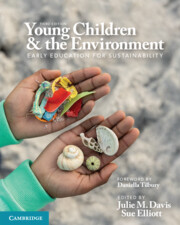
Young Children and the Environment is a practical, future-oriented resource that explores how early childhood educators can work with children, their families and wider community to tackle issues of sustainability. Now in its third edition, this seminal text covers Early Childhood Education for Sustainability, as well as the science of sustainability, public health, children's wellbeing, ethics and a broad range of environmental management topics. 'Stories from the Field' present practical ideas for early childhood educators to support their own learning and teaching in sustainability, and international case studies provide examples of how sustainability is taught to young children across the globe. Young Children and the Environment is a call to action for those who work with children to put in place practices for a sustainable future. This book is a vital resource for students and practitioners looking for guidance on how to implement change for the future of children and the environment.