To save content items to your account,
please confirm that you agree to abide by our usage policies.
If this is the first time you use this feature, you will be asked to authorise Cambridge Core to connect with your account.
Find out more about saving content to .
To save content items to your Kindle, first ensure no-reply@cambridge.org
is added to your Approved Personal Document E-mail List under your Personal Document Settings
on the Manage Your Content and Devices page of your Amazon account. Then enter the ‘name’ part
of your Kindle email address below.
Find out more about saving to your Kindle.
Note you can select to save to either the @free.kindle.com or @kindle.com variations.
‘@free.kindle.com’ emails are free but can only be saved to your device when it is connected to wi-fi.
‘@kindle.com’ emails can be delivered even when you are not connected to wi-fi, but note that service fees apply.
Many of the complex problems faced by decision makers involve uncertainty as well as multiple conflicting objectives. This book provides a complete understanding of the types of objective functions that should be used in multiattribute decision making. By using tools such as preference, value, and utility functions, readers will learn state-of-the-art methods to analyze prospects to guide decision making and will develop a process that guarantees a defensible analysis to rationalize choices. Summarizing and distilling classical techniques and providing extensive coverage of recent advances in the field, the author offers practical guidance on how to make good decisions in the face of uncertainty. This text will appeal to graduate students and practitioners alike in systems engineering, operations research, business, management, government, climate change, energy, and healthcare.
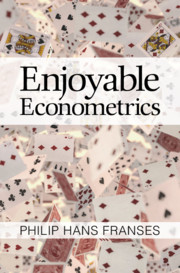
Econometrics can at first appear a highly technical subject, but it can also equip the practitioner with a useful skillset of smart ways to formulate research questions and collect data. Enjoyable Econometrics applies econometric methods to a variety of unusual and engaging research questions, often beyond the realm of economics, demonstrating the great potential of using such methods to understand a wide range of phenomena. Unlike the typical textbook approach, Enjoyable Econometrics follows in the footsteps of Freakonomics by posing interesting questions first before introducing the methodology to find the answers. Therefore, rather than equation-heavy sections based around complex methodologies, the reader is presented with chapters on 'Money' and 'Fashion, Art and Music'. Franses writes in a way that will enthuse and motivate the economics student embarking upon the essential study of econometrics. Indeed, the book shows that econometric methods can be applied to almost anything.
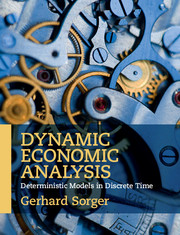
Focusing on deterministic models in discrete time, this concise yet rigorous textbook provides a clear and systematic introduction to the theory and application of dynamic economic models. It guides students through the most popular model structures and solution concepts, from the simplest dynamic economic models through to complex problems of optimal policy design in dynamic general equilibrium frameworks. Chapters feature theorems and practical hints, and seventy-five worked examples highlight the various methods and results that can be applied in dynamic economic models. Notation and formulation is uniform throughout, so students can easily discern the similarities and differences between various model classes. Chapters include more than sixty exercises for students to self-test their analytical skills, and password-protected solutions are available for instructors on the companion website. Assuming no prior knowledge of dynamic economic analysis or dynamic optimization, this textbook is ideal for advanced students in economics.
With a new author team contributing decades of practical experience, this fully updated and thoroughly classroom-tested second edition textbook prepares students and practitioners to create effective forecasting models and master the techniques of time series analysis. Taking a practical and example-driven approach, this textbook summarises the most critical decisions, techniques and steps involved in creating forecasting models for business and economics. Students are led through the process with an entirely new set of carefully developed theoretical and practical exercises. Chapters examine the key features of economic time series, univariate time series analysis, trends, seasonality, aberrant observations, conditional heteroskedasticity and ARCH models, non-linearity and multivariate time series, making this a complete practical guide. Downloadable datasets are available online.
The DNA helix of the material discussed in this chapter has a lot in common with the contents of Chapters 4 and 6, as it deals with competition based on non-price tools. Indeed, the effects of product differentiation on consumer behaviour are largely analogous to those exerted by advertising campaigns, and product differentiation is usually the outcome of firms’ investment in R&D.
However, this component of firms’ strategies deserves a place of its own, as is the case in the tradition of the theory of industrial organization, for (at least) two relevant reasons. The first is that it has spurred a large and productive stream of research on discrete choice theory, where it is explicitly admitted that there may not exist a representative consumer buying a basket including all goods supplied by any given industry. In fact, this subject is replaced by another with preferences focussed upon a detailed list of characteristics defining her/his preferred variety, and the resulting consumption choice is determined by a compromise between pure preferences, the actual varieties supplied by firms, market prices and consumer income. In the early stages of the construction of this part of IO theory, the discrete choice approach was often labelled as the address approach (Archibald et al., 1986), where the ‘address’ is the vector of coordinates identifying the position of any given product variety in the space of relevant characteristics. The alternative view connected with the figure of a representative consumer was accordingly defined as the non-address approach. In the latter framework, the typical modelization of product differentiation takes the form of a parametric preference for variety, dating back to Bowley (1924) and then revived by the modern version of monopolistic competition (Dixit and Stiglitz, 1977), the new trade theory (Helpman and Krugman, 1985, 1989), as well as IO (Singh and Vives, 1984). The second reason is that the discrete choice theory of product differentiation has produced new insights on the entry process and the evolution and long-run equilibrium configuration of industry structure. More explicitly, while under horizontal differentiation, in the vein of the Hotelling (1929) model, free entry drives prices to marginal cost and the degree of differentiation between adjacent varieties to zero, under vertical differentiation this outcome is impossible if quality improvements hinge upon fixed costs which can be likened to R&D costs (Gabszewicz and Thisse, 1980; Shaked and Sutton, 1983).
The economic theory of international trade has taken a well-defined strategic flavour in its modern version, which is known as the new trade theory. Its building blocks are monopolistic competition, consumers’ preference for variety and increasing returns to scale, but also the strategic behaviour characteristic of oligopoly theory has acquired almost immediately a considerable role in it, as testified by the volumes of Helpman and Krugman (1985, 1989), Grossman (1992), and the survey in Brander (1995), to mention only a few reference works.
This chapter offers a compact overview of relevant contributions applying differential game theory to the analysis of problems either directly connected with the dynamic translations of classical themes in trade theory, such as the optimal design of trade policies including tariffs and voluntary restraints (Section 8.1), or to issues falling in the area of environmental and resource economics with an eye to capture the impact of trade strategies and policies on the quality of the environment and the preservations of resource stocks, as well as a synthetic portray of the interaction between trade, resource exploitation and global warming (Section 8.2).
Trade and Trade Policies
This section is a survey of differential games in which the subject is the design and impact of different trade policies either in three-country models where firms export towards a third market or in two-country models where intraindustry trade takes place between them. The basic layout used in the ensuing models can be seen as a differential game version of the Cournot models with trade dating back to Brander (1981) and Brander and Krugman (1983).
Sticky Prices, Once Again
The differential game literature on the choice between import tariffs and export subsidies revisits a discussion whose building blocks are in Brander and Spencer (1985) and Eaton and Grossman (1986). Not surprisingly, all of the initial debate (Dockner and Haug, 1990,1991; Driskill and McCafferty, 1996) relies on modified versions of the Cournot sticky price oligopoly game of Simaan and Takayama (1978) and Fershtman and Kamien (1987).
Without following the chronological order of appearance, I will set out with the summary of the analysis carried out by Driskill and McCafferty (1996), who use the sticky price game to describe a classical situation in international trade theory.
The main aim of this volume is to do justice to a literature which has developed itself at the intersection of several disciplines but, unlike others using similar formal instruments (as, for example, growth theory), has not yet been given a systematic reconstruction. To avoid misunderstandings, I want to point out that the material contained in this volume covers the literature using continuous time models in industrial economics, i.e., either optimal control problems or differential games. Covering also dynamic models in discrete time would require at least the same space, or transforming the book into a large survey. Either way, the volume would become hardly useful.
After the adoption of the game theory approach, the analysis of oligopolistic competition has taken a completely new angle as compared to the previous view of industrial economics prevailing until the early 1970s. The revolution generating what we now call the theory of industrial organization (IO) has shed light on topics which had remained at the margin of the discipline for decades, creating from scratch a number of research strands. Some of the topics addressed in these fields of IO – if not all – have an explicit and intuitive dynamic nature. Capacity accumulation, research & development (R&D) and advertising are obvious examples. Yet, the game theory toolkit has included static (often multistage) and repeated games, and Markovian games in discrete time. In static multistage games, time is blackboxed, while repeated games take a time invariant constituent stage game and typically insert time and time discounting to look at critical thresholds of the latter (as in folk theorems investigating the stability of implicit collusion in prices or outputs).
Proper dynamic games in either discrete or continuous time have been seldom used. This is apparent from dominant textbook in IO at different levels (Tirole, 1988; Martin, 1993, 2002; Shy, 1995; Belleflamme and Peitz, 2010), where dynamics in continuous time is usually confined to the exposition of models dealing with R&D races. Even in Fudenberg and Tirole (1986), a relevant portion of the text treats repeated games while most of the remainder looks at R&D competition. A relevant exception is Fudenberg and Tirole (1991), in which differential game theory is presented and complemented with an illustration of oligopoly games with capacity accumulation games.
This chapter reviews differential games of different natures, sharing, however, a common feature: firms are assumed to control either quantities or prices and nothing else. Note that the evolution of applications of differential games has not been linear, so to speak. What I mean here is that while industrial economics has slowly moved away from basic oligopoly models describing quantity or price competition to account for richer and more sophisticated strategy spaces, differential games in IO left aside proper characterisation of what we are accustomed to consider as Bertrand and Cournot competition for quite some time, taking as departure points either models including several different control spaces at the same time or models where firms are indeed choosing output levels but never shoot right at the correct price level except asymptotically at equilibrium. Industrial economists started learning about differential oligopoly games thanks to Clemhout et al. (1971), where such things as consumer loyalty and market shares are already taken to be the relevant objects of analysis. And in the 1970s a large literature flourishes on themes connected with marketing and management, like advertising, which are reviewed in the next chapters. Then, Simaan and Takayama (1978) investigate the role of demand dynamics in the form of price stickiness, with many productive follow-ups.
Their model, frequently revisited, lends itself to be used as a ductile and malleable tool for the illustration of solution techniques as well as for helping us to understand properly how a state dynamics may condition the strategic behaviour of firms, and why it is relevant to adopt such a dynamic view. Put differently, in addition to its intrinsic value, the sticky price game allows one to grasp the difference between a static and a dynamic approach to a ‘simple’ oligopoly game, where ‘simple’ means that firms are just choosing output levels. This is the subject matter of Section 3.1, where quantity competition under price stickiness is investigated using several solution concepts, including nonlinear feedback strategies, also considering the case (empirically relevant but seldom considered in the theoretical literature) of hyperbolic demand functions.
Section 3.2 examines the opposite case, where demand is sluggish, while Section 3.3 illustrates games of capacity accumulation, where physical capital is a state variable for each firm and the structure is a strategic reinterpretation of dominant growth models in macroeconomics.
This is an area in which a lot has been achieved, but also a lot is still left for future research. The reason, of course, is the dynamic nature of innovation processes, together with their manifold linkages with related disciplines in economics, like the theory of growth and, of course, environmental and resource economics (some models belonging to this field and contemplating R&D investment are reviewed in the next chapter).
The material appearing in this chapter summarises the extant debate and its evolution, in two related but inherently different subfields. In the first, attention is drawn by uncertainty affecting innovative industries, and the resulting models describe the properties of stochastic R&D races. In the second, uncertainty is commonly assumed away, and the research questions being addressed focus on the private and social convenience of cooperative vs. noncooperative R&D projects, technological spillovers and learning by doing.
Section 6.1 briefly reconstructs the difference between classical studies of R&D races with stochastic innovation dates and exogenous R&D efforts and the transformation of this literature in the form of differential games where R&D efforts are strategic instruments controlled by firms.
Section 6.2 contains an exposition on deterministic models examining either process or product innovation in isolation or the combination of both, then learning by doing and the role of technological leadership as a barrier to entry, and finally returns to race models where the race takes place in the space of innovation portfolios.
The reader will note the higher degree of homogeneity characterising the literature compacted in Section 6.1 as compared to that grouped in Section 6.2. This is the consequence of the higher degree of maturity reached by the discussion on patent races, while the debate concerning deterministic R&D appears more like a scatter diagram. This, which might sound as a negative appraisal, in fact implies the opposite. A positive interpretation is that the second literature still offers considerable room for productive research in several directions which have been intensively and extensively explored using static games.
Stochastic Innovation Races
A large stream of literature starting with Kamien and Schwartz (1972; 1976) and then taking a well-defined shape with Loury (1979), Dasgupta and Stiglitz (1980) and Lee and Wilde (1980) investigates R&D races under uncertainty. The number of contributions enriching our understanding of this matter is so high that it would be simply impossible to list all of them.
Stackelberg equilibria are a delicate matter in game theory in general and in differential game theory in particular, where the critical aspects of hierarchical play become evident in terms of the time inconsistency issue that usually affects these structures. Consequently, this chapter is not a recollection of Stackelberg games in IO, but rather a reconstruction of what differential game theory can say about the solution of dynamic Stackelberg models, complemented by the exposition of a few applications in the field covered by this volume. In a sense, the following treatment of this subject can be taken as an invitation to intensify the implementation of Markovian Stackelberg solutions along a number of different directions where this approach could yield relevant results but its technical difficulties have long prevented its adoption.
As stated in Chapter 1 (Section 1.5), differential game theory becomes aware of the time inconsistency affecting open-loop Stackelberg solutions from Simaan and Cruz (1973a,b) and Kydland (1977) onwards, and quite quickly relevant applications appear in the literature on economic policy (Kydland and Prescott, 1977; Calvo, 1978; Barro and Gordon, 1983a,b), in a debate focussing upon rules versus discretion in manoeuvring monetary and fiscal policy instruments.
A very important aspect which I would like to stress most explicitly is that the presence of time inconsistency affecting an open-loop Stackelberg outcome (note that I'm avoiding the use of the term ‘equilibrium’) implies that we cannot expect to observe the realization of that outcome, except at most for an instant (in the model) or a very restricted time interval (in the real world) because players will deviate from it either immediately (again, in the theoretical model) or very quickly (again, in real world situations).
In the context of games dealing with monetary and fiscal policies, this problem clearly emerges in Cohen and Michel (1988, pp. 267–68):
The time-inconsistency … meant that the optimal policy chosen by the government did not have the characteristic of being optimal after the initial instant when it was chosen. Technically speaking, this meant that it did not satisfy the dynamic programming principle of Bellman (1957).
The nature of the problem can be easily grasped from the original static formulation of the sequential play Cournot game in Stackelberg (1934). The subject matter of the game can be spelled out in the following terms.