To save content items to your account,
please confirm that you agree to abide by our usage policies.
If this is the first time you use this feature, you will be asked to authorise Cambridge Core to connect with your account.
Find out more about saving content to .
To save content items to your Kindle, first ensure no-reply@cambridge.org
is added to your Approved Personal Document E-mail List under your Personal Document Settings
on the Manage Your Content and Devices page of your Amazon account. Then enter the ‘name’ part
of your Kindle email address below.
Find out more about saving to your Kindle.
Note you can select to save to either the @free.kindle.com or @kindle.com variations.
‘@free.kindle.com’ emails are free but can only be saved to your device when it is connected to wi-fi.
‘@kindle.com’ emails can be delivered even when you are not connected to wi-fi, but note that service fees apply.
This chapter details and explains wood anatomy, including the fundamental distinctions between hardwoods, or flowering plants, and softwoods, mainly the conifers. The principal cell types and defining characteristics of secondary xylem are described, with emphasis on the details and traits most relevant to wood identification and work with archaeological wood. The second half of the chapter reviews well-documented variability in anatomical expression that may result from a wide range of internal and external stimuli, including delving further into functional and ecological variation (i.e., juvenile wood, reaction wood, such as were initially described in Chapter 3). The deliberate and secondary effects of human activities influencing wood development and woodland resources generally are also examined.
This chapter examines some of the analytical procedures and practicalities of work with archaeological wood, aside from wood identification (Chapter 5). The categories and variety of primary data commonly used and reported in archaeological wood analysis are reviewed, including concerns inherent to work with ancient material. Anatomical observations and morphometric data collection at the larger, macroscopic scale are elaborated, including observations and procedures concerning sample selection for radiocarbon dating purposes. Some of the coverage relates directly to the broader research involving growth-ring variation, that is, dendroclimatology and related fields, some of which is described in earlier chapters. The general analytical approaches that are nowadays commonly used to report and compare among archaeological wood assemblages are overviewed, as are issues involving temporal and spatial resolution, including discrepancies, results that deviate from expectations. The chapter concludes with a view toward the future, directing attention to the relevance of archaeological wood in the modern world, not the least being as a record of past climate dynamics and global change.
This chapter emphasizes the role of wood as an information source in view of modern archaeological and paleobiological research and practice. Tree-ring-based applications and other uses of archaeological wood data sets are overviewed. The fundamental nature of wood as a vital plant tissue system, valuable natural resource, and forest product are additional themes, drawing especially from plant biology and wood science (what is wood?). As an exceptionally versatile and almost infinitely adaptable biological material, wood has long served human needs for illumination, cooking foods, heating dwellings, firing ceramics, and a host of other subsistence and technological purposes. It has been manufactured into countless utilitarian and non-utilitarian objects and has formed the basic structural and finishing elements for dwellings and other construction of nearly all forms and types, on land as well as to navigate the planet’s waters. The forms and variety of preservation states in which wood occurs archaeologically are overviewed in this opening chapter, along with initial discussion of the inherent complexities and some of the difficulties involved in work with ancient material. This chapter also provides suggestions and guidance on education and training for work with archaeological wood, emphasizing the importance of understanding wood from both humanistic and plant biological standpoints to enhance archaeological interpretation.
This article reveals that Captain Robert Falcon Scott rewrote his Terra Nova journals for the period 24 January to 18 June 1911, making extensive changes, in places. He made carbon copies of his journal from then until 31 October 1911. The Royal Geographical Society (with IBG) holds the combined manuscript as Carbon copy of diary as leader of British Antarctic Expedition, Jan. to Oct. 1911 with reference number RFS/1. This little-known version of Scott’s journals has apparently been overlooked by many researchers and scholars. The main research question addressed by the article is: “What was the significance of Captain Scott rewriting his story?” The article reviews two versions of Scott’s story – the published narrative Scott’s Last Expedition, and RFS/1. It investigates the provenance of each version and then reviews differences between the two texts. Three key differences stand out, suggesting the underlying pressures that drove Scott to rewrite his story in mid-1911. The article touches upon editorial changes made by Leonard Huxley in compiling Scott’s Last Expedition and contrasts those changes with changes made by Scott when rewriting the same passages. It also investigates the provenance of a typescript version of RFS/1 held by Canterbury Museum.
What can you do to improve your health and at the same time improve the health of our home planet? Do you want to be a healthier and more sustainable consumer? In this straightforward, easy-to-understand and entertaining book, dietitian and environmentalist Dr. Dana Ellis Hunnes outlines the actions we can all take. Many people feel overwhelmed by the scope of climate change and believe that only large, sweeping changes will make any difference. Yet the choices we make every day can have effects on climate change, the oceans, the land, and other species. This book outlines the problems we are facing, and then presents ideas or 'recipes' to empower us, to help us all make a difference. Recipe For Survival provides the guidance that you can use right now to improve your health, your family's health, and the health of the environment simultaneously.
This paper considers the degree to which the concept of ‘internal colonialism’ accurately describes the political economy of Nunavut’s commercial fisheries. Offshore fisheries adjacent to Nunavut were initially dominated by institutions based in southern Canada, and most economic benefits were captured by southern jurisdictions. Decades of political struggle have resulted in Nunavut establishing a role for itself in both the management of offshore resources and the operation of the offshore fishing industry. However, key decisions about fishery management are made by the federal government, and many benefits from Nunavut’s offshore fisheries continue to accrue to southern jurisdictions. The concept of internal colonialism is therefore a useful concept for understanding the historical development and contemporary conflicts over offshore fisheries. By contrast, Nunavut’s inshore fisheries were established as community development initiatives intended to promote economic well-being and stability. While inshore fisheries primarily benefit Inuit community economies, the growth of inshore fisheries has been hampered by small profit margins, inadequate marine infrastructure, and a dearth of baseline data. The federal government’s failure to support the expansion of inshore fisheries is a manifestation of internal colonialism, insofar as it reflects an unequal distribution of public infrastructure and research.
The article discusses how promising outlooks and favourable memories of past and distant mining ventures are employed in the view of a mine in spe. The study utilises interview quotes and written narratives pertaining to a case of mine development in Swedish Pajala and neighbouring Finnish Kolari (the Northland project 2004–2014), located above the Arctic Circle, for explicating this. Its theoretical framework includes the concept of minescape and the ideas of past presences and anticipated futures, which support capturing (the temporality of) the sociocultural and discursive dimensions of mining alongside with its physicality. Previous and distant experiences with mines appeared readily abstracted and brought into the current debate, forgetting about contexts, that is, about any historical or geographical contingencies. This kind of temporal and spatial referencing is seen to represent an imaginative practice which, as it is argued, gains an enhanced role in tandem with the increasing market dependency and volatility of the extractive business. By attending to the meaning-making based on remembering, and forgetting, in the context of experiences made with mining in the past or elsewhere, the article contributes to our understanding of the present-day role of mining heritage.
Supporting Antarctic scientific investigation is the job of the national Antarctic programmes, the government entities charged with delivering their countries’ Antarctic research strategies. This requires sustained investment in people, innovative technologies, Antarctic infrastructures, and vessels with icebreaking capabilities. The recent endorsement of the International Maritime Organization (IMO) Polar Code (2015) means that countries must address challenges related to an ageing icebreaking vessel fleet. Many countries have recently invested in and begun, or completed, builds on new icebreaking Polar research vessels. These vessels incorporate innovative technologies to increase fuel efficiency, to reduce noise output, and to address ways to protect the Antarctic environment in their design. This paper is a result of a Council of Managers of National Antarctic Programs (COMNAP) project on new vessel builds which began in 2018. It considers the recent vessel builds of Australia’s RSV Nuyina, China’s MV Xue Long 2, France’s L’Astrolabe, Norway’s RV Kronprins Haakon, Peru’s BAP Carrasco, and the United Kingdom’s RRS Sir David Attenborough. The paper provides examples of purposeful consideration of science support requirements and environmental sustainability in vessel designs and operations.
This commentary introduces a methodology and theoretical framework for studying how the tourism industry might balance the competing demands of economic growth and environmental governance. We focus on the “balancing act” Svalbard tourism industry must play among sometimes competing demands of climate change mitigation and emissions from tourism, and of strict Norwegian environmental management policy and demands for increased tourism. While these are specific to Svalbard, the balancing act of competing needs is the core challenge of the UN Sustainability Goals giving this research global and pan-Arctic relevance. Through collaboration between two tourism organisations, the Association of Arctic Expedition Cruise Operators (AECO) and Visit Svalbard and an interdisciplinary team of scientists, we will co-produce knowledge about how to innovate new opportunities while protecting the wilderness, the very backbone of tourism. This collaboration considers how policy, climate change, and local attitudes together may affect the tourism industry and helps to define and develop sustainable tourism operations and products. For instance, tourists may participate in environmental and community-related activities or “micro safaris” rather than a sole focus on charismatic megafauna. Policy discussions about tourism growth need to consider how local and national governments anticipate and navigate rapid social, political, and environmental changes.
Socio-economic transformations greatly worsened the state of the Arctic regions for residents, which led to a decrease in the population due to the significant migration outflow. Using the balance of the population movement based on data from Rosstat, we estimated the intensity of migratory movement (relocation to permanent residence) and the natural movement of the population, along with the directions of incoming movement and attrition of the population to the general population dynamics in 1991–2000 in the regions of the Arctic zone of Russia. The analysis showed that the population was characterised by greater mobility compared with the population of the country as a whole. The attrition of the population was greater than the incoming population, and the regions of the Arctic zone of Russia were the donors of the population for the rest of Russia.
As Ngāi Tahu (southern Maori), we take issue with widespread reference in scholarly publication to Polynesian voyagers reaching the Antarctic, an idea that originated in the translation of Rarotongan traditions in the nineteenth century. Analysis of those indicates that they contain no plausible reference to Antarctic seafaring. Southern Māori interests have extended into the Subantarctic Islands for 800 years but there is no reference to Antarctica in our historical traditions. Our archaeology and history document a southern boundary to Māori occupation at Port Ross (Auckland Islands), despite habitable islands existing further south. We think it is very unlikely that Māori or other Polynesian voyaging reached the Antarctic.
Accurate citation practices are important to ensure a robust knowledge base and overall trustworthy academic enterprise. The prevalence of poor citation practices has been assessed in multiple fields, resulting in estimates of inaccurate citations ranging typically between 15% and 25%. Here, we assessed the accuracy of citations in research articles extracted from 11 journals with a polar sciences focus. Thirty percent of citations from recent articles (published between 2018 and 2019) and 26 % of citations between 1980 and 2019 were found to be inaccurate. We found no evidence for differences in citation accuracy between the journals assessed, or effects on citation accuracy associated with the number of authors, number of references, position of references or if a citation was a self-citation or not. Importantly, we present evidence for a decline in citation accuracy between 1980 and 2019 in polar sciences. Citation practices are unlikely to improve unless journals provide incentives for scholars to be more meticulous, and we recommend active monitoring of citation accuracy and citation appropriateness by reviewers and editorial staff.
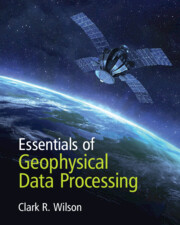
A concise introduction to geophysical data processing - many of the techniques associated with the general field of time series analysis - for advanced students, researchers, and professionals. The textbook begins with calculus before transitioning to discrete time series via the sampling theorem, aliasing, use of complex sinusoids, development of the discrete Fourier transform from the Fourier series, and an overview of linear digital filter types and descriptions. Aimed at senior undergraduate and graduate students in geophysics, environmental science, and engineering with no previous background in linear algebra, probability, or statistics, this textbook draws scenarios and datasets from across the world of geophysics, and shows how data processing techniques can be applied to real-world problems using detailed examples, illustrations, and exercises (using MATLAB or similar computing environment). Online supplementary resources include datasets for students, and a solutions manual and all the figures from the book as PowerPoints for course instructors.
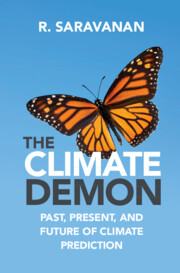
Climate predictions - and the computer models behind them - play a key role in shaping public opinion and our response to the climate crisis. Some people interpret these predictions as 'prophecies of doom' and some others dismiss them as mere speculation, but the vast majority are only vaguely aware of the science behind them. This book gives a balanced view of the strengths and limitations of climate modeling. It covers historical developments, current challenges, and future trends in the field. The accessible discussion of climate modeling only requires a basic knowledge of science. Uncertainties in climate predictions and their implications for assessing climate risk are analyzed, as are the computational challenges faced by future models. The book concludes by highlighting the dangers of climate 'doomism', while also making clear the value of predictive models, and the severe and very real risks posed by anthropogenic climate change.