Refine search
Actions for selected content:
149890 results in Classical Studies
Chapter 5 - Conclusion
-
- Book:
- Ancient Assyrians
- Published online:
- 09 October 2025
- Print publication:
- 23 October 2025, pp 260-268
-
- Chapter
- Export citation
Chapter 2 - The Theory of Social Categories
-
- Book:
- Ancient Assyrians
- Published online:
- 09 October 2025
- Print publication:
- 23 October 2025, pp 17-76
-
- Chapter
- Export citation
Acknowledgments
-
- Book:
- Ancient Assyrians
- Published online:
- 09 October 2025
- Print publication:
- 23 October 2025, pp xiii-xvi
-
- Chapter
- Export citation
Epigraph
-
- Book:
- Ancient Assyrians
- Published online:
- 09 October 2025
- Print publication:
- 23 October 2025, pp vi-vi
-
- Chapter
- Export citation
A NEW EDITION OF PORPHRY’S LETTER TO MARCELLA - Jean-François Pradeau (ed., trans.), Porphyre – Lettre à Marcella. Édition critique, traduction française, introduction et notes. (Philosophia Antiqua 169.) Pp. x + 148. Leiden and Boston: Brill, 2023. Cased, €140. ISBN: 978-90-04-68534-5.
-
- Journal:
- The Classical Review , First View
- Published online by Cambridge University Press:
- 22 October 2025, pp. 1-3
-
- Article
- Export citation
CULTURAL HERITAGE DURING WORLD WAR II - Antonino Crisà(ed.), Archaeology, Cultural Heritage and World War II. Italy, Greece, France and Finland as Historical Contexts. Pp. xxii + 301, b/w & colour ills, b/w & colour maps. Leiden and Boston: Brill, 2024. Cased, €131. ISBN: 978-90-04-69636-5.
-
- Journal:
- The Classical Review , First View
- Published online by Cambridge University Press:
- 22 October 2025, pp. 1-3
-
- Article
- Export citation
THE ATHENIAN EMPIRE OF THE FIFTH CENTURY BCE - Leah Lazar, Athenian Power in the Fifth Century bc. Pp. xxvi + 297, ills, maps. Oxford: Oxford University Press, 2024. Cased, £90, US$115. ISBN: 978-0-19-889626-5.
-
- Journal:
- The Classical Review , First View
- Published online by Cambridge University Press:
- 22 October 2025, pp. 1-3
-
- Article
- Export citation
ALLUSIONS AND INTERTEXTS IN ARCHAIC GREEK POETRY - Thomas J. Nelson, Markers of Allusion in Archaic Greek Poetry. Pp. xvi + 441. Cambridge: Cambridge University Press, 2023. Paper, £39.99, US$49.99 (Cased, £105, US$135). ISBN: 978-1-009-07819-1 (978-1-316-51437-5 hbk).
-
- Journal:
- The Classical Review , First View
- Published online by Cambridge University Press:
- 22 October 2025, pp. 1-3
-
- Article
- Export citation
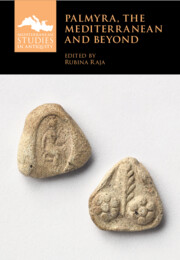
Palmyra, the Mediterranean and Beyond
-
- Published online:
- 21 October 2025
- Print publication:
- 16 October 2025
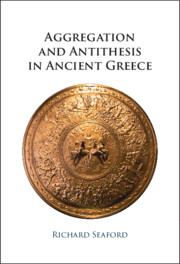
Aggregation and Antithesis in Ancient Greece
-
- Published online:
- 21 October 2025
- Print publication:
- 28 August 2025
CRAFTING CHOICES FOR POTTERY-MAKING IN PREHISTORIC THERMI-LESBOS, NORTH-EAST AEGEAN: MANUFACTURING STRATEGIES, EMERGING COMPLEXITY AND CONNECTIVITY
-
- Journal:
- Annual of the British School at Athens , First View
- Published online by Cambridge University Press:
- 20 October 2025, pp. 1-44
-
- Article
-
- You have access
- Open access
- HTML
- Export citation
P.Oxy. 2456 and the chronology of Euripides
-
- Journal:
- The Journal of Hellenic Studies / Volume 145 / November 2025
- Published online by Cambridge University Press:
- 20 October 2025, pp. 232-245
- Print publication:
- November 2025
-
- Article
- Export citation
The Southern Necropolis of Cyrene - By Luca Cherstich. Reports, Excavations and Studies of the Archaeological Unit of the University G. D’Annunzio of Chieti-Pescara 4. Archaeopress, Oxford, 2024. ISBN 9781803275499 (paperback), 9781803275505 (eBook), pp. 506, 318 colour figures. Price: £75 (paperback), £75 (eBook, institutional use), £16 (eBook, personal use)
-
- Journal:
- Libyan Studies , First View
- Published online by Cambridge University Press:
- 20 October 2025, pp. 1-3
-
- Article
- Export citation

Between Yahwism and Judaism
- Judean Cult and Culture during the Early Hellenistic Period (332–175 BCE)
-
- Published online:
- 18 October 2025
- Print publication:
- 04 December 2025
-
- Element
- Export citation
AN ANCIENT GLOSSARY - A. C. Dionisotti (ed.), Expositio Notarum. (Cambridge Classical Texts and Commentaries 64.) Pp. xviii + 624, ills. Cambridge: Cambridge University Press, 2022. Cased, £114, US$154. ISBN: 978-1-316-51479-5.
-
- Journal:
- The Classical Review , First View
- Published online by Cambridge University Press:
- 17 October 2025, pp. 1-3
-
- Article
- Export citation
5 - Seeing the Word
- from Part II - A Sign for This Generation: Reading the Gospels with Origen
-
- Book:
- The Life of Jesus in the Writings of Origen of Alexandria
- Published online:
- 26 September 2025
- Print publication:
- 16 October 2025, pp 92-114
-
- Chapter
- Export citation
10 - Palmyrene Military Expatriation and Its Religious Transfer at Roman Dura-Europos, Dacia and Numidia
-
-
- Book:
- Palmyra, the Mediterranean and Beyond
- Published online:
- 21 October 2025
- Print publication:
- 16 October 2025, pp 212-231
-
- Chapter
- Export citation
Acknowledgements
-
- Book:
- Cyril of Alexandria: <i>Against Julian</i>
- Published online:
- 26 September 2025
- Print publication:
- 16 October 2025, pp ix-x
-
- Chapter
- Export citation
Book 9
- from Against Julian
-
- Book:
- Cyril of Alexandria: <i>Against Julian</i>
- Published online:
- 26 September 2025
- Print publication:
- 16 October 2025, pp 439-489
-
- Chapter
- Export citation
Dedication to the Most Pious and Christ-loving Emperor Theodosius
- from Against Julian
-
- Book:
- Cyril of Alexandria: <i>Against Julian</i>
- Published online:
- 26 September 2025
- Print publication:
- 16 October 2025, pp 67-70
-
- Chapter
- Export citation
