Refine search
Actions for selected content:
60694 results in Classical studies (general)
CULTURAL HERITAGE DURING WORLD WAR II - Antonino Crisà(ed.), Archaeology, Cultural Heritage and World War II. Italy, Greece, France and Finland as Historical Contexts. Pp. xxii + 301, b/w & colour ills, b/w & colour maps. Leiden and Boston: Brill, 2024. Cased, €131. ISBN: 978-90-04-69636-5.
-
- Journal:
- The Classical Review , First View
- Published online by Cambridge University Press:
- 22 October 2025, pp. 1-3
-
- Article
- Export citation
THE ATHENIAN EMPIRE OF THE FIFTH CENTURY BCE - Leah Lazar, Athenian Power in the Fifth Century bc. Pp. xxvi + 297, ills, maps. Oxford: Oxford University Press, 2024. Cased, £90, US$115. ISBN: 978-0-19-889626-5.
-
- Journal:
- The Classical Review , First View
- Published online by Cambridge University Press:
- 22 October 2025, pp. 1-3
-
- Article
- Export citation
ALLUSIONS AND INTERTEXTS IN ARCHAIC GREEK POETRY - Thomas J. Nelson, Markers of Allusion in Archaic Greek Poetry. Pp. xvi + 441. Cambridge: Cambridge University Press, 2023. Paper, £39.99, US$49.99 (Cased, £105, US$135). ISBN: 978-1-009-07819-1 (978-1-316-51437-5 hbk).
-
- Journal:
- The Classical Review , First View
- Published online by Cambridge University Press:
- 22 October 2025, pp. 1-3
-
- Article
- Export citation
AN ANCIENT GLOSSARY - A. C. Dionisotti (ed.), Expositio Notarum. (Cambridge Classical Texts and Commentaries 64.) Pp. xviii + 624, ills. Cambridge: Cambridge University Press, 2022. Cased, £114, US$154. ISBN: 978-1-316-51479-5.
-
- Journal:
- The Classical Review , First View
- Published online by Cambridge University Press:
- 17 October 2025, pp. 1-3
-
- Article
- Export citation
ON THE ORIGINS OF GREEK PHILOSOPHY - Giovanni Pugliese Carratelli, Principii della filosofia greca. La nascita della filosofia. Nuova edizione a cura di Francesco Verde. Pp. xl + 75, ill., maps. Naples: Bibliopolis, 2023. Paper, €18. ISBN: 978-88-7088-712-9.
-
- Journal:
- The Classical Review , First View
- Published online by Cambridge University Press:
- 15 October 2025, pp. 1-3
-
- Article
- Export citation
WRITING THE HISTORY OF FREED ROMANS FROM BELOW - Sinclair W. Bell/ Dorian Borbonus/ Rose MacLean(edd.), Freed Persons in the Roman World. Status, Diversity, and Representation. Pp. xii + 294, ills. Cambridge: Cambridge University Press, 2024. Cased, £85, US$110. ISBN: 978-1-009-43853-7.
-
- Journal:
- The Classical Review , First View
- Published online by Cambridge University Press:
- 14 October 2025, pp. 1-4
-
- Article
- Export citation
READING GELLIUS AND MISCELLANY - Scott J. DiGiulio , Reading Miscellany in the Roman Empire. Aulus Gellius and the Imperial Prose Collection. Pp. xiv + 340. New York: Oxford University Press, 2024. Cased, £78, US$120. ISBN: 978-0-19-768826-7.
-
- Journal:
- The Classical Review , First View
- Published online by Cambridge University Press:
- 13 October 2025, pp. 1-3
-
- Article
- Export citation
ASPECTS OF BODY AND GENDER IN LATE ANTIQUITY - Stanimir Panayotov/ Andra Jugănaru/ Anastasia Theologou/ István Perczel(edd.), Soul, Body, and Gender in Late Antiquity. Essays on Embodiment and Disembodiment. Pp. xvi + 421. London and New York: Routledge, 2024. Cased, £160, US$210 (Paper, £42.99, US$56.99). ISBN: 978-0-367-74427-4 (978-0-367-74430-4 pbk).
-
- Journal:
- The Classical Review , First View
- Published online by Cambridge University Press:
- 13 October 2025, pp. 1-2
-
- Article
- Export citation
Gianluca De Martino, The Cult of Poseidoniate Hera and the Lucanians in Poseidonia/Paistom. An Ancient Story of Religion and Multiculturalism. (Commentationes Humanarum Litterarum 145.) Pp. viii + 329, b/w & colour ills, maps, colour pls. Helsinki: The Finnish Society of Sciences and Letters, 2023. Paper, €30. ISBN: 978-951-653-496-4.
-
- Journal:
- The Classical Review , First View
- Published online by Cambridge University Press:
- 13 October 2025, pp. 1-2
-
- Article
- Export citation
THE AEOLIC LANGUAGE - Roger D. Woodard , Aeolic and Aeolians. Origins of an Ancient Greek Language and its Community of Speakers. Pp. xvi + 631. Cambridge: Cambridge University Press, 2025. Cased, £120. ISBN: 978-1-009-42440-0.
-
- Journal:
- The Classical Review , First View
- Published online by Cambridge University Press:
- 13 October 2025, pp. 1-3
-
- Article
- Export citation
NEW TESTAMENT GREEK - Benjamin Kantor, The Pronunciation of New Testament Greek. Judeo-Palestinian Greek Phonology and Orthography from Alexander to Islam. Pp. liv + 841, figs. Grand Rapids, MI: Wm. B. Eerdmans, 2023. Cased, US$99.99. ISBN: 978-0-8028-7831-1. - Benjamin Kantor, A Short Guide to the Pronunciation of New Testament Greek. Pp. xvi + 132, figs. Grand Rapids, MI: Wm. B. Eerdmans, 2023. Paper, US$14.99. ISBN: 978-0-8028-7832-8.
-
- Journal:
- The Classical Review , First View
- Published online by Cambridge University Press:
- 13 October 2025, pp. 1-3
-
- Article
- Export citation
THE RECEPTION OF ARISTOPHANES IN BRITAIN - Peter Swallow, Aristophanes in Britain. Old Comedy in the Nineteenth Century. Pp. xii + 285, ills. Oxford: Oxford University Press, 2023. Cased, £88, US$115. ISBN: 978-0-19-286856-5.
-
- Journal:
- The Classical Review , First View
- Published online by Cambridge University Press:
- 13 October 2025, pp. 1-2
-
- Article
- Export citation
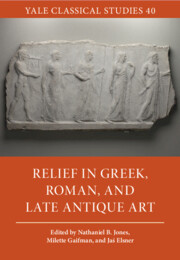
Relief in Greek, Roman, and Late Antique Art
-
- Published online:
- 11 October 2025
- Print publication:
- 25 September 2025
CAR volume 75 issue 2 Cover and Back matter
-
- Journal:
- The Classical Review / Volume 75 / Issue 2 / October 2025
- Published online by Cambridge University Press:
- 05 November 2025, pp. b1-b4
- Print publication:
- October 2025
-
- Article
-
- You have access
- Export citation
ANCIENT CYPRUS: NEW DIRECTIONS IN HISTORICAL, LITERARY AND ARCHAEOLOGICAL SCHOLARSHIP
-
- Journal:
- The Classical Review / Volume 75 / Issue 2 / October 2025
- Published online by Cambridge University Press:
- 01 October 2025, pp. 350-357
- Print publication:
- October 2025
-
- Article
-
- You have access
- Open access
- HTML
- Export citation
ENSLAVED, FREED AND SUB-ELITE PEOPLE IN ROMAN SOCIETY
-
- Journal:
- The Classical Review / Volume 75 / Issue 2 / October 2025
- Published online by Cambridge University Press:
- 01 October 2025, pp. 376-382
- Print publication:
- October 2025
-
- Article
-
- You have access
- Open access
- HTML
- Export citation
Books Received 75.2
-
- Journal:
- The Classical Review / Volume 75 / Issue 2 / October 2025
- Published online by Cambridge University Press:
- 05 November 2025, pp. 611-624
- Print publication:
- October 2025
-
- Article
- Export citation
CAR volume 75 issue 2 Cover and Front matter
-
- Journal:
- The Classical Review / Volume 75 / Issue 2 / October 2025
- Published online by Cambridge University Press:
- 05 November 2025, pp. f1-f7
- Print publication:
- October 2025
-
- Article
-
- You have access
- Export citation
Figures
-
- Book:
- Relief in Greek, Roman, and Late Antique Art
- Published online:
- 11 October 2025
- Print publication:
- 25 September 2025, pp ix-xx
-
- Chapter
- Export citation
7 - Remedial Relief
-
-
- Book:
- Relief in Greek, Roman, and Late Antique Art
- Published online:
- 11 October 2025
- Print publication:
- 25 September 2025, pp 232-258
-
- Chapter
- Export citation
