Refine search
Actions for selected content:
3714 results in Classical languages
Copyright page
-
- Book:
- Oscan in Southern Italy and Sicily
- Published online:
- 05 October 2015
- Print publication:
- 01 October 2015, pp iv-iv
-
- Chapter
- Export citation
5 - Curse tablets
-
- Book:
- Oscan in Southern Italy and Sicily
- Published online:
- 05 October 2015
- Print publication:
- 01 October 2015, pp 133-166
-
- Chapter
- Export citation

Der Epische Cyclus
- Oder die Homerischen Dichter
-
- Published online:
- 05 August 2015
- Print publication:
- 25 November 2010
- First published in:
- 1835
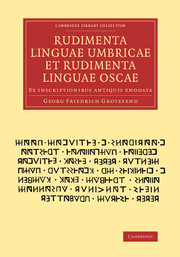
Rudimenta linguae umbricae et rudimenta linguae oscae
- Ex inscriptionibus antiquis enodata
-
- Published online:
- 05 June 2015
- Print publication:
- 05 March 2015
- First published in:
- 1835
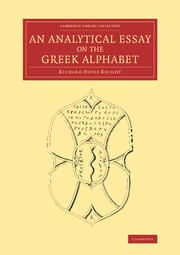
An Analytical Essay on the Greek Alphabet
-
- Published online:
- 05 June 2015
- Print publication:
- 17 July 2014
Grammar of the Latin Language
- From Plautus to Suetonius
-
- Published online:
- 05 June 2015
- Print publication:
- 20 May 2010
- First published in:
- 1872
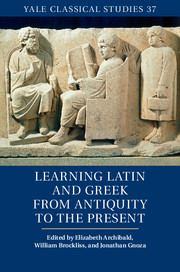
Learning Latin and Greek from Antiquity to the Present
-
- Published online:
- 05 March 2015
- Print publication:
- 26 February 2015
Chapter 6 - Out of the mouth of babes and Englishmen: the invention of the vernacular grammar in Anglo-Saxon England
-
-
- Book:
- Learning Latin and Greek from Antiquity to the Present
- Published online:
- 05 March 2015
- Print publication:
- 26 February 2015, pp 83-98
-
- Chapter
- Export citation
Chapter 3 - Teaching Latin to Greek speakers in antiquity
-
-
- Book:
- Learning Latin and Greek from Antiquity to the Present
- Published online:
- 05 March 2015
- Print publication:
- 26 February 2015, pp 30-51
-
- Chapter
- Export citation
Copyright page
-
- Book:
- Learning Latin and Greek from Antiquity to the Present
- Published online:
- 05 March 2015
- Print publication:
- 26 February 2015, pp iv-iv
-
- Chapter
- Export citation
Chapter 11 - Women’s education and the classics
-
-
- Book:
- Learning Latin and Greek from Antiquity to the Present
- Published online:
- 05 March 2015
- Print publication:
- 26 February 2015, pp 156-165
-
- Chapter
- Export citation
Chapter 13 - Exclusively for everyone – to what extent has theCambridge Latin Coursewidened access to Latin?
-
-
- Book:
- Learning Latin and Greek from Antiquity to the Present
- Published online:
- 05 March 2015
- Print publication:
- 26 February 2015, pp 184-197
-
- Chapter
- Export citation
Chapter 12 - “Solitary perfection?” The past, present, and future of elitism in Latin education
-
-
- Book:
- Learning Latin and Greek from Antiquity to the Present
- Published online:
- 05 March 2015
- Print publication:
- 26 February 2015, pp 166-183
-
- Chapter
- Export citation
Chapter 9 - Ut consecutivumunder the Czars and under the Bolsheviks
-
-
- Book:
- Learning Latin and Greek from Antiquity to the Present
- Published online:
- 05 March 2015
- Print publication:
- 26 February 2015, pp 136-144
-
- Chapter
- Export citation
Bibliography
-
- Book:
- Learning Latin and Greek from Antiquity to the Present
- Published online:
- 05 March 2015
- Print publication:
- 26 February 2015, pp 209-231
-
- Chapter
- Export citation
Chapter 2 - Papyri and efforts by adults in Egyptian villages to write Greek
-
-
- Book:
- Learning Latin and Greek from Antiquity to the Present
- Published online:
- 05 March 2015
- Print publication:
- 26 February 2015, pp 10-29
-
- Chapter
- Export citation
Chapter 14 - Epilogue
-
-
- Book:
- Learning Latin and Greek from Antiquity to the Present
- Published online:
- 05 March 2015
- Print publication:
- 26 February 2015, pp 198-208
-
- Chapter
- Export citation
Learning Latin and Greek from Antiquity to the Present - Title page
-
-
- Book:
- Learning Latin and Greek from Antiquity to the Present
- Published online:
- 05 March 2015
- Print publication:
- 26 February 2015, pp iii-iii
-
- Chapter
- Export citation
Chapter 10 - Latin for girls: the French debate
-
-
- Book:
- Learning Latin and Greek from Antiquity to the Present
- Published online:
- 05 March 2015
- Print publication:
- 26 February 2015, pp 145-155
-
- Chapter
- Export citation
Chapter 5 - Pelasgian fountains: learning Greek in the early Middle Ages
-
-
- Book:
- Learning Latin and Greek from Antiquity to the Present
- Published online:
- 05 March 2015
- Print publication:
- 26 February 2015, pp 65-82
-
- Chapter
- Export citation
