To save content items to your account,
please confirm that you agree to abide by our usage policies.
If this is the first time you use this feature, you will be asked to authorise Cambridge Core to connect with your account.
Find out more about saving content to .
To save content items to your Kindle, first ensure no-reply@cambridge.org
is added to your Approved Personal Document E-mail List under your Personal Document Settings
on the Manage Your Content and Devices page of your Amazon account. Then enter the ‘name’ part
of your Kindle email address below.
Find out more about saving to your Kindle.
Note you can select to save to either the @free.kindle.com or @kindle.com variations.
‘@free.kindle.com’ emails are free but can only be saved to your device when it is connected to wi-fi.
‘@kindle.com’ emails can be delivered even when you are not connected to wi-fi, but note that service fees apply.
MY INTEREST in the political career of Michael Sata was sparked in late 2010 when I happened to come across a radio discussion on the BBC World Service. The speaker was remembering a harsh-tongued and unpredictable politician, with a rude and aggressive style of politics seen by some as brilliant and by others as a disaster. Though uneducated, this man was described as an organically intelligent politician who had a natural campaigning ability and whose public rallies attracted thousands. I thought to myself, ‘They must be referring to Sata. Is he dead?’ In fact, I was way off the mark. It turned out that the subject was not the (still living) leader of Zambia's main opposition party, the Patriotic Front (PF), but rather George Alfred Brown, a British politician who served as Deputy Leader of the Labour Party in the 1960s and who died in 1985. Yet it struck me how Brown's rise to political prominence bore an uncanny resemblance to Sata’s.
Both Brown and Sata had little formal education but had a ‘man of the people’ common touch and a talent for making mincemeat of their more educated opponents on the campaign trail. Both cut their teeth in trade unions, were elected as members of parliament in urban constituencies, and rose rapidly within party hierarchies. Brown held several Cabinet positions under Prime Minister Harold Wilson during the 1960s. These positions included Foreign Secretary and First Secretary of State, which effectively made Brown the second in command. Brown and Sata could have crossed paths in these years, on the street or the railway platform, as, at the time, Sata was living and working in England as a porter at London's Victoria Station. Thereafter, their career trajectories went in opposite directions. Sata returned to Zambia and held several Cabinet positions under Presidents Kenneth Kaunda and Frederick Chiluba in the 1980s and 1990s, including latterly Minister without Portfolio, a role that gave him free rein and, it turned out, a little too much power for his own good.
However, the duo had starkly contrasting fortunes following their exits fromfr9 government. After resigning as Foreign Secretary in 1968, Brown's fortune was a drink-fuelled slide into political oblivion. He lost his seat in 1970 and left the Labour Party in 1976. Announcing his resignation, he tripped and fell into a gutter, glass in hand – a literal fall from grace.
THE CLOSING decade of the twentieth century in Zambian politics was dominated by the Movement for Multiparty Democracy (MMD) and President Chiluba, who rose to power in November 1991 after defeating incumbent President Kaunda and his United National Independence Party (UNIP) – the nationalist movement that had ruled Zambia since independence in 1964. Chiluba secured 76 per cent of the presidential vote in 1991 and about 69 per cent five years later. Against its 1991 total of 125 of the 150 seats in parliament, the MMD increased its parliamentary representation to 131 seats in 1996. Over the course of his decade-long rule, Chiluba embarked on a drive to liberalise the economy and consolidate the democratic space that had permitted his party to gain power.
When the MMD ascended to power, it inherited an economy on the verge of collapse. Widespread shortages of essential commodities, skyrocketing inflation, swelling debt, a highly volatile local currency and a bloated civil service – long used by Kaunda as a patronage political machine – all required an urgent economic recovery programme. With copper exports, on which Zambia's gross national product overly depends, at an all-time low due to the declining price of the commodity on the international market, the MMD had little choice but to turn to multilateral institutions such as the International Monetary Fund (IMF) and World Bank for help. However, donors, who had suspended all financial assistance to Zambia just before the 1991 elections, demanded the implementation of a package of economic structural adjustment reforms as a precondition for the resumption of aid.
Starting early in 1992, Chiluba's government embarked on a decade-long radical economic liberalisation programme partly in response to donor prescriptions, but also as a way of fulfilling the MMD's own pre-election campaign promises. The reformist drive resulted in the privatisation of about 250 state-owned industries, the removal of trade barriers, the liberalisation of financial markets and agricultural marketing, and the reduction of state support of education and health. By the end of Chiluba's first term in office, most of these reforms had been fully implemented. For instance, foreign exchange and price controls had been abolished, all tariffs for trade and imports had been removed, state support for agriculture had been substantially reduced, and user fees for education and health introduced.
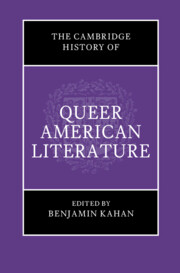
Moby-Dick's Ishmael and Queequeg share a bed, Janie in Zora Neale Hurston's Their Eyes Were Watching God imagines her tongue in another woman's mouth. And yet for too long there has not been a volume that provides an account of the breadth and depth of queer American literature. This landmark volume provides the first expansive history of this literature from its inception to the present day, offering a narrative of how American literary studies and sexuality studies became deeply entwined and what they can teach each other. It examines how American literature produces and is in turn woven out of sexualities, gender pluralities, trans-ness, erotic subjectivities, and alternative ways of inhabiting bodily morphology. In so doing, the volume aims to do nothing less than revise the ways in which we understand the whole of American literature. It will be an indispensable resource for scholars, graduate students, and undergraduates.
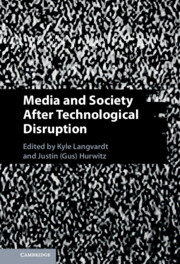
The internet has reshaped the media landscape and the social institutions built upon it. Competition from online media sources has decimated local journalism and diminished the twentieth century's established journalistic gatekeepers. Social media puts individual users front and center in the creation of the content that they consume. Harmful speech can spread further and faster, and the institutions responsible for policing that speech-Facebook, TikTok, YouTube and the like-lack any clear twentieth-century analog. The law is still working to catch up to the world these changes have wrought. This volume gathers sixteen scholars in law, media, technology, and history to consider these changes. Chapters explore the breakdown of trust in the media, changes in the law of defamation and privacy, challenges of online content moderation, and financial viability for journalistic enterprises in the internet age. This title is also available as Open Access on Cambridge Core.
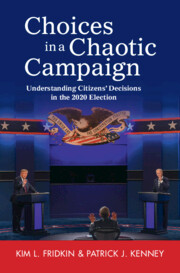
In Choices in a Chaotic Campaign, Kim Fridkin and Patrick Kenney explore the dynamic nature of citizens' beliefs and behaviors in response to the historic 2020 presidential campaign. In today's political environment where citizens can effortlessly gather information, it is important to move beyond standard political characteristics and consider the impact of pre-existing psychological predispositions. Fridkin and Kenney argue these predispositions influence assessments of campaign events and issues, and ultimately alter citizens' voting decisions. The book relies on data from an original three-wave panel study of over 4,000 people interviewed in September, October, and immediately after Election Day in November 2020. The timing of the surveys provides the analytical leverage to explore how views of the campaign alter citizens' impressions of the candidates. The book demonstrates that expanding the relevant citizen characteristics to include psychological predispositions increases our ability to understand how campaigns influence voters' decisions at the ballot box.
The Letters of Ernest Hemingway, Volume 6 (June 1934–June 1936) traces the completion and publication of Hemingway's experimental nonfiction book Green Hills of Africa and work on stories including 'The Short Happy Life of Francis Macomber' and 'The Snows of Kilimanjaro.' In more than twenty pieces in Esquire, he relates his hunting and fishing exploits, discusses writing and writers, and becomes more politically vocal, addressing topical concerns. During this period he immerses himself in big game fishing off Key West, Cuba, and Bimini, gathering specimens for scientific study and making record catches, as well as taking on boxing challengers. He maintains longstanding literary friendships, advises and helps aspiring writers and contemporary artists, and makes public his disdain of critics. Volume 6 also features for the first time an Appendix of Earlier Letters (1918–1934) that have come to light since publication of previous volumes. Writing his epistolary autobiography, Hemingway himself reveals the many and sometimes contradictory facets of his wide-ranging genius.
Edited by
Alejandra Laera, University of Buenos Aires,Mónica Szurmuk, Universidad Nacional de San Martín /National Scientific and Technical Research Council, Argentina
Argentine Literature continues to figure prominently in Spanish and Modern Languages programs in the English-speaking world, and there are specialists in Argentine literature in most departments in the United States, UK, Canada, New Zealand, and Australia. If we peruse the anthologies commonly used for survey courses, and the requirements for graduate degrees, we will find Argentine literature overrepresented. Certain authors are also regularly taught in English and Comparative Literature departments, and in large survey classes in World Literatures, Third World Literatures, and Gender Studies. This continued interest within and outside foreign language departments, and the recent boom in translation of Argentine works, provides fertile ground for this volume.
As indicated by the title, this chapter covers cases raising issues not covered in other chapters. Most prominent are cases concerning recusal not related to campaign fundraising or expenditures, most of which do not result in an order for recusal. Other issues covered include judicial districting unrelated to voting rights, retaliation, challenges to the creation of new positions arising in the context of filling them, method of selection (appointment or election) unrelated to filling an interim vacancy, recall, and a range of other miscellaneous issues.
New Negro writers and artists often spotlighted the contrast between the liberatory potential of dynamic bodily movement and the restricted social spaces of Harlem, which were shaped by segregation. This chapter examines a variety of cultural texts – social and cultural history by Wallace Thurman and James Weldon Johnson, visual art by Winold Reiss, and short fiction by Rudolph Fisher and Langston Hughes – to argue that representations of dance and bodily movement opened the way for creative engagement with the spatial dynamics of segregation and overcrowding in Harlem, which was fascinated by the look, the sound, and the feel of dance. Fisher’s short story “High Yaller,” for instance, probes the affective or subjective dimensions of segregation, passing, and colorism through a sustained focus on dancing bodies in “jim-crowed” scenes of Harlem cabaret and the traversing of “color lines” in the cityscape of New York.
Chapter 3 provides a statistical portrait of the 2,103 cases concerning the selection of state judges identified in the research. This portrait includes the frequency of such litigation over time and across states, the issues raised in the litigation, and how those issues vary over time, across states, and by type of election used. The chapter includes a comparison of litigation in state courts versus federal courts, noting that federal litigation over state judicial selection is a relatively recent phenomenon and has been driven in significant part by the Voting Rights Act. Importantly, the vast majority of the litigation occurs in states using contested judicial elections to select and/or retain judges.
Edited by
Alejandra Laera, University of Buenos Aires,Mónica Szurmuk, Universidad Nacional de San Martín /National Scientific and Technical Research Council, Argentina
In the mid-twentieth century a flow of books written by women writers was published. These works reformulated the emancipatory imaginaries of the political and artistic avant-gardes of the 1920s with original explorations of gender and affective relationships. In these books can be seen the emergence of a new sensibility along with a new poetics that nourishes the demands of the market and the expectations of a wider and more diversified audience prone to reading new experiences, innovative aesthetics, and novel affects. This chapter heeds the articulation of the sensitive and the political in different writers. Salvadora Medina Onrubia, Norah Lange, and Sara Gallardo are the writers of different decades who through their work, the literary-discursive figures they created, and their biographical stories displayed passionate and conflictive interactions with their time. They pursued emancipation specially through language. Literary texts, public speech, and print columns help them to mobilize more than just a political idea or a literary project, by activating perceptions, emotions, sensibilities, and public imaginations. This chapter will analyze the host of feelings that emerged in this process, mainly women’s genuine interest to get close to other women.
Edited by
Alejandra Laera, University of Buenos Aires,Mónica Szurmuk, Universidad Nacional de San Martín /National Scientific and Technical Research Council, Argentina
This chapter makes a case for integrating some musical narratives – both verbal and audiovisual – into the field of Argentine literature. After considering the case of Luis Alberto Spinetta’s 1973 “Cantata de puentes amarillos,” a song generally valued as a poetic achievement, it highlights the historical role of five iconic music works: the Himno Nacional, the national anthem written in 1813 by Vicente López and Blas Parera, which inaugurated a state ritual based on the alleged epic value of personal sacrifice; “Mi Noche Triste,” a tango recorded by Carlos Gardel in 1917, which describes a beloved woman’s absence from the perspective of a suffering male narrator, thus nourishing a topos of gender relations in popular culture; Estancia, a classical ballet composed by Alberto Ginastera in 1941, which displays the nationalist myth of Argentina’s rural authenticity; “Manuelita la Tortuga,” a children’s song by María Elena Walsh, the story of a female turtle who travels to Paris in order to be made beautiful; and Charly García’s “No bombardeen Buenos Aires,” a rock song that in June 1982 proposed a critical view of the Malvinas/Falklands War, contributing to the negative memory of the dictatorship of 1976–83.
This chapter traces the complex legacies of multiple religious traditions, including Christianity, Islam, and syncretistic spirituality, as they inform utopian strands of twentieth- and twenty-first-century American fiction, including the miraculous realism of Toni Morrison, the lyrical historicism of Marilynne Robinson, and the religiously themed science fiction of James Blish and G. Willow Wilson. Apocalyptic concepts, with a strong emphasis on transformative and liberatory possibility, are a recurrent element of these narratives. The term “spirituality” itself is ambiguous, particularly in a national context in which religion has been a source of both oppression and hope. The chapter draws on postsecular critiques of literature and culture that, in John McClure’s terms, indicate “a mode of being and seeing that is at once critical of secular constructions of reality and of dogmatic religion.” It argues that skeptical perspectives do not necessarily militate against the aesthetic and ethical potential of theologically oriented utopian fiction.
Edited by
Alejandra Laera, University of Buenos Aires,Mónica Szurmuk, Universidad Nacional de San Martín /National Scientific and Technical Research Council, Argentina
This chapter examines novels by both male and female writers who published some of their mostprominent works in and around 1884, to address issues and themes that illustrate generalarguments about the 1880s and beyond. Authors and their works are presented as aheterogeneous group of men and women whose views pose multiple perspectives on theconnection between Argentine literature and politics. Miguel Cané, Eugenio Cambaceres, JuanaManuela Gorriti, Raimunda Torres y Quiroga, Antonio Argerich, and Lola Larrosa comment oneducation, reading, writing, literature, and family relations, reflecting the frenetic changes inWestern industrialized societies at the end of the nineteenth century, as well as the globalanxieties that these transformations brought to individuals across classes and territories. Theformation of Argentine literature can only be thought of as an unfinished process, with multiplesources, and in connection with other nations and regions. Setting the year 1884 as themoment in which to find the literary bases of the Argentine canon is an exercise that allows usto trace, instead of a clear origin for Argentine national literature, the germ of multiple possibleaccounts of its foundation.
Edited by
Alejandra Laera, University of Buenos Aires,Mónica Szurmuk, Universidad Nacional de San Martín /National Scientific and Technical Research Council, Argentina
Edited by
Alejandra Laera, University of Buenos Aires,Mónica Szurmuk, Universidad Nacional de San Martín /National Scientific and Technical Research Council, Argentina