To save content items to your account,
please confirm that you agree to abide by our usage policies.
If this is the first time you use this feature, you will be asked to authorise Cambridge Core to connect with your account.
Find out more about saving content to .
To save content items to your Kindle, first ensure no-reply@cambridge.org
is added to your Approved Personal Document E-mail List under your Personal Document Settings
on the Manage Your Content and Devices page of your Amazon account. Then enter the ‘name’ part
of your Kindle email address below.
Find out more about saving to your Kindle.
Note you can select to save to either the @free.kindle.com or @kindle.com variations.
‘@free.kindle.com’ emails are free but can only be saved to your device when it is connected to wi-fi.
‘@kindle.com’ emails can be delivered even when you are not connected to wi-fi, but note that service fees apply.
Set and costume designs are a large part of worldbuilding for the plays that actors inhabit. These elements enhance and contextualize the historical, geographic, and temporal environments for the performance. August Wilson was incredibly detailed in what he asked for in his plays, not just from the actors but also from the designers. Constanza Romero and David Gallo are but two of the designers who have brought the world of Wilson’s American Century Cycle to full realization. This chapter features a conversation between Romero, Gallo, and Willa J. Taylor about their design processes and practices when working on Wilson’s plays.
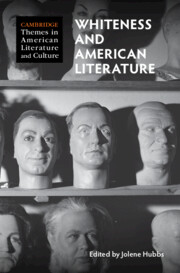
This volume provides an illuminating exploration of how ideas about whiteness have shaped the literature and culture of the United States. Covering nearly 250 years – from the 1790 Naturalization Act, which limited access to citizenship to immigrants who were 'free white person[s],' to the present – Whiteness and American Literature considers how a broad spectrum of novels, movies, short stories, television shows, poems, songs, and other works depict whiteness. The collection's twenty accessible and engaging chapters by renowned scholars analyze representations of whiteness in a variety of historical periods, literary genres, and aesthetic forms. Chapters also survey scholarly work at the crossroads of whiteness studies and disability studies, food studies, and other academic disciplines. Designed for scholars, students, and general readers, this book is essential reading for anyone interested in gaining a deeper understanding of the role whiteness plays in the US imagination.
This book chronicles important formal and theoretical innovations in Latinx literature during a period when Latinx writers received increasing acclaim while their communities became targets of rising hostility. The essays in this collection show how Latinx writers confront this contradiction by cultivating an understanding of Latinx experience in its transnational dimensions, by recovering histories that were suppressed or erased, by engaging in burgeoning decolonial projects that resist Western epistemologies, and by forming coalitions and solidarities within Latinx groups as well as with other minoritized racial and ethnic communities to challenge state violence and US imperial projects. The book highlights the increasingly important role of genre, form, and media in the contemporary Latinx literature and provides an account of how the shifting demographics and new migrations of Latinx people have not only resulted in new narratives and art but also altered and expanded how we imagine the category 'Latinx.'
This book examines the poetries of two Aboriginal Australian poets, namely Oodgeroo Noonuccal (formerly Kath Walker; 1920-1993) and Lionel Fogarty (1958-) and two African American Black Arts poets , namely Amiri Baraka (formerly Everett LeRoi Jones; 1934-2014) and Sonia Sanchez (1943-) to demonstrate their role in the struggle for civil and human rights of their peoples from the 1960s. The book demonstrates commonalities and differences in the strategies of these poets' literary and political resistance. These poet-activists, though ethnically diverse and geographically dispersed, share comparable socio-political concerns and aspirations. Their activism is not a reflection of a single ideological current, but a bricolage of many ideologies and perspectives. They have engaged in trans-Pacific political movements and transgressed the borders of any one ideological territory. It is important to establish Aboriginal and African American trans-Pacific communication because these poets have collaborated and engaged in global politics (whether in the form of Garveyism or the 'transnation'). Their poetries are characterized by an irresistible drive towards international rhizomatic collaboration and engagement. This is a transcontinental literary influence exerted by African American poets on Aboriginal poets during the 1960s and beyond.
In the 1970s, Black and white media raised an alarm over “Black-on-Black crime,” drawing a line between law-abiding Black citizens and criminals who were making their neighborhoods unlivable. The narrative of Black-on-Black crime would become one of the leading alibis of the wars on crime and drugs, and it originated not with the Nixon or Reagan administrations but in boxing. Chapter 3 follows a cast of magazine writers – John Lardner, A. J. Liebling, Norman Mailer, George Plimpton – who taught the nation to root for the right kind of Black fighter against the wrong kind. Their stories showed advocates for the wars on crime and drugs how anti-Blackness could survive civil rights: It had to come wrapped in pro-Blackness.
A half century ago, Treasury Assistant Secretary Surrey warned that tax expenditures threatened unmonitored access to the “back door” of the US Treasury. Such withdrawals served as entitlements to the wealthy and powerful.
Among the hundred tax expenditures today, a dozen account for the majority of the drain on the Treasury as they cost over $1 trillion annually. Each is designed to target their generosity to the already affluent and thereby accelerate the concentration of wealth.
In large part due to our past federal policies that overtly targeted their benefits to White households and their posterity, White Americans are the disproportionate beneficiaries of these policies. As such, these twelve tax deductions funnel most of their benefits to White households.
Since 1989, White household wealth has increased by more than $100 trillion. Since that time, these tax expenditures have assisted White households by nearly $20 trillion in reduced tax payments. Assuming these transfers were invested and earned a modest 3 percent real rate of return, then they would total $40 trillion in 2022. Assuming the funds were deposited in an S&P 500 index fund and simply held until 2022, then they would account for nearly $60 trillion of that increase.
Many cultures share the truism of shirtsleeves to shirtsleeves in three generations, indicating the challenges that family dynasties face in retaining massive wealth across several generations. The Mars family, famous for M&Ms and other candies, offer a contemporary “success” story.
The federal estate, gift, and generation-skipping transfer (GST) taxes are designed to tax larger wealth transfers from one generation to another. This chapter explains how each works and assesses their effectiveness.
These taxes generate $30 billion annually, or less than 1 percent of federal revenues. Recent increases in exemption levels – to over $13 million and double that for married couples – mean very few decedents actually pay these taxes. In effect, these progressively designed taxes affect only the extremely rich.
The prime beneficiaries of this leaky tax system are White households. In 2022, they reported receiving 93 percent of all bequests and gifts. This is despite the fact that Black households give in greater numbers and attach a higher value to leaving a legacy than do White households.
Due to state laws that undermine the rule against perpetuities, the uber rich can now create dynasty trusts that protect their trust assets while assuring that future generations will reap large incomes.
Just three years after the passage of the federal income tax, Congress enacted the federal estate tax. Instrumental in its passage were Sen. Furnifold Simmons (D-NC) and Rep. Claude Kitchin (D-NC). Both had represented the Second Congressional District, known as the Black Second. Both orchestrated the infamous 1898 election that effectively ended Black voting in North Carolina for sixty years. One cannot ignore this connection.
Amidst the Great Depression, Congress reprised the federal gift tax and stiffened the estate tax in a desperate search for tax revenues. Over the next forty years, the two taxes functioned relatively effectively at taxing intergenerational wealth transfers, raising revenue, and limiting the concentration of wealth. Although loopholes remained unchecked, the top tax rate stayed at 70 percent for decades.
Over the past half century, one that accords with the post-Civil Rights period, Congress has continually and relentless dismantled the wealth transfer tax system. Since 1976, real household wealth has tripled while the rate of filers, real taxable estates, and real collected taxes have all declined.
This dismantling will assure that more of the wealth received from the past will get transferred to advantage mostly Whites in the future, thereby cementing White supremacy.
In 1995, Roger Bannister, the first man to break four minutes in the mile, gave new life to an old debate. He argued that Black runners had “certain anatomical advantages” that made them all but unbeatable on the track and the roads. Some condemned his remarks. Bannister had, they said, failed to acknowledge the role of culture. Nature or nurture? commentators asked and asked again. The disagreement between the two sides hid a larger consensus: that the Black athlete constitutes a coherent scientific classification, a classification that, in a society that values the natural above the social sciences (and all sciences above the humanities), enters the collective consciousness in biological form. Chapter 1 tells the longer story of that consensus and how science and science writers used a naturalized male/female binary to naturalize a Black/white racial binary – a rhetorical move that the movement to bar trans athletes from competing in women’s and girls’ divisions has borrowed and reversed.