To save content items to your account,
please confirm that you agree to abide by our usage policies.
If this is the first time you use this feature, you will be asked to authorise Cambridge Core to connect with your account.
Find out more about saving content to .
To save content items to your Kindle, first ensure no-reply@cambridge.org
is added to your Approved Personal Document E-mail List under your Personal Document Settings
on the Manage Your Content and Devices page of your Amazon account. Then enter the ‘name’ part
of your Kindle email address below.
Find out more about saving to your Kindle.
Note you can select to save to either the @free.kindle.com or @kindle.com variations.
‘@free.kindle.com’ emails are free but can only be saved to your device when it is connected to wi-fi.
‘@kindle.com’ emails can be delivered even when you are not connected to wi-fi, but note that service fees apply.
The chapters presented before showed diverse historical trajectories, different adaptive patterns, and continuous human occupation of the Pampas and Patagonia since the end of the Pleistocene. Both regions were probably among the last continental lands, except Antarctica, colonized by Homo sapiens after their dispersal from Africa. The first outcome of this review of the archaeology of the Pampas and Patagonia is that it does not support a pre-15,000 cal BP human occupation of the Southern Cone. Putting this in the global discussion means that the Pampas-Patagonia peopling holds up a pre-13,000 cal BP (the so-called pre-Clovis Model) but post–Late Glacial Maximum human arrival at the continent, which is in agreement with current archaeological, ancient DNA, and paleoclimatic models (Llamas et al. 2016; Pitblado 2011; Posth et al. 2018; Prates et al. 2020; Sutter 2021; Waters and Stafford 2013). Moreover, most of the paleoclimatic evidence supports the hypothesis that the earliest human arrivals at the Pampas and Patagonia took place under cold climatic conditions in semiarid to arid environments (Borrero and Martin 2018; Prado et al. 2021) during the cooling period known as the Antarctic Cold Reversal (14,700–13,000 cal BP).
In this chapter, the historical background of the archaeology in the Pampas and Patagonia is discussed and summarized. It encompasses a period of about 100 years, between the 1870s when the first archaeological investigations took place in the Pampas and Patagonia (Ameghino 1880–1881; Holmberg 1884; Moreno 1874; Moseley 1892; Zeballos and Pico 1878) and the late 1970s when there was a theoretical and methodological shift in the archaeology of both regions, which gave rise to modern research. The current regional models in the Pampas and Patagonia are a product of this last period’s research, first with a processual orientation and then adding other theoretical approaches (evolutionary, processual-plus/neo-processualism, post-processualism, etc.). However, some of the data and ideas generated in this first 100 years of investigation are still present in contemporary debates, as shown in the following chapters of this book.
The Middle Holocene was a time of change in both the Pampas and Patagonia. In some way, these changes were the prelude to the demographic expansion, regional diversification, economic intensification, and social complexity that characterized the following period, the Late Holocene. During the Middle Holocene times, archaeological evidence in the Pampas was scarce until a decade ago or so, but recent research increased information significantly (e.g., Ávila 2011; Ávila et al. 2011; Bonomo et al. 2013; Donadei Corada 2020; Gutiérrez et al. 2010; Mazzanti et al. 2015; Messineo et al. 2019a, b, c; Politis et al. 2012; Scheifler 2019). This period is characterized by global warming, known as the Hypsitermal or Holocene Thermal Maximum (Renssen et al. 2012). As a result, in the Pampas, the sea level raised above the current level at around 7000 BP. However, there is no agreement about the magnitude of this raising (between 2.2 to 6 masl depending on the author) and the chronology of the maximum ingression (see revisions in Aguirre and Whatley 1995; Melo et al. 2003). For Isla and Espinosa (1995), it began at the onset of the Holocene, reaching its maximum height (around 2 masl) around 6500–6000 BP. This resulted in the coast having sometimes a transgressive position, such as in the east of the Salado Depression and the Paraná Delta (Cavallotto et al. 2004, 2005; Iriondo and Kröhling 2008), while in other cases, it was very close to the present according to the variations of the littoral morphology.
During the Late Holocene time, regional differentiation, which became visible during the Middle Holocene, produced a wide variety of historical trajectories and adaptive patterns in the Pampas and Patagonia. It is clear that around 4000 BP human populations were selectively using all the diverse, available habitats. In this period, the archaeological visibility increased significantly, a fact that also suggests a rise in the population density of both regions (see discussion in Chapter 7).
This book summarizes the current archaeological and ethnographic knowledge regarding the indigenous people who inhabited the South American Southern Cone since the end of the Pleistocene (Figure 1.1). This land, roughly between 32° and 56° S latitude, comprises the Pampas and Patagonia. Since the beginning of the European conquest in the sixteenth century, both regions have attracted the attention of conquerors and explorers even though there were no precious rocks or metals within them, nor were they inhabited by indigenous populations who could be easily exploited or subjugated to slavery or encomiendas. This is not to say that there were no fabulations – notably, the legend of the Ciudad de Los Césares, or Trapalanda, where supposedly fabulous riches could be found. This legend originated around the sixteenth century when stories after the inland trip by Francisco César, a captain from the Sebastian Gaboto expedition, began to circulate. Also, the castaways from the shipwreck of one of Francisco Camargo’s expeditions fueled these legends. The sad reality was that no evidence existed about the fate of those castaways.
As we show in Chapter 2, there has been a long tradition of the archaeological research in both the Pampas and Patagonia since the end of the nineteenth century. From the very beginning of the investigations, the Late Pleistocene human occupation was at the top of the research agenda in both regions. Giant ground sloth skins from Cueva del Milodón and human skulls supposedly found in very ancient (Tertiary) layers in the Pampas seashore ignited the imagination of scientists of those times, and fieldwork looking for spectacular findings as well as reckless interpretations abounded. Since then, the first human occupation has been the main focus of the archaeological investigation in both regions. This chapter summarizes and discusses the results of this almost continuous, intense, and fertile archaeological research.
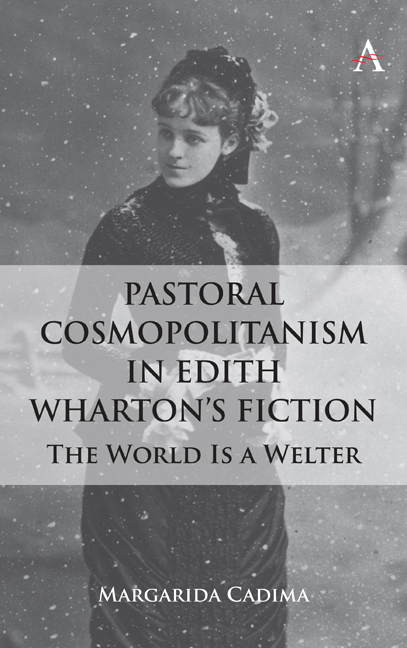
American novelist Edith Wharton (1862-1937) is best known today for her tales of the city and the experiences of patrician New Yorkers in the 'Gilded Age'. This book pushes against the grain of critical orthodoxy by prioritizing other 'species of spaces' in Wharton's work. For example, how do Wharton's narratives represent the organic profusion of external nature? Does the current scholarly fascination with the environmental humanities reveal previously unexamined or overlooked facets of Wharton's craft? I propose that what is most striking about her narrative practice is how she utilizes, adapts, and translates pastoral tropes, conventions, and concerns to twentieth-century American actualities. It is no accident that Wharton portrays characters returning to, or exploring, various natural localities, such as private gardens, public parks, chic mountain resorts, monumental ruins, or country-estate 'follies'. Such encounters and adventures prompt us to imagine new relationships with various geographies and the lifeforms that can be found there. The book addresses a knowledge gap in Wharton and the environmental humanities, especially recent debates in ecocriticism. The excavation of Wharton's words and the background of her narratives with an eye to offering an ecocritical reading of her work is what the book focuses on.
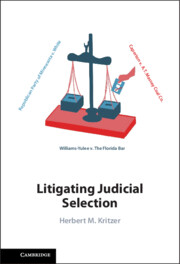
In the United States and elsewhere, the questions of who should serve as a judge and how these judges should be chosen are increasingly contested. In Litigating Judicial Selection, Herbert Kritzer examines these questions with a comprehensive analysis of judicial-selection litigation over time and place. With a data set of over 2,000 cases from around the world, Kritzer offers new insight into the judicial selection by way of in-depth statistical analysis and an extensive narrative description of several important case studies. This book should be read by anyone seeking insight into the way judges are selected in the twenty-first century.
A landmark study of the African Charter on human and peoples' rights. Documents on one side the international community's inability to foist a human rights system upon Africa and on the other the process within the OAU (now African Union) that eventually brought it into being and determined its content.
The conclusion proposes alternative ways to think about Christian normativity, drawing on the concepts of polydoxy and religious autonomy from Alvin Reines, with additional support from Catherine Keller and Laurel Schneider, and the concept of theological disobedience, derived from Louis Michael Seidman’s notion of constitutional disobedience.
The conservative side of the quest for true Christianity – what traditionalists call the “rule of faith” – can also be organized in terms of doctrine, culture, and politics. The second chapter begins by looking at the doctrinal quest, which focuses on the retrieval of “historic Christianity.” John Henry Newman, Karl Barth, and C. S. Lewis represent key moments in the rise of retrievalism among Protestants.
This chapter examines the liberal approaches to Christian prescriptivism, which have typically fallen under the label of the “essence of Christianity.” The quest for the essence has its origins in the Reformation but becomes a widespread theological concern in the Enlightenment. This first chapter examines liberal, historicist, dialectical, and liberationist versions of this quest. Using Schleiermacher’s rubric, I organize different versions of the essence along the lines of reason (doctrine), experience (culture), and morality (politics).