To save content items to your account,
please confirm that you agree to abide by our usage policies.
If this is the first time you use this feature, you will be asked to authorise Cambridge Core to connect with your account.
Find out more about saving content to .
To save content items to your Kindle, first ensure no-reply@cambridge.org
is added to your Approved Personal Document E-mail List under your Personal Document Settings
on the Manage Your Content and Devices page of your Amazon account. Then enter the ‘name’ part
of your Kindle email address below.
Find out more about saving to your Kindle.
Note you can select to save to either the @free.kindle.com or @kindle.com variations.
‘@free.kindle.com’ emails are free but can only be saved to your device when it is connected to wi-fi.
‘@kindle.com’ emails can be delivered even when you are not connected to wi-fi, but note that service fees apply.
What happens to material knowledges and practices in the aftermath of involuntary uproot and relocation? How do displaced newcomers weave their lifeworlds, knowledges and practices into a novel context in the early stages after arrival? Anchored in a contemporary prism case in Zimbabwe, this archaeological study employs a temporally layered approach to displaced communities in southern Africa experiencing intense mobility in a dense political landscape with one or more dominant political entities. Extending the temporal scope and analytical relevance back to at least the early nineteenth century ce, our primary aim is to understand craftspeople’s practical problem-solving when coping with loss and absence while seeking to re-weave their social webs. The case examples share a common focus on earth materials (mud, soil, clay), stone and wood—easily available, low-cost or cost-free materials frequently used by displaced and refugee communities. Key analytical concepts are epistemic encounters, social memory, resistance and Achille Mbembe’s necropolitics. The approach seeks to merge two domains that are rarely combined: craftspeople’s engagements with their socio-ecological landscapes and the relevance of ancestral commemoration.
From the fifth century onward, the creation of monumental ‘Big’ Buddhas (dafo 大佛), carved from living rock, became a significant cultural and religious phenomenon across Asia. This paper takes the Sichuan Basin as a case study, given its high concentration of rock-carved religious (RCR) sites. Notably, the number of monumental Buddha sculptures in the region increased significantly between 700 and 1200 ce. This paper examines the extent to which the construction of these Big Buddhas represents the appropriation of Buddhist RCR sites by non-local political and religious elites as a form of social control, and it is herein proposed that these social and religious elites commissioned and maintained such projects to reinforce authority and integrate local religious practices into institutional Buddhism. Since the construction of Big Buddhas required vast resources, labour and coordination, this paper examines those Big Buddhas which were left unfinished in order to understand the criteria for both success and failure, while also considering how these sculptures, as acts of social appropriation, mediated between the mundane and the divine, the imperial periphery and the centre, functioning as both spiritual symbols and political instruments.
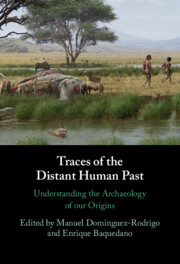
Traces of the Distant Human Past offers a critical examination of early human behavior by challenging traditional narratives and pushing for a more scientific, theoretically informed approach to archaeology. Emphasizing the importance of understanding early humans within their environmental context, the contributors to this volume propose a shift towards theoretical frameworks and ecological perspectives in archaeological research. They highlight the scarcity of well-preserved archaeological sites, making a strong case for high-resolution analyses and the need for new methodologies, including the use of artificial intelligence in taphonomy. By questioning the scientific rigor of current practices and advocating for hypothesis-driven research, this volume not only informs but also inspires a reevaluation of the approaches that can be applied to an interpretation of the evidence for human evolution in the archaeological record. It will be an essential resource for those interested in advancing the field and gaining a deeper understanding of human origins.
An enduring challenge for the human evolutionary sciences is to integrate the palaeoanthropological record of human evolution and speciation with the archaeological record of change and differentiation in hominin lifeways. The simplest hypothesis, and therefore an attractive hypothesis, is that change is made possible by, and reflects, evolutionary change in the capacity of individual humans. The very long-term trend of increasing diversity and sophistication of technical and social lifeways (albeit with noise and periods of stasis) reflects long-term trends of increasing cognitive capacity linked to bipedality, followed by body size increase, encephalization and slow life history. We suggest instead that the long-term trend sees a gradual decoupling of human lifeways from the intrinsic capacities of individual people. We develop this view through an analysis of the Middle Stone Age and behavioural modernity, arguing that these depend on mosaics of social and individual factors, none clearly connected to specific evolved changes in individual humans.
This study offers a review of the artistic dimension of the Chinchorro culture, a complex hunter-gatherer society along the coast of the Atacama Desert that, around 7000 years ago, created elaborate representations of the dead. It provides archaeological background and investigates the possible reasons for the development of artificial mummification. Drawing on the art therapy model and the concepts of art and grief, the analysis interprets Chinchorro mortuary rituals as expressions of emotional and social processes. This study argues that these anthropogenically prepared mummies represent artistic expressions that reflect the intentional decision-making and emotional awareness of these ancient communities, serving as a means to process grief. Furthermore, the paper highlights the multifaceted nature of Chinchorro society, including the mining and use of pigments such as manganese—materials that, while symbolically meaningful, posed serious health risks and may have contributed to the eventual decline of their elaborate funerary practices. Finally, the study underscores the enduring cultural significance of the Chinchorro, particularly in shaping contemporary identity of Arica region, where artistic portrayal of dead links ancient and modern narratives of cultural heritage.
The advent of urbanism had profound impacts on landscape management, agricultural production, food preservation, and cuisine. This Element examines the 6,000-year history of urbanism through the archaeological perspective of food, using the analysis of cooking and eating vessels, botanical remains, and animal bones along with texts and iconographic evidence to understand the foodways that spurred and accompanied the growth of cities. Human-environmental changes took place as farmers became fewer in number but increasingly essential as providers of food for city-based consumers. The Element also examines the ways in which cities today share patterns of food production and consumption with the first urban settlements, and that we can address questions of sustainability, nutritional improvement, and other desired outcomes by recognizing how the growth of cities has resulted in distinct constraints and opportunities related to food.
In this paper, I use examples from the Roman past and the Brexit present of the UK to discuss the links between practices, identities and the changing dimensions of imperial power. In both the traditional archaeological context of later Roman Britain and in excavating the roots of Brexit in post-War British politics, analysis of the practical semiotics of identity is the most fruitful way to understand the social processes under way. In each context, the meaning of different practices, articulated through the concepts of identities and boundaries, is crucial to the structuration of, respectively, a late imperial and a post-imperial society. The tensions between imperial and local identities are manifest across a wide suite of practices, the investigation of which provides a dynamic method for understanding how these tensions play out, with consequences for the fragmentation of the Roman Empire, on the one hand, and of the UK, on the other.
With this paper, we aim to bring the history of the rural landscapes and communities of the ancient (‘Classical’) Mediterranean back into the limelight, drawing attention to their contributions to and pivotal roles within the multifaceted structural transformations of the Mediterranean in the first millennium bce. To do so, we focus on two case studies from one particular region that looms large amongst those heavily exploited by ancient colonial powers: the island of Sardinia. In chronological terms, our focus is on the so-called Punic and Roman periods, roughly spanning between the fifth century bce and the fifth century ce. Long overlooked, if not outright dismissed, in conventional accounts of the ancient Mediterranean, the rural communities of Punic-Roman Sardinia were not only vital economic producers, but also formed large and culturally distinct social groups. They actively maintained their own traditions, ways of living and practices in the face of the ruling classes’ disruptive initiatives. Their actions to shape their identity and history resonate closely with the theory of the ‘history of subaltern groups’ formulated in Antonio Gramsci’s Prison Notebooks, particularly Notebook 25. We draw upon a semiotic understanding of Gramsci’s notion of subalternity to strengthen archaeology’s ability to foreground the materiality of those communities unaccounted for by history. Our goal is to discuss comparatively the material signs of rural life of Punic and Roman-period Sardinia, to outline an alternative decolonial perspective on the island and to consider its implications for the wider ancient Mediterranean.
How might the affective work of politics be accessed through the fragments of material culture that we recover as archaeologists? This paper considers how political identities can be formed and shaped affectively through engagement with the qualities of craft objects and the connected world of experience that they index. Taking up a case study from nineteenth-century highland Madagascar, I explore how political affects are caught up with the making and using of everyday things and how the transposed qualities of objects and the metonymic connections they evoke offer a means to tie changes in material culture to shifts in political affects over time.
Semioidentity refers to the sign–identity relationship in its pragmatic and metapragmatic dimensions. A component of social semiotic analysis, the study of semioidentity offers a distinctive contribution to archaeology by making explicit the different kinds of signs and their functions in the interpretive process. It privileges indexical signs as a means of anchoring interpretation and thus provides opportunities for additional higher-order claims about ideology and belief systems. A semiotic approach contributes to knowledge growth by positing that the most reliable interpretations—that is, those most likely to be true in the long term—are those that incorporate a variety of semiotic resources since their functions will act to constrain one another. In this essay, I discuss semiotic resources and semiotic ideology from the perspective of Peircean semiotics. I then offer a case study focusing on the archaeology of the Pueblo Revolt and the emergence of a pan-Pueblo historical consciousness to illustrate some of the rich insights that it affords.
Identity is a permanent integral feature of archaeological research. Even when it seems marginal to the current archaeological agenda, identity is brought back into the discussion by the urgency to engage with—often homogenizing—identity-based policies in contemporary politics. Lately, the emphasis placed on difference, fluidity and multivocality within archaeology has sensibly advanced the debate. Nevertheless, immutable identities continue to arise in studies of antiquity, replicating essentialist assumptions on the human past built around binary structures and simplistic equations of culture-historical reminiscence between material culture/practices and identities. The contributors to this special issue show how informing archaeological discourse with a semiotic methodology enhances the visibility of social dynamism, cultural complexities, among ancient human groups. This is particularly true for the communities silenced by history. These papers push the ontological and epistemological boundaries of archaeology by envisaging the archaeological record as a set of interconnected signs, whose cognitive potential overcomes the material space they occupy so that they become meaningful to different individuals and communities in diverse ways. Their stance maintains that semiotics holds the largely unexplored potential to enhance our understanding of the complexity of the past, ultimately offering a compelling standpoint to engage with contemporary identity-centred political debates.
Cognitive archaeology focuses on the mental processes behind human material culture, exploring the human mind for patterns of behavioural strategies and their corresponding material expression in artefacts. Sharing some of the aims and perspectives of cultural anthropology, cognitive archaeology has also been called ‘Evolutionary Cognitive Archaeology’ (ECA) when it refers to hominin evolution. However, despite the abundance of publications and research projects that focus on ECA, this is a relatively new discipline, in which the earliest analyses were principally oriented to the appearance and evolution of language and symbolism. As there is no standardized method for investigating cognitive evolution, ECA researchers use multidisciplinary and wider theoretical models and methodological approaches. In this sense, partially because it is not unique to the genus Homo, stone toolmaking has been, and still is, an essential criterion for inferring hominids’ cognitive capacities. Aiming to contribute to ongoing discussions, this paper addresses and reviews some of the more relevant evolutionary cognitive approaches related to stone-tool manufacture in general and Acheulean technology in particular, aimed at building a synthesized chronological review of the discipline.
Northwestern Iberia was inhabited by communities whose only settlement model was the hillfort throughout the Iron Age. In archaeological terms, these people are included in the so-called ‘Castro Culture’. These communities experienced social and material changes at the end of the Iron Age. From the second century bc onwards, a more hierarchical and complex social system, together with a process of monumentalization and sophistication of the architecture of the settlements, was adopted. More specifically, in the region between the Douro and Miño rivers, a series of highly original subterranean constructions have been documented. Unique in the archaeological record of the European Iron Age, the function of sites has been much debated, with the most accepted use as steam bath. In this article, these buildings are analysed from a performative approach, to understand their meaning and function in the context of the landscape of the hillforts.
Panoramic accounts of long-term socio-political change tend to marginalize the role of animals. Taking a materialist stance, we re-evaluate the ways livestock shaped the emergence of the tributary mode of production out of a kinship-ordered mode of production. This explicitly Marxist analytical framework foregrounds the interplay between value, wealth, and labour, while attending to the economic specificities of livestock that make it particularly dynamic. Drawing on ethnohistorical data, we identify wealth in livestock as heritable, expandable, flexible, and convertible, while inherently unstable. We offer the first synthesis tying these qualities together and present a holistic picture of how these qualities can catalyse the class formation by promoting differential accumulation of wealth, economic growth, and direct appropriation of value from producers. These dynamics offer an animal-centric explanatory lens to view the long-term trajectory of northern Mesopotamia from the Neolithic through the Late Chalcolithic (9700-3500 BCE), where caprines, cattle, and pigs were central to the development of urbanism and states. While our analysis is specific to the social formations, species, and human-animal relations in northern Mesopotamia, the framework we present can be applied to contexts globally to better understand the animal side of political economic dynamics of early complex societies.
The capacity to relate a signal to an arbitrary, specific and generally understood meaning—symbolism—is an integral feature of human language. Here, we explore two aspects of knapping technology at the Acheulean site of Boxgrove that may suggest symbolic communication. Tranchet tips are a difficult handaxe form to create, but are unusually prevalent at Boxgrove. We use geometric morphometrics to show that despite tranchet flaking increasing planform irregularity, handaxes with tranchet tips have more standardized 3D shapes than those without. This challenging standardization suggests tranchet tips at Boxgrove were part of a normative prescription for a particular handaxe form. Boxgrove presents some of the thinnest handaxes in the Acheulean world. To replicate such thin bifaces involves the technique of turning-the-edge. Since this technique is visually and causally opaque it may not be possible to learn through observation or even pointing, instead requiring arbitrary referents to teach naïve knappers. We use scar ordering on handaxes to show a variety of instances of turning-the-edge in different depositional units at Boxgrove, indicating it was socially transmitted to multiple knappers. The presence of societally understood norms, coupled with a technique that requires specific referents to teach its salient features, suggests symbolism was a feature of hominin communication at Boxgrove 480,000 years ago.
Worldbuilding is a concept that has been used to describe the creation of immersive landscapes in fiction and games and is deeply resonant with archaeological knowledge construction. This article argues for worldbuilding in archaeology as a creative intervention that encourages an exploration of archaeological data throughout the process of creation, interpretation and dissemination to generate past worlds, shaped through community storytelling. Through the examples of Çatalhöyük in Second Life, Other Eyes and the Avebury Papers projects, I explore a playful practice that closely interrogates reuse of archaeological data and encourages lateral thinking amongst students and other archaeological storytellers.
Rituals are sites of personal and social transformations. However, we still do not have a sophisticated theory for how these rituals were embedded and generated within specific political economies, nor how communities used ritual activities to conceptualize the cosmos. This paper develops a theoretical framework exploring pragmatism and materialism to articulate the relationship between imperial political economies and ritual activities, situating the latter in the former. This framework will then be applied to ritual activities in southern Roman Britain, exploring how ritual activities emerged within the imperial political economy. The emergence of Roman imperialism in Roman Britain materially impacted upon not only the nature and range of ritual activities, but also the cosmologies of local communities. Ritual activities are materializations of cosmological beliefs, and both were determined by the imperial political economy. It is this process by which cosmologies emerged to naturalize socially constructed relations and activities that I call ontogenesis.
‘Giant’ handaxes are a widely recognized but infrequently investigated phenomenon of the Acheulean period. The scale of their distribution and the selective pressures underpinning their production are not well explored. Here, we report new data from a large-scale experimental study that identifies the point at which handaxes become too large to use with a single hand, alongside a review of known Acheulean assemblages displaying ‘giant’ handaxes. On the understanding that most ‘regularly sized’ Acheulean handaxes were gripped in one hand, if handaxes require bimanual grips, alternative explanations for their production—beyond unimanual butchery and woodworking tasks—should be sought. Our data identify clear mass, length and thickness thresholds for bimanual gripping. It is revealed that spatially and temporally diverse archaeological sites display ‘giant’ artefacts that exceed these thresholds. We suggest these atypically large handaxes would most plausibly have been utilitarian tools used for cutting, but in alternative ways to more regularly sized bifaces. This includes when worked materials were secured by another individual or structure, during digging activities, or when used as a stationary cutting ‘plane’ secured on the ground.
All societies throughout time have shown a greater or lesser degree of superstition when facing the traumatic event of death. Roman society was no exception, especially when numerous religious currents participated in the funerary rituals, sharing their own conception and beliefs. The following lines present a brief overview of children’s death, especially premature ones, from the early Imperial to the late Imperial period, when they became more highly regarded. It is followed by the traumatic or marginal deaths of some individuals whose behaviour, illnesses or ways of dying were suspicious for their closest people: the article closes with the treatment given to certain women. All the deaths in this research aroused suspicions among their relatives or the authorities, who did not hesitate to practise rituals to calm them in the afterlife and ensure that they did not return to life as evil spirits. In this article we will focus on the practices that developed in the city of Onoba and its hinterland or influential area; a Roman colony located in the westernmost part of the province of Baetica, a port city of enormous importance for the Empire given its importance as a gateway for minerals coming from the Urium mines.
Tell settlements often provide a unique window into prehistoric lifeways due to remarkable preservation and safeguarding from modern disturbances. Vésztő-Mágor in Hungary is one such tell with stratigraphy, features and finds that reflect thousands of years of prehistoric settlement. In 2021, the Vésztő-Mágor Conservation and Exhibition Program began the work of stabilizing, documenting and preserving prehistoric deposits, features and artefacts exposed in an in situ exhibition trench at Vésztő-Mágor. In the process, an exceptionally well-preserved carbonized item was discovered embedded in a series of Middle Bronze Age house floors. We describe the object and context of discovery, and interpret it as matting inside a wattle-and-daub house. We expand our discussion to similar contexts known from Vésztő-Mágor, in the Carpathian Basin, and beyond, to highlight the technologies involving organic materials used at prehistoric tell sites and their significance for understanding lifeways at these settlements.