To save content items to your account,
please confirm that you agree to abide by our usage policies.
If this is the first time you use this feature, you will be asked to authorise Cambridge Core to connect with your account.
Find out more about saving content to .
To save content items to your Kindle, first ensure no-reply@cambridge.org
is added to your Approved Personal Document E-mail List under your Personal Document Settings
on the Manage Your Content and Devices page of your Amazon account. Then enter the ‘name’ part
of your Kindle email address below.
Find out more about saving to your Kindle.
Note you can select to save to either the @free.kindle.com or @kindle.com variations.
‘@free.kindle.com’ emails are free but can only be saved to your device when it is connected to wi-fi.
‘@kindle.com’ emails can be delivered even when you are not connected to wi-fi, but note that service fees apply.
Comparing the fourth-century writings of John Chrysostom and Libanius with the sixth-century writings of Severus of Antioch and John Malalas suggests that Jewish characters continued to play significant roles in Christian writings even as Jews themselves became less visible in the city of Antioch.
Amidst all of the ills that struck Antioch in the sixth century, the bubonic plague ranks high. This chapter addresses the actual entity of the pestilence, calling into question the reports in the ancient sources.
The sociocultural spaces of the “Minoan” Aegean were teeming with animal bodies. Many of these animals were alive, but many were not—and never had been; the latter are our focus here. Realized across a range of media, such as zoomorphic vessels, frescoes, and seal stones, animals’ bodies took on a rich diversity of material and spatial qualities that could afford distinctive interactive experiences that the notion of “representations” fails to capture. By recognizing both biological and fabricated entities as real embodiments of animals, which could coexist and interact in Aegean spaces, the nature of our discussion changes. We see that the dynamics of representation were caught up in a much wider field of relationships involving these crafted bodies, which characterized their engagements with people. Doing so moves us beyond questions of signification and intentional design, and toward a fuller recognition of people’s actual experiences of animalian bodies. Looking closely at a variety of venues, ranging from palatial courts to a modest house bench, our focus thus can turn to how the world of animalian things was a crucial part of social life in Aegean spaces, and how direct interactions with these other animal bodies were central, yet often overlooked and minimized, components of human relations with nonhuman beasts.
Examination of pottery production has always been of major importance for the understanding of colonial enterprise in the western Mediterranean during the Middle Geometric II period. Neutron Activation Analysis carried out on ceramics dating from this period to the Early Archaic period and exchanged between Pithekoussai, Kyme and the necropolises of the Valle del Sarno now elucidates the origin of some of the earliest Greek pottery used in the Phlegraean area. Analytical studies further demonstrate the complexity of Pithekoussan-Kymean pottery production and the modes of its consumption and diffusion in Campania and beyond. It was possible to ascertain the dominance of local over imported ceramic wares, and the high degree of specialisation achieved by the Phlegraean workshops from a very early phase. This allows us to clarify the dynamics of the contacts between the motherland and the colonial cities, and therefore between the colonies and the Indigenous and Etruscan hinterland.
The walls of Antioch are the only visible memento of the ancient city. Continuously repaired and reconfigured, they encompass at least eight different phases. How these defenses document the transformation of the city through the ages is the core issue.
entities stand as crystallizations of a distinctly Aegean manner of animalian compositeness that is highly intuitive in its integration. These entities – the boar’s tusk helmet, ox-hide shield and ikrion (ship cabin) – embody this dynamic in an arrant fashion, since, while each is prominently animalian and bodily, they do not themselves take the shapes of animal physiques. Instead, they brought novel, conventional object-forms to animalian presences in the Aegean. By not standing as animals themselves, they starkly draw out the potent relational dynamics that could be realized between creatures, and between creatures and things. Discussion ultimately concerns the added complexity introduced to the statuses of these entities when rendered in movable representational media like glyptic and painted ceramics; particular attention comes to their frequent rendering in series. While seriation is often read as simplifying something’s status to the merely ornamental, I argue, instead, that articulation of shields, helmets and ikria in series imbued them with a peculiar, complex dynamism.
Chapter 3 explores the relationship of material and immaterial embodiments of animals in the Bronze Age Aegean, through the lion. Since populations of living lions were not present on Crete, representational embodiments were the basis of people’s physical encounters with the species; hence the peculiarities of these “object-bodies” powerfully contributed to the characterization of the beast. The vast majority of Cretan lion representations occurred in glyptic. Seals (as worn objects) and impressions (as material signifiers of identity) consistently placed the leonine in direct relation to the human, through bodily and sociocultural juxtapositions. Cretans also would have encountered lions in immaterial manifestations, through oral culture. Early Aegean poetic traditions formulated a paralleling of human and lion through similes that was remarkably similar to the paralleling juxtaposition generated between a lion-seal and person. In MBA III–LBA II, after centuries of development in Crete, the lion’s association with glyptic extended to the early Mycenaean mainland. This moment saw intense intra-Aegean exchange, with material, practical and linguistic dimensions. The epic tradition was taking form, including lion similes. Through its various embodiments, the lion was caught up in this interaction, as its Aegean juxtaposition with humans fluidly continued and developed.
This chapter focuses on the population in Antioch: daily routines, practices, and cultural outlook. The texts of Libanius and John Chrysostom, among others, offer compelling vignettes of city life in Late Roman Antioch.
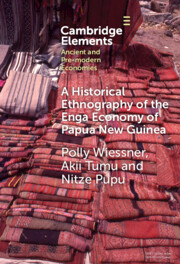
The question addressed in this Element is: What happens to a society when, in the absence of influence from foreign populations, constraints are released by a new crop making possible significant surplus production? We will draw on the historical traditions of 110 tribes of the Enga of Papua New Guinea recorded over a decade to document the changes that occurred in response to the potential for surplus production after the arrival of the sweet potato some 350 years prior to contact with Europeans. Economic change alone does not restructure a society nor build the social and political scaffolding for new institutions. In response to rapid change, the Enga drew on rituals that altered norms and values and resolved cultural contradictions that inhibited cooperation to bring about complexity rather than chaos. The end result was the development of one of the largest known ceremonial exchange systems prior to state formation.
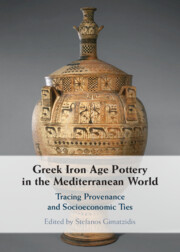
Greek pottery is the most visible archaeological evidence of social and economic relations between the Aegean and the Mediterranean during the Iron Age, a period of intense mobility. This book presents a holistic study of the earliest Greek pottery exchanged in Greek, Phoenician, and other Indigenous Mediterranean cultural contexts from multidisciplinary perspectives. It offers an examination of 362 Protogeometric and Geometric ceramic and clay samples, analysed by Neutron Activation, that Stefanos Gimatzidis obtained in twenty-four sites and regions in eight countries. Bringing a macro-historical approach to the topic through a systematic survey of early Greek pottery production, exchange, and consumption, the volume also provides a micro-history of selected ceramic assemblages analysed by a team of scholars who specialise in Classical, Near Eastern, and various prehistoric archaeologies. The results of their collaborative archaeological and archaeometric studies challenge previous reconstructions of intercultural relations between the Aegean and the Mediterranean and call into question established narratives about Greek and Phoenician migration.
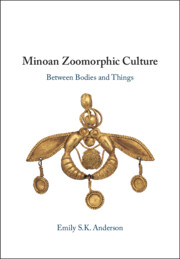
Since the earliest era of archaeological discovery on Crete, vivid renderings of animals have been celebrated as defining elements of Minoan culture. Animals were crafted in a rich range of substances and media in the broad Minoan world, from tiny seal-stones to life-size frescoes. In this study, Emily Anderson fundamentally rethinks the status of these zoomorphic objects. Setting aside their traditional classification as 'representations' or signs, she recognizes them as distinctively real embodiments of animals in the world. These fabricated animals-engaged with in quiet tombs, bustling harbors, and monumental palatial halls-contributed in unique ways to Bronze Age Aegean sociocultural life and affected the status of animals within people's lived experience. Some gave new substance and contour to familiar biological species, while many exotic and fantastical beasts gained physical reality only in these fabricated embodiments. As real presences, the creatures that the Minoans crafted artfully toyed with expectation and realized new dimensions within and between animalian identities.
Chapter 3 shifts discussion to the broader political landscape of the kingdom and to the nature of Hieron’s relationship with the cities of southeastern Sicily that recognized his political authority as a king.
Chapter 2 places Hieron’s kingship in conversation with the Hellenistic monarchies of the eastern Mediterranean and goes on to explore the qualities of his rule that set Hieron’s basileia ahead of its time – as, for example, in his diplomatic dealings with Rome.
In the opening lines of the twenty-third book of his universal history, Diodorus Siculus praises his native Sicily as “the fairest of all islands, since it can contribute greatly to the growth of an empire.”1 Sitting at the intersection of prevailing maritime routes, the island served as a natural landing for ships plying their way between the Mediterranean’s Eastern and Western Basins. Its broad coastal plains supported large urban centers and entrepôts that opened onto the Tyrrhenian Sea to the north, the Ionian Sea to the east, and the vast Libyan Sea to the south and west, inviting contacts from the Italian Peninsula, the Greek mainland, and North Africa. Indeed, located at the heart of the Mediterranean basin, Sicily has occupied an equally central place in the geopolitics of the region across much of the last three millennia.