Preface
Published online by Cambridge University Press: 21 October 2009
Edited by

Summary
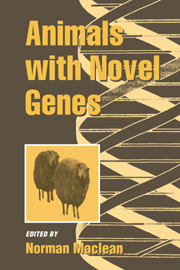
The explosion of knowledge in the biological sciences is now widely recognized. This intellectual revolution has involved some remarkable examples of lateral thinking, and the production of transgenic animals is one such application. The development of these new animal types has depended on the exploitation of cloned genes and techniques capable of achieving the integration of transgenes into the chromosal DNA of the relevant animals. Although the dream of directly modifying an animal's genetic endowment was long cherished, no one, at least until ten years ago, could have guessed how rich the benefits of the transgenic technology would be. We now stand at a scientific watershed, and interesting and productive applications have already appeared in genetics, medicine and agriculture. Obviously they are only the beginning: The technology is now proven and the future looks promising in innumerable ways.
This book attempts to provide the reader with a picture of what has been achieved and where the methodology is most likely to go from here. We have chosen to divide the topic by animal groups, partly because the technology varies from group to group, but even more because present and future applications differ strikingly among organisms. Thus, whereas the greatest appeal of transgenic insects is their power to throw light on problems like mutagenesis and gene regulation, the greatest appeal of transgenic mammals is their contribution to agricultural productivity and pharmaceutical research.
I am most grateful to the contributors to this volume for their expenditure of time and energy.
Information
- Type
- Chapter
- Information
- Animals with Novel Genes , pp. ix - xPublisher: Cambridge University PressPrint publication year: 1995
Accessibility standard: Unknown
Why this information is here
This section outlines the accessibility features of this content - including support for screen readers, full keyboard navigation and high-contrast display options. This may not be relevant for you.Accessibility Information
Accessibility compliance for the PDF of this book is currently unknown
and may be updated in the future.