To save content items to your account,
please confirm that you agree to abide by our usage policies.
If this is the first time you use this feature, you will be asked to authorise Cambridge Core to connect with your account.
Find out more about saving content to .
To save content items to your Kindle, first ensure no-reply@cambridge.org
is added to your Approved Personal Document E-mail List under your Personal Document Settings
on the Manage Your Content and Devices page of your Amazon account. Then enter the ‘name’ part
of your Kindle email address below.
Find out more about saving to your Kindle.
Note you can select to save to either the @free.kindle.com or @kindle.com variations.
‘@free.kindle.com’ emails are free but can only be saved to your device when it is connected to wi-fi.
‘@kindle.com’ emails can be delivered even when you are not connected to wi-fi, but note that service fees apply.
This chapter discusses the definitions of the virtues employed by early scholastic authors and examines their systems for classifying the virtues, as well as their accounts of specific virtues and the gifts of the Holy Spirit.
Hume writes that it is “no inconsiderable part of science barely to know the different operations of the mind, to separate them from each other, to class them under their proper heads, and to correct all that seeming disorder, in which they lie involved, when made the object of reflection and enquiry.” He describes this branch of knowledge as “mental geography.” Yet while his mental geography of thought is now well understood, his mental geography of feeling—specifically, of the non-sensory “secondary impressions” or “impressions of reflection” that he discusses in Books 2 and 3 of A Treatise of Human Nature—has not been. This essay seeks to clarify Hume’s doctrines in these two Books by explaining the nature and classification of the five kinds of secondary impressions that Hume distinguishes: (1) sensible agitations (i.e., “emotions” in one sense of that term); (2) feelings of or from mental operations; (3) volitions; (4) passions (both calm and violent); and (5) sentiments of taste.
This chapter addresses three questions that arise from Hume’s observations about character in the Treatise: whether Hume can talk about enduring traits that constitute character, given his depiction of the mind as in flux; whether character is “objective” or a creation of spectators; and whether Hume’s treatment of virtue and vice is only descriptive of how we derive our moral categories. I argue, first, that since Hume distinguishes between the feeling of a motive and its causal efficacy, he can observe that, while feelings may be fluid, character is determined by which has the force to produce action consistently. Second, the contingency of moral categories on human nature is not the same as creation of the features that fall under those categories. Third, Hume both describes our process of moral discrimination and offers guidance about making judgments of virtue and vice. However, he is not defending his view of moral character but employing the norms that arise from human practices.
Shmuel Nili’s Beyond the Law’s Reach? is an inquiry into the moral duties of the world’s established democracies in a world rife with violent and undemocratic states. Nili argues that these “consolidated” democratic states are “entangled” with the leaders of such violent polities—and uses this entanglement to derive an elegant and plausible series of political duties. In response, this essay seeks to undermine the distinction between the established democracies and the violent states, by showing that some democratic states—including, most centrally, the United States—are as violent as those societies considered by Nili as the focus of international moral obligation. This fact, however, does not impugn the moral obligations identified by Nili; instead, it demonstrates that Nili’s duties might demand something like a necessary form of moral hypocrisy—in which a democratic state might be effectively able to undermine violence abroad, even while incapable of effectively eliminating that violence on its own territory.
This article examines Paul’s view of the law with attention to the figure of the pedagogue. It suggests that the law stands in a redemptive-historical role to the coming of Christ. It accomplishes this through a comparison between Seneca’s Moral Epistles and Paul. Seneca’s discussion is a helpful heuristic to elucidate Paul’s teaching on Jewish law. Paul highly values the Jewish law and explains that it leads humans to Christ as a pedagogue, although the law itself does not have the power to make righteous. Scholars offer arguments in support of positive or negative attitudes toward the pedagogue, but the pedagogue’s basic role was to bring a child to the age of maturity and rationality. Paul’s thesis is to argue that the Jewish law functions, historically and ethically, to lead one to Christ. This interpretation suggests that the law plays a positive redemptive-historical role in Galatians 3:19–4:11.
In this chapter, I argue, drawing primarily on passages from the Gorgias, the Republic and the Laws, that Plato understands tragedy to be, in essence, an imitation of the finest and noblest life. According to Plato, the only thing that is genuinely good and valuable is wisdom and virtue, and it is this life that tragedy imitates. This definition may seem deeply counterintuitive, lacking core tragic notions of loss, failure and suffering, but Plato would say these depend on prior conceptions of gain, success and flourishing. Ideal tragedy includes adversity, obstacles and limitations to living the best life – it is not an easy life of uninterrupted success – but it foregrounds the goodness and value of the life rather than dwelling on the obstacles. I formulate four constraints on ideal tragedy: the veridical constraint, which holds that only the life that is genuinely the best should be imitated as best; the educative constraint, which holds that tragic imitation must aim at educating the audience by encouraging them to pursue virtue and wisdom; the emotional constraint, which holds that the tragic imitation should cause appropriate and appropriately moderate emotional reactions; the political constraint, which holds that no living citizen should be portrayed as living the best life.
The second applied context in which I explore the implications of my view of moral heroism is in public practices of honoring and commemoration. Moral heroism is far from the only thing we honor and commemorate, but it is a common ground on which to think honoring and commemorating are appropriate or even called for. Yet what we understand ourselves to be honoring, the purposes for which we commemorate, as well as how we set about these activities are all subject to important revisions if my view of moral heroism is accepted. In particular, my view supports a broad shift away from honoring moral heroes and toward honoring moral achievements instead: it favors achievement admiration over characterological admiration. Engaging with the recently exploding literature concerning moral reservations about commemorations including statues, monuments, and the like, I distill two focal concerns about commemorations: They unjustly marginalize, and they mark inappropriate moral aspirations. I then show how the revisions supported by my view of moral heroism are both helpful in attenuating ongoing controversies surrounding practices of commemoration and productive in advancing the aims of honoring and commemorating moral excellence.
This chapter offers a brief review of the central arguments of the book, summed up in a theme of decentering the moral hero in my account of moral heroism. Refocusing our admiration and commemoration more neatly around achievements rather than achievers, positioning exemplarity in moral education as pedagogically promising when the figure of the hero isn’t the centerpiece of moral excellence, and opting for moral heroism as an achievement consisting in sacrificing rather than a state of character are all, among other things, ways of nudging the figure of the hero toward the periphery in my account of moral heroism. I embrace this elevation of action appraisal over person appraisal when it comes to moral heroism. This is not to say that the figure of the hero drops out entirely or fails to be of interest, however. I conclude by noting some possible directions of future work.
This chapter completes the picture of moral heroism the book offers. I address the tension in the account that arises from the combination of my practical necessity explanation of the Non-Optionality Claim and the feature of sacrifices that they are chosen over an available alternative. I do so by distinguishing between ways in which an agent’s choice becomes constrained. Another tension is between the practical necessity explanation of the Non-Optionality Claim and the deontic status of being supererogatory. I show how an action can be practically necessary and supererogatory.
These arguments lead to a more general consideration of the supererogatory status of moral heroism, which unfolds in three phases: first in terms of the reasons and duties we might have to aspire to moral heroism, second in terms of programs designed to socially engineer moral heroism, and finally in terms of parents or caretakers raising children to become moral heroes. In all three phases, I argue that the goals of becoming morally heroic or helping others to do so are not simply universally laudable and fitting. This is an important quality of my view that is again an improvement over virtue thinking, which positions moral heroes more straightforwardly as models for emulation.
This chapter develops the case against the dominant view of moral heroism, which I call the ‘virtue approach.’ It posits moral virtues in moral heroes which play a pivotal role in every phase of how we understand and respond to moral heroism. On this view, the virtues of moral heroes are what explain their extraordinary behavior, and what set them apart from the rest of us. Moral virtues are what moral heroes offer to us as we attempt to learn from them and emulate them. It is the virtues of moral heroes that make them fit and useful as components in programs in moral education. And the virtue of the hero is what attracts our admiration, what calls out for honor and commemoration.
I introduce three theoretical desiderata for a theory of moral heroism: accuracy, related phenomena, and fitting responses. The arguments of this chapter target accuracy, showing that the virtue approach misunderstands moral heroism. Many moral heroes are poor candidates for virtue, and the patterns by which we draw inferences about virtue and moral heroism align poorly. We need a different approach to capture the significance and nature of moral heroism.
Moral heroism without virtue has implications for applied contexts, such as moral education. In this context, moral heroes have featured prominently in well-developed programs of character education. My view of moral heroism raises some problems for the design and implementation of such programs, not least because of the way that virtue thinking is embedded in them. After articulating several of those problems, I go on to explore directions in which my view might push us to reform our approaches to moral education, including by salvaging what may be salvaged from programs of character education. Recent studies in psychology provide some reason to think that approachable exemplars are more effective in motivating positive moral change than extraordinary exemplars. My view of moral heroism helps make the approachability of moral heroes more visible than the virtue approach, because it does not cast moral heroes as exemplars of hard-won virtues, but instead depicts moral heroism as an achievement that often comes amid a background of non-achievement. I suggest this is an encouraging data point for thinking that my view of moral heroism can supply an understanding of moral heroes that is not only theoretically rich and psychologically accurate but also educationally useful.
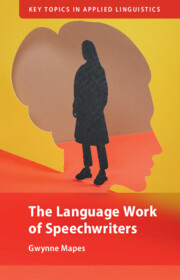
The work of speechwriters is prominent in political discourse, yet the writers themselves remain in the shadows of the powerful, public figures they work for. This book throws the spotlight on these invisible wordsmiths, illuminating not only what they do, but also why it matters. Based on ethnographic research in the US American speechwriting community, it investigates the ways in which speechwriters talk about their professional practices, and also the material procedures which guide the production of their deliverables. Relying on a robust collection of various genres of discursive data, Mapes focuses on the primary rhetorical strategies which characterize speechwriters' discourse, neatly exposing how they are beholden to a linguistic marketplace entrenched in ideological and socioeconomic struggle. Providing fascinating insights into an understudied and relatively misunderstood profession, this book is essential reading for academic researchers and students in applied linguistics, discourse studies, linguistic and cultural anthropology, and sociolinguistics.
This chapter compares the impact of different regulatory tools (command and control, mandates, and incentives relative to reasoning, honesty oath, and nudge) on the crowding out of different types of intrinsic compliance motivations.
MacIntyrean business ethics research has focused on the concept of a practice, drawn primarily from After Virtue. MacIntyre later emphasized the need to adopt an account of human nature to provide a better grounding for his earlier social teleology. We consider three implications of incorporating the neo-Aristotelian and Thomistic account of human nature outlined in MacIntyre’s later works for MacIntyrean business ethics research: First, this account enables the MacIntyrean perspective to better ground its focus on practices as a key moral requirement for the organization of work. Second, it provides a better basis for distinguishing productive practices in good order from other business activities lacking the characteristics of a practice. Third, a theory incorporating an account of human nature, particularly MacIntyre’s notion of natural law, is better able to address broader questions in business ethics that are not directly concerned with the structure of work.
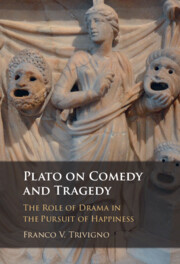
For Plato, tragedy and comedy are meaningful generic forms with proto-philosophical content concerning the moral character of their protagonists. He operates with a distinction between actual drama, the comedy and tragedy of the fourth and fifth centuries BCE, and ideal drama, the norm for what comedy and tragedy ought to be like. In this book Franco Trivigno reconstructs, on Plato's behalf, an original philosophical account of tragedy and comedy and illustrates the interpretive value of reading Plato's dialogues from this perspective. He offers detailed analyses of individual dialogues as instances of ideal comedy and tragedy, with attention to their structure and philosophical content; he also reconstructs Plato's ideals of comedy and tragedy by formulating definitions of each genre, specifying their norms, and showing how the two genres are related to each other. His book will be valuable for a range of readers interested in Plato and in Greek drama.
What is moral heroism? In this book, Kyle Fruh criticizes virtue-centric answers to this question and builds a compelling alternative theoretical view: moral heroism without virtue. Drawing on real-world examples, psychology, and moral philosophy both ancient and contemporary, he argues that in fact the central achievement of moral heroes is the performance of high-stakes sacrifices, so that moral heroism is clearly not a sign of rare moral attainment among an enlightened few, but is instead something enacted by all sorts of people from all walks of life. He also looks at the question of how we respond to moral heroism, both by honoring it and by recruiting it to our efforts at moral improvement and moral education. His book is for anyone interested in moral excellence, the long philosophical traditions which examine it, and contemporary discussions of morally outstanding actions and agents.
In Tusculans 2 the interlocutors discuss the value of physical pain. They swiftly agree that it is not the greatest evil but take longer to consider whether it is bad or, as the Stoics think, merely indifferent. Enduring pain is taken to be an indication of courage and manliness (virtus) and this is undermined by the claim that physical pain is not bad. Therefore neither the Epicureans nor the Stoics provide a wholly satisfactory account of the value of physical pain and its relationship to virtue.
This chapter focuses on Cicero’s treatment of the emotions in Books 3 and 4, and more specifically on his account of the dispute between the Stoics and the Peripatetics. At first sight, the dispute seems uncomplicated: the Stoics advocate the complete absence of emotions whereas the Peripatetics hold that emotions should rather be moderated or controlled. But Cicero’s stress on the idea that emotions are beliefs seems to come at the expense of other central parts of the theory of emotions, most prominently the theory of action. I argue that these features of his presentation serve him in securing a thesis that he is keen to defend in Book 5: that virtue guarantees happiness and that this happiness is invulnerable to the accidents of fortune.
‘The Personified Will’ examines how the faculty of the will was depicted as a personified character in English Renaissance plays. The will was portrayed in a variety of benevolent and malevolent guises, yet the function of these characters has not yet been integrated into our appreciation of the era’s dramatic conventions. I argue that we may more fully appreciate the ways that dramatists queried the practical expression of individual liberty, identity, and civil harmony by attending to a historically disregarded set of Will characters (from Sebastian Westcott’s The Marriage of Wit and Science to William Shakespeare’s Twelfth Night). The performance of the personified will offers important, but hitherto overlooked, evidence of how playwrights attempted to scrutinize the nature of human freedom and social concord, and the extent to which personifications of the will were used to legitimize contemporary systems of status and authority. Exploring the actions of honourable and corrupt personifications of the will provides a way to elucidate the ethical predicaments associated with will’s performance, which the second chapter of this book examines in more detail.
Cicero composed the Tusculan Disputations in the summer of 45 BC at a time of great personal and political turmoil. He was grieving for the death of his daughter Tullia earlier that year, while Caesar's defeat of Pompey's forces at Munda and return to Rome as dictator was causing him great fears and concerns for himself, his friends and the Republic itself. This collection of new essays offers a holistic critical commentary on this important work. World-leading experts consider its historical and philosophical context and the central arguments and themes of each of the five books, which include the treatment of the fear of death, the value of pain, the Stoic account of the emotions and the thesis that virtue is sufficient for happiness. Each chapter pays close attention to Cicero's own method of philosophy, and the role of rhetoric and persuasion in pursuing his inquiries.