While international humanitarian law (IHL) offers protections for infrastructure indispensable to civilian survival, the personnel who operate, maintain and repair these systems remain largely invisible in legal frameworks and humanitarian discourse. Drawing on operational experience, this article examines the systemic threats faced by essential services personnel in contemporary urban warfare, including direct attacks, mobility constraints and the cumulative effect of protracted conflict, all of which undermine the resilience of essential services. Through exploring existing legal frameworks, recent political initiatives and practical measures already undertaken by humanitarian actors and service providers to enhance personnel safety, the article argues that safeguarding essential services personnel is not only a legal and moral imperative but also an operational necessity for preserving civilian life during conflict. While the authors acknowledge the lack of explicit special protection of essential services personnel under IHL, they advocate for a principled, good-faith interpretation and application of IHL that embraces its humanitarian spirit, arguing that the protection of “objects indispensable to the survival of the civilian population” must logically extend to the people who keep those objects and services functioning. The article concludes by proposing future avenues for strengthening protection, including improved visibility, multidisciplinary and essential service provider-centred preparedness planning, and the potential recognition of a distinctive sign for essential services personnel. Ultimately, the article calls for essential services personnel to be better recognized as indispensable to the survival of civilian populations and urges all actors to move beyond infrastructure to protect the systems – including the people – that sustain life in war.
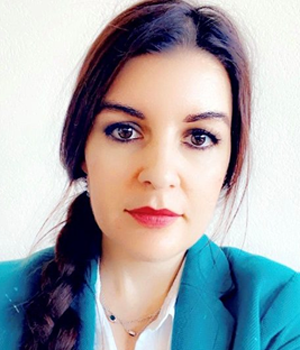 Dr Eirini Giorgou is a Legal Adviser in the International Committee of the Red Cross (ICRC) Arms and Conduct of Hostilities Unit, where she works, among other issues, on explosive weapons in populated areas and on nuclear weapons. She has several years’ experience in multilateral disarmament and arms control diplomacy and negotiations outside the ICRC. She is a licensed lawyer and holds a PhD in international law from the University of Geneva.
 Dr Eirini Giorgou is a Legal Adviser in the International Committee of the Red Cross (ICRC) Arms and Conduct of Hostilities Unit, where she works, among other issues, on explosive weapons in populated areas and on nuclear weapons. She has several years’ experience in multilateral disarmament and arms control diplomacy and negotiations outside the ICRC. She is a licensed lawyer and holds a PhD in international law from the University of Geneva.