To save content items to your account,
please confirm that you agree to abide by our usage policies.
If this is the first time you use this feature, you will be asked to authorise Cambridge Core to connect with your account.
Find out more about saving content to .
To save content items to your Kindle, first ensure no-reply@cambridge.org
is added to your Approved Personal Document E-mail List under your Personal Document Settings
on the Manage Your Content and Devices page of your Amazon account. Then enter the ‘name’ part
of your Kindle email address below.
Find out more about saving to your Kindle.
Note you can select to save to either the @free.kindle.com or @kindle.com variations.
‘@free.kindle.com’ emails are free but can only be saved to your device when it is connected to wi-fi.
‘@kindle.com’ emails can be delivered even when you are not connected to wi-fi, but note that service fees apply.
We study the pricing of foreign silver coins circulating in China during the period from 1866 to 1924. Spanish and Mexican silver dollar coins often traded at prices substantially larger than their bullion value. These premiums are associated with global economic and political conditions, proxies for Chinese political and banking uncertainty, and seasonal production cycles and market conditions for China’s export commodities. Diagnostic tests using the value of copper money and imports often confirm our interpretation. Our evidence suggests how rational currency traders, bankers, merchants, farmers and consumers sustained an informal monetary system during this era.
This paper anatomises and illustrates drawings and prints in the British Museum extracted from an early seventeenth-century album. The drawings, which were inserted by the museum into a new album, suggest that the original album originated in the workshop of a London goldsmith with German or central European origins who worked for the royal court and had a connection to Thomas Cecil, Earl of Exeter. Particular attention is paid to forty-four ornament prints, mainly German, long separated from the drawings. Nearly all are signal additions to the canon of engraved ornament documented in London at this early date. The ensemble thus reassembled is a rare window into design sources, style and processes early in the Stuart period.
Farmers sought relief from the 1893 recession by lobbying for an increase in the money supply from newly mined silver. Railroads sought relief by reorganizing their debt, through extended maturities and combinations of smaller roads with larger ones. The specter of bimetallism in the US added to the financial uncertainty following the Panic of 1893 for European investors who became increasingly worried that US debtors would pay them with silver instead of gold. A slow-motion run on the US Treasury’s gold began and then gained steam. Morgan’s own business was not insulated from the turmoil surrounding the Treasury’s gold reserves.
This chapter explores the role of metalwork in Late Antiquity, with particular focus on the production, distribution and significance of gold, silver, copper, iron, lead and tin artefacts. It examines metal extraction processes, manufacturing techniques and the various ways in which metal objects were used in both secular and religious contexts. Drawing on archaeological evidence, chemical analysis and written sources, the chapter highlights how the study of metalwork provides valuable insights into the economic structures and political landscape of the late antique period. Rather than reflecting decline, late antique metalwork demonstrates adaptation to new demands. Gold and silver, used for coinage, jewellery and ceremonial objects, continued to be produced in both state-run and private workshops, with Constantinople, Antioch and Alexandria emerging as key centres. Silver plate played an essential role in imperial gift-giving and church donations, while stamped silver objects indicate a sophisticated state-controlled production system. The chapter also examines the continued production of copper alloys and iron, which were essential for military equipment, everyday utensils and monumental architecture, as well as lead and tin, which were widely used in construction, plumbing and pilgrimage objects.
This chapter offers an account of literature’s intervention in the money debates of the early twentieth-century United States. It explores the corrosive effects of banking crises and the fear of corrupt trusts through the realist anti-banking novels of writers such as Upton Sinclair; the persistent social shibboleths of gold versus paper money in the naturalism of Edith Wharton and Frank Norris; the teleological failures of speculation depicted in the caricatures of F. Scott Fitzgerald; and the possibilities and limitations of the crisis that precipitated the New Deal, as suggested by the fiction of Zora Neale Hurston. The chapter also explores, through the writing of Mina Loy, the alternative money debates that were receiving increased attention in this period.
Silver coinage developed accompanied by locally produced silver. Gold was introduced in the late first century bce. Both were reformed by Nero, and the system eventually collapsed.
This chapter explores the complex networks and varied kinds of movement of people, ideas and objects that shaped artistic creativity in the early Byzantine empire. As part of a historiographic review, centers of cultural production, ethnicity, identity, style, and decorum are considered. Decades of largely futile attempts to locate the places of production of portable luxury media, especially silver, are presented. High-quality styles can be illusionistic, but can also be based on very different criteria. A more complex and nuanced model for understanding the process of creation is proposed. This chapter concludes with some remarks about Egypt’s significance in the empire, and what the visual record tells us about the distribution of artistic creativity.
After uncovering oil’s role in decolonization, one question immediately emerges: what about other natural resources? Although oil is neither the only fossil fuel on which we depend nor the only resource that produces a substantial amount of wealth, it appears to be the only natural resource that can lead to separate independence. This chapter compares oil and other natural resources to achieve a more comprehensive understanding of the relationship between natural resources and territorial sovereignty. Through an investigation of coal, precious metals, and natural gas, it argues that natural resources can lead colonial areas to divergent outcomes – namely amalgamation, separate independence, and secessionism – after decolonization depending on (1) their commercial value and (2) the timing of their discovery. While resources with low economic value did not affect the territoriality of states, those with high value resulted in three different outcomes. Resources discovered before or during the process of colonization often resulted in amalgamation into a larger entity. Those discovered between colonization and decolonization often resulted in separate independence. Finally, those discovered after decolonization often led to secessionism.
The seventeenth century shaped Dai Viet in major ways. Like their counterpart in Cochinchina, the Le-Trinh regime directly involved in the silk for sliver trade. Eight tons of silver flew into Tongking bringing the wealth of the nation to a new level. Commerce changed culture in many ways, from the introduction of Christianity to the emergence of Lieu Hanh, a new religious figure connected to women traders. It modernised Tongking’s firearms and financed the seven campaigns against Cochinchina. It stimulated the import of Chinese books and prints, which had become more accessible and affordable to the literati class. Add to this new wealth in circulation more broadly, a construction boom, and increased participation of women. Like the thirteenth century, the Red River delta saw another political integration, this time between the military group from Thanh Hoa and the literati from the Red River delta. It may not be a coincidence that both eras s saw the extensive and intensive maritime commerce both in the country and with overseas. The synergy brought in by the maritime wealth however created a more systematically Confucianist institution from the village up. The autonomous village now became the fixed image of Vietnam.
This chapter provides an overview of Alexander’s wealth by examining the sources of his income and his expenditure. In connection to the expenditure, the chapter provides an overview of Alexander’s coinage. The chapter suggests that while Alexander’s campaigns brought tremendous wealth to the king, much of his useable wealth was absorbed by the army necessary for the campaigns.
Mineral chabazite has shown the unusual ability to surface template nanometal particles, especially Ag. A chabazite analog was synthesized from delaminated metakaolin. The chabazite formed retained the platy morphology of the base clay. This morphology is ideal for displaying surface-supported nanometal particles. The synthetic chabazite analog demonstrated the ability to form and support large concentrations of Ag nanoparticles, as observed in the related natural mineral. Due to greater Al content, the synthetic chabazite manifests significantly improved capacity for the formation of such Ag nanoparticles. As in the case of the mineral chabazite, surface Ag nanoparticles of high uniformity were observed in the range of 5–6 nm.
This chapter outlines how from the late seventeenth to the early nineteenth century a mature Tokugawa shogunate recast the Japanese realm’s structures of trade, diplomacy, and maritime defense. It details the ways in which the Tokugawa regime, despite being Japan’s central authority, could not act unilaterally but had to recognize the agency held by the Satsuma and Tsushima domains in their relations with foreign states. In addition, the chapter explains the monopolistic and market tools employed by the shogunate to control key sectors of Japan’s foreign trade. It also explores the broader Pacific contexts – notably a common desire among participants to limit the use of silver in trade with China – that shaped the Japanese state’s foreign trade. Finally, it details the diversity in imported products that emerged by the early nineteenth century, reflected in the variety of goods in demand by both male and female Japanese consumers.
In the early modern period, Japan emerged as a key node in global trading networks. While a vast range of goods were traded, Japan’s position was underpinned by the silk-for-silver exchange that acted as a powerful magnet for foreign merchants. This chapter aims to situate Japan within global trade by exploring the underlying commercial dynamic that drove engagement and the crowded commercial landscape that emerged as a result. The focus is, first, on successive challengers including the Portuguese, shuinsen merchants, the Dutch, the English, and the Chinese and, second, on Tokugawa attempts to channel trade through sanctioned pathways while cutting links with any group that might inject volatility into a precariously balanced system. The chapter concludes by examining the Zheng maritime organization, which emerged to challenge the Dutch East India Company for control over trade routes in East and Southeast Asia.
Following the silver kimpaba displacement from Cabinda to Abomey, this chapter studies how the precious article was received and incorporated in its new home in the royal palaces of the Kingdom of Dahomey, where material culture and objects of prestige were highly valued. Fon artists of Abomey, including silversmiths, appropriated foreign items to create a panoply of articles combining local and foreign elements. The chapter analyzes the silver kimpaba in comparison to other silver articles fabricated by royal silversmiths in Abomey and discusses how the item became an object of prestige and power, until it was looted by the French troops led by Alfred Amédée Dodds in the late nineteenth century. The chapter also discusses the silver kimpabas legacy in Cabinda. As European powers prepared to conquest and colonize the region, they started offering silver swords modeled after the local kimpaba as gifts to local rulers. Overall, the chapter argues, the silver sword embodied the Mfukas increasing power and the fragmentation of Loango coasts societies.
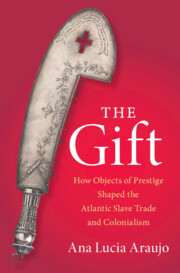
This chapter examines the eighteenth-century silver ceremonial sword fabricated in La Rochelle and given as a gift to Cabindas Mfuka Andris Pukuta following the conflict of 1775. The chapter argues that the object stands for a rich example of the complex interactions between French trades and Cabinda’s local authorities. The chapter explores the work and trajectory of the silversmith, who likely created the sword, and its connections to the shipowner Daniel Garesché and ship captain Jean Amable Lessenne. Like a large cutlass, the sword follows the format of a kimpaba, a Woyo insignia. The chapter explores the uses and meanings of this kimpaba, and its connections to other existing similar West Central African swords. The chapter argues that the sword symbolizes the increasing power acquired by coastal Woyo agents in detriment of the Ngoyo’s ruler whose powers were decreasing with the intensification of the slave trade.
In the 1920s, the Bank of England promoted central banking to preserve London’s control over Indian financial policies and insulate those policies from political changes sweeping the colony. This chapter traces India’s deepening distrust of London in the monetary sphere, and the role envisaged by the Bank of England for an Indian central bank operating under its tutelage. After the failure of efforts to create a central bank in the 1920s, the Bank of England and Whitehall insisted on a privately owned, ‘independent’ central bank as a precondition for Indian constitutional reform. In the end, notions of an independent central bank did not stand up to the vicissitudes of colonial bureaucratic politics. Efforts of the colonial government and the Bank of England to curb the independence of the Reserve Bank of India offer important insights into the early history of central banking in India, but also shed new light on the role central banks in economies undergoing the transition from colonialism to independence.
The Gift explores how objects of prestige contributed to cross-cultural exchanges between Africans and Europeans during the Atlantic slave trade. An eighteenth-century silver ceremonial sword, commissioned in the port of La Rochelle by French traders, was offered as a gift to an African commercial agent in the port of Cabinda (Kingdom of Ngoyo), in twenty-first century Angola. Slave traders carried this object from Cabinda to Abomey, the capital of the Kingdom of Dahomey in twenty-first century's Republic of Benin, from where French officers looted the item in the late nineteenth century. Drawing on a rich set of sources in French, English, and Portuguese, as well as artifacts housed in museums across Europe and the Americas, Ana Lucia Araujo illuminates how luxury objects impacted European–African relations, and how these economic, cultural, and social interactions paved the way for the European conquest and colonization of West Africa and West Central Africa.
Australia has a vast range of renewable and non-renewable energy resources. These resources generate energy for domestic and international consumers for a range of different residential and industrial purposes. The acceleration of climate change and the need to reduce anthropogenic greenhouse gas emissions has opened up new opportunities to generate energy in a less carbon-intensive manner. The shift away from carbon-intensive fossil fuel energy generation has accelerated markets for renewable energy generation from kinetic processes like solar, wind and hydrogen. Historically, the energy framework in Australia has been dominated by non-renewable energy generation. This is largely a consequence of the fact that Australia has extensive coal and gas reserves. Black and brown coal reserves are particularly prevalent in the eastern states of New South Wales and Victoria. Australia’s identified conventional gas resources are extensive and extraction has increased threefold over the past two decades despite the accelerating climate emergency. Most of the recoverable reserves of conventional gas are located off the west and north-west coasts.
The small finds discovered during the 1948–1951 excavations by Katherine M. Kenyon and John B. Ward-Perkins at Sabratha were scattered after the 1950s and have taken some time to be re-assembled. The following report on the small objects includes material in silver, copper alloy, iron, lead, glass, semiprecious stones, clay and stone, with a separate report on the substantial bone artefact assemblage. As well as providing the basic data on the objects, some of which are unique to Roman Libya, efforts have been made to put them into their Empire-wide context.
This study asks how human trafficking in Ming China (1368–1644) became enveloped in the emerging global economy of the sixteenth century. Utilizing theoretical insights from the model of “slaving zones,” the essay examines recorded incidents of human trafficking along China’s littoral from 1370 to 1565 and contends that its presence and persistence were intertwined with the Ming court’s economic policies and problems. Here the history of human trafficking in early-to-mid-Ming China is viewed from the perspective of a series of challenges to the country’s economic well-being but also to its power to govern according to its own laws and norms. These challenges include the Ming regime’s efforts: to eradicate piracy and smuggling through their integration into the lawful framework of tribute trade; to support provincial requests for extra revenue to promote military security; to acquire Japanese silver but deny Japan mercantile access to China; to profit from Portugal’s Southeast Asian and Japanese commercial networks. This study argues that the increasing prevalence of human trafficking along China’s coastline was the result of competing forces anxious for power and riches that fused into the thrust of sixteenth-century China’s expanding economy, as well as the adaptability of those in authority to ignore the consequences of allowing safe havens for persons bartering and selling human beings. These factors turned the status of Ming China’s littoral from a “no slaving zone” into an “imperfect no slaving zone.”