To save content items to your account,
please confirm that you agree to abide by our usage policies.
If this is the first time you use this feature, you will be asked to authorise Cambridge Core to connect with your account.
Find out more about saving content to .
To save content items to your Kindle, first ensure no-reply@cambridge.org
is added to your Approved Personal Document E-mail List under your Personal Document Settings
on the Manage Your Content and Devices page of your Amazon account. Then enter the ‘name’ part
of your Kindle email address below.
Find out more about saving to your Kindle.
Note you can select to save to either the @free.kindle.com or @kindle.com variations.
‘@free.kindle.com’ emails are free but can only be saved to your device when it is connected to wi-fi.
‘@kindle.com’ emails can be delivered even when you are not connected to wi-fi, but note that service fees apply.
Chapter 5 explores bottom-up diasporic state-building through the case study of the Swedish diaspora, which largely worked outside the structures of the state through civil society and grass-roots mobilisation. It firstly contextualises diasporic activity within Sweden’s foreign policy stance towards Iraq and how this shaped and limited mobilisation in 2003. The chapter later demonstrates how the Swedish diaspora organisations were able to influence Swedish policymakers and institute diaspora co-development projects in Iraq through Sweden’s development agency and Sweden’s democratic tradition. It also uncovers the challenges these endeavours faced in the context of conflict and insecurity in Iraq. In later years, the diaspora was able to initiate other initiatives such as the Diaspora Initiative for National Reconciliation and Dialogue, which attempted to reconcile Iraq’s fractious politics by bringing together opposing political factions in Iraq to talk and find common ground. Finally, the chapter reflects on how Iraq’s fragmented state-building has empowered majorities and disempowered minorities both in Iraq and in the diaspora, drawing attention to the way power is also distributed transnationally and how this has altered connections and mobilisation towards Iraq.
The final chapter of the book offers a reflection on the overarching dimensions that guided the selection of the eight Historical Trauma contexts. Here, the emphasis is placed on the concept of multi-directional memory, a notion derived from memory studies that can be employed to circumvent victimhood competition. Selected concepts related to the HT definition criteria are compared across the different contexts. To this end, a series of flowcharts were developed to illustrate the historical trajectories of the concepts discussed in the book, including conspiracy of silence, victim identity, and value compilations. The comparison of social pathologies and reconciliation is given a broad scope. The concept of healing is addressed, and it is noted that the social and cultural science literature has been reticent to engage in discussions about the reasoned use of the concept that is consistent with evidence-based health interventions and comprehensive psychological and holistic approaches. The outlook addresses the prolificacy of the concept of historical trauma, and the potential dangers associated with its overuse.
The chapter on the consequences of the Rwandan genocide against the Tutsi brings many constructive contributions that have been made to improve the situation of those affected. Nevertheless, the consequences of this very short-lived genocide were immense. PTSD and trauma-related cultural syndromes were described as direct consequences, although the latter faced an impediment in prevailing against the dominance of the international (and Global North) vocabulary. Research attributed long-lasting societal problems, which were partially addressed by home-grown governmental programs. A very important topic discussed in the chapter is that of international aid organizations, which were also the producers of scientific contributions in most cases. These include contributions on interethnic trust and reconciliation. Some, especially local authors, refer to African values such as Ubuntu, which they argue should play a role in healing or reconciliation.
For more than 150 years, politicians, the federal government, and missionary churches misled Canadians about deaths, abuse, and the genocidal intent in residential schools for Indigenous children. More recently, the identification of suspected unmarked graves at former school sites has triggered a renewed spread of misinformation denying the harmful legacy of residential schools. To what extent does the Canadian public endorse residential school denialism? Can education counter this misinformation? In this study, we develop and test a scale for measuring residential school denialism. We find that nearly one in five non-Indigenous Canadians agree with denialist claims, while an equal share feel they do not know enough to offer an opinion. Denialist beliefs are more common among men, conservatives, those with anti-Indigenous attitudes, and white Canadians who strongly identify with their racial in-group. In an experiment, we also show that educational information reduces non-opinions and increases the likelihood of rejecting denialist arguments.
The other philosopher writing in Kant’s wake who figures prominently in the origins of “continental” philosophy is Hegel. Although many of the seeds of Hegel’s thought were planted by Fichte, Hegel’s works ultimately had far greater direct impact. Hegel was not, however, an ethical or moral philosopher like Fichte. T. H. Irwin plausibly claims, indeed, that Hegel actually denies that moral philosophy is “a distinct discipline.” But Hegel had a massive influence on the history of ethics even so, including on “modern moral philosophy.” Partly this was as a critic, not just of moral philosophy, but also of the modern conception of morality itself. Hegel argues that what he and other moderns call “morality” (Moralität) is a formal abstraction that is incapable of “truth” or “reality.” Moral philosophers who focus on oughts and obligation mistake, in his view, an abstract moment of practical thought for something realizable; they fasten on a desiccated abstraction rather than the “living good” that is embodied in actual modern (liberal) customs and institutions, what Hegel calls “ethical life.” Hegel’s critique of morality begins a tradition that runs through Marx, Kierkegaard, and Nietzsche in the nineteenth century and through Anscombe and Bernard Williams in the twentieth.
The case for more aid to Afghanistan slowly gained ground from late 2002. The Accelerating Success initiative, coupled with the Bonn Process and a new Afghan Constitution, began to move reconstruction efforts in the right direction. A new reconciliation program recognized the need for a settlement with the Taliban. But enduring challenges from recalcitrant warlords, international donors, inflexible diplomacy, and a sclerotic bureaucracy counteracted whatever progress was achieved from 2003 to 2005.
Incarnation and Atonement are two aspects of the work of Christ addressed in Christology. In the IIncarnation, God the Son assumes a human nature in order to bring about human salvation; and in Atonement he achieves this. Various accounts of atonement have developed over the centuries. This chapter considers the major historic views in the context of a broadly Chalcedonian understanding of the Incarnation.
Throughout the long history of Christianity, Christians have celebrated their faith in a myriad of ways. This Companion offers new insights into the theological depths of the liturgical mysteries that are the essence of Christian worship services, rituals, and sacraments. It investigates how these mysteries order time and space, and how they permeate the life of the Churches. The volume explores how Christian liturgy, as a corporeal and communal set of activities, has had a profound impact on spiritualities, preaching, pastoral engagement, and ecumenical relations, as well as encounters with religious others. Written by an international team of scholars, it also explores the intrinsic connections between liturgy and the arts, and why liturgy matters theologically. Ultimately, The Cambridge Companion to Christian Liturgy demonstrates the inextricable link between theology and liturgy and provides incentives for critical and constructive reflections about the relevance of liturgy in today's world.
Forgivingness is virtue, a specification of generosity, a disposition to give offenders, especially against oneself, more of good and less of evil than they deserve. It is an interconnected set of sensitivities to features of situations marked by wrongdoing. The forgiving person is responsive to these features in ways that tend to mitigate, eliminate, or forestall anger in the interest of wishing the wrongdoer well and/or of enjoying a positive and harmonious relationship with him or her. The chief considerations favoring forgiveness are (1) the offender’s repentance, (2) excuses for the offender, (3) the offender’s suffering, (4) moral commonality with the offender, and (5) relationship to the offender.
Many countries struggle to heal the wounds caused by past governmental discrimination against minorities, a process sometimes made difficult by continuing instances of injustice. One tool to improve majority-minority relations is Truth and Reconciliation Commissions (TRCs), which document historical injustices. We collect data before and after the release of the Norwegian TRC report on the treatment of the Sámi and other national minorities, which allows us to investigate its effects on reconciliatory attitudes. We further leverage the unrelated outbreak of demonstrations against current injustices, allowing us to examine responses to both past and current injustices. We find greater support for some aspects of reconciliation, but mainly in areas with a small presence of national minorities. Our results show the limits of TRCs when current conflicts shape the interpretation of historical injustice.
Global patterns of political violence and war have changed across the course of the twentieth into the twenty-first century. We have seen the decline of inter-state wars – Ukraine being a testing exception – and the emergence of localised transnational conflict. At the same time, modern reconciliation processes have been globalised with a particular institutional form, usually conducted under the auspices of a nation-state. This chapter examines the mismatch between these forms. It asks whether a nation-based approach can adequately respond to local–global violence. It argues not for replacing national forums of reconciliation but for reframing them in terms of a new emphasis on global–local reconciliation forums. This will entail an understanding of the way in which contemporary social life is lived across different levels of integration and spatial extension. It requires a recognition that in the contemporary world we are seeing the continuing clash of ontologically different ways of life – customary, traditional, modern, and postmodern – and that this needs a different kind of cultural and political sensitivity than that offered by modern juridical proceduralism.
This study considers ethical questions of freedom and reconciliation in Jimmy Boyle’s autobiographical A Sense of Freedom (2016). A Scottish life prisoner, Boyle describes a moral phenomenology of freedom and reconciliation through his life and his time in prisons, including Glasgow’s Barlinnie Special Unit. Promoting mature democratic relations between prisoners and staff, the Unit enabled development and change in participants’ moral psychology. Boyle’s ‘sense of freedom’ moves from negative forms of refusal, resistance and withdrawal to ever more positive forms: abstract ideal freedom, emancipatory agency, trust, collective empowerment, taking responsibility, coming alive and loving creativity. Reconciliation recognised the human in the enemy, mature engagement, democratic involvement and thinking socially and politically beyond the prison. This metaphysics transcending violence was grounded in Boyle’s metapsychology as one capable of love. The chapter draws on earlier discussions of freedom and reconciliation in the young Hegel, recognition and complex victimhood, atonement and mature retributivism. The penal system is seen as combining a persecutory impulse in the major key and humanistic traces in the minor, a ‘structure in dominance’ of the former over the latter. Barlinnie Special Unit inverted this structure briefly, pointing to a deep abolitionist tendency inside what became ‘the loving prison’.
The chapter’s first section develops the book’s underlying argument that the moral psychology of violation involves synthesising metaphysical expression and its metapsychological grounds. Its second section engages with Martha Nussbaum’s argument in Anger and Forgiveness (2016) that we should understand guilt and forgiveness without reference to metapsychology, and only in terms of unconditional love leading to eudaimonic social ‘Transition’. Against this, I argue that guilt and forgiveness remain morally important and we see this in the parable of the prodigal son. Where Nussbaum argues that the father’s unconditional love sets aside questions of forgiveness, I suggest that such moral questions between a father and son remain at stake. A third section offers a ‘case study’ of guilt and forgiveness in the dialogue between Jo Berry, whose father died in the IRA Brighton bombing of 1984, and Patrick Magee, one of the bombers. This shows how difficult moral dialogues around blame, guilt and forgiveness are central to reconciliation, though this may be blocked by surrounding unresolved social and political questions. Overall, connecting metaphysics and metapsychology enables us to see why moral transactions (distinguished from legal ones) and social transitions are both necessary for reconciliation.
Modern theory of punishment generally conflates two questions. The first concerns the justification of state punishment, the second the moral–psychological damage that occurs when a person is violated. The first leads to political theory and a legally based account of wrongdoing and punishment. The second considers the moral–psychological nature of violation, grief and reconciliation. Hegel’s early theological writings provide a critical vantage point from which to view law and the dominant liberal theory of punishment, including his own ‘mature’ position as a founder of modern retributivism. Based on a metaphysics of love, he develops there his account of a perpetrator’s guilt and how a victim might deal with violation, finding a common ground in the grief both may feel. This early metaphysical ethics contrasts with the Philosophy of Right’s later rational, retributive, metaphysics of punishment. The chapter considers critically Axel Honneth’s approach and suggests that the early theological writings are worthy of more consideration than they are often given. This early work might be more mature in psychological terms than Hegel’s later legal and political theory, providing the basis for a critique of that theory that is ethically real and institutionally critical. This is a prototypical ERIC critique pointing towards penal abolition.
Judge Roberto Carlos Vidal López is a Lawyer and Professor at the Pontificia Universidad Javeriana in Bogotá, where he gained a PhD in law. Since 1997 he has been a Professor and Expert Researcher there on human rights, international humanitarian law (IHL), forced migration and internal displacement. He has also studied history.
In addition to his work as a Professor, Judge Vidal López has been a Lecturer at the Universidad del Rosario and a Visiting Researcher at the University of Essex in the United Kingdom. He has worked for the Ideas for Peace Foundation, the United Nations in Colombia, the International Association for the Study of Forced Migration, the University Network for Peace, the Ombudsman’s Office of Colombia and the Brookings Institution, a major Washington-based think tank. He has also produced thirty publications, including Truth-Telling and Internal Displacement in Colombia (2012), The Participation of Internally Displaced People in Peace Processes in Colombia (2007) and Derecho global y desplazamiento interno: Creación, uso y desaparición del desplazamiento forzado por la violencia en el derecho contemporáneo (2007).
Existing research on public opinion towards Indigenous peoples tends to focus on the extent to which citizens hold racist and anti-Indigenous attitudes. In contrast, few empirical studies have examined the extent to which citizens support reconciliation with Indigenous peoples. Drawing on data from the 2021 Canadian Election Study (CES), we construct a novel Indigenous reconciliation scale to measure non-Indigenous support for policies that seek to address the historical and ongoing legacies of residential schools. We then compare this scale to existing measures of Indigenous resentment before investigating the effects of several individual-level determinants related to attitudes, elite cues, and policy preferences on support for Indigenous reconciliation policies. Our findings shed light on the ongoing efforts in settler countries in North and South America and Australasia to decolonize their settler institutions and to create new and renewed relationships with Indigenous communities in those countries.
While much scholarly attention has been devoted to analyzing governments' attempts to determine ways of remembering or forgetting the past, little is known about how the politics of remembrance affect the process of reconciliation. To what extent does conflict remembrance actually influence the shaping of collective (national) identities? Does remembering the painful past lead to reconciliation? If not, what does it do? This article addresses these questions by reflecting on the author's experience of teaching multinational groups at her university in Japan, and discussing fraught issues relating to the Asia-Pacific War (including the “comfort women”) with her classes. Drawing on class observations and student essays from 2016 to 2019, she discusses the often conflicting narratives and identities that students bring to the university classroom and the pedagogical challenges involved in negotiating these. The paper illustrates how highly selective narratives of the national past (learnt at school or absorbed from the media) affect collective identity (the way we perceive the self versus the other), and discusses implications for East Asian reconciliation and peace.
In this introductory essay to the special issue of The Asia-Pacific Journal: Japan Focus on “The Comfort Women as Public History,” we analyze the turn since the early 2000s towards “heritagization” of this controversial issue. After reviewing the political, cultural and historiographical background to ongoing disputes over “comfort women,” we examine how the reframing of this issue as “heritage” has been accompanied by increasing entanglement with the global politics of atrocity commemoration, and associated tropes. Prominent among such tropes is the claim that commemoration fosters “peace”. However, following recent critical scholarship on this issue, and drawing on the papers that comprise this special issue, we question any necessary equation between heritagization and reconciliation. When done badly, the drive to commemorate a contentious issue as public history can exacerbate rather than resolve division and hatred. We therefore emphasise the need for representation of comfort women as public history to pay due regard to nuance and complexity, for example regarding the depiction of victims versus perpetrators; the transnational dimension of the system; and its relationship with the broader history of gender politics and the sexual subjugation of women.
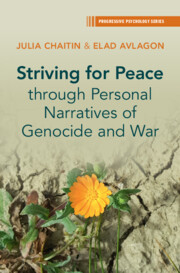
Personal narratives of genocide and intractable war can provide valuable insights around notions of collective identity, perceptions of the 'enemy,' intergenerational coping with massive social trauma, and sustainable peace and reconciliation. Written in an accessible and narrative style, this book demonstrates how the sharing of and listening to personal experiences deepens understandings of the long-term psychosocial impacts of genocide and war on direct victims and their descendants in general, and of the Holocaust and the Jewish–Arab/Palestinian–Israeli context, in particular. It provides a new theoretical model concerning the relationship between different kinds of personal narratives of genocide and war and peacebuilding or peace obstruction. Through its presentation and analysis of personal narratives connected to the Holocaust and the Palestinian–Israeli conflict, it provides a deep exploration into how such narratives have the potential to promote peace and offers concrete ideas for further research of the topic and for peacebuilding on the ground.
This article examines statements issued by municipal governments, local organizations, and Indigenous communities that cancelled Canada Day celebrations in 2021, following news confirming physical evidence of unmarked graves at former residential schools. We argue that the statements reflect political logics of the past, present, and future, including dominant national narratives of liberal multiculturalism, residual logics of white nationalism, and emergent, transformative projects of Indigenous-defined reconciliation and resurgence. Through dominant narratives, the policy of cancelling Canada Day is presented as an expression of Canadian values, while settler-colonialism is obscured. Meanwhile, the residual white nationalism of the post-Confederation movement surfaces as statements tend to speak to an imagined normative Canadian subject who—only temporarily—suspends their celebration of the nation-state. Finally, the statements evidence emergent political forces, including Indigenous articulations of transformative reconciliation, resistance to settler-colonialism, and expressions of sovereignty, which signal the potential for major shifts in practices of national celebration in Canada.