To save content items to your account,
please confirm that you agree to abide by our usage policies.
If this is the first time you use this feature, you will be asked to authorise Cambridge Core to connect with your account.
Find out more about saving content to .
To save content items to your Kindle, first ensure no-reply@cambridge.org
is added to your Approved Personal Document E-mail List under your Personal Document Settings
on the Manage Your Content and Devices page of your Amazon account. Then enter the ‘name’ part
of your Kindle email address below.
Find out more about saving to your Kindle.
Note you can select to save to either the @free.kindle.com or @kindle.com variations.
‘@free.kindle.com’ emails are free but can only be saved to your device when it is connected to wi-fi.
‘@kindle.com’ emails can be delivered even when you are not connected to wi-fi, but note that service fees apply.
Hedging has been widely viewed as an optimal foreign policy for small and middle powers. However, hedging was more effective in some cases than others and ultimately proved detrimental for certain states. This Element contributes to knowledge about hedging by explaining why some smaller powers can hedge successfully between competing great powers while others fail, suffering serious harm. It develops a theoretical model consisting of international-systemic and state-level variables that determine hedging outcomes. It then tests the model using cases in the post-Soviet space (Georgia, Ukraine) and Southeast Asia (Malaysia, Vietnam, the Philippines) exposed to great power rivalry but exhibiting different hedging outcomes. It shows that hedging failure occurs due to changes in three key variables – structural uncertainty, availability of protective options, and decisionmakers' geopolitical prudence – and interactions between them. The Element highlights the limits to smaller power hedging and argues that hedging should not be taken for granted.
Adam Smith is often read as having sought to develop a systematic and universally applicable science of political economy, but in fact he did not believe that it was even possible to do so. This is true for a variety of reasons. First, Smith was generally skeptical of system-building, holding that intellectual systems tend to be reductive and distorting. Although Smith aspired to develop a theory of natural jurisprudence that would lay out a set of universally applicable laws, such laws were in fact incompatible with his own conception of justice. Smith’s general approach to politics and political economy also tended to be far more pragmatic, in several senses of that term, than universal or scientific. Finally, Smith’s aversion to the “spirit of system” in politics led him to be wary of implementing even his own preferred policies immediately or in their entirety.
One possible strategy in dealing with the so-called “Adam Smith Problem” is to probe the architectural unity of his two major works, The Theory of Moral Sentiments and the Wealth of Nations. The architectural elements of a theory consist of premises and perspectives chosen, processes and mechanisms described, and results obtained. In this essay, I trace in the Wealth of Nations the architectural building blocks as known from The Theory of Moral Sentiments, by analogy, all the way up to the Impartial Spectator. The key challenge of this thought exercise is to not simply carry over the ethical categories of The Theory of Moral Sentiments to the Wealth of Nations, but to remain entirely within its economic framework. There is no explicit mention of the Impartial Spectator in the Wealth of Nations, but one can find his counterpart in connection with prudence, the dimmed-down self-regarding virtue that connects the two books and drives much of the action in the economic realm. Specifically, it is the long-sightedness of prudence, that is, the consideration of the consequences of one’s economic actions on oneself and others over a longer time-horizon, that allows for an analogy to the Impartial Spectator procedure. Just as the Impartial Spectator from The Theory of Moral Sentiments is the result of spinning off from one’s person an imagined disinterested, more objective judge of one’s conduct, the unnamed Long-sighted Spectator of the Wealth of Nations would be conjured up by the economic agent to ensure better judgment and sustainable economic behavior over time.
This paper develops a parallel between prudence and population ethics. I argue that developing a standard guiding the evaluation of the comparative prudential value of different lives is challenging because it shares a similarity with population ethics: In both contexts, we assess the comparative value of populations of person-stages/people, which may vary in number and level of well-being. Based on this analogy, I show that Arrhenius’ fifth impossibility theorem can be applied to prudence. I develop and compare five possible escape routes: Critical-Level Views, Totalism, Limited Aggregation, Nebel’s Lexical Threshold View and what I call the Negative Lexicality View.
The world came closest to nuclear war during the Cuban Missile Crisis. We find that there existed two paths by which nuclear war might have occurred. The first path involves unrestrained hard-liners. Nuclear weapons did not deter some actors from proposing escalatory actions, including the use of nuclear weapons. Luckily, both Kennedy and Khrushchev reined in their respective hard-liners. Along the second path, situations – not known at the time – could have led to an initial use of nuclear weapons, after which events might have spiraled out of control. The US, for example, did not know that the Soviets had placed tactical nuclear weapons in Cuba. If the US had tried to invade Cuba to topple Castro – as some people advocated – then the Soviets might have used the weapons. Ultimately, Kennedy successfully used a quarantine and threatened force to compel the Soviets to withdraw their missiles from Cuba. The threat of nuclear war lingered behind these actions. In the end, however, the crisis ended not because of nuclear deterrence but rather because both sides reached a mutually acceptable bargain. Kennedy promised not to invade Cuba and to remove US missiles from Turkey; Khrushchev, meanwhile, agreed to remove Soviet missiles from Cuba.
The 1948 Berlin Blockade did not escalate to war, largely because Truman and Stalin did not want another world war so soon. Atomic weapons played no obvious role. The fear of atomic weapons did not deter Stalin – who lacked such weapons – from initiating the crisis. They also played no role in ending the crisis, since Truman made no explicit threat to use them. Instead, the airlift defeated the blockade, and Stalin ended the crisis. In contrast, nuclear weapons played a clearer role in the 1958–1962 Berlin Crisis. Both sides now had a second-strike capability, but that deterred neither Khrushchev from initiating the crisis nor Kennedy from considering nuclear war. Nevertheless, the possibility of a nuclear war made each leader more prudent. As the crisis evolved, large numbers of East Germans started crossing into West Berlin. Ulbricht, the leader of East Germany, pleaded with Khrushchev to do something. Khrushchev permitted the construction of a wall (although Kennedy may have signaled his non-opposition). This ended the refugee flow and, therefore, the immediate crisis. The Berlin Crises intensified the Cold War. They led to the formation of NATO and the Warsaw Pact, as well as the division of Germany into two states.
The Franco-Prussian War was both unnecessary and imprudent. France initially received all that it demanded from King William of Prussia. Pressure from the legislature and the people of the boulevard, however, then caused French leaders – including Napoleon III – to expand French demands. This allowed Bismarck, the chancellor of Prussia, to manipulate France into declaring a war that he knew Prussia could win. Two characteristics proved fatal for France. First, the French polity and key French leaders succumbed to war hysteria. This allowed emotions to guide their decision-making, rather than rational calculations. Second, an arrogance among French leaders led to military overconfidence and an element of wishful thinking (e.g., about prospective allies). France was, in other words, less powerful than its leaders thought it would be. Finally, the war was imprudent from the French perspective as well. Within two weeks, as a result of French decisions, Napoleon III went into exile, France lost Alsace-Lorraine, a revolt occurred in Paris, and the German states unified.
This article invites readers to consider certain questions too rarely asked: What are we doing when we consider or fail to consider something or someone? What implications, especially theological implications, does our considering or failing to consider have for ethics as reflection on our moral lives? Finally, will considering our considering help us to become more considerate human beings? Three major figures from the Christian tradition—Bernard Lonergan, Bernard of Clairvaux (author of De Consideratione), and Thomas Aquinas—help us to answer these questions in ways that urge us to consider not only their own words and ideas, but also those of others, especially ourselves. As teachers, they also lead us to ask how consideration might become a more frequent focus of education, broadly understood. And in closing, the reader is asked to consider the possibility that everyone, in their serious questioning, or considering, is “theologizing” in a way.
Recent debates in moral philosophy have placed significant emphasis on personal conscience, often elevating individual autonomy above all other considerations. This overemphasis has paradoxically led to the suppression of another’s conscience in situations where two moral agents must act together toward a shared goal, as in the physician–patient relationship. Critics of conscientious objection argue that recognizing its legitimacy fosters moral relativism or subjectivism. How, then, can conscience be properly formed and understood in a way that safeguards against relativism while upholding its rightful role in conscientious objection? This article argues that Aquinas’s integration of natural moral law, conscience, prudence, and virtue offers the most coherent and original framework for addressing these challenges. By grounding conscience in truth and sustaining it through virtue, Aquinas provides a robust basis for defending conscientious objection while safeguarding human dignity and moral integrity. While primarily theoretical, this study also draws practical implications for healthcare and institutional ethics, showing how a Thomistic understanding of virtue and conscience can inform dialogue and policy in pluralistic contexts.
I explore and defend the unusual view that the replacement of matter taking place in the human body undermines egoistic reasons, and that we therefore have little or no basis for long-term egoistic concern. I begin by arguing that you should not have egoistic concern for a replica, i.e. a person resulting from a complete and sudden replacement of matter. I then argue that when it comes to egoistic concern, replication is not relevantly different from the slower and more gradual form of replacement found in human metabolism: if the former undermines egoistic reasons, so does the latter. I grant that the resulting view is, in some respects, hard to accept, but I conclude that we should at least treat it as a serious possibility.
Legal disputes are often negotiated under the backdrop of an adjudicated award. While settlements are common, they are not universal. In this paper, we empirically explore how uncertainty in adjudicated awards impacts settlement negotiations. To do so, we develop an experimental design to test how increases in variance and positive skewness of the award distribution impact negotiations and settlement rates. We find increases in variance decrease settlement rates, while increases in skewness generally increases settlement rates. We also gather individual measures of risk aversion and prudence, and incorporate these measures into the analysis to test for heterogeneous treatment effects. Overall, our results suggest that highly variable adjudicated awards can contribute to the excess use of inefficient litigation, while more positively skewed awards can reduce the use of inefficient litigation.
This paper provides experimental evidence of the role of higher order risk attitudes—especially prudence—in prevention behavior. Prudence, under an expected utility framework, increases (decreases) self-protection effort compared to the risk neutral level when the risk of losing part of an income exists in a future (the same) period. Motivated by these predictions that give the exact test on prudence, an experiment was designed where subjects go through higher order risk attitude elicitation and make a self-protection decision. In contrast to the expected utility theory, the observed efforts are less than the risk neutral level, regardless of the timing of loss. This violation of expected utility predictions can be explained by probability weighting.
We report the results from an experiment designed to measure attitudes towards ambiguity beyond ambiguity aversion. In particular, we implement recently-proposed model-free preference conditions of ambiguity prudence and ambiguity temperance. Ambiguity prudence has been shown to play an important role in precautionary behavior and the mere presence of ambiguity averse agents in markets. We observe that the majority of individuals’ decisions are consistent with ambiguity aversion, ambiguity prudence and ambiguity temperance. This finding confirms the prediction of many popular (specifications of) ambiguity models and has important implications for models of prevention behavior.
We study prudence and temperance (next to risk aversion) in social settings. Previous experimental studies have shown that these higher-order risk preferences affect the choices of individuals deciding privately on lotteries that only affect their own payoff. Yet, many risky and financially relevant decisions are made in the social settings of households or organizations. We elicit higher-order risk preferences of individuals and systematically vary how an individual’s decision is made (alone or while communicating with a partner) and who is affected by the decision (only the individual or the partner as well). In doing so, we can isolate the effects of other-regarding concerns and communication on choices. Our results reveal that the majority of choices are risk averse, prudent, and temperate across social settings. We also observe that individuals are influenced significantly by the preferences of a partner when they are able to communicate and choices are payoff-relevant for both of them.
It is now well established that higher-order risk preferences play a crucial role in determining the risky choices of decision makers in a wide range of important areas such as economics, finance and health. While influential theories of risky choice in those fields can explain attitudes to second order risk, the implications of these models for higher order risk preferences is still to be developed. This paper addresses that gap for the Markowitz (J Political Econ, 60:151–58, 1952) (M) model of utility which embodies reference-dependent utility, loss aversion and was seemingly the first model to explain the fourfold attitude to risk. In this paper, we set out new properties of the M model for higher order preferences, such as higher-order risky choice reversals, that can help explain experimental evidence not readily reconcilable with other models of risky choice. A second contribution of the paper is to empirically examine the heterogeneity of preference functionals describing second as well as higher order risky choices using hierarchical Bayesian estimation methods. Our analysis of the risky choices revealed in three prominent studies provides support for the M model as a useful complement to other leading models of risky choice such as cumulative prospect theory (CPT). In addition, we set up a new experiment whose design is shown to have satisfactory discriminatory power between the M and CPT specifications, and our results based on the Bayes factor confirm the heterogeneity of preference functionals across decision makers, and that the CPT specification is more prevalent.
This article explores some ethical implications of nuclear energy from a theological perspective. The key point argued for is that the few texts in the literature that address nuclear energy from a theological perspective do not give adequate weight to the importance of the potential benefits of nuclear energy as part of climate change mitigation strategies. The same also applies to the possible role of nuclear energy in providing compensation for future generations in terms of energy resource durability. The texts thus fail to address matters of importance for intergenerational justice. I examine first an article by Jame Schaefer that discusses Aquinas’ conception of prudence in relation to nuclear energy. I then discuss the relevant sections of the papal encyclical, Laudato Si’ and the Japanese Bishops Conference’s document, Abolition of Nuclear Power. All these texts fail to articulate the potential benefits of nuclear energy pertaining to some perspectives on intergenerational justice, because they do not take sufficient note of advances in nuclear technology that would allay some of the concerns expressed within the texts with which I take issue.
This chapter recovers Schopenhauer’s previously neglected account of prudent political action. It points out the connections between the skilled governance of society and the savvy self-control of the individual in Schopenhauer’s works and argues that a full analysis of his conception of politics must include a treatment of prudence in world affairs as well as in interpersonal encounters. In fact, Schopenhauer supplemented his account of the modern state as an instrument of society-wide pacification with an account of prudent self-governance as an obligation for the modern subject. He believed that the state must impose constraints on disruptive egoism from the top, but that individuals should also prudently mask their egoism and in this way soften antagonisms. In Schopenhauer’s view, Hobbes’ theory of statehood could be constructively linked to Baltasar Gracián’s account of prudence; implemented together, they could strengthen the prospects of peace.
There are two kinds of time bias: near bias and future bias. While philosophers typically hold that near bias is rationally impermissible, many hold that future bias is rationally permissible. Call this normative hybridism. According to arbitrariness objections, certain patterns of preference are rationally impermissible because they are arbitrary. While arbitrariness objections have been leveled against both near bias and future bias, the kind of arbitrariness in question has been different. In this article we investigate whether there are forms of arbitrariness that are common to both kinds of preferences and, hence, whether there are versions of the arbitrariness objection that are objections to both near bias and future bias. If there are, then this might go some way toward undermining normative hybridism and to defending thoroughgoing time-neutralism.
ERISA strictly regulates fiduciaries. While ERISA’s fiduciary rules were abstracted from state trust law, several important departures exist. Congress adopted a broad functional definition of fiduciary so that all decision makers – not just asset managers (traditional trustees) – can be held accountable. Importantly, however, decisions by employers respecting the design, establishment, or modification of an employee benefit plan are not fiduciary acts for they do not implicate program management (the so-called settlor versus trustee distinction). ERISA specifies a stringent set of fiduciary duties, including four major obligations: loyalty; prudence; compliance with plan terms that do not violate ERISA; and (generally) investment diversification. Plan provisions that would excuse fiduciary breach (exculpatory clauses) are explicitly barred. In addition, certain transactions involving insider dealings with the plan are prohibited regardless of fairness or whether loss ensues. Fiduciary liability with regard to participant-directed investments has received careful attention from both courts and regulators and is specially examined in the chapter.
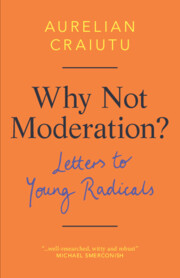
Moderation is often presented as a simple virtue for lukewarm and indecisive minds, searching for a fuzzy center between the extremes. Not surprisingly, many politicians do not want to be labelled 'moderates' for fear of losing elections. Why Not Moderation? challenges this conventional image and shows that moderation is a complex virtue with a rich tradition and unexplored radical sides. Through a series of imaginary letters between a passionate moderate and two young radicals, the book outlines the distinctive political vision undergirding moderation and makes a case for why we need this virtue today in America. Drawing on clearly written and compelling sources, Craiutu offers an opportunity to rethink moderation and participate in the important public debate on what kind of society we want to live in. His book reminds us that we cannot afford to bargain away the liberal civilization and open society we have inherited from our forefathers.