To save content items to your account,
please confirm that you agree to abide by our usage policies.
If this is the first time you use this feature, you will be asked to authorise Cambridge Core to connect with your account.
Find out more about saving content to .
To save content items to your Kindle, first ensure no-reply@cambridge.org
is added to your Approved Personal Document E-mail List under your Personal Document Settings
on the Manage Your Content and Devices page of your Amazon account. Then enter the ‘name’ part
of your Kindle email address below.
Find out more about saving to your Kindle.
Note you can select to save to either the @free.kindle.com or @kindle.com variations.
‘@free.kindle.com’ emails are free but can only be saved to your device when it is connected to wi-fi.
‘@kindle.com’ emails can be delivered even when you are not connected to wi-fi, but note that service fees apply.
While few martyrs made it to sainthood during the early modern period, the idea of martyrdom was nevertheless revitalized and reshaped following the Reformation and New World discoveries. This chapter analyzes how martyrdom functioned across different geographical and religious frontiers – heresy, infidelity, and paganism – whose importance shifted over time in line with Catholic imperial expansion.
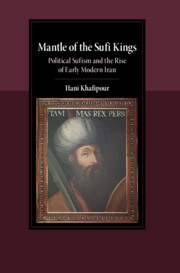
The rise and establishment of Safavid rule in Iran is a clear and momentous event in the wider history of the Middle East and Islamic world. In this study, Hani Khafipour explores how loyalty, social cohesion, and power dynamics found in Sufi thought underpinned the Safavid community's sources of social power and determination. Once in power, the Safavid state's patronage of art, literature, and architecture, turned Iran into a flourishing empire of culture, influencing neighboring empires including the Ottomans and Mughals. Examining the origin and evolution of the Safavid order, Mantle of the Sufi Kings offers fresh insights into how religious and sociopolitical forces merged to create a powerful Shi'i empire, with Iran remaining the only Shi'i nation in the world today. This study provides a bold new interpretation of Iran's early modern history, with important implications for the contemporary religio-political discourse in the Middle East.
By the mid-fifteenth century, the Safavid order had militarized, emerging as a significant threat to regional powers like the Aqquyunlu, Qaraquyunlu, Shirvanshah, and later, the Ottomans. This provoked the deaths of key Safavid leaders – Sheikh Junayd, Haydar, and Sultan ʿAli – along with thousands of their followers, who were killed in battle or executed. Despite these devastating losses, the Safavid community’s loyalty to their cause remained steadfast.
Stories of fallen Kurdish revolutionaries who return to the living in dreams, and of Druze souls who circulate across securitized borders gesture at forms of vitality and animation that persist beyond biological death. In this article, we have put forward the concept of “insurgent immortality” to make sense of the political potency of revolutionary martyrs and past lives among Kurdish communities from Turkey and Syrian Druze communities in the Israeli-occupied Golan Heights. By insisting on the immortality of their dead, we argue, these stateless communities articulate a claim to counter-sovereignty. What makes these communities’ practices aimed at mastering and transcending death different from the sovereignty claimed by nation-states is that apparitions of dead martyrs and past lives work as expansive, boundary-crossing mechanisms, rather than the territorializing logics of enclosure and containment that mark state sovereignty. The immortality we describe in this article is insurgent because it relies on the recognition and cultivation of long-term exchange relations between the living and the dead, through which debt becomes a modality of generative expansion across both this and otherworldly times and spaces. The resulting sense of generalized indebtedness opens up spaces of liminality in which the dead come alive as both inspiring and unsettling figures. We develop insurgent immortality as a comparative concept that emerges from the specific ethnography of each case yet reaches across their contextual boundedness. In this way, we hope to inspire renewed conversation about shared trajectories of resistance, including its ambivalences, that arise in contexts of statelessness, occupation, and disenfranchisement.
Cyprian of Carthage’s On the Lapsed, written in the aftermath of the third-century Decian persecution, contains several stories of the eucharist attacking apostate Christians. These Christians claimed they had been admitted to the eucharist by local, highly esteemed martyrs and confessors. Cyprian, who had fled during the persecution and been unpopular since the day of his election, could not afford to confront this group directly. Instead, he crafted a text that conjured up an autonomous eucharist that policed itself against unworthy intruders. Moreover, he used the graphic language of bodily suffering and dismemberment to scramble the boundaries between lapsed Christian, bishop, and martyr, essentially reconfiguring himself as a martyr.
We know precious few facts about the life of Maximus of Turin. He was not a native of Turin, as Maximus himself implies in Sermon 33, and his clerical status upon arrival in the town is unclear. Gennadius of Marseilles’s On Illustrious Men (late fifth century) notes that Maximus was a bishop of Turin and that he died during the period when the reigns of the western emperor Honorius and the eastern emperor Theodosius II overlapped – that is, sometime between 408 and 423. Gennadius also describes Maximus as a competent preacher able to fit his discourse to any occasion or any biblical text. Neither a terribly significant figure from late antiquity nor the most gifted orator of his era, Maximus left behind a collection of more than a hundred sermons that, collectively, offer a glimpse into a rural Christian community in northern Italy during the late fourth and early fifth centuries. Here Maximus testifies to the region’s theological diversity; both heretics generally and “Arian heretics” specifically lurk around his community, as do pagans and lukewarm Christians. Indeed, he frequently complains directly to his congregation that they should attend his sermons with greater frequency.
This chapter traces the development of Iranian Shi’ite revolutionary Ali Shariati in his conception of a nonviolent Islam encompassing humanist, existentialist, and socialist ethics in pursuit of an egalitarian ‘System of Abel’. This is in turn placed in tension with his valorisation of ‘alter-inflicted violence’ as a means to altruistic self-transcendence.
Chapter 6 takes as its subject the relatively sudden proliferation of narrative images of the virtuous deeds and dramatic martyrdom of the saints that became popular themes for altarpieces in the second half of the sixteenth century. These transformations to the altarpiece were the result of earlier artistic developments, but they were also shaped by the context of the Reformations.
Following a brief historical overview of the birth of the organised movement, Chapter 1 introduces literary figures and texts promoted by antivivisection periodicals such as the Zoophilist, the Home Chronicler, and the Animals Guardian. Adopting a literary-critical approach offers a fresh perspective on the movement’s association pamphlets and periodicals which have, thus far, largely been examined as historical documents. Poems, stories, and ‘humane words’ from notable writers were sourced and deployed to shape a common antivivisectionist identity, articulate the movement’s ideology, and mobilise activists. Analysis of antivivisection poems by Christina Rossetti, Robert Browning, Alfred Tennyson, and Robert Buchanan is complemented by attention to the framing and reception of these works in antivivisection publications and the wider press.
This chapter argues that Gerard Manley Hopkins’s preoccupation with agony and martyrdom is best understood in the broader context of Victorian figurations of religious suffering as inherently feminine. The chapter outlines the multiple factors shaping Victorian interest in female martyrs, from new theories of sexology to anxieties over Roman Catholicism. It then examines texts by writers such as Sarah Stickney Ellis, John Mason Neale, and Charles Kingsley that contain representations of suffering as a Christian virtue to which women are innately disposed. Such texts ostensibly frame women’s martyrdom as a paradoxical means of power through self-disavowal while often containing voyeuristic descriptions of suffering female flesh. Next, the work of Christina Rossetti is introduced as a counterpoint that avoids lurid depictions of sexualized violence in favour of reflections on female subjectivity and salvation. The chapter ends by finding in Hopkins’s martyr texts a complex and nonreductive engagement in this wider discourse.
The study of late antique and early medieval urban religion in the Iberian Peninsula suffers from a dearth of datable and localizable source material. Martyr passions abound, as do liturgical texts, but these almost always survive only in later manuscripts, filtered through monastic libraries and scriptoria. How far these copies preserve the genuine texts performed in earlier cult remains an open question. This article intervenes in this discussion by focusing on a somewhat unusual cult known as the ‘Innumerable’ or ‘Eighteen’ martyrs of Zaragoza. The cult’s Passion text survives in two variant redactions. One originates from the sixth-century city of Zaragoza, the cult’s center, while the other derives from the Carolingian monastery of Saint-Germain-des-Prés in ninth-century Paris. These divergent lines of transmission make possible a comparative study that both elucidates the process of ‘monasticization’ that the Passion underwent in Carolingian hands and vindicates the relative conservatism of the Iberian lines of transmission. Indeed, the Iberian manuscripts retain a remarkable amount of distinctly local material, thereby presenting a rich case study in the civic and oral sensibilities of martyr passions. This article places the Passion back in its civic context, amidst the complex and fractious religious life of Visigothic Zaragoza, complementing the burgeoning interest in communal liturgical and ceremonial life evident among historical liturgists and musicologists. More broadly, it shows that Iberian passions are indispensable texts for historians of urban religious expression and civic Christianity in the Visigothic period.
Lucian’s position as a commentator on religion has been debated intensely since late antiquity: for most of the last two millennia, it has been the main focus for commentators. This is primarily due to Lucian teasing Christians in a couple of places (although in fact they get off relatively lightly); but he is also, and indeed much more insistently, scathing about aspects of Greco-Roman ‘paganism’. This chapter begin by unpicking some of this reception history, and showing how modern scholarly perspectives remain locked into nineteenth-century cultural-historical narratives (which were designed to play ‘Hellenism’ off against ‘Christianity’, in various forms). It then argues that we should set aside the construct of Lucian’s status as a religious ‘outsider’— a legacy of nineteenth-century thinking — and consider Lucian instead as an agent operating within the field of Greek religion, and contributing richly (albeit satirically) to ongoing, vital questions over humans’ relationship with the divine. He should be ranged, that is to say, alongside figures like Aristides, Pausanias, and Apuleius as keen observers of the religious culture of the time.
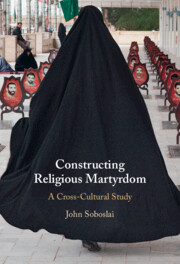
Martyrdom is a phenomenon common to many of the world's religious traditions. But why? In this study, John Soboslai offers insights into the practices of self-sacrifice within specific sociopolitical contexts. Providing a new understanding of martyrdom through the lens of political theology, he analyzes discourses and performances in four religious traditions during social and political crises, beginning with second-century Christianity in Asia Minor, where the term 'martyr' first took its meaning. He also analyzes Shi'a Islam in the 1980s, when 'suicide bombing' first appeared as a strategy in West Asia; global Sikhism during World War I, where martyrs stood for and against the British Raj; and twenty-first-century Tibetan Buddhism, where self-immolators used their bodies in opposition to the programs of the People's Republic of China. Presenting a new theory of martyrdom linked to constructions of sovereign authority, Soboslai reveals common features of self-sacrifice and demonstrates how bodily performances buttress conceptions of authority.
While the political aspect of the traditionalist quest for prescriptive Christianity has been central to the story from the start, this chapter examines, first, the complicated way that religious and political norms are intertwined in American history and dependent on whether the Christian community is in a position of power or not. Second, the chapter examines two aspects of Christian identity that are especially important in understanding contemporary American politics: (1) a global Christian identity that understands Christians as those persecuted by godless secular society, and (2) an antignostic identity that understands Christians as those who wage war against “gnosticism,” a term applicable to whatever conservative Christians are currently combatting in the political sphere.
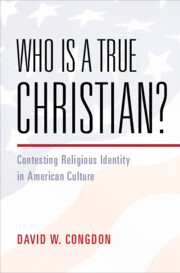
'No true Christian could vote for Donald Trump.' 'Real Christians are pro-life.' 'You can't be a Christian and support gay marriage.' Assertive statements like these not only reflect growing religious polarization but also express the anxiety over religious identity that pervades modern American Christianity. To address this disquiet, conservative Christians have sought security and stability: whether by retrieving 'historic Christian' doctrines, reconceptualizing their faith as a distinct culture, or reinforcing a political vision of what it means to be a follower of God in a corrupt world. The result is a concerted effort 'Make Christianity Great Again': a religious project predating the corresponding political effort to 'Make America Great Again.' Part intellectual history, part nuanced argument for change, this timely book explores why the question of what defines Christianity has become, over the last century, so damagingly vexatious - and how believers might conceive of it differently in future.
Amid the debates about the organization and unity of the church in third-century Carthage, Cyprian rose as a prominent and learned catechist. This chapter looks at several writings associated with basic education – Ad Donatum, Ad Quirinum, De dominica oratione – as well as letters from the ecclesiastical debates to shed light on the way these debates shaped approaches to teaching knowledge of God in catechesis.
This chapter argues that the religious policies of Ben Jonson’s Bartholomew Fair (1614) are not limited to its frequently noted anti-Puritan satire but are also concerned with Catholic dissent and, more generally, the question of the theatre’s legitimacy and effect on its audiences. The play’s parody of martyrdom arguably reflects the discourse of pseudo-martyrdom to which the Oath of Allegiance controversy had given rise after the Gunpowder Plot and which deeply divided English Catholics, who faced a choice between recusancy, conformity, or some form of semi-conformity. Jonson’s satirical portrayal of Puritans who unsuccessfully attempt to remain ‘religious in midst of the profane’ thus also speaks to Catholic concerns that conformity may eventually lead to an erosion of dissent. This chapter further argues that the Pauline theology of things indifferent is fundamental to the play’s ideological structure and informs both its treatment of religious dissent and the legitimacy of the theatre. Despite its comic resolution, Bartholomew Fair ultimately amounts to a coercive imperative of inclusion that undermines opposition both to the theatre and to the Established Church.
This chapter discusses the collaboratively written First Part of Sir John Oldcastle (1599) as a response to Shakespeare’s irreverent transformation of the eponymous Lollard martyr into Falstaff. Oldcastle restores the Lollard martyr to his heroic stature and is therefore often read in terms of a moderate, that is, politically loyal and conformist form of Puritanism. However, the play arguably, in its representation of nonconformity and a conditional form of political obedience, is more radical than is usually assumed and voices a nuanced challenge to royal supremacy over the Church of England. As this chapter further suggests, the play’s nonconformist ethos therefore also contributes to a more ambivalent conception of theatricality than the one embodied by Shakespeare’s Falstaff, a conception of theatricality that is defined by a self-reflexive distrust in the space between seeming and being.
This chapter discusses Shakespeare’s Falstaff as an anti-martyr in the two parts of Henry IV. The character of Falstaff isloosely based on the fifteenth-century Lollard martyr John Oldcastle and was indeed once called Oldcastle in performance. Even though Shakespeare transforms the martyr into a cowardly dissembler, who has very little to do with the Lollard martyr, countless allusions to Oldcastle’s martyrdom provide a meaningful interpretative framework for Falstaff’s ‘better part of valour’. However, this does not mean that Shakespeare mocks the Proto-Protestant as part of a Catholic or anti-Puritan campaign. On the contrary, in contrast with the politically subversive martyr figure in 2 Henry IV, Archbishop Scrope, Shakespeare’s transformation of the Lollard martyr rather amounts to a defence of the Elizabethan ideal of outward conformity. Falstaff’s dissimulation, insofar as it can be read as a rejection of martyrdom, is a form of political obedience. Moreover, Falstaff’s dissimulation also entails a defence of theatrical dissimulation that aligns Shakespeare’s theatre closely with the religious policies of the Elizabethan government.
While many accounts of early Christianity see the early Church as a pacifist movement, closely following Jesus’ non-retaliatory teaching, this chapter argues that there is a more ambiguous relationship to violence in the first three centuries of the Christian movement, including military service. Aside from the violent rhetoric in the eschatological parables of Jesus, Christians appropriated the violence of the Hebrew Bible to shape negative views of outsiders, which in turn prepared the way from actualised violence in the post-Constantine era.