To save content items to your account,
please confirm that you agree to abide by our usage policies.
If this is the first time you use this feature, you will be asked to authorise Cambridge Core to connect with your account.
Find out more about saving content to .
To save content items to your Kindle, first ensure no-reply@cambridge.org
is added to your Approved Personal Document E-mail List under your Personal Document Settings
on the Manage Your Content and Devices page of your Amazon account. Then enter the ‘name’ part
of your Kindle email address below.
Find out more about saving to your Kindle.
Note you can select to save to either the @free.kindle.com or @kindle.com variations.
‘@free.kindle.com’ emails are free but can only be saved to your device when it is connected to wi-fi.
‘@kindle.com’ emails can be delivered even when you are not connected to wi-fi, but note that service fees apply.
Chapter 5 compares laws of employment protection, compensation, and labor unions in the three countries, and describes how the different laws affect incentive bargaining of the firm and corporate governance. The US employment-at-will rule gives employers almost complete discretion to dismiss employees unless there are either contractual protections or discrimination. The Japanese abusive dismissal rule strictly restricts employers’ discretion in dismissing employees even in business downturns. Relative to Japanese companies, the US companies rely heavily on performance-based pay, which includes generous stock options. Among the compensation packages in China, the portion of payment for social insurance and welfare benefits is large. Performance-based bonuses play a significant role in privately owned enterprises (POEs). The US labor unions are basically industry unions and adversarial to management, while Japanese labor unions are company unions and are rather agreeable to management. All labor unions in China are government-backed, organized only on individual enterprises, and expected to mitigate labor disputes.
In this chapter, a new Lockean argument for intellectual property rights is offered, emphasizing self-defense, self-preservation, and the moral significance of investment. It is argued that creators and inventors have defensible claims to the values and income streams derived from their intellectual efforts, akin to their rights to protect their physical capacities and powers. These claims are grounded in two arguments: (1) the right to defend created values against unjustified interference, supported by Lockean principles of self-preservation and respect for persons; and (2) the moral asymmetry between creators, who invest time, labor, and resources, and copiers, who do not. Addressing challenges such as the non-rivalrous nature of intellectual works and the balance of societal needs, it is argued that intellectual property rights are morally justified to protect the autonomy and livelihoods of creators.
Management of broadleaf weeds in chile pepper may be improved by including a rotation with sorghum treated with selective, non-residual herbicides. However, herbicide programs within sorghum specifically for managing weeds in subsequent chile pepper have not been evaluated. This study evaluated the effects of two herbicide programs applied in sorghum on broadleaf weed density and hand hoeing time in chile pepper the following year, and compared the programs for their net economic benefits across sorghum and chile pepper growing seasons. Treatments were: 1) sorghum non-treated control, 2) one herbicide application, which was a premix combination of 2,4-D (0.35 kg ai ha-1), bromoxynil (0.35 kg ai ha-1), and fluroxypyr (0.14 kg ai ha-1) applied at the 4-leaf stage of sorghum, 3) two herbicide applications, which included the aforementioned premix combination followed by bromoxynil (0.28 kg ai ha-1) applied at the 6-leaf stage of sorghum, and 4) weed-free sorghum using hand hoeing. Results indicated broadleaf weeds covered less than 10% of the ground in sorghum treated with herbicides. The two-application program resulted in 24% fewer broadleaf weeds in chile pepper than in sorghum hand-hoed, and 63% fewer than the one-application program. Hand hoeing time in chile pepper was similar among the two-application program, one-application program, and weed-free sorghum. A partial budget analysis indicated that the one-application program provided greater net economic benefit than the two-application program (US$6,550 ha⁻¹ vs. US$5,894 ha⁻¹), due to lower input costs and greater overall gross revenue. These findings indicate the two-application program maximizes reductions of broadleaf weeds in chile pepper caused by rotational sorghum; however, the one-application program may be a cost-effective approach to reduce broadleaf weeds in chile pepper.
This article is an environmental history of Anaconda Copper Company’s disposal of hundreds of thousands of tons of toxic waste from its Potrerillos and El Salvador mines into Chile’s Río Salado and Bahía de Chañaral. First, it uncovers a long history of disputes between copper companies and workers who panned the river for tailings. This early water war in Chile was shaped by competing understandings of water’s legal status. While workers claimed rights under the water law’s definition of water as a bien nacional de uso común, mining companies invoked the mining code and contended that the river’s water and waste were private property under civil law. Mining companies claimed rivers’ water by treating rivers in legal terms as mines and property of the state, bienes fiscales, that could be conceded as private property. They argued that human engineering of rivers in dams and canals, and through pollution, made rivers into a commodity and a form of property akin to subsoil minerals. Second, the article describes how, during the social reformist government of Eduardo Frei (1964–1970) and the revolutionary government of Salvador Allende (1970–1973), the state asserted control over Chile’s waterways while balancing centralized state management of water in the name of development with local users’ claims of long-standing riparian use rights. Third, the article traces the long history of the state and mining companies treating water as an economic commodity, often superseding local use rights, and argues that this history built the foundation for the later privatization of water during the Pinochet dictatorship. The article demonstrates that the privatization of water in Chile under Pinochet had its origins in the resolution of the tension between water and civil law in favor of extending property rights to water and building as a subsidy to transnational mining companies. This meant rolling back state management of rivers and often eroding local users’ water rights. Finally, the article concludes by examining the town of Chañaral’s successful 1987 lawsuit against the El Salvador mine to win an injunction against further pollution of the Salado as part of a moment of broader Latin American “environmental constitutionalism” during the 1980s. While this legal victory reflected a significant change in environmental law and an emergent environmentalist movement in Chile and across Latin America, it struck a blow to hundreds of workers who depended on extracting tailings from the river for their livelihood and who responded with unsuccessful protests.
In the 1940s and 1950s, the concepts of surplus labor, disguised unemployment, and underemployment emerged as key tools for thinking about economic development in the emerging “Third World.” This article examines how these concepts were developed and debated in Egypt, a country that was at the forefront of postcolonial planning efforts internationally. To this end, the article examines the statistical construction of the “labor problem” and the way it shaped competing visions of economic development among national, colonial, and international actors. Using a variety of sources—including Egyptian government archives, documents from the British Foreign Office, and the International Labour Organization—the article contributes to the global history of development and quantification, and contributes to the scholarship on Nasserism in Egypt.
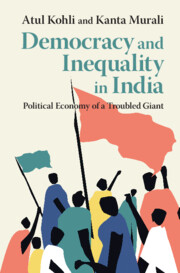
Chapter 4 first examines two societal groups – labor and women – and asks two questions. How have these groups fared since the 1980s? And how have they responded to top-down changes in India’s political economy? The final part of the chapter also discusses civil society activism and social movements more generally. As with Chapter 3, Chapter 4 highlights that the story of India since the 1980s is not wholly top-down. While the state and business remain dominant actors, societal groups have challenged and continue to challenge that domination.
This chapter provides an introduction to the book. It sets the stage by highlighting contrasts in India’s economy, democracy, and society. It then discusses the main topics covered in the book – democracy and governance, growth and distribution, caste, labor, gender, civil society, regional diversity, and foreign policy. The chapter also outlines the three themes that comprise the main arguments of the book. First, India’s democracy has been under considerable strain over the last decade. Second, growing economic inequalities that accompanied India’s high-growth phase over the last three and a half decades are associated with the country’s democratic decline. Third, society has reacted to changes from below but there are limits to societal activism in contemporary India.
This chapter considers the meanings of human labor in the work of three Bloomsbury writers: John Maynard Keynes, Bertrand Russell, and Virginia Woolf. The psychological and social potential of “idleness” is discussed with reference to Keynes’ The Economic Consequences of Peace and his “Economic Possibilities for our Grandchildren,” in which he argues that in future, society will see a radical reduction in working hours. Russell’s essay “In Praise of Idleness” is also analyzed in relation to his argument that “modern methods of production have given us the possibility of ease and security for all.” These positions are contrasted with Woolf’s explorations of the increasing access of women to professional work. Woolf’s focus is not on the liberatory potential of “idleness” but rather on the continuing barriers to productive work faced by women in the period. The chapter concludes that while for Keynes and Russell “idleness” offered an opportunity to live a more meaningful and free life, for Woolf the recent entry of women to the professions offered important new opportunities for individual agency and financial autonomy through work.
This article examines how the labor and community structures of female skin-divers, the Japanese ama and Korean haenyeo, believed to exemplify the primitive ability to adapt to extreme climates, became staple research subjects for global adaptation-resilience science. In the context of development studies, adaptation-resilience discourse has been seen as reflecting the emergence of neoliberal governmentality. In contrast, this article frames adaptation-resilience as a reactionary technological response that emerges in times of scarcity and crisis. This article demonstrates how the discourse can be traced back to interwar Japanese physiologists, who saw themselves as rescuing Japan from the ills of modernity through a socio-biological development program that drew on the diver’s adaptability as a means to create subjects not only capable of surviving extreme deprivation but willing to do so in the service of the community and the state. These scientists and their research were taken up uncritically in the postwar by international science and development organizations, who found in them a shared vision of a labor-intensive and low ecological impact model of community-rooted development that offered a sustainable and healthier alternative to capitalism, one that could help humanity overcome crises of modern excess such as climate change. However, sustainability meant the valorization of absolute austerity as a development goal, ruling out relief for suffering marginalized populations. This article therefore suggests that resiliency-based development entraps its subjects in a regime of self-exploitation that forces them into a constant state of emergency, paradoxically deepening their vulnerability in the process.
Resilient Zulu moral economy compelled Natal’s sugar planters and white settler state to introduce Indian indentured workers since 1860. As concerns over productivity in a weak colonial economy informed this decision, meticulous management of labor time crucially shaped the treatment of migrant Indian indentees. Moreover, systemic violence in capital’s life processes formed the culture of work-discipline in the plantations and in other industrial sectors. Subsequently, as contract expired Indian indentees acquired relative economic mobility compared to Africans, they appeared in Zulu critiques of Natal’s settler colonial order. Ironically, dispossessed Zulus reproduced colonial logic of time management while discussing the comparative economic success of Indian “newcomers.” Zulu critiques of colonial labor management also complemented the racial exclusivity of migrant Indians. Analyzing the complex workings of capital, labor, and race in nineteenth-century Natal, this article explains how capital’s life processes shaped violent conflicts in the intimate domestic space of working-class lifeworld.
Contemporary India provides a giant and complex panorama that deserves to be understood. Through in-depth analysis of democracy, economic growth and distribution, caste, labour, gender, and foreign policy, Atul Kohli and Kanta Murali provide a framework for understanding recent political and economic developments. They make three key arguments. Firstly, that India's well-established democracy is currently under considerable strain. Secondly, that the roots of this decline can be attributed to the growing inequalities accompanying growth since the 1990s. Growing inequalities led to the decline of the Congress party and the rise of the BJP under Narendra Modi. In turn, the BJP and its Hindu-nationalist affiliates have used state power to undermine democracy and to target Indian Muslims. Finally, they highlight how various social groups reacted to macro-level changes, although the results of their activism have not always been substantial. Essential reading for anyone wishing to understand democracy in India today.
The Shepherd does not merely depict believers as enslaved persons, rather the very writtenness of the Shepherd itself – its composition, transmission, and readership – is inflected by the discourse of enslavement. I explore the Shepherd’s portrayal of Hermas as an enslaved person expected to copy the book given to him by the Church, to write and disseminate the Shepherd’s commandments to God’s enslaved persons, and to read aloud the visions and revelations he experienced to others. I put the Shepherd in conversation with Cicero and Pliny the Younger, who exemplify the use of enslaved persons for literary labor and the production of a “creative genius” or “sole author” through the labor of others. I note how the Shepherd, in line with other Christian revelatory literature like Revelation, is more explicit about the use of enslaved literary labor than many Roman texts and provides a rare avenue for exploring how ancient writers conceptualized and portrayed enslaved scribes. The Shepherd’s own composition and dissemination by Hermas is, I argue, inflected by its participation in the ancient Mediterranean discourse and logics of enslavement.
This chapter examines representations of and responses to the law’s attempts to regulate poverty in early nineteenth-century England. Drawing upon poems by William Wordsworth, periodical essays, legislative reports, legal cases, and popular treatises, the chapter shows how writers alternately affirmed and interrogated the law’s efforts to strip paupers of agency. It focuses on the legal discourse that governed metropolitan paupers and that some paupers themselves deployed in the service of self-representation. Many writers cast beggary as a professional mode characterized by inventiveness and effort, qualities that paupers were thought to lack. In mobilizing the theatricality of which they stood accused, paupers emerge as both competent and competitive, internally well-regulated and chaotic, criminalized by their very performance of selfhood. By defending their own character in both law courts and the court of public opinion, beggars interrogated legal constructs such as property and testimony.
By focusing on the American Protective Association (A.P.A.), this article demonstrates how anti-Catholicism influenced free labor ideologies and working-class movements during the Gilded Age. The labor movement in the late nineteenth century generally believed that the so-called “dangerous classes” threatened working-class social mobility and economic independence. Religious bigotries, though, often dictated which people and institutions were considered economically dangerous. This article argues that, as anti-Catholic stereotypes collided with emergent anti-monopoly critiques, some working-class reformers saw Catholicism as incompatible with traditional notions of free labor. These reformers embraced anti-Catholic politics and chose to establish, join, or support the A.P.A. Many in the A.P.A. thought Catholic workers lacked the autonomy necessary to be free laborers, leading to intra-union conflict and a distrust of labor organizations with significant Catholic membership. They also charged that the Catholic Church itself opposed free labor and was already profiting off slave labor in institutions like the Houses of the Good Shepherd, a charitable institution, which sought to reform “abandoned women.” Ultimately, the A.P.A. and its anti-Catholic bigotries contributed to the fragmentation of the working class in Gilded Age America in ways that scholars have not yet recognized.
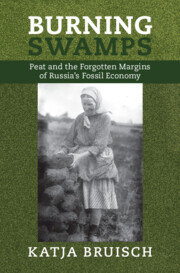
For nearly a century, seasonal, often female, manual labor remained fundamental to making peat available for industrial enterprises and electric power plants. Focusing on the trajectories of peat workers, this chapter discusses the seasonal nature and gendered organization of labor. It reveals that, as an embodied, more than-human activity, peat extraction was an experience marked by social inequality and difference as well as by the uncertain material environments of extraction sites, where the weather, dysfunctional technology, and the physical interaction with peat caused injuries and accidents. Examining the overlapping temporalities, modes of production, and agencies (human and nonhuman) in the making of peat fuel, this chapter foregrounds the forgotten margins of Russia’s fossil economy as focal points of the intertwined exploitation of humans and nature upon which it relied.
This groundbreaking environmental history recounts the story of Russia's fossil economy from its margins. Unpacking the forgotten history of how peat fuelled manufacturing industries and power plants in late Imperial and Soviet Russia, Katja Bruisch provides a corrective to more familiar historical narratives dominated by coal, oil, and gas. Attentive to the intertwined histories of matter and labor during a century of industrial peat extraction, she offers a fresh perspective on the modern Russian economy that moves beyond the socialism/capitalism binary. By identifying peat extraction in modern Russia as a crucial chapter in the degradation of the world's peatlands, Bruisch makes a compelling case for paying attention to seemingly marginal places, people, and resources as we tell the histories of the planetary emergency.
There was strong national political interest in the KCIR, which established specialized courts as one of a handful of possible labor policy designs for the United States. The KCIR itself came to be regarded as the key test of the model. Owing in part to Allen’s remarkable talents as a publicist, the KCIR was regularly covered in national media. Labor and business publications were guarded or overtly hostile, but the KCIR was given serious coverage in magazines of progressive opinion, and friendly and extensive coverage in major newspapers like The New York Times. By the time of the 1920 Republican National Convention, a firm majority of notable Republicans favored using the KCIR model in at least some industries. In 1921 and 1922, President Harding called upon Congress to create a federal industrial court system. However, the factionalized Republican Congress and the fractious Harding Administration were unable to pursue any coherent model of labor policy reform. Most state legislatures introduced bills modelled on the KCIR; leaders in several states were eager to try the model, but opted to await the resolution of legal questions.
In the Doctrine of Right, Kant describes domestic right as “the right to a person akin to the right to a thing.” The Feyerabend lectures lack this framework, but the same set of marriage, parent-child, and master-servant relationships are united under the framework of “domestic societies.” This chapter explores domestic right in Feyerabend, mapping Kant’s careful resistance to conceptualizing these relationships in terms of property right in light of debates about marriage, domestic right, labor, and slavery unfolding in the 1780s. This resistance is informed by a paradox at the heart of Kant’s thinking about domestic right, namely, his claim that marriage and servitude are rightful while sex work and slavery are not. This puzzle arises because Kant follows Achenwall in locating slavery in domestic right, which leads to his innovative framework of domestic right as “the right to a person akin to the right to a thing.” The deep entanglement of Kant’s thinking about sex, and about service and slave labor, should lead us to think about these problems together, and to challenge the silos in Kant scholarship that treat his thinking about gender and sex distinctly from slavery and race.
This paper examines what Kant says about the economy in Feyerabend’s notes of Kant’s lectures on natural right. While Feyerabend does not report Kant having a systematic discussion of the economy as a topic in its own right the text is interesting in what it shows about the context and the development of Kant’s thought on issues to do with political economy. I look at the Feyerabend lecture notes in relation to things said about the economy in Achenwall’s Natural Law, Kant’s text book, as well as in Kant’s Doctrine of Right. Looking at the three texts in relation to each other illuminates the development of Kant’s thinking and the paper focuses on tracing the relations between ideas to do with the economy in the three texts. I look at Kant’s developing thoughts on the economy in relation to the following ideas: an account of money; an account of value and price; the theorization of labor; taxation; property and the commons.
This chapter explores the challenges faced by the Belgian colonial administration in controlling mobility within and across the borders of Rwanda and the Belgian Congo. After Rwanda had become an official mandated area of Belgium, efforts to regulate movement became integral to economic and labor control. The chapter then sets out to explain the inherent contradictions of this asymmetrical labor system englobing both shores and hinterlands of the Lake Kivu region in which Rwanda came to serve as a labor reserve supporting Belgian economic interests in Kivu, and further away in Katanga. The need for labor in the Belgian Congo became one of the main factors explaining its persistent interconnections with Rwanda during the colonial period; the deep-rooted historical ties between the societies around the Lake another.
These interconnections also amplified and altered pre-existing patterns of mobility. This caused problems for the Belgian administration at both sides of the border as they needed to control mobility without damaging the colonial labor market. The chapter shows that they often prioritized economic benefits over their own rules and regulations, and the interests of the Belgian Congo over those of Rwanda. Here as well, chiefs played ambiguous roles, in regulating the movement of commoners and mobilizing labor. The system fostered competition among chiefs for both people and their labor. It incentivized chiefs to closely monitor their subjects, imposing a heavier burden on ordinary people and prompting them to seek better conditions elsewhere.