To save content items to your account,
please confirm that you agree to abide by our usage policies.
If this is the first time you use this feature, you will be asked to authorise Cambridge Core to connect with your account.
Find out more about saving content to .
To save content items to your Kindle, first ensure no-reply@cambridge.org
is added to your Approved Personal Document E-mail List under your Personal Document Settings
on the Manage Your Content and Devices page of your Amazon account. Then enter the ‘name’ part
of your Kindle email address below.
Find out more about saving to your Kindle.
Note you can select to save to either the @free.kindle.com or @kindle.com variations.
‘@free.kindle.com’ emails are free but can only be saved to your device when it is connected to wi-fi.
‘@kindle.com’ emails can be delivered even when you are not connected to wi-fi, but note that service fees apply.
The conclusion of Invisible Fatherland reviews the book’s findings with a view to the rise of Nazism and the concept of militant democracy. Juxtaposing the republic’s constitutional patriotism with Nazi ideology, the author highlights the clash between two diametrically opposed “ways of life.” While Nazism was a violent political order that dehumanized marginalized groups, Weimar democracy embraced plural and hybrid identifications. Although the republic ultimately fell to the Nazi threat, the study argues that its constitutional patriotism remains a positive legacy of Western-style democracy. By reframing the narrative, Invisible Fatherland provides a forward-looking, “glass-half-full” perspective on one of history’s most misunderstood democratic experiments
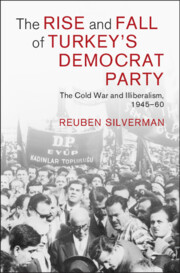
This chapter focuses on the Democrat Party’s final years in power (1958–60), which followed a debt restructuring agreement with creditors. During these years, Democrat Party leaders attempted to implement unpopular economic policies while still holding on to power. Their main tactic was to create the “Homeland Front,” a mass political organization. Though many people joined willingly, the Democrat-led government relied on high-pressure tactics and propaganda to ensure participation. It also increased pressure on its opposition through both legislation and extralegal actions such as mobilizing mobs to attack opposition leaders. These methods were, I argue, part of a more general shift toward illiberal, less democratic norms of governance among American Cold War allies in the late 1950s. By 1960, however, the Democrat Party’s authoritarian actions had alienated important domestic groups, including academics, bureaucrats, and military officers, which led to its removal from power. Rather than explaining the origins of the May 1960 coup, this chapter reveals how hollowed out the democratic political order had become by the time military officers finally launched their operation.
More than sixty years after Turkey's Democrat Party was removed from office by a military coup and three of its leaders hanged, it remains controversial. For some, it was the defender of a more democratic political order and founder of a dominant center-right political coalition; for others, it ushered in an era of corruption, religious reaction, and subordination to American influence. This study moves beyond such stark binaries. Reuben Silverman details the party's establishment, development, rule, and removal from power, showing how its leaders transformed themselves from champions of democracy and liberal economics to advocates of illiberal policies. To understand this change, Silverman draws on periodicals and archival documents to detail the Democrat Party's continuity with Turkey's late Ottoman and early republican past as well as the changing nature of the American-led Cold War order in which it actively participated.
Autocrats frequently appeal to socially conservative values, but little is known about how or even whether such strategies are actually paying political dividends. To address important issues of causality, this study exploits Russian president Vladimir Putin’s 2020 bid to gain a popular mandate for contravening presidential term limits in part by bundling this constitutional change with a raft of amendments that would enshrine traditional morality (including heteronormativity and anti-secularism) in Russia’s basic law. Drawing on an original experiment-bearing survey of the Russian population, it finds that Putin’s appeal to these values generated substantial new support for Putin’s reform package, primarily from social conservatives who did not support him politically. These findings expand our understanding of authoritarian practices and policy making by revealing one way in which core political values are leveraged to facilitate autocracy-enabling institutional changes and potentially other ends that autocrats might pursue.
This article examines populist challenges to democracy and liberalism in contemporary Europe through the eyes of populist opponents. It does not assume that populist parties necessarily threaten liberal democracy but shows that, for many, fear of this threat is a mobilizing force. Content analysis of data on justifications of initiatives opposing populist parties in Hungary, Poland, Germany, Spain, Italy, Sweden and Denmark examines the prevalence of opposition frames defining populism as ‘democratic illiberalism’ or as a ‘threat to liberal democracy’, and demonizing, delegitimizing ‘anti-populist’ frames. Analysis shows the Populism as Democratic Illiberalism and Anti-Populist opposition frames were more prevalent than the Populism as Threat to Liberal Democracy frame. It further shows that populist success in hybrid democracies could be an explanation for the higher prevalence of the Democratic Illiberalism frame in some cases, and that ideological illiberalism and the polarizing practice of cooperation with populist parties in government could explain the higher prevalence of the Anti-Populist frame.
This article analyses the political speeches of Hungarian Prime Minister Viktor Orbán between 2014 and 2023 by applying the ‘ideational approach’. Questioning the description of Orbán as a politician whose career represents nothing but opportunism and kleptocracy, the article argues that his politics are driven and underpinned by an illiberal political ideology. Examining how Orbán conceptualizes illiberalism in the realms of (1) Hungarian domestic politics; (2) foreign and global politics; and (3) cultural politics (understood in the Gramscian sense as a battle for fundamental values), this article offers a systematic analysis of Hungarian illiberalism and of the interrelations of its main ideological components. The article also examines how and why Orbán portrays himself not only as the authentic voice of the Hungarian people, but also simultaneously as the genuine representative of original Europeanness.
What does it mean “to tolerate” in a post-Christian and post-secular state? This chapter argues that antecedents of contemporary conflicts over diversity in Europe can be found in early modernity, specifically in early modern practices of toleration, which impacted on both the belonging and the visibility of minorities. New forms of intolerance pertain to the position of religious, ethnoreligious, and sexual minorities in public life, echoing the concerns of the public visibility of minorities inhering in historical Christendom. The political articulation of certain groups as “other” to “the nation” is increasingly mediated through constitutional repertoires, such as constitutional revision and amendments, developments in the hermeneutics of constitutional concepts, or pseudo-constitutional behaviour. This chapter introduces the main themes: tolerance and intolerance, constitutionalism, secularisation, and their significance across the liberal–illiberal divide.
This concluding chapter reflects on the phenomenon of constitutional intolerance, its many faces, its entanglement in histories of toleration, and its implications for discourses on constitutionalism, illiberalism, and secularisation. It argues that the default lines have shifted from secularisation to fundamental questions about the future of constitutional democracy in Europe, considering the fundamental aspects of constitutional intolerance: the articulation of otherness vis-à-vis the political community and the sanctioning of this othering in public space. The conclusion also considers the rise of “cynical democracy” in the instrumental use of constitutional repertoires to further partisan interests, as well as the right wing tendency towards the overrepresentation of formal-procedural legalism, an attachment of legitimacy to legality, and a weakening of the capacity for normative reflection in the highest courts.
This chapter focuses on the role of the family in European culture wars. It analyses the ideological usage of the family by illiberal actors in Poland and Hungary and the EU’s reaction to this kind of illiberal erosion. The chapter argues that recent developments seem to hold potential to increase the constitutional relevance of the family in the EU in ways that could hardly be predicted, by beginning to attract the (LGBTQ) family in the controversial area of the EU’s common values. The chapter claims that looking at the role of family in similar European culture wars and how it reflects on the constitutional relevance of the family in EU law is essential for understanding the contemporary movement.
How does a religious group's demographic status influence its members' attitudes toward economic and political liberalization? This study adopts a contextual approach and compares Azeri Muslims' political and economic attitudes in two illiberal states, Azerbaijan and Georgia. We argue that attitudes toward liberalization are shaped by the strength of association with one’s religious community and its relative position vis-à-vis the state and society. Drawing on a series of Caucasus Barometer surveys, we find that context and position in society matter. In religiously restrictive Muslim-majority Azerbaijan, Muslims’ religiosity is associated with greater support for political liberalization but lower support for economic liberalization. In religiously restrictive non-Muslim-majority Georgia, however, Muslims’ religiosity reflects the converse: opposition to political liberalization but support for economic liberalization. Thus, instead of theologies, the political and economic opportunity structures facing religious groups may play a critical role in determining their attitudes toward various forms of liberalization.
Like other regions of the world, academic freedom is on the decline in Africa. While there are some generic factors accounting for this phenomenon worldwide, others are fundamentally unique to the African context. These are related principally to the subject matter of coloniality of higher education on the continent. This study addresses these matters by, among others, discussing the origins of the university in pre-modern Africa and the place of academic freedom in it. This development is followed by the emergence of university education in Europe through the application of the liberal script and which contributed to the sidelining and eventual general demise of higher education institutions with their roots in pre-modern Africa. The work contends that while one may trace the origins of the university/academic freedom to Africa, academic freedom as it stands today is shaped by the liberal script with hardly any reference to the root of higher education in Africa. Therefore, the meaning, understanding and application of academic freedom do not reflect the realities of higher education in Africa. This work proposes the adoption of a relative universalist approach, as opposed to the liberal approach, which is clothed with universality, but in reality, it is a reflection of a European idea of academic freedom. This approach is considered necessary to reflect the African reality of academic freedom which will help to identify effective advocacy tools to promote and protect academic freedom in Africa and thereby make academic freedom more meaningful for application in the region.
The radical Right has turned to the Left’s iconic hero Antonio Gramsci for inspiration and guidance on how to launch a counter-hegemonic struggle against liberal cultural and political domination. Gramsci provides a powerful way to understand the globalisation of the Right, and many of Gramsci’s ideas, particularly cultural hegemony, historic blocs, and counter-hegemonic movements have been self-consciously and strategically appropriated by the Right. What radical Right intellectuals call ‘metapolitics’ provides them with a global sociological, ideological, and political framing, as well as a political economy with capitalism and class at its centre. It provides a strategic direction that seeks to mobilise social forces produced and marginalised by liberalism and globalisation by bringing them to self-consciousness, turning them from classes in themselves to politically aware and active classes for themselves. The global Right is not ideologically unified, nor does it have centralised controlling institutions. Instead, their counter-hegemonic ideologies enable diverse actors and agendas to find common cause despite their differences.
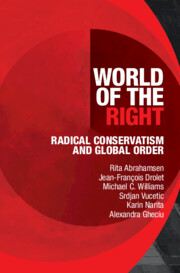
The chapter examines how the radical Right’s counter-hegemonic struggle relates to other struggles for power in contemporary world politics and attacks on the so-called liberal international order (LIO). Drawing on recent literature on struggles for recognition, we show how the radical Right has built powerful transversal, global alliances based on a logic and discourse of difference and diversity rather than claims to Western superiority. We illustrate this through an analysis of an emerging global alliance in defence of the ‘natural family’. The radical Right’s civilisationalism and calls for multipolarity also enable complex, strategic convergences with illiberal states such as China and Russia, as well as states and people in the Global South. The multi-polar, civilisational world order envisioned by the radical Right is not anti-hierarchical and inclusive, but legitimises new differences and new forms of exclusion through its claims to cultural diversity. It is a more sovereigntist vision of the world in which exclusionary illiberal forces would be able to operate with fewer international constraints.
The contemporary radical Right is not merely a series of nationalist projects but a global phenomenon. This book shows how radical conservative thinkers have developed long-term counter-hegemonic strategies that challenge prevailing social and political orders both nationally and internationally. At the heart of this ideological project is a critique of liberal globalisation that seeks to mobilise transversal alliances against a common enemy: the 'New Class' of global managerial elites who are accused of undermining national sovereignty, traditional values, and cultures. 'World of the Right' argues that while the radical Right is far from a unified political movement, its calls for sovereignty, civilisational orders, and multipolarity enable complex, strategic convergences with illiberal states such as China and Russia, as well as states and people in the Global South. The potential consequences for the future of the liberal world order are profound and wide-ranging.
Increasingly, illiberal and authoritarian governments are seizing upon the concept of constitutional identity in order to justify and vindicate their political projects in the face of external criticism. This contribution raises questions about what these invocations tell us about the normative value of constitutional identity. The authors argue that, in the European context of supranational legal integration, constitutional identity should not be seen as an unconditional source of value. Invocations of constitutional identity only deserve recognition to the extent that they serve the ideals of constitutionalism. Where constitutional identity is invoked as a normative argument, the normative expectation of constitutionalism is implied – claims from constitutional identity that stand at odds with the ideals of constitutionalism, in fact, invoke the former ironically and frivolously. Exemplary cases in which constitutional identity is invoked to justify forms of ‘illiberal’ constitutionalism – notably the Polish and Hungarian cases – should be considered abuses of the concept as they do not live up to the normative expectations which they evoke.
The European Court of Justice (ECJ) is often viewed as a revered champion of opposition to autocratic reforms in the Member States. In the context of the rule of law crisis in Poland, however, its resolute support for judicial independence contrasts notably with the limited improvements for judges on the ground. As the present investigation suggests, this discrepancy can be explained by a mode of incremental adjustments at national level that has allowed Polish lawmakers to repeatedly neutralise the effects of the Court’s interventions. Resulting from this strategy are several instances of mutually responsive interaction between the Court of Justice and autocratic national lawmakers that have shaped developments in the rule of law crisis, both at national and supranational level. At national level, lawmakers have incrementally adjusted reforms to comply – at least superficially – with supranational judicial interventions, whereas the Court refined its interpretation of supranational safeguards of judicial independence in response to incremental adjustments in Polish law. Yet, more recently, this interaction of inadvertent mutual inspiration may have come to a halt. Rather than changing national law to superficially respond to supranational judicial interventions, Polish authorities may increasingly deny the Court’s authority to adjudicate in matters of judicial independence in the Member States altogether.
After Ekrem İmamoğlu won as Istanbul’s mayor, the contestation between the city and central government resembled other cases of liberal mayors winning in illiberal populist regimes. To expand liberal democracy, the mayor sought to reinvigorate effective democratic citizenship by increasing access to information, creating more inclusive governance networks through public participation opportunities, limiting the regime’s clientelism and rent-seeking opportunities in real estate and contracting, and (re)creating social solidarity. The national government responded by extensively covering “scandals” and continuing populist rhetoric to maintain polarization, limiting the city’s financial resources, and moving power and projects to agencies they still controlled. This article uses Istanbul to develop this model and illustrate how İmamoğlu has made progress in each area despite the central government’s effort to constrain his administration.
Zakat returned to Middle Eastern political discourse in the 1930s, through modern Islamism. It became one of two concrete initiatives distinguishing an Islamic modern economy from economies ostensibly corrupted by secularists and colonialists. The other was Islamic finance. In both cases, the focus was more on the symbolism of Islamizing a secularized sphere than on solving actual economic problems. Islamism tacitly stripped zakat of all but one of its original functions: poverty alleviation. Sidelining zakat’s role in public finance and the protection of property rights, it frittered away golden opportunities to draw from Islam’s rich history universal lessons for economic progress and rule of law. Focusing on the functions that made zakat a pillar of Islam would have initiated a dialogue with secularists inclined to dismiss Islam as a source of backwardness. A similar scenario has played out in relation to Islamic finance. Nowhere has a categorical ban on interest, which is absent from the Quran anyway, been enforced. In any case, it is unfeasible. In making Islamic finance seem interest-free through euphemisms and accounting tricks, Islamism reduces economic transparency and institutionalizes dishonesty. Weakening rule of law, it also compounds mistrust.
This chapter explains the logic behind the choice of institutions that the book highlights. A liberal order is impossible without the capacity to form organizations able to act on behalf of private constituencies. Apart from providing shared goods, private organizations restrain entities capable of repression, including the state. Hence, a section of the book is devoted to exploring the political effects of Islamic and modern waqfs. Whereas the former played key roles in keeping civil society anemic, the latter is now invigorating civic life. Religious repression has been ubiquitous in the Middle East. In inducing preference and knowledge falsification in broad domains, it conceals doubts about policies promoted in the name of religion. In the process, it impoverishes and distorts public discourse. For these reasons alone, religious freedoms are also essential to liberal governance. Economic freedoms are pivotal because they shape political incentives and capacities. Private property rights, the freedom to invest, and predictable taxation are among the determinants of private political capacities. So are characteristics of the available forms of economic organization. Institutions that limit the scale, longevity, and complexity of Middle Eastern enterprises have reduced the political reach of private economic actors.
Islam’s historical institutional complex has delayed a liberal order in the Middle East, not blocked it permanently. The institutions primarily responsible for the region’s historical trajectory are either gone or, under new conditions, they no longer inhibit liberalization. The infrastructure for an effective civil society is in place. Apart from private associations, it includes perpetual enterprises. And no absolute barrier exists to reinterpreting illiberal readings of Islam. By and large, the institutions that sustain the region’s repressive regimes are mutually supporting. For example, religious illiberalism facilitates associational repression, and vice versa. In any one context, the interlinkages among various institutions may work against liberalization, because change depends on appropriate movements in complementary institutions. The half-full part of this glass is that altering a single institution can destabilize others, possibly unleashing a cascade of mutually reinforcing reforms. Yet there is probably no quick fix to the prevailing illiberalism. Many patterns must change for the Middle East to reach advanced standards of liberty. Although specific changes can stimulate one another, each involves adjustments to interpersonal norms, organizational rules, and state laws. Some would upset longstanding status rankings and hierarchies. Learning civic skills requires communal practice. Vested interests are already organized.