To save content items to your account,
please confirm that you agree to abide by our usage policies.
If this is the first time you use this feature, you will be asked to authorise Cambridge Core to connect with your account.
Find out more about saving content to .
To save content items to your Kindle, first ensure no-reply@cambridge.org
is added to your Approved Personal Document E-mail List under your Personal Document Settings
on the Manage Your Content and Devices page of your Amazon account. Then enter the ‘name’ part
of your Kindle email address below.
Find out more about saving to your Kindle.
Note you can select to save to either the @free.kindle.com or @kindle.com variations.
‘@free.kindle.com’ emails are free but can only be saved to your device when it is connected to wi-fi.
‘@kindle.com’ emails can be delivered even when you are not connected to wi-fi, but note that service fees apply.
This chapter traces the historical junctures that have shaped the political-economic trajectories in those countries. It explains the structural contexts through which environmental movements have emerged as responses to political and economic transformation. The chapter demonstrates how the political-economic structure of the country where they operate has shaped the diverse characteristics of environmental movements in terms of their organisational structures, strategies, and modalities.
This chapter looks at the industrial state and the ways in which state strategies for managing the economy through industrial policy, tax and regulation have a significant bearing on sustainability transitions. It explores the purpose of the state in industrial society and what implications this has for the prospects of industrial transformation for sustainability, including the potential for shifts in the developmental state that has thus far been deployed to promote conventional economic growth. The final section of the chapter on transforming the industrial state explores the idea that the very dynamism, uncertainty, volatility and ostensibly competitive nature of global capitalism which currently drives unsustainability can also lead to openings for transformation and revival, creative construction following ‘creative destruction’ and the reconfiguring of alternatives.
Indigenous and tribal communities often make claims to territory citing their longstanding ties to the land. Since 1989, they increasingly reference ILO Convention No. 169, the only legally binding international agreement on Indigenous and tribal peoples rights. This Element proposes a three-pronged analytical framework to assess the promise and limits of indigenous rights to land as influenced by international law. The framework calls for the place-specific investigation of the interrelations between: (1) indigenous identity politics, (2) citizenship regimes, and (3) land tenure regimes. Drawing on the case of Mexico, it argues that the ILO Convention has generally been a weak tool for securing rights to ancestral land and for effectively challenging the expansion of extractivism. Still, it has had numerous other significant socio-political implications, such as shaping discourses of resistance and incentivizing the use of prior consultation mechanisms in the context of territorial disputes.
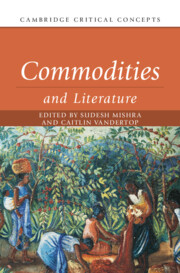
Global commodities, from tea and sugar to coal and oil, have had an enduring presence in literary texts. Commodity cultures have also shaped literary ones, from the early influence of the literary coffeehouse to the serial novels facilitated by print's own emergence as a mass commodity. This book offers an accessible overview of the many intersections between literature and commodities. Tracing the stories of goods as diverse as coffee, rum, opium, guano, oil and lithium, as they appear across a range of texts, periods, areas, and genres, the chapters bring together existing scholarship on literature and commodity culture with new perspectives from world-literary, postcolonial and Indigenous studies, Marxist and feminist criticism, the environmental and energy humanities, and book history. How, this volume asks, have commodities shaped literary forms and modes of reading? And how has literature engaged with the world-making trajectories and transformations of commodities?
Juristocratic reckoning is observable not only “from below.” Collective struggles that employed law animated by the idea that the state should be a vehicle of social justice have provoked a reckoning “from above.” This chapter suggests three dynamics: namely, authoritarian legalism, the dispersion of law, and the tribunalization of law. They reflect differently on the reaction by states and powerful economic actors to what the editors of this volume call “legal apotheosis” but which we would rather refer to as “organic constitutionalism” (Schwöbel 2010). Within these three pathways the chapter observes an active diminishment of the already limited possibilities of law to be mobilized for social justice. In the first modality – the incremental implementation of authoritarian legalism in India – legal measures have been systematically introduced in recent years to “legalize” a dual-law situation long in the making. In a second step, the chapter outlines the dispersion of law in relation to the borders of Europe, where the access to the laws that would nominally regulate these borders (e.g., asylum law) is thwarted by the creation of new legal zones and jurisdictional responsibilities. Third, the chapter observes the tribunalization of law with relation to the regulation of global capitalism, where seemingly egalitarian procedures increase asymmetries and “singularize” injuries. Taken together, the three cases point toward the emergence of a constitutional order that is averse to political conflict being carried out through law. The pathways described in this chapter have hegemonic tendencies; they ensure that political orders are authoritatively institutionalized through law but cannot be contested through it anymore.
Indigenous peoples, rural and peasant populations, and Afro-descendants have increasingly disputed mining and other extractive ventures in the territories they inhabit in various regions of Latin America. This article introduces an open-access digital and bilingual curated repository of data that compiles legal and legal-like actions by various actors in the context of paradigmatic conflicts over mining in Central America and Mexico. It situates the relevance of this digital resource against the background of the increasing global recourse to law in socioenvironmental conflicts—a tendency that may be defined as the juridification of environmental politics. The article also places the database in relation to key debates in digital humanities and discusses potential uses as well as future developments and challenges to expanding and improving such a resource.
During the Fascist period, the extractive industry played an important role in Italy’s economic and political landscape, and sulphur was considered the autarkic mineral par excellence. This article reveals how the rhetoric surrounding the vigorous extraction of sulphur in Sicily was part of a larger project of reconstruction and reorganisation, which involved the division of land, reclamation efforts, military operations and colonisation. Drawing on examples of visual and written narratives from public reports, essays, illustrated magazines and exhibitions of the time, the article demonstrates that extraction was both the actual site of resource extraction and the Fascist extractive logic of consensus. The use of specific discourses and definitions enabled and justified the portrayal of humans and lands as extractable resources, creating images and imaginaries that normalised exploitation and transformation, and the regime’s extractive force.
Edited by
Lisa Vanhala, University College London,Elisa Calliari, International Institute for Applied Systems Analysis, Vienna and Euro-Mediterranean Centre on Climate Change, Venice
Despite experiencing particularly severe and potentially irreversible climate change impacts, Peru has not yet developed explicit national policies on loss and damage. This chapter draws on the analysis of government policy and legislative documents, as well as twelve semi-structured interviews with key public and civil society actors, and identifies two key factors which contribute to limiting Peru’s engagement with loss and damage at the national level: national identity and policymaking politics. With respect to the former, the chapter argues that the issue of loss and damage is perceived as inconsistent with Peru’s identity and status as an upper middle-income country. National actors tend to frame loss and damage as “money for the poor” and thus something concerning Small Island Developing States and least developed countries, and there is also a fear that, as a middle-income nation, Peru might potentially be liable for claims against the nation state for the impacts of climate change. Moreover, Peru’s extractivist development and economic model limits the discussion and uptake of bold climate-related policies. With respect to (party) politics, the chapter finds that loss and damage is seen as highly contentious in Peru’s policymaking process and that it lacks the necessary support from civil society organizations.
Edited by
Lisa Vanhala, University College London,Elisa Calliari, International Institute for Applied Systems Analysis, Vienna and Euro-Mediterranean Centre on Climate Change, Venice
Chile has begun to play a new leadership role on loss and damage in the international negotiations. Historically, Chile engaged little with loss and damage discussions in negotiations, but this changed with its presidency of the twenty-fifth Conference of Parties in 2019. Drawing on a review of the domestic policy landscape and institutional responses to loss and damage as well as fourteen interviews with key government, non-governmental organization, and private sector actors, this chapter suggests that while the presidency role acted as a driver for Chile taking the lead on the topic at the international level, the country’s economic identity acts as a constraint on the domestic development of adequate responses to loss and damage and on engagement with the loss and damage terminology. It also finds that Chile’s centralism and lack of ministerial coordination as well as the relatively institutionally weak position of the Ministry of the Environment limits more effective loss and damage governance. The chapter further argues that loss and damage as a concept has not permeated Chilean civil society. Finally, it demonstrates that Chile’s prioritization of economic growth and its extractivist economy undermine efforts to meaningfully address loss and damage at the national level.
This paper traces how geological surveys and prospecting across two centuries shaped Afghanistan’s enduring characterization as a mineral-rich “El Dorado.” By investigating the shift in survey methods from comprehensive terrestrial to aerial reconnaissance, I show how geological knowledge production served purposes far beyond imperial resource identification and extraction. Drawing from historical and ethnographic research, including insights from a current emerald mine operator, I uncover how precious stones’ physical properties and circulating narratives about hidden riches propelled—and continue to propel—a vast network of individuals into mining enterprises: from state authorities and local powerbrokers to foreign geologists, mineral collectors, and international aid organizations. The result is the creation of new narratives about extractable wealth that interweave scientific practices and global market dynamics to transcend conventional periodization such as pre-Soviet, Soviet, and United States. These narratives have emerged from and reinforced asymmetrical relationships in both labor and expertise, ultimately positioning Afghan participants precariously within global mineral markets, made riskier still in times of conflict.
This chapter provides an historical context for the emergence, and continuation, of a frontier logic of ecoviolence in Guyana, analyzing the hyper-exploitation of the Ameridians, minors and migrants in the mining sector. While Guyana’s Indigenous peoples, the Amerindians, named their home the “Land of Many Waters”, towns and villages such as Rose Hall, New Amsterdam, Queenstown and Anna Regina serve as a reminder of the European colonial regimes which spearheaded capitalist, frontier logics of extractivism which spatialized ecoviolence and precarity; the theft of Indigenous lands and territories; and ongoing structural racial, gender, and economic disparities intersected with environmental injustice. The return of neoliberal frontiers of logic and hyper-exploitation of workers forces readers to think more holistically about harm and hyper-exploitation.
Plants have played a central role in cultural imaginaries across South and Central America and the Caribbean. This chapter, organised chronologically from the colonial period to the present, focuses on key literary traditions and/or works from Latin America and the Caribbean that engage directly with plants, including sugar cane, the ceiba pentandra, and rubber. The chapter includes discussion of a number of works in English, Portuguese, and Spanish, including John Grainger’s The Sugar-Cane (1764), Euclides da Cunha’s À margem da história [The Amazon: Land Without History] (1909), and Lydia Cabrera’s El Monte [The Wilderness] (1954). Although the works under discussion belong to different historical, national, and linguistic contexts, recurrent plant-inflected tropes and concerns emerge, including those relating to questions of aesthetics and literary form; cultural identity and belonging; environmental care and destruction; and the complex and ever-evolving relationships between human and non-human worlds.
Amidst the popularizations of eco-crisis in movie and television media in the past two decades, the internationally vaunted eco-fiction film “Don’t Look Up” (2021) stands as a recent, explicit near-term allegory for political-economic culpabilities, technocratic infatuations, and social-ecological consequences of anthropogenic climate change. How might this contemporary, culturally acclaimed allegory help to illuminate some of the textures of environmental violence as proposed by Marcantonio and Fuentes; and how might notions of climate coloniality challenge the allegorical presentation of climate crisis in Don’t Look Up? Drawing on ecocinemacriticism, literary ecocriticism, contemporary Indigenous studies, and social theory, this chapter assesses the presumptive Whiteness of vaunted mainstream ecocinema as a form of cultural narrative; the generally myopic coloniality of apocalypse narratives; and linkages to other forms of spectacle in an international polity dependent on neoliberal political economics and structures of extraction. If these dynamics are interwoven with legacies of colonialism and racism, what are the implications for media representations of environmental violence?
Degrowth literature predominantly states that degrowth strategies are meant from and for the Global North. While economic mainstream discourse suggests that the Global South still has to grow in terms of achieving development, degrowth proponents expect a reduction of material and energy throughput in the Global North to make ecological and conceptual space for the Global South to find its own paths toward ecosocial transformation. Based on a Latin American post-development and post-extractivist perspective and drawing on dependency theory, this article suggests another approach: first, it argues that the growth imperative, which in the peripheral world translates into the imperative to develop, also causes harm in societies of the Global South. Throughout Latin America, in the last decades, economic growth has mainly been achieved through extractivism with negative impacts, which are now being pushed further by green growth strategies. Second, I explore some possibilities for a cross-fertilisation between degrowth and International Relations scholarship, calling into question the assumption that degrowth in high-income countries would automatically ‘make space’ for the Global South to engage in self-determined paths of ecosocial transformation, as long as the structures, institutions, and rules of global governance and trade which secure profoundly asymmetric, colonial relations are not challenged.
The introduction takes the reader into the history of oil in the Ecuadorean Amazon in the twentieth century. Zooming out from the testimony of a former oil worker, a historical overview sheds light on the dynamics of oil extraction in the region by national and international companies. This history is analyzed from the interdisciplinary perspective of the Environmental Humanities, combining archival and oral sources, sociological and anthropological concepts, and a mixed-methods approach. From this vantage point, the changes in the rainforest brought by the oil industry can be narrated as a fundamental metamorphosis of the landscape, its ecology, and its inhabitants. Drawing from Amazonian and European notions of metamorphosis, four dimensions of this process are particularly relevant for the historical analysis: conceptual, material, toxic, and social. The metamorphosis as metaphor offers a perspective on historical change in the Amazon as a process driven by the conflictive interaction between the rainforest ecosystem and the narrative and material manifestations of the oil industry.
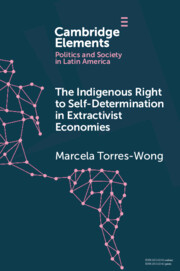
International norms widely recognize the Indigenous right to self-determination by which Indigenous peoples define and purse their collective aspirations. Nevertheless, as progressive as legal frameworks might appear, in reality, few Indigenous communities enjoy this right and most remain vulnerable and disempowered. Activists blame Latin America's extractivist economies, while governments argue that extractive revenues are necessary to improve Indigenous life. Far from presenting a unified position, rural Indigenous peoples are most often divided over extractive industries. To assess how Indigenous self-determination has progressed, and the role that extractivism plays in this, this Element examines six Indigenous communities in Mexico, Bolivia, and Peru with contrasting experiences of extractive projects. It finds that the Indigenous ability to use favorable legislation in conjunction with available economic resources shapes different self-determination outcomes. Finally, it assesses Indigenous possibilities for self-determination in the light of environmental activism and discourses on Buen Vivir.
In this chapter, I compare national debates around the definition of the collective subject that should be granted access to a new participatory mechanism for development and resource governance called Free Prior and Informed Consent/Consultation (FPIC). This is an interesting case, I argue, around which to discuss a type of recognition conflict that I call participation conflict. These conflicts result from the implementation of means of recognition (through categorisation exercises) in contexts where opportunities to control new strategic resources are pursued by traditionally marginalised social actors. Regulated by ILO Convention 169 and included in most Latin American legal frameworks since the 1990s, in recent years, FPIC has suddenly catalysed the attention of both governments and social movements. FPIC aims at achieving more effective bottom-up participation by establishing an obligation to consult – or obtain the consent of – indigenous peoples before large development projects and legal reforms that would affect them can proceed. Given its relevance for natural resource governance, interest in FPIC initiatives has been growing, particularly in the framework of political economy models that increasingly rely on commodity exploitation to sustain economic growth and welfare investments. The Andean region has been pioneering the implementation of FPIC worldwide. Here is where the most advanced legislation and institutionalisation processes in regard to FPIC have developed over the past decade. However, these advances have not occurred without tensions. Heated disputes on the definition of the collective subject that should be granted this new right have led to very different outcomes in Bolivia, Colombia and Peru. Some crucial knots in this discussion have revolved around how to operationalise the distinction between ethnic and non-ethnic communities and, notably, whether or not peasant communities should be entitled to FPIC. This represents, therefore, a telling example of an ethnic boundary-making exercise (a classic ‘means of recognition’) with important implications for groups’ self-perception and mutual relationships. The different answers offered by the three countries to the subject question not only have important implications in terms of the inclusion and exclusion of considerable parts of the rural population from new mechanisms of participatory governance; they also reflect the models of citizenship and development that these countries are committed to building through the redefinition of identity articulation/disarticulation processes and delimitation of social boundaries.1
Resource extraction has grown to global significance as part of a particular version of industrial modernity. This modernity emerged with the industrial revolution, accelerated dramatically during the twentieth century, and is now changing rapidly. The fossil fuel-driven world as we know it is questioned and in many parts of the world already taking a downturn. Resource extraction modernity came with a particular kind of societies, based on values linked to gender-, ethnic- and social hierarchy and with largely unsustainable practices. As this modernity is challenged, political and cultural tensions have grown around extractive industries that go far beyond those we saw in the past captured in concepts such as preservation and conservation. To make sense of these comprehensive changes the chapter unites two key concepts: the Anthropocene and the Planetary Mine that together shape the new extractivist paradigm. The Anthropocene speaks to the profound geo-anthropological transformation of the human-earth relationship. The Planetary Mine brings out the interconnected global character of contemporary resource extractivism of which Arctic mining is a significant part.
Chapter 8 argues that any steps or program can be effective only if they adopt a justice lens and reject proposed technical and market fixes that threaten to perpetuate the same inequities, corporate agendas, and extractivist mentality that created the climate and ecological crisis in the first place.
Extractivism has been predominant in the Arctic since whaling and sealing campaigns began in the sixteenth century, followed by mining and drilling for oil and gas. In this chapter we present some of the main features of this ‘extractivist history’ of the circumpolar region. We organize this development along a set of themes. First, we explore the extractive frame of mind in Western thought and how it has continued to shape visions of the region. Second, we explore the material and social impacts of historical extractivism. Third, we use the theoretical lens of colonialism and decolonialism to understand the social and political relations, especially with aboriginal populations. Fourth, we examine the, often fraught, recent and contemporary debates around contemporary and future extractivism and its implications for the Arctic. The historical overview serves the purpose of providing a legible pattern from what is also a range of diverse and rich variations. A key finding is that extractivism is a lasting legacy and a path dependency of the region. At the same time resource extraction has many problematic sides that the seeking of new Arctic futures will have to deal with.