To save content items to your account,
please confirm that you agree to abide by our usage policies.
If this is the first time you use this feature, you will be asked to authorise Cambridge Core to connect with your account.
Find out more about saving content to .
To save content items to your Kindle, first ensure no-reply@cambridge.org
is added to your Approved Personal Document E-mail List under your Personal Document Settings
on the Manage Your Content and Devices page of your Amazon account. Then enter the ‘name’ part
of your Kindle email address below.
Find out more about saving to your Kindle.
Note you can select to save to either the @free.kindle.com or @kindle.com variations.
‘@free.kindle.com’ emails are free but can only be saved to your device when it is connected to wi-fi.
‘@kindle.com’ emails can be delivered even when you are not connected to wi-fi, but note that service fees apply.
Chapter 6 digs deeper into the textual conventions deployed in many of the monumental inscriptions set up on restored structures. In particular, it points to how they responded to and influenced the experience of the inexorable degradation of time through a rhetoric of ruin and fragmentation that both naturalized and justified the form or extent of rebuilding and in late antiquity shifted to increasingly vivid, sensorially affective forms.
The notion that curse tablets were used to cause harm whereas amulets were used to provide protection is a misleading oversimplification. Curse tablets have often been removed from the category of religion and consigned to the illusive one of magic. However, the existence of those tablets designated as prayers for justice illustrates that the desires which drove curse tablet creation were varied. To ascertain to what extent the use of curse tablets and amulets fitted in with polis religion, different aspects of them are examined, such as the ritualistic nature of their creation, their use of formulaic inscriptions and evidence for their use, or lack of use, of reciprocity. Examples of amulets and curse tablets are presented from the fourth century BCE through to the second century CE and from a large geographical scope. Examples from across the Greek world illustrate a paradoxical unity and sense of religious community amongst those who engaged in these practices. The incredibly personal nature of the inscriptions on curse tablets and the wearing of amulets provides an insight into Greek religious practice at an individual level.
The chapter is focused on the Palmyrene Tariff (CIS II.3913), a lengthy bilingual text in Aramaic and Greek promulgated in the city in AD 137 to regularize local taxation, i.e. taxes on goods entering and leaving the city which originate within its immediate vicinity, and on trades being plied within the city, not taxes on long-distance trade. Attention is given to the book on the Tariff by Ilia Sholeimovich Shifman, published in Russian in 1980 and republished in English in 2014, and to the publications of Michał Gawlikowski (2012, 2014) on the original location of the Tariff stone opposite a shrine devoted to Rab-Asīrē and close to the Agora. The respective roles of Greek and Aramaic are explored, including the question of which had priority in the drawing up of the Tariff. The sources and composition of the text are analysed with reference to the role played by earlier Roman authorities. A final section considers the position of tax collectors in Palmyrene society and the light which the Tariff can throw on life in Roman Syria.
This article explores literary records of the fourth-century senatorial dedications that illustrate the perception of inscribed monuments in variegated spatial contexts. It offers considerations about literary reflections of material conditions in which late antique statues were set, staged, and perceived, their interaction with urban and domestic contexts, accessibility, and ways in which their mise-en-scène had an impact on an onlooker. Late antique and middle Byzantine patrographic attestations highlight the pleasure experienced by viewing inscribed monuments in city fora. I argue that literary accounts of statue and epigraphic representations of the senatorial aristocracy mediate the phenomenon of the expansion of new, spatially mobile elites. I examine literary descriptions of (1) statuary set up for senatorial office-holders; (2) dedications for emperors and other recipients awarded by senatorial officials; (3) statue monuments erected by senates. I conclude with an elaboration on what different media genres, as mediating structures by which aristocracy and rulers articulated their interaction, reveal about members of the senatorial order fashioning their relationship with the imperial court and the broader public. The elusive traces in late antique and medieval literary reports furnish fragments of historical evidence of how the memory of individual senators was constructed, reshaped, and perceived.
The wayfinding theory of Kevin Lynch, this article proposes, lays bare an underappreciated spatial modality deployed by inhabitants and visitors to the Roman city based on street-view navigation of the city’s legible topographical elements, ranging from natural to built features of the environment. In particular, wayfinding is positioned as a primarily non-elite and sub-elite – or subaltern – spatial modality that elites may have been aware of, but rarely had to make use of in their movement through the city. A survey of a diverse set of epigraphic corpora – graffiti, enslaving collars, dipinti, curse tablets, brick stamps, tesserae, and epitaphs – instead demonstrates the pervasive role of wayfinding across many aspects of subaltern Roman life, especially in connection to the practical conduct of business, and how this spatial modality was entangled in several matrices of domination. Ultimately, the theoretical lens of wayfinding should encourage us to reorient our approaches to the topography of Rome away from elite productions of cartography and towards subaltern, street-level conceptions of the space of the urbs.
Inscribed Greek verse epitaphs were produced in relatively high numbers in the city of Rome under the Principate. Although many were made for slaves and freedmen, their use was not confined to them. The individuals who opted to use them made a deliberate choice to emphasize their Greek cultural identity. They may have had several motives, but often the deceased or their (grand)parents had migrated from the eastern parts of the Roman empire to Rome, voluntarily or involuntarily. By presenting themselves as Greek in their language and use of mythological exempla, they claimed the paideia (‘education’) and culture associated with the Greek literary past. Yet despite the heavy emphasis on Greekness, the epigrams also display an awareness of the Roman context in which they were set up. Greek epigrams formed excellent vehicles to navigate the cultural ambiguities of ‘being Greek’ in Rome, and this explains why Rome became a major production centre of Greek funerary epigram.
Chapter 6 explores the downfall of the Kingdom of Alania. It argues that Alania split into multiple competing princedoms during the twelfth century, and that this development cannot be blamed on Mongol or Qipchaq invasions. Rather, increasing aristocratic competition led to intercommunal conflicts, made more acute by the ability of Alan aristocrats to ally with Qipchaq nobles and bring in allied Qipchaq troops. It concludes with a brief overview of Alania during and after the Mongol invasions of the North Caucasus in 1238–40.
Chapter 4 returns to the theme of Christianisation. It argues that Christianising styles were widely adopted in tenth- and eleventh-century Alania, having an impact which lasted until the early modern period. Moreover, this widespread acceptance of Christianising styles allowed the kings of Alania to claim that they possessed a particularly potent ‘power of the foreign’ as a result of their recognition by the Byzantine and Georgian courts and ecclesiastical hierarchies. As a consequence, they were able to effectively claim a paramount status among Central North Caucasian aristocrats and establish a hereditary dynasty.
The development of runic writing (the early Germanic alphabetic script) and the practice of inscribing runes on stone are difficult to trace, particularly as rune-stone inscriptions are rarely found in original and/or datable contexts. The discovery of several inscribed sandstone fragments at the grave field at Svingerud, Norway, with associated radiocarbon dates of 50 BC–AD 275, now provide the earliest known context for a runestone. An unusual mixture of runes and other markings are revealed as the fragments are reconstructed into a single standing stone, suggesting multiple episodes of inscription and providing insight into early runic writing practices in Iron Age Scandinavia.
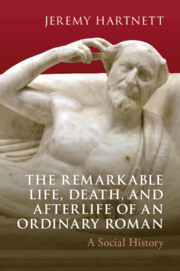
When we think of Romans, Julius Caesar or Constantine might spring to mind. But what was life like for everyday folk, those who gazed up at the palace rather than looking out from within its walls? In this book, Jeremy Hartnett offers a detailed view of an average Roman, an individual named Flavius Agricola. Though Flavius was only a generation or two removed from slavery, his successful life emerges from his careful commemoration in death: a poetic epitaph and life-sized marble portrait showing him reclining at table. This ensemble not only enables Hartnett to reconstruct Flavius' biography, as well as his wife's, but also permits a nuanced exploration of many aspects of Roman life, such as dining, sex, worship of foreign deities, gender, bodily display, cultural literacy, religious experience, blended families, and visiting the dead at their tombs. Teasing provocative questions from this ensemble, Hartnett also recounts the monument's scandalous discovery and extraordinary afterlife over the centuries.
La Milpa, situated in northern Belize, stands out as one of the region's largest archaeological sites, having served as the capital of an ancient Maya city-state. Its significance is indicated by extensive monumental architecture, with the epicenter covering approximately 8.8 ha. The site's corpus of monuments, comprising 23 stelae and several altars, underscores its prominence in northern Belize, rivaling the corpora of sites such as Nim li Punit and Caracol. Despite its remote location, La Milpa has garnered the attention of researchers, particularly since the first modern survey of the site in 1988. Subsequent studies—in particular, that by Nikolai Grube in the 1990s—has provided detailed analyses of the site's corpus of carved monuments. Recent efforts, including epigraphic documentation in 2019, serve to enhance our understanding of La Milpa's dynastic history through traditional epigraphic and computational photographic methods. Utilizing field observations, raking light photography, and 3D photogrammetric models, we have refined previous analyses and provide new insights into the iconography and textual segments of the monuments. Here, we present the results of these recent efforts as well as our new analyses of a selection of monuments.
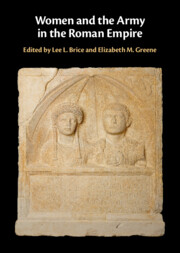
Considering the sources and material evidence available from Rome, this chapter focuses on the evidence of women’s associations with these soldiers of the different units stationed in the capital. These women were often labeled as “wives” in written documentation. By analyzing the available evidence, predominantly on funerary monuments, the authors expand the discussion of the social expectations and realities of women associated with the military in the context of the Empire’s center. The evidence gives us a rich image of an aspect of society that has not yet been explored, while at the same time providing a new perspective on the life of Roman soldiers. The origin of the women and their social background is treated as a relevant factor for their integration in the military community and – as inhabitants of Rome – in the community of the city. In this context it is interesting to consider the origin of personal relationships. In some cases, it seems that women accompanied soldiers to Rome from a provincial location and other cases suggest the relationship began in the capital itself.
The role of women in the religious sphere of the military world has been underserved. This chapter turns to the epigraphic record to illuminate the role of women in military households and communities in both public and private contexts. Visual and epigraphic material is a rich source of information for our understanding of women’s roles in public military settings and private military households, and especially how women expressed religiosity on behalf of themselves, their soldier-husbands, and their households broadly. The evidence is not overwhelming, but there is enough to start building an image of the religious aspects of the lives of women associated with the army. With this aim in mind, this chapter illuminates the lives of women in military communities through the lens of religion as one aspect of daily life. By investigating precisely what women were doing in the military community, this contribution addresses the increasing trend to see the families of soldiers – whether living in the fort or extramural settlement – as a direct part of the military community, rather than a “civilian” counterpart that has often been discussed in pejorative terms or as an appendage population that is located there only by chance.
New research in the microregion of Musti (El Krib) in N Tunisia in 2019–2023 has revealed unpublished 2nd–3rd-century AD funerary monuments featuring rich iconography, including a female figure beside the altar and two pigs. These items and other published epigraphic and anepigraphic monuments from the fertile microregion stand out from other tombstones in Roman Africa. Both the type of monument and its relief decoration distinguish these objects. A rare holistic approach, combining historical, epigraphic and iconographic analyses with the results of archaeobotanical and archaeozoological research, will enhance our understanding of the history and agriculture of the Musti microregion and this part of Proconsular Africa during the early Roman Empire.
The presence of women in Roman military contexts has been established beyond doubt by scholars in recent decades. Nevertheless, very little sustained attention has been paid to who these women were, how they fit into the fabric of settlements, and what their contributions were to these communities. This volume offers new insights into the associations, activities, and social roles of women in the context of the Roman army, emphasizing the tangible evidence for the lived realities of women and families at different social levels. The various chapters adopt dynamic perspectives and shed new light on archaeological and historical evidence to provide novel conclusions about women's lives in antiquity. Histories of the Roman army can no longer ignore the women who lived and worked in its midst and histories of Roman women must acknowledge their important military role.
Classic Maya history was rife with shifting political coalitions and disputes with the key antagonists, Tikal and the Kaan regime, at the center. Understanding how power dynamics and political shifts were experienced among subordinate polities is best viewed from multiple perspectives. We employ elements of Graeber and Sahlins' (2017) stranger-king model, focusing on exogamous marriage practices in relation to two Snake Queens ruling at Waka’. They served as direct links between the Kaan regime and the subordinate Wak polity. We focus on the political and diplomatic nature of their roles in crafting Waka's place in the overarching narratives of alliance and conquest during the sixth through the early part of the eighth centuries. The pairing of archaeological and textual data surrounding Ix Ikoom in the sixth century and Lady K'abel during the seventh century permit interrogation of women's prominence with respect to Kaan regime-building strategies during these centuries.
The story of the Classic Maya “Snake” kingdom is truly a tale of two cities, with a capital that evidently switched from Dzibanche to Calakmul in the seventh century a.d. This article explores the era of transition between them in search of an elusive sequence of kings, while asking why the transfer came about and who played principal roles in it. Although grounded in finds at Calakmul, any attempt to answer complex questions of this nature must draw on a wider body of materials, both epigraphic and archaeological, from across the southern Maya Lowlands. Whatever portrait of the serpent kingdom is now possible, it is one that can only arise from close collaboration and the fusion of many scattered sources and clues.
The article presents the results of the last decade of archaeological and epigraphic research, which clarified the history of the polities of the ancient Maya sites of Holmul and Naranjo during the expansion of the Dzibanche royal dynasty in the eastern area of the Department of Peten, Guatemala, from the second half of the sixth century through the first half of the seventh century a.d. The discussion centers on the textual and material indicators of the geopolitical contacts of the royal families of Sak Chuwen of Naranjo and Chak Tok Wayaab of Holmul, including changes in polychrome pottery and hieroglyphic inscriptions, in particular, rhetoric of good governance and political loyalty. In the case of Holmul, the transformation affects the urban landscape of the site. New data clarify the relationship between Holmul and Naranjo during the initial period of their subordination to the kings of Dzibanche. The emerging picture of these secondary alliances and hierarchies within the Kaanu'l domain is essential for a better understanding of Classic Maya political systems at local and regional levels.
The Kaanuˀl dynasty ruled a hegemonic state with political influence over much of the Classic Maya Lowlands between a.d. 520 and 751. The present article introduces the subject for a special section of the journal, which refocuses attention on the archaeological zone of Dzibanche in southern Quintana Roo, Mexico, where new data are emerging about the origins of the Kaanuˀl dynasty, its urban organization, and its connections to neighboring centers. In this article, we present new data from a recent lidar survey as well as from previous work by Enrique Nalda's Instituto Nacional de Antropología e Historia (INAH) project to reevaluate Dzibanche's characteristics vis-à-vis its rise as a kingdom with far-reaching political influence. We complement these archaeological data with epigraphic information from new monuments and reanalysis of existing ones based on 3D scanning to update the list of Dzibanche rulers. We then revisit the chronology of Dzibanche's royal burials proposing correlations with known Early Classic Kaanuˀl rulers. Overall, the contributions to this special section present new perspectives on the Kaanuˀl's rise to power and its relationship with distant vassals in the crucial period of expansion into northern Peten, leading to the defeat of Tikal and eventually to its transition to a new dynastic seat at Calakmul in the a.d. 630s.