To save content items to your account,
please confirm that you agree to abide by our usage policies.
If this is the first time you use this feature, you will be asked to authorise Cambridge Core to connect with your account.
Find out more about saving content to .
To save content items to your Kindle, first ensure no-reply@cambridge.org
is added to your Approved Personal Document E-mail List under your Personal Document Settings
on the Manage Your Content and Devices page of your Amazon account. Then enter the ‘name’ part
of your Kindle email address below.
Find out more about saving to your Kindle.
Note you can select to save to either the @free.kindle.com or @kindle.com variations.
‘@free.kindle.com’ emails are free but can only be saved to your device when it is connected to wi-fi.
‘@kindle.com’ emails can be delivered even when you are not connected to wi-fi, but note that service fees apply.
‘Blake’s Scattered Leaves’ explores the sibylline poetics of the poet and printmaker’s book making in America, Europe, The First Book of Urizen, and The Four Zoas, rematerializing Blake’s practices of invention and composition within and against constraints and teleologies of printing. Attention to material cultures of book making produces new readings of Blake’s sibylline metaphors and poetical possibilities, and practices of interleaving, repurposing of proofs, demediating the text, and freeing images as separate designs. Blake exploits the constitutively mobile potential of full-plate illustrations produced in different workshops, retaining that mobility in his illuminated books, where different placements make each copy unique and blur boundaries between different books. To capture the dynamic trajectories of mobile book parts or independent art works is to reconfigure the hybrid history of Blake books, questioning distinctions between book parts and artworks crystallized by institutional divisions of knowledge that separate the library from the print room.
The composite nature of perceptions is examined further in terms of mereological structure. Manifolds of outer intuition are stretched out in a space that both differentiates between an object and its exact duplicate and underlies fine discriminations ad indefinitum of a single object’s manifold. However, there is also a unity of space that runs through all spaces contained in it. Since space is a form of perception, there is therefore also a unity that runs through all nested perceptual manifolds. For this to be possible, space has to be a special kind of whole, namely, what Kant calls a totum analyticum, i.e., a whole whose parts depend on it, rather than vice versa, i.e., not a totum syntheticum. It is argued that a particular mereological structure of space is a precondition for the organization of manifolds of perception. Another precondition is what Kant calls “affinity,” i.e., that perceived particulars – including tropes – can be represented in ways that are associable with each other. In neither case is the unity due to a combinatorial synthesis. In empirical cognition, such a synthesis can only trace out an order of a perceptual manifold that is already there.
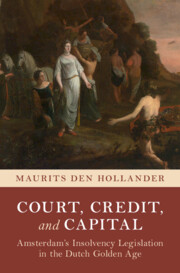
Seventeenth-century Amsterdam was a city of innovations. Explosive economic growth, the expansion of overseas trade, and a high level of religious tolerance sparked great institutional, socioeconomic and legal changes, a period generally known as 'the Dutch Golden Age.' In this book, Maurits den Hollander discusses how insolvency legislation contributed to the rise of a modern commercial order in seventeenth-century Amsterdam. He analyzes the procedure and principles behind Amsterdam's specialized insolvency court (the Desolate Boedelskamer, 1643) from a theoretical perspective as well as through the eyes of citizens whose businesses failed. The Amsterdam authorities created a regulatory environment which solved insolvency more leniently, and thus economically more efficiently, than in previous times or places. Moving beyond the traditional view of insolvency as a moral failure and the debtor as a criminal, the Amsterdam court recognized that business failure was often beyond the insolvent's personal control, and helped restore trust and credit among creditors and debtors.
We show that recent approaches to quantitative analysis based on non-idempotent typing systems can be extended to programming languages with effects. In particular, we consider two cases: the weak open call-by-name (CBN) and call-by-value (CBV) variants of the $\lambda$-calculus, equipped with operations to write and read from a global state. In order to capture quantitative information with respect to time and space for both CBN and CBV, we design for each of them a quantitative type system based on a (tight) multi-type system. One key observation of this work is how CBN and CBV influence the composition of state types. That is, each type system is developed by taking into account how each language manages the global state: in CBN, the composition of state types is almost straightforward, since function application does not require evaluation of its argument; in CBV, however, the interaction between functions and arguments makes the composition of state types more subtle since only values can be passed as actual arguments. The main contribution of this paper is the design of type systems capturing quantitative information about effectful CBN and CBV programming languages. Indeed, we develop type systems that are qualitatively and quantitatively sound and complete.
We define the category of polynomial functors by introducing its morphisms, called dependent lenses or lenses for short, and we show how they model interaction protocols. We introduce several methods for working with these lenses, including visual tools such as corolla forests and polybox pictures. We explain how these lenses represent bidirectional communication between polynomials and describe how they compose. By the end of the chapter, readers will have a comprehensive understanding of how polynomial functors and their morphisms can be used to model complex interactive behaviors.
We examine a monoidal structure on the category of polynomial functors, defined through the operation of substituting one polynomial into another. We explain how this composition product transforms polynomials into a richer algebraic structure, enabling the modeling of more complex interactions and processes. The chapter explores the properties of this monoidal structure, how it relates to existing constructions in category theory, and its implications for understanding time evolution and dynamical behavior. We also provide examples and visual representations to clarify how substitution works in practice.
This chapter focuses on one of the most important legal solutions in case of insolvency in seventeenth-century Amsterdam: the accord, or composition. It comprises a detailed qualitative analysis of almost 100 accords, combined with quantitative data obtained from the basic details of a broader dataset of more than 600 accords from the entire period covered by this book. These agreements between insolvents and their creditors sought to prevent an execution sale of the estate. At first, accords were concluded privately before notaries, until, in the second quarter of the seventeenth century, the Amsterdam burgomasters sought to subject their effectuation to prior consent of a public authority. Guarantors played an important role in securing such compositions. If the creditors trusted their debtor and his guarantors to make good on their promises, an accord would yield much higher returns than a simple execution of the estate. The Amsterdam regents thus endorsed, regulated, and added credence to an innovative and beneficial legal practice that had been developed among their own citizens.
Everywhere one looks, one finds dynamic interacting systems: entities expressing and receiving signals between each other and acting and evolving accordingly over time. In this book, the authors give a new syntax for modeling such systems, describing a mathematical theory of interfaces and the way they connect. The discussion is guided by a rich mathematical structure called the category of polynomial functors. The authors synthesize current knowledge to provide a grounded introduction to the material, starting with set theory and building up to specific cases of category-theoretic concepts such as limits, adjunctions, monoidal products, closures, comonoids, comodules, and bicomodules. The text interleaves rigorous mathematical theory with concrete applications, providing detailed examples illustrated with graphical notation as well as exercises with solutions. Graduate students and scholars from a diverse array of backgrounds will appreciate this common language by which to study interactive systems categorically.
Pierre Boulez was a great letter writer and a frequent correspondent. Since the extent of his correspondence is vast and very little of it has been published in English, this chapter looks solely at Boulez’s epistolary exchanges with the composers Karlheinz Stockhausen, Olivier Messiaen, György Ligeti and Elliott Carter. While the correspondence with Stockhausen is one of the richest of all, only a brief sense of this can be given here. The correspondences have been selected on the basis that all four composers were pivotally important for Boulez in different ways. He had important friendships with them. He valued and performed their music and they in turn were fulsome in their appreciation of his championing their music as well as of his achievements as a composer. This brief consideration shows how Boulez not only pursued his own musical path but also promoted the music of his composer friends.
Despite the fact that Boulez was criticised by many of his contemporaries insofar as they perceived him as having an excessively mathematical bent, some recent scholars have tended to minimise the significance of mathematical thinking for his compositional approach. This chapter posits that Boulez’s engagement with mathematical thinking cannot be so quickly dismissed. It disentangles the history of ideas and brings a new perspective to Boulez’s relationship with mathematics. After summarising the references to mathematical thinking in the literature on Boulez, it discusses the transformation of the field of mathematics that provided the context for Boulez’s engagement with the discipline and teases out the significance of mathematical thinking in Boulez’s compositional approach. Ultimately, it argues that there is an intimate relationship between the technical and aesthetic basis of his compositional approach and contemporary developments in the field of mathematics.
Shelley famously asserted that translation is as vain as casting a violet into a crucible to understand its colour and odour. Despite this seeming dismissal of the practice, translation forms an integral component of Shelley’s vocation as a poet and thinker. Throughout his writing career, he translated from French, German, Greek, Italian, Latin, and Spanish and also rendered some of his own poetry into Italian. His translation practice encompasses a wide range of genres: from Greek hymns and Latin georgics to Italian terza rima and ottava rima, to Spanish silvas and redondillas, to drama and philosophical prose. This chapter opens with a discussion of Shelley’s views on translation and the symbiotic relationship between translation and original composition in his own creative process. It then considers the connections between translation and language learning in the Shelley household before concluding with a survey of Shelley’s translations by language.
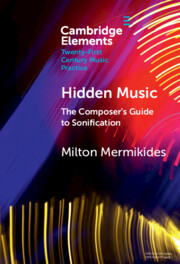
This book explores the intersection of data sonification (the systematic translation of data into sound) and musical composition. Section 1 engages with existing discourse and offers an original model (the sonification continuum) which provides perspectives on the practice of sonification for composers, science communicators and those interested in this rapidly emerging field. Section 2 engages with the sonification process itself, exploring techniques, models of translation, data fidelity, analogic and symbolic data mapping, temporality and the listener experience. In Section 3 these concepts and techniques are all made concrete in the context of a selection of the author's projects (2004–2023). Finally, some reasons are offered on how sonification as a practice might enrich composition, communication, collaboration, and a sense of connection.
Cross-cultural collaboration in popular music represents opportunities for the audibility of multiple voices and the creation of new sounds, but it also presents many challenges. These challenges are both musical – that is, how to technically match voices – and ethical – that is, how to negotiate historically entrenched power discrepancies. Practice-based research has recently developed as a field in popular music studies. This burgeoning area has much to offer in terms of new knowledge, based on embodied insights, lived experience, and an arts practice. Through a practitioner-centred account of three projects involving traditional Persian and Vietnamese musicians, and western folk/rock musicians, this Element suggests pragmatic strategies and conceptual frameworks for making pop music with people of different cultural backgrounds.
This chapter treats the design considerations for dictionaries as printed books, the transition from print to digital formats in the thirty years around the turn of the twenty-first century, and the considerations for digital and online formats. Section 1: Customer-focused decisions about format, size, and extent of physical dictionaries; the mapping of book and page components of printed dictionaries; the mutual influence of editorial and design choices; and the advent of digital composition and production for printed formats. Section 2: Factors driving the choice of digital versus print formats for changing customer needs; functional challenges of converting printed dictionaries to digital; design considerations for online interfaces, including both technical performance and user experience.
In the present study, we assessed the sponge fauna, sponge-associated, and planktonic prokaryotic communities residing in Burgers' Zoo Ocean aquarium, Arnhem, the Netherlands. The Ocean aquarium consisted of separate displays and life support systems, and included fish-only systems in addition to a large, 750,000 L tank containing a living, tropical coral reef ecosystem. Sponges were observed throughout the aquarium system and were identified as belonging to the genera Chalinula, Chondrilla, Chondrosia, Cinachyrella, Stylissa, Suberites and Tethya. There was a highly significant difference in composition between sponge-associated and planktonic prokaryotic communities. The tanks in which the sponges were sampled appeared to have a secondary structural effect on prokaryotic composition with sponges and water from the same tanks sharing several microorganisms. Both sponge-associated and planktonic prokaryotic communities housed prokaryotic taxa, which were highly similar to microorganisms previously recorded in sponges or coral reef environments, including taxa potentially involved in nitrification, denitrification, sulphur oxidation, and antibiotic biosynthesis. Several abundant microorganisms were only recorded in sponges and these may play a role in maintaining water quality in the aquarium system. Potential pathogens, e.g. related to Photobacterium damselae, and beneficial organisms, e.g. related to Pseudovibrio denitrificans, were also detected. The present study showed that Burgers' Zoo Ocean aquarium housed diverse free-living and host-associated prokaryotic communities. Future research should focus on identifying conditions and microbial communities conducive to a healthy aquarium environment.
On five occasions in Pauline literature, the author claims to write in their own hand. In three of the five instances, the autograph is reserved for the final greeting and the greeting alone. In Galatians 6.11 and Philemon 19, however, Paul writes more than the letter's greeting in his own hand, as the comment about his autograph appears well before the closing salutations. This article engages one of these texts, Philemon, and argues that it was written entirely in Paul's hand. The letter was a Pauline holograph. To make this argument, the article first assesses the ‘cheirographic rhetoric’ of Philemon 19. Paul alludes to a type of documentary writing, the cheirograph, that recorded various sorts of financial proceedings. Paul's autographic guarantee recalls validation statements that were integral to this genre of text. Comparanda from the non-literary papyri show that when an author of a cheirograph called specific attention to their own handwriting, the entire document was customarily written in their own hand. The article then turns to the personal nature of Philemon and the abundance of second-person singular forms, arguing that there was a strong preference that personal letters like Philemon be handwritten in Paul's context. Taken together, these two arguments demonstrate that Paul's short letter to Philemon was more likely to be handwritten than dictated.
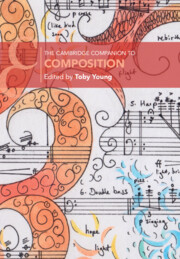
What is a composer, and what do they do? This introduction explores the idea of composition – in both Western traditions and further afield. It begins by tracing a brief cultural history of the composer in the classical music tradition and their shifting role in society, before considering a range of narratives and definitions of composition, challenging us to think about what the word ‘composition’ might mean for us in the twenty-first century.
There are as many ways of creating music as there are composers in the world, with a vast array of possible methods and practices. This book provides essential critical and practical tools for composers as they try to navigate this complex landscape, whilst also offering provocations for practitioners discovering their own voices and solidifying their place in their musical communities. Designed to be a companion in the truest sense, the book offers practical support throughout the creative process and thought-provoking insights on technical questions for a range of compositional approaches.
This chapter presents the patterns of composition in Slavic languages. In Slavic, most compounds are nouns (like čel-o-věkъ) and adjectives (like *bos-o-nògъ). Verbal compounds (like blag-o-sloviti ‘to bless’) are less frequent and less productive (as is generally the case in Indo-European languages). The author reviews patterns and phenomena of nominal, adjectival, adverbial, verbal, pronominal, and numeral composition.
We start by examining the current composition of the atmosphere, and then turn our attention to some of the most important chemical reactions that take place in the unpolluted atmosphere. In particular, we will introduce you to the hydroxyl radical, nature’s garbage collector. As well as the three well-known greenhouse gases, the IPCC refers to a wide range of other substances as Short-Lived Climate Forcers, including chemically reactive gases such as methane, ozone, nitrogen oxides, carbon monoxide, etc., and aerosols. The atmospheric fate of all these species needs to be understood. After that, we will examine the polluted atmosphere, particularly smog and acid rain. While this topic might not seem directly related to climate change, there are some useful lessons to be learned. We also include a short discussion on how we use isotope data to help narrow in on some of the more important processes in our environment.