To save content items to your account,
please confirm that you agree to abide by our usage policies.
If this is the first time you use this feature, you will be asked to authorise Cambridge Core to connect with your account.
Find out more about saving content to .
To save content items to your Kindle, first ensure no-reply@cambridge.org
is added to your Approved Personal Document E-mail List under your Personal Document Settings
on the Manage Your Content and Devices page of your Amazon account. Then enter the ‘name’ part
of your Kindle email address below.
Find out more about saving to your Kindle.
Note you can select to save to either the @free.kindle.com or @kindle.com variations.
‘@free.kindle.com’ emails are free but can only be saved to your device when it is connected to wi-fi.
‘@kindle.com’ emails can be delivered even when you are not connected to wi-fi, but note that service fees apply.
Porphyry and Iamblichus added further levels of virtue to Plotinus’ scale of virtues. In Chapter 8 I discuss Iamblichus’ On the Pythagorean Life, which presents Pythagoras as a model of the political virtues. I show how, on this level, Iamblichus takes over Epicurean ideas about serenity, freedom from disturbance, a balanced control of desires and bodily needs and how, more generally, the Epicurean biographical practice of praising philosophical heroes as models to be imitated anticipates Iamblichus’ presentation of the figure of Pythagoras. I note also a wider use of Epicurean ethical ideas in Late Antique Platonism, in particular on the level of political virtues, the virtues of the discipline of bodily desires.
Chapter 6 gives a survey of ethical themes in Plotinus. It begins with happiness (eudaimonia) as life at its highest degree, the life of intellect of which human soul is capable. The affairs of bodily existence have no part in this life of intellect, which is a perfect, joyful, peaceful state. To reach this state, virtue is required. Two sorts of virtue are distinguished: the ‘political’ virtues and the ‘higher’ (or ‘greater’) virtues, as stages in assimilation to the divine life of transcendent Intellect. The affairs of our bodily life concern us as souls which have a need, a natural ‘appropriation’, to take care of bodily lives, ours and that of others. Action in this bodily existence should be guided by practical wisdom, a wisdom guided by ‘premises’, i.e., norms derived from theoretical wisdom. Finally, I indicate the variety of texts composed by Plotinus’ Platonist successors where ethical themes may be found.
This chapter illustrates how Greek and Arabic sources influenced the thinking of early scholastic theologians working on the topic of human nature in four main areas. These are debates about the powers of the soul, the composition of the soul, the relationship between the body and the soul, and the theory of knowledge.
The chapter focuses on the experiences and representations of the shipboard community in the late nineteenth and early twentieth centuries, to explore the changes in the imagining of ‘people’ and questions of individual and collective identity. By closely reading the novels by Joseph Conrad, James Hanley, and B. Traven, alongside the theoretical works of Sigmund Freud, Gustave Le Bon, and Hannah Arendt, it argues how fictional form diagnoses and dramatises with singular power the gradual move from Victorian ideas of the ‘crowd’ to an interwar imagining of peoples’ history and the language of rights. In the process, the chapter addresses a range of issues, from questions of race, class, and the body to the condition of statelessness and the growth of proletarian consciousness, which push the maritime novel in new directions.
Hippocratic doctors discussed two forms of total loss of consciousness. The most common one, where they equated fainting with a separation of the soul, and another form - independent from the psuchê - where they saw the concurrence of numerous independent bodily symptoms that ended up in a swoon. The momentary disruption of cognitive functions that occurred during fainting, and their definite cessation with death made them conceive the soul as both a broad notion that subsumed numerous mental capacities (which transiently separated from the body during swoons) and as a life force that abandoned the body for good with death.
The analysis of total loss of consciousness illustrates the varied ways in which the different authors resolved - in their corresponding periods and contexts - the tension between body and soul. Despite their diverse approaches, all the medical writers under scrutiny took for granted the existence of a soul, its intervention in this kind of conditions, and its bonds to the body as determiner of the clinical presentation. Particularly, they grappled to organise the mental capacities and explain how they were affected in the different forms of impaired consciousness.
Total loss of consciousness is nowadays mostly framed as a global alteration of brain activity. In antiquity, doctors often alluded to this symptom with compound terms of psuchê or anima, and they understood the body and the soul to be involved - to different extents - in the phenomenon. Consequently, by exploring how they conceived this condition, it is possible not only to better understand their idea of consciousness, but also to get a hint of how the envisaged the relation between body and soul.
Unlike the other presentations, Galen associates both forms of total loss of consciousness, lepipsuchiê and sunkopê, with an affection (whether direct by sympathy) of the heart. Namely he localises the problem in the seat of the spirited part of his tripartite soul. Nevertheless, the loss of pneuma provides a link with the affection of the rational soul, whereby both conditions cause total loss of movement and perceptions. The idea of the soul as a life principle is also present in this author, because although total loss of consciousness is associated with the temporary depletion of pneuma (and finishes when it is replenished), the separation of the soul does cause death.
Post-Hellenistic authors took some Hippocratic ideas and terminology to build their own theories about the different forms of losing consciousness, and about the relationship between body and soul. Also, they presented a clearer distinction between the two forms of total loss of consciousness (to the extent that they described a new disease, where the body was primarily affected but not the soul). Celsus’ description of fainting suggests that his idea of soul was influenced by Epicurean corpuscular theories with a rational and an irrational component. Aretaeus, in his turn, was majorly concerned with the mechanisms that produced fainting, where he included a tangle of ideas that included loss of heat, loss of tension, affection in the blood or in the heart, and sometimes, the separation of the soul. However, his idea of psuchê was rather erratic, and his way of organizing mental capacities was not consistent throughout the treatise.
The 18-item Body, Eating, and Exercise Comparison Orientation Measure (BEECOM; Fitzsimmons-Craft, Bardone-Cone, & Harney, 2012 assesses body-, eating-, and exercise-related social comparison tendencies. The BEECOM [scale abbreviation] can be administered online and in person to adults and is free to use in any setting. This chapter first discusses the development of the BEECOM and then provides evidence of its psychometrics. More specifically, the BEECOM has been found to have three-factor structure within exploratory and confirmatory factor analyses and demonstrates invariance across age, gender, and eating disorder history status. Internal consistency reliability, test-retest reliability, convergent validity, discriminant validity, and incremental validity support the use of the BEECOM. Next, this chapter provides the BEECOM items in their entirety, instructions for administering the BEECOM to participants, the item response scale, and the scoring procedure. A nine-item abbreviated form is offered, and translations are provided. Logistics of use, such as permissions, copyright, and contact information, are provided for readers.
Suárez offered a rich analysis of three types of distinction, which continued to be important in early modern philosophy: the conceptual distinction (distinction of reason), the real distinction, and the modal distinction. They are commonly understood in terms of separability, but for Suárez, separability was merely a sign of specific types of distinctions. And he argued that mutual separability is neither necessary nor sufficient for a real distinction. Furthermore, he required knowledge of actual cases of mutual separation as a sign of real distinction. This chapter examines the real distinction and modal distinction in early modern philosophy. Descartes inherited Suárez’s view that separability is a mere sign and examination of Suárez’s theory results in elegant solutions to thorny problems in Descartes’s theory of body. Finally, the notion of a mode played an important role in arguments for immaterial beings in Descartes and various other early modern philosophers, including Leibniz.
Bridget Nichols shows how important the bodily dimension of the liturgy is, especially because it is steadily associated with mental and cognitive activities. In this context, she pays particular attention to the role of the senses, which impacts greatly how not only big celebrations and ceremonies but also small gestures are experienced.
This chapter will explore the fundamentals of drama, both as a skill and as a methodology for teaching other curricular requirements. It also offers practical activities and assessment practices, as well as theoretical underpinnings and methods to further develop teaching methodologies beyond this text. You will have the confidence and knowledge to engage learners of all ages and abilities to explore their own ideas through dramatic performance and to evaluate the performance of others. The key to drama is not only the development of skills, but also the ability to apply processes and value these processes as equal to the end product of a drama activity. The application of drama in literacy, numeracy and other areas of learning will be embedded throughout. A great deal of the focus on drama in the classroom in Australia is from a western perspective.
Charles Brockden Brown’s Edgar Huntly (1799) narrates two scenes of panther attacks. In the first scene, Huntly’s mind is paralyzed, while in the second, Huntly’s body kills a stalking panther by hurling a tomahawk across a dark cave, an effort stemming from our bodily “constitution.” This introduction argues that this artist not only troubled the mind-centered ontology of consciousness—the Cartesian idea of the mind’s dominance over the body—but also explored the ontological alternatives that centered the expressions of our material body’s “constitution.” It both uncovers the posthumanist accents of this work, and reveals the way it prods us to refurbish posthumanism by historicizing it. Starting with Brown, this introduction thus recovers a set of texts focused on “minding the body,” on not simply eroding the philosophical distinction between the mind and body in order to trouble a mind-centered ontology and imagine a body-centered alternative to it, as posthumanism does. It also reveals the way artists used the expressive agency of these historical bodies to imagine less repressive alternatives to nineteenth-century structures of power—including chattel slavery, market capitalism, and patriarchy—whose claims to dominance involved reducing the body to little more than mindless matter.
Henry Box Brown not only mailed himself in a box from Richmond in Philadelphia in 1849, but he also remediated this experience of embodiment later in competing slave narratives, on stage, in a panorama, and through his role as a magician and mesmerist. In these four “acts,” Brown uses the representation of his experiences of Black embodiment across various media both to support and—simultaneously—to undercut the mind-centered ontology that structured the system of chattel slavery’s reduction of Blackness to mindless matter. Rather than imagine ontological drift, as Bird does, or ontological betweenness, like Forrest, Brown uses different representations of Black embodiment to imagine existence as always already ontologically doubled, as something governed by the mind-centered paradigm that demeans the body, and by the body-centered paradigm that makes the material body’s expressive agency crucial for the fullest articulation of humanity. Brown suggests that consciousness emerges simultaneously from the mind and the body, and that by carefully curating these overlapping, and doubled, forms of consciousness, Black subjects can “mind the body” in order to imagine alternatives to white culture’s dehumanizing of Blackness.
In his intensely physical acting, the nineteenth-century actor, Edwin Forrest, crafted a working-class theatrical aesthetic that imagined our existence not as drifting, but as ontologically between, an ontological third term distinct from both the mind-centered and the body-centered ontological paradigms. By recovering the way Forrest staged his own muscular—and white—body in his interpretation of Shakespeare’s Othello (1826) and in Bird’s The Gladiator (1831), this chapter argues that Forrest used the experience of his labored at, and laboring, body to perform this ontological betweenness as an alternative to the antebellum market’s alienation and regulation of working-class bodies. In staging the agency of white, working-class bodies against Black inagentic bodies on stage, Forrest’s performance of ontological betweenness “minded the body” by offering his adoring working-class audiences less alienated—but racially complicated—ways to perform their own material embodiment in the early nineteenth century.
This chapter explores the medically-trained writer, Robert Montgomery Bird, and his fraught experience of the way the competing ontological paradigms that inflected Edgar Huntly also conditioned early nineteenth-century medical discourse. Bird uses his picaresque novel, Sheppard Lee (1836), to interrogate what was called “regular” medical discourse and its mind-centered ontology, and to imagine instead the ontological possibilities that result from the body-centered ontology of metempsychosis. For Bird, metempsychosis involves our consciousness migrating from one body to another, and being defined by its different embodiment. In representing the lived experience of both white and Black embodiment, Bird uses metempsychosis to interrogate “regular” medicine’s mind-centered ontological paradigm, even as he puts pressure on “irregular” medicine as well. As I argue, Bird understands conscious existence as ontological drift, as I call it, a far less clear, but far more capacious ontology than either regular or irregular medical discourses entertain. By “minding the body” in this way, Bird uses his novel’s interrogation of the mind-body relationship to imagine a less repressive, but not unproblematic, form of racialized conscious existence in the antebellum period.
The plays of Sean O’Casey are filled with aches and pains, debilitating diseases, and traumatic wounds. He was himself a disabled writer. Furthermore, his presentation of disease and disability is inseparable from his critique of class, militarism, and masculinist ideology. This chapter shows how O’Casey’s depictions of disability are more nuanced than they may at first appear. He does demonstrate an essentialist tendency to see female resilience as a triumph over the failures of male impairment, yet, in plays such as Juno and the Paycock and The Silver Tassie, O’Casey allows space for contrary readings that speak with relevance to contemporary understandings of disability.
This book recovers an important set of American literary texts from the turn of the nineteenth century to the Civil War that focus on bodies that seem to have minds of their own. Artists such as Charles Brockden Brown, Robert Montgomery Bird, Edwin Forrest, Henry Box Brown, Elizabeth Stuart Phelps, and Herman Melville represented the evocative expressiveness of these literary bodies. With twitches and roars, flushes and blushes, these lively literary bodies shaped the development of American Literature even as they challenged the structures of chattel slavery, market capitalism, and the patriarchy. Situated within its historical context, this new story of nineteenth-century American Literature thus reveals how American literary expression-from novels to melodramas, from panoramas to magic tricks-represented less repressive, more capacious possibilities of conscious existence, and new forms of the human for those dehumanized in the nineteenth century.
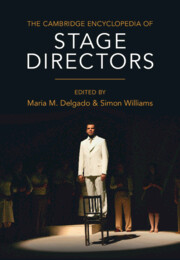
With a broader range of entries than any other reference book on stage directors, this Encyclopedia showcases the extraordinary diversity of theatre as a national and international artistic medium. Since the mid nineteenth century, stage directors have been simultaneously acclaimed as prime artists of the theatre and vilified as impediments to effective performance. Their role may be contentious but they continue to exert powerful influence over how contemporary theatre is made and engaged with. Each of the entries - numbering over 1,000 - summarises a stage director's career and comments on the distinctive characteristics of their work, alluding to broader traditions where relevant. With an introduction discussing the evolution of the director's role across the globe and bibliographic references guiding further reading, this volume will be an invaluable reference work for stage directors, actors, designers, choreographers, researchers, and students of theatre seeking to better understand how directors work across different cultural traditions.