To save content items to your account,
please confirm that you agree to abide by our usage policies.
If this is the first time you use this feature, you will be asked to authorise Cambridge Core to connect with your account.
Find out more about saving content to .
To save content items to your Kindle, first ensure no-reply@cambridge.org
is added to your Approved Personal Document E-mail List under your Personal Document Settings
on the Manage Your Content and Devices page of your Amazon account. Then enter the ‘name’ part
of your Kindle email address below.
Find out more about saving to your Kindle.
Note you can select to save to either the @free.kindle.com or @kindle.com variations.
‘@free.kindle.com’ emails are free but can only be saved to your device when it is connected to wi-fi.
‘@kindle.com’ emails can be delivered even when you are not connected to wi-fi, but note that service fees apply.
Advocates for animal rights often position the killing of animals for food or clothing alongside discussions of state-sponsored killings of humans. This chapter argues that stories of widespread animal disease outbreaks – what veterinary scientists call “epizootics” – and the policies we adopt to contain them offer fruitful ways to strengthen these ethical and political discussions in human–animal studies. Because animal diseases can threaten economic systems, governments often implement “stamping out” policies to contain them that require the killing of large numbers of sickened animals. Because some diseases can cross over between nonhuman and human populations, epizootic outbreaks have also catalyzed “One Health” initiatives within the medical and veterinary sciences that view human and nonhuman sciences through a shared sense of pathogen vulnerability. By examining literary accounts of these developments, we gain a clearer sense of the limits of ethical, political, and medical models that frame the animal world as fundamentally separate from our human world.
Chapter 4 provides an environmental interpretation of Kant’s aesthetic and teleological theory as developed in the Critique of the Power of Judgment. To put Kant’s insights in dialogue with new contributions in climate aesthetics, I begin with Kant’s theory of the sublime. I claim that Kant’s account of the dynamical sublime has important moral and political relevance for climate philosophy despite its human-centered focus. Next, I look into Kant’s account of natural beauty, which I suggest justifies duties against environmental degradation. I also touch on Kant’s duties to love nature’s harmony and purposes in light of ecological stewardship. The chapter concludes with a look into Kantian teleology from the Critique of Judgment. I propose that teleological judgment can be used to motivate protection of non-beautiful aspects of ecosystems, especially in light of climate-related biodiversity loss.
Chapter 1 motivates a Kantian analysis of climate change by examining early criticisms against Kant in the field of animal ethics. If Kant’s philosophy is ill-suited for justifying concern for nonhuman animals, its suitability for broader environmental issues remains unclear. After evaluating passages from Kant’s critical texts that motivate these criticisms, I assess a classic set of objections to the standard reading of Kant’s theory from Christina Hoff. After analyzing attempts by contemporary Kant scholars to respond to her challenge, I conclude with the merits of the standard reading of Kantian ethics for the sixth mass extinction debate.
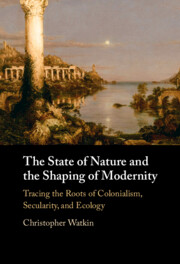
The state of nature is a powerful idea at the heart of the fragmented and sometimes conflicting stories the modern West tells about itself. It also makes sense of foundational Western commitments to equality and accumulation, freedom and property, universality and the individual. By exploring the social and cultural imaginaries that emerge from the distinct and often contradictory accounts of the state of nature in the writing of Hobbes, Locke and Rousseau, The State of Nature and the Shaping of Modernity offers a fresh perspective on some of the most pressing debates of our time, showing how the state of nature idea provides a powerful lens through which to focus the complex forces shaping today's political and cultural landscape. It also explores how ideas about human nature and origins drive today's debates about colonialism, secularism, and the environment, and how they can shed new light on some of society's most heated debates.
This introductory chapter outlines the motivation behind the book, critically discusses anthropocentrism in economics, and introduces the distinction between the direct and indirect approaches. It also puts the book into perspective, highlighting its overall contribution.
The relationship between One Health and human rights is both symbiotic and antagonistic. The objectives of One Health align with human rights to the extent that they advance specific rights, particularly the rights to life and health. One Health also promotes human dignity, the foundation of human rights, by improving environmental conditions and addressing threats to health that impact people’s lives. Yet the inherent anthropocentrism of human rights sits uneasily with One Health’s commitment to human, animal, and environmental health. The growing field of environmental human rights may offer some way forward for resolving this tension and advancing the legal framework for One Health, while also highlighting some of the potential pitfalls along the way. Early environmental human rights positioned the environment as a precondition for the enjoyment of human rights. More recently the right to a healthy environment has been recognised more widely, expanding the potential for human rights objectives to include protection of environmental health, and perhaps also animal health. This chapter will explore the lessons that human rights law might offer and the potential for the right to a healthy environment to temper the anthropocentrism of human rights in a way that better promotes the triple objectives of One Health.
In this chapter we argue that One Health approaches indicate the need for a re-conceptualisation of public health law. From a regulatory perspective, to address public health effectively we need to attend to our interdependencies with each other, with other animals, and with the environment. This chapter argues that a failure to recognise the interdependence between humans and nature unnecessarily limits the scope of public health law, as it restricts the regulatory interventions and actors available to achieve desired public health outcomes. One Health offers an opportunity to broaden our understanding of what it means to regulate public health in a non-anthropocentric manner. It also allows us to acknowledge that non-state actors that advance animal and environmental health via standard-setting, gathering information, and influencing behaviour can mitigate risks to public health. A core function of public health is prevention and re-conceptualising the scope and actors involved in public health law to encompass the more holistic approach suggested by One Health that is critical to its continued evolution as the twenty-first century progresses.
Animals routinely suffer violence by humans, especially during war, but it is unclear how much people in conflict environments express concern for animal welfare. Based on a 2,008-person survey in Ukraine in May 2024, we find that respondents are anthropocentric, prioritizing human over animal suffering; biocentric, regarding both as important; or, in a small minority, zoocentric, emphasizing animal over human suffering. Experimental priming on violence against animals during the Russia–Ukraine war has limited effect on changing attitudes toward animal welfare, but it does increase resource allocation to animal relief organizations. A war crimes punishment experiment also shows that while respondents sanction perpetrators of human suffering more severely than perpetrators of animal suffering, violence against animals is still strongly penalized, indicating appreciation for animal rights, justice, and accountability. We reflect on the implications of our findings for speciesist versus posthumanist understandings of suffering during war.
Situated amidst the breathtaking Himalayas and the Arabian Sea, Pakistan grapples with escalating environmental challenges, compounded by the impending threat of climate change. This article delves into the imperative of reshaping primary education in Pakistan to address the pressing issues of environmental degradation and biodiversity loss. The article endeavours a content analysis of the themes prevailing in the primary textbooks which uphold anthropocentric and capitalist values. Recognising education as a catalyst for change, the article argues for a paradigm shift, particularly within the realms of primary school science and general knowledge education, by integrating eco-justice pedagogies and contemplative approaches. Prevailing educational paradigms, heavily influenced by Western perspectives, often reinforce anthropocentric and capitalist ideologies that prioritise human exploitation of nature. To address these inherent shortcomings, the article advocates for cultivating a love for nature from an early age as a means of fostering a profound connection between children and the natural world.
This chapter takes three plant types – the shady tree, the happy crop, and the wayside flower – as starting points for an exploration of ancient attitudes towards plants as both in harmony with and divergent from human worldviews and goals. It demonstrates how the same or similar plants can represent very different moods in different settings, sometimes positively reinforcing a human view, sometimes obstructing it. The connection between the sense of a human lifespan and the longevity or brevity of plants’ lives is forged and reforged in different contexts, while very human concerns with morality and aesthetics are differently projected onto these three broad categories of plant. Ranging from the earliest Greek works to the mid-imperial period of Rome, the chapter highlights both some continuities and some differences emerging in the course of around 900 years of literary engagement with plants.
Humankind has entered the Anthropecene era. The world faces numerous threats to the survival of humanity and other species. While diverse disciplines have risen to meet global challenges, psychology has largely focused on individual aspects such as cognition, emotion, and behavior. This chapter aims to support psychology in adapting to global challenges by introducing a novel tool, the panological model. This model comprehensively accounts for the complex relationships between multiple levels of analysis. The first part of the chapter introduces the core characteristics and innovations of the panological model, which seeks to expand upon Uri Bronfenbrenner’s bio-ecological model. These advancements include: a paradigm shift from anthropocentrism to ecocentrism, a new systemic vision, and a redefiniton of the role of time. The second part of the chapter combines the model with the principles of global fairness, wellness, and worthiness. This integration shows how psychology can gain a deeper understanding of macro-level phenomena, enabling it to address pressing global challenges like international conflicts, pandemics, and environmental sustainability.
This chapter addresses some of the scientific, philosophical and theological arguments brought to bear on the debates surrounding human–robot relationships. Noting that we define robots through our relationships with them, it shows how factors such as emotion and agency can indicate things such as a theory of mind that condition users to expect reciprocal relationships that model a sense of partnership. These factors are important in ‘lovotics’, or a trend in social robotics to produce robots that people want to develop relationships with. Such relationships, however, at least given current capabilities in robotics, will always fall short of conditioned expectations because robots, rather than being full partners, are largely reducible to the self or user. The chapter introduces the notions of anthropomorphism and anthropocentrism to demonstrate these critiques, and then moves on to consider alternative figurations of relationships – drawing in particular on articulations of relationality – that may enable us to rethink how we image and imagine robots.
We propose researchers of environmental violence have much to gain by considering the relevance of degrowth critiques in characterizing and addressing environmental violence. We argue a more dynamic, intersectional, and less anthropocentric definition of environmental violence reveals how pervasive forms of violence against the biosphere are still embedded in many contemporary strategies for sustainability. Recognizing these limits as well as their overlaps with degrowth can help us better identify assumptions and practices that address environmental violence’s sources and far-reaching consequences.
A few dozens of solutions to the Fermi paradox have been proposed in the past. The most relevant ones will be concisely discussed in this paper. They will be classified as follows: exceptionality solutions, annihilation solutions and communication barrier solutions. The argument will be advanced that all existing resolutions to the Fermi paradox are in their essence anthropocentric. The epistemological groundwork of anthropocentrism will be discussed. Conversely, in this paper, a non-anthropocentric solution to the Fermi paradox will be proposed: the ‘lasting human epistemological limitations solution’. This resolution to the Fermi paradox acknowledges that human epistemological capacities are limited to the degree that not only extraterrestrial forms of life may be unobservable to the human perceptive apparatus, but that universes may exist around humans with forms of life, inorganic matter or entities of any other type that humans are incapable of perceiving. In light of the revolutionary developments in theoretical physics, it is likely that in the future these developments will be reflected in increasingly non-anthropocentric solutions to the Fermi paradox.
This chapter argues that to practise social work in the Anthropocene it is crucial to decentre the human. This decentring does not involve devaluing the human but embedding their experience in the non-human world. We begin with a discussion of the Anthropocene along with the ecological crises and the growth in population, production and consumption as issues that underpin it. We highlight the importance of moving from anthropocentrism to Gaia in the way we understand the relationship between the human and the non-human world. This shift will enable social workers to rethink the social, the community and human rights in more ecocentric ways and will have implications in the ways social workers engage in activism and practice to affect social change.
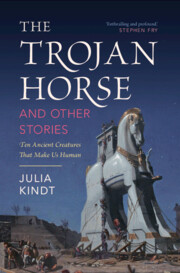
What makes us human? What, if anything, sets us apart from all other creatures? Ever since Charles Darwin's theory of evolution, the answer to these questions has pointed to our own intrinsic animal nature. Yet the idea that, in one way or another, our humanity is entangled with the non-human has a much longer and more venerable history. In the West, it goes all the way back to classical antiquity. This grippingly written and provocative book boldly reveals how the ancient world mobilised concepts of 'the animal' and 'animality' to conceive of the human in a variety of illuminating ways. Through ten stories about marvelous mythical beings – from the Trojan Horse to the Cyclops, and from Androcles' lion to the Minotaur – Julia Kindt unlocks fresh ways of thinking about humanity that extend from antiquity to the present and that ultimately challenge our understanding of who we really are.
Edited by
Cecilia McCallum, Universidade Federal da Bahia, Brazil,Silvia Posocco, Birkbeck College, University of London,Martin Fotta, Institute of Ethnology, Czech Academy of Sciences
The fields of critical animal studies and feminist new materialisms have important implications for anthropology. In attending to ethics in human-animal relations, these fields not only decenter but also destabilize the very category of the Human. In conversation with critical animal studies and feminist anthropology, multispecies ethnography thinks with nonhumans and honors their specificities as both individuals and species. Multispecies ethnography encourages analysis of humans’ entanglement with other species as well as thinking about seemingly inanimate matter such as rocks as animate entities. Recognizing the animacy of objects offers interesting and important insights for ethnography. In this chapter, the author provides an overview of the cross-pollination of the multispecies and new materialist turns to explore how feminist and queer studies of the non/human are important for anthropology. Multispecies and feminist new materialist interrogations of sexuality are discussed, focusing on their innovative and important ethical contributions to human understandings of sexuality. The author argues that anthropology is uniquely positioned to intervene further in this conversation and posits that queering multispecies ethnography, rather than simply using nonhuman animals to reify or resist human formations of sexuality, can offer an opening to interrogate sexuality as a multispecies entanglement.
This chapter examines the influence of William Bartram´s Travels through North and South Carolina, Georgia, East and West Florida on the writing of Wordsworth and Coleridge in the 1790s and highlights the uniqueness of Bartram´s eco-centric approach to sublimity in early American thinking about the natural world. A practiced botanist and natural illustrator, Bartram delights in cataloguing plant and animal lives, but the Travels also offers a significant intervention into trans-Atlantic discourses of sublimity. Bartram´s sublime overwhelms the perceiver with plentitude rather than terror, and he narrates experiences of sublimity from amidst the rich life he delights to describe rather than at a distance. He emphasizes continuity between human and more-than-human lives. Bartram also resists the nationalistic orientation of his American contemporaries, attending to native and local epistemologies. The chapter concludes with comparisons between passages of the Travels, Coleridge’s “Kubla Khan,” and Wordsworth’s “Ruth.”
Making good decisions about sustainability requires explicit consideration about what criteria to use. Three grand traditions dominate most policy discussions: utilitarianism, deliberative ethics and anarchism/libertarianism. The chapter proposes seven criteria for good decisions. Three are criteria for the outcomes. A good decision should enhance the well-being of humans and other species while reducing stress on the environment; be efficient in allocating resources; and enhance individual freedoms. Four are criteria about process: take account of uncertainty in both facts and values, as well as value conflicts; promote fairness in both the decision process and its outcomes; rely on human cognitive strengths and compensate for weaknesses; and allow for social learning.
The subject of environmental science (ES) was introduced into Bhutanese schools to educate students about sustainable environmental conservation. This study aims to answer the research question: What are the impacts of studying ES on Bhutanese students for environmental sustainability? The study employed mixed methods to draw data from interviews with six principals, 14 teachers and 189 students, and surveys with 14 teachers and 563 students from six secondary schools. Participants indicated the development of students’ Gross National Happiness value of sustainable environmental and socioeconomic development. However, an anthropocentric perspective appeared to be dominant among participants, suggesting a need to develop ecocentric worldviews to support sustainability. Most students noted their changed behaviours, development of optimism, stewardship and agency towards ecological sustainability from studying ES. To prepare students to take action to address sustainability issues, teachers could leverage students’ optimism, agency and stewardship through action-oriented approaches to teaching ES.