Refine search
Actions for selected content:
5 results
EPICURUS AND THE REJECTION OF DETERMINISM: EPISTLE TO MENOECEUS 133
-
- Journal:
- The Classical Quarterly , First View
- Published online by Cambridge University Press:
- 10 December 2025, pp. 1-11
-
- Article
-
- You have access
- Open access
- HTML
- Export citation
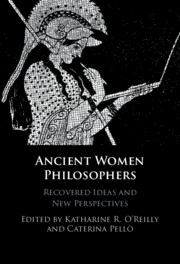
Ancient Women Philosophers
- Recovered Ideas and New Perspectives
-
- Published online:
- 17 August 2023
- Print publication:
- 31 August 2023
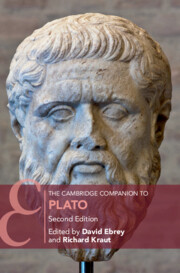
The Cambridge Companion to Plato
-
- Published online:
- 21 July 2022
- Print publication:
- 04 August 2022
4 - On the need to re-examine the relationship between the mathematical sciences and philosophy in Greek antiquity
-
-
- Book:
- Anachronisms in the History of Mathematics
- Published online:
- 19 July 2021
- Print publication:
- 22 July 2021, pp 105-130
-
- Chapter
- Export citation
5 - The Kierkegaardian ideal of “essential knowing” and the scandal of modern philosophy
-
-
- Book:
- Kierkegaard's 'Concluding Unscientific Postscript'
- Published online:
- 04 August 2010
- Print publication:
- 29 July 2010, pp 87-110
-
- Chapter
- Export citation
