To save content items to your account,
please confirm that you agree to abide by our usage policies.
If this is the first time you use this feature, you will be asked to authorise Cambridge Core to connect with your account.
Find out more about saving content to .
To save content items to your Kindle, first ensure no-reply@cambridge.org
is added to your Approved Personal Document E-mail List under your Personal Document Settings
on the Manage Your Content and Devices page of your Amazon account. Then enter the ‘name’ part
of your Kindle email address below.
Find out more about saving to your Kindle.
Note you can select to save to either the @free.kindle.com or @kindle.com variations.
‘@free.kindle.com’ emails are free but can only be saved to your device when it is connected to wi-fi.
‘@kindle.com’ emails can be delivered even when you are not connected to wi-fi, but note that service fees apply.
Pericles, Prince of Tyre has a great deal to say about listening, especially in contrast to looking. This Chapter demonstrates that in Pericles visual modes of perception are imbricated in regimes of power and exploitation, while audition is presented as a way out. When characters in the play lend their ears to sounds and voices that are all-too-often silenced, ignored, or drowned out – especially those belonging to women and the natural world – they are miraculously redeemed and regenerated. Marina’s voice, in particular, drives the drama toward its happy conclusion. To account for the power of her voice, I turn to Hélène Cixous, Julia Kristeva, and David Kleinberg-Levin, each of whom takes aim at the oppressiveness of logocentrism, celebrating instead the enlivening energies of the pre-semantic and extra-verbal. As do these authors, Pericles associates the plenipotent voice of the play with the feminine, the more-than-human, and the beyond-meaning, indicating that these can usher us into productive and ethical relationships with others and our world.
This Chapter considers the significance of voice in Coriolanus, especially the way voices are located within bodies. It shows how the patricians situate their voices in the “worthier” parts of the body and the citizens’ voices in the “worser,” leveraging anti-corporeal and anti-materialist ideologies to authorize their own speech and discredit the citizens’. Nevertheless, the voices in this play are highly mobile. They repeatedly move about within bodies and between bodies, undercutting the patricians’ conservative approach and allowing us to envision radical alternatives. Invoking work by Emmanuel Levinas and Adriana Cavarero, the Chapter concludes by fleshing out these radical alternatives.
This Chapter examines the ways Prospero vocally projects his authority in The Tempest, either on his own or in conjunction with other entities. It unpacks the vast range of vocal tricks Prospero uses to gain and wield power over others, especially his disgruntled slave, Caliban. Drawing on the work of Jennifer Lynn Stoever, it shows how Prospero imposes and enforces a “sonic color line” that punishes Caliban’s vocal difference in a way that enacts racial oppression through the ear. To the degree that it does this, the play chillingly anticipates racialized listening practices that remain with us today. Nevertheless, the play’s conclusion gives us reason to believe that Prospero perhaps comes to recognize, regret, and even repent of his vocal tyranny. Though the drama stops short of enacting a truly ethical dialogue, this possibility calls out to us, albeit faintly, at the end of the play.
This chapter examines the changing reception of Charles Harpur’s poetry. Firstly, it considers the valuing of Harpur as a nature poet, and secondly, the impact of literary theory on interpretative approaches. It then outlines a third phase that is text-historical or text-critical, and which is attentive to the poems’ multiple moments of composition and revision. The chapter discusses Harpur’s navigation of colonial readership, and how he experimented with a range of voices. It includes an examination of his translations that are related, in part, to Harpur’s fascination with the role of the poet and with other poets, such as Coleridge.
How we find a voice to tell our story. Variations in first-person narrators; reflecting background and personality in speech. Engaging with the challenges presented by dialogue in historical fiction; accommodating regional accent and dialect.
In English, either the agent or the patient of an event can be topicalised. The active codes the first, unmarked option (A cat broke the vase), the second is achieved by the passive. This chapter discusses the complex history of the second option. While in Old English, passives were primarily adjectival. From Middle English onward, they became increasingly verbal, coding the outcome of a transitive event, and were used as a viewpoint construction, or to structure the discourse. Word order was also changing, restricting initial position more and more to an ever more versatile subject. The passive, catering for this versatile subject position, expanded to cross-linguistically uncommon forms such as the prepositional and recipient passives, and so did the novel mediopassive. The expansion saw its completion with the progressive passive in the eighteenth century. Special attention is devoted to the interconnectedness of these different passives, and their changing relations.
History is not just a recounting of events; it is shaped by narrative style, cognitive frameworks, and the selection of time frames, all of which influence how events are understood. The chapter delves into the ‘linguistic turn’ in history, where language plays a crucial role in expressing and interpreting the past. Key elements of historical discourse, including narration, voice, time, and causation, are examined in depth.
The chapter also addresses the challenges of teaching history in a second language (L2), emphasizing the need for specialized instructional tools and rhetorical models. With references to a comprehensive chart of integrated descriptors for history across the curriculum and a genre map for bilingual history teaching, it underscores how controlling historical discourse through language can influence societies. Thus, this work also highlights the intersection of history, language, and ideology, especially in multilingual contexts.
This chapter situates the poets' collections from Long Ago (1889) through Wild Honey from Various Thyme (1908) within late-nineteenth-century ideas about lyric as simultaneously sung and printed, private and public, enclosed and open. Departing from a 1906 diary entry proclaiming the draw of their 'lyric bedrooms', this chapter considers how Michael Field write lyric poems that negotiate between enclosed indoor space and outdoor space, between the personal and the poetic present and past, and between states of sleep and consciousness, between poetry idealised as oral and aural while realised as printed and visual. Michael Field’s poetry collections present a palimpsest of the past and present, both of their personal, domestic lives and of the newly consolidated genre of lyric poetry in the fin de siècle.
An avenue for the progress of areal linguistics in South America is the investigation of the geographical distribution of specific features, such as the expression of sociative causation. Sociative causation is a particular type of causation where the causer not only makes the causee do an action but also participates in it (Shibatani & Pardeshi, 2002). Guillaume & Rose (2010) hypothesize that dedicated sociative causative markers are an areal feature of South America, in particular western South America. The aim of the present paper is to reassess the spatial distribution of these markers based on a large worldwide sample of 325 languages. The results show that dedicated sociative causative markers are significantly more frequent in South America compared to the rest of the world.
Cortisol is a well-established biomarker of stress, assessed through salivary or blood samples, which are intrusive and time-consuming. Speech, influenced by physiological stress responses, offers a promising non-invasive, real-time alternative for stress detection. This study examined relationships between speech features, state anger, and salivary cortisol using a validated stress-induction paradigm.
Methods:
Participants (N = 82) were assigned to cold (n = 43) or warm water (n = 39) groups. Saliva samples and speech recordings were collected before and 20 minutes after the Socially Evaluated Cold Pressor Test (SECPT), alongside State–Trait Anger Expression Inventory (STAXI) ratings. Acoustic features from frequency, energy, spectral, and temporal domains were analysed. Statistical analyses included Wilcoxon tests, correlations, linear mixed models (LMMs), and machine learning (ML) models, adjusting for covariates.
Results:
Post-intervention, the cold group showed significantly higher cortisol and state anger. Stress-related speech changes occurred across domains. Alpha ratio decreased and MFCC3 increased post-stress in the cold group, associated with cortisol and robust to sex and baseline levels. Cortisol–speech correlations were significant in the cold group, including sex-specific patterns. LMMs indicated baseline cortisol influenced feature changes, differing by sex. ML models modestly predicted SECPT group membership (AUC = 0.55) and showed moderate accuracy estimating cortisol and STAXI scores, with mean absolute errors corresponding to ∼ 24–38% and ∼16–28% of observed ranges, respectively.
Conclusion:
This study demonstrates the potential of speech features as objective stress markers, revealing associations with cortisol and state anger. Speech analysis may offer a valuable, non-invasive tool for assessing stress responses, with notable sex differences in vocal biomarkers.
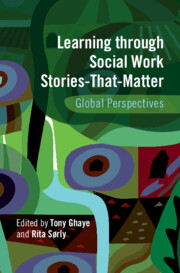
In our increasingly tumultuous world, this book offers insight and inspiration through personal narrative. It collects the accounts of twenty-seven social workers and those in academia based in five continents, surveying a wide range of environments, communities, and systems. Each narrative serves as a testament to the profound intersections of relationships, emotions, and experiences, encapsulating stories of genuine human significance. Advocating for the cultivation of three essential intelligences – social intelligence (SQ), emotional intelligence (EQ), and experiential intelligence (XQ) – the book prompts readers to grasp the nuanced power dynamics inherent in each tale. As a prompt to critical reflection that guides readers towards self-discovery and professional identity, this collection is ideal for graduate students and researchers in social work.
This chapter will explore the fundamentals of drama, both as a skill and as a methodology for teaching other curricular requirements. It also offers practical activities and assessment practices, as well as theoretical underpinnings and methods to further develop teaching methodologies beyond this text. You will have the confidence and knowledge to engage learners of all ages and abilities to explore their own ideas through dramatic performance and to evaluate the performance of others. The key to drama is not only the development of skills, but also the ability to apply processes and value these processes as equal to the end product of a drama activity. The application of drama in literacy, numeracy and other areas of learning will be embedded throughout. A great deal of the focus on drama in the classroom in Australia is from a western perspective.
Laryngeal dysplasia is a pre-cancerous lesion within the larynx. This study aims to identify factors influencing progression to cancer by analysing long-term follow-up data.
Methods
Data from 221 patients diagnosed between 2005 and 2017 were reviewed retrospectively. Patient demographics, treatment strategies and follow-up results were compared.
Results
Progression to cancer occurred in 26 patients (11.7 per cent). A significant association was found between cancer progression and initial biopsies obtained from the anterior commissure (34.6 per cent in progressing cases vs. 6.2 per cent in non-progressing; p < 0.001). Carcinoma in situ cases showed a higher progression rate (21.7%) compared to mild dysplasia (3.4 per cent) (p = 0.007). The group with cancer progression also had higher rates of other cancers (15.4 per cent vs. 2.1 per cent; p = 0.008), including lung cancer (11.5 per cent vs. 0 per cent; p = 0.001).
Conclusion
The study determined an 11.7 per cent progression rate of laryngeal dysplasia to cancer. Lesions involving the anterior commissure carried an approximately 8.1-fold increased risk of progression.
Building on the experience of Russian antiwar emigration in 2022, this article reinterprets the categories of “exit” and “voice” to better understand dissent under repressive political regimes. It argues that exit can function as a form of voice in contexts where other forms of voicing discontent are effectively eliminated by repression. This perspective on exit opens the category of voice to a normative conceptualization, defining it as an expression of civic identity. Acting on this identity in response to Russia’s war on Ukraine leads dissenting citizens either into self-imposed exile or inner exile. The article identifies three key modalities of voice available to dissenting citizens: exit-as-voice, voice-after-exit, and oblique voice. In all these modalities, voice is primarily performative, shaped by the political and ethical constraints that emerge from the interplay between repression and resistance. The article draws on an autoethnography of exit within Russian academia and on accounts of resistance both inside and outside Russia.
Chapter 6 treats Balkan convergence involving morphology and morphosyntax more generally, focusing particularly on inflectional morphology. Attention is given to categories and to forms, as well as the special, and often nuanced, functions and semantic range of particular items. Convergence involving nouns and noun phrases is documented, with regard to case, deixis, definiteness, gender, number, and adjectival modification. Particular attention is given to the development of analytic structures. Regarding verbs and verb phrases, convergence is discussed in the categories of tense, aspect, mood, evidential marking, voice, and valency.
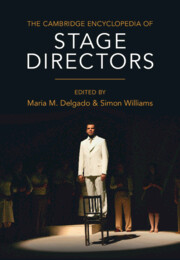
With a broader range of entries than any other reference book on stage directors, this Encyclopedia showcases the extraordinary diversity of theatre as a national and international artistic medium. Since the mid nineteenth century, stage directors have been simultaneously acclaimed as prime artists of the theatre and vilified as impediments to effective performance. Their role may be contentious but they continue to exert powerful influence over how contemporary theatre is made and engaged with. Each of the entries - numbering over 1,000 - summarises a stage director's career and comments on the distinctive characteristics of their work, alluding to broader traditions where relevant. With an introduction discussing the evolution of the director's role across the globe and bibliographic references guiding further reading, this volume will be an invaluable reference work for stage directors, actors, designers, choreographers, researchers, and students of theatre seeking to better understand how directors work across different cultural traditions.
Recurrent respiratory papillomatosis is a benign disease caused by human papillomavirus that often requires frequent surgical intervention. In the UK, microdebridement is the most common technique compared to 3.3 per cent of procedures performed with coblation. This is the first study to compare the efficacy and safety profile of microdebriders versus coblation in children.
Methods
Demographic data and surgical outcomes were collected retrospectively for all children with recurrent respiratory papillomatosis over an eight-year period.
Results
Seventeen children with recurrent respiratory papillomatosis underwent a total of three hundred operations, including 182 coblation (60.7 per cent) and 113 microdebrider procedures (37.7 per cent). The complication rate was 3.8 per cent for coblation and 7.1 per cent for microdebridement (p = 0.22). There was no significant difference in the time interval between coblation and microdebrider procedures (p = 0.21).
Conclusion
In children with recurrent respiratory papillomatosis, this study demonstrated a comparable efficacy and safety profile for surgical intervention with coblation versus the currently favoured microdebrider technique.
The fourteenth-century poet John Gower was a prodigiously Ovidian author, especially throughout his Latin Vox clamantis and English Confessio amantis. It is in the Vox clamantis, and its first book the Visio Anglie, where Gower fully engaged with Ovid in exile, and where he became the Ovidian exile in the ways theorised in Chapter 4. While Gower did not experience exile or marginalisation in real life, in the Visio he inhabits Ovidian exile to respond to the 1381 Uprising. Menmuir firstly speculates how Gower might have read Ovid’s exile poetry. She also considers different theoretical approaches to Gower’s use of Ovid, including cento. Thereafter, the chapter progresses sequentially through the Visio, charting Gower’s range of approaches to the exilic Ovid. At the opening of the Visio, Gower compresses prevailing themes of the exile poetry. Chapter 16 of the Visio is the height of Gower’s Ovidian exilic inhabitation, where Gower shifts to speaking in a first-person voice. The storm at sea in the Visio is drawn from Ovid in exile. Finally, a voice from Heaven speaks to the Gowerian narrator but is in fact a mouthpiece for Ovid in exile.
Chapters 4, 5 and 6 form Part II of this book, which turns to later medieval poets who became the Ovidian exile in some way, especially by inhabiting an Ovidian exilic voice. Chapter 4 is a manifesto for this theory of voice, drawing particularly on David Lawton’s concept of ‘public interiorities’. The first section of this chapter surveys the medieval and modern theories of voice which help us understand how Gower, Chaucer and other medieval authors conceptualised voice. The core of a theory of vox is Aristotle, whose ideas were developed in late antiquity and the Middle Ages. Next, the chapter considers medieval respondents who used Ovid’s exilic voice well before the fourteenth century. It focuses especially on Modoin (d. c. 840) and Baudri of Bourgueil (c. AD 1046–1130) as representative of the classicising of the Carolingian Renaissance and the ‘Loire School’, respectively. These writers engaged productively with Ovid’s exilic voice but did not inhabit it in the same way that Gower and Chaucer did. The third and final section of this chapter asks why Gower and Chaucer, writing in fourteenth-century Ricardian London, were impelled to ‘become’ Ovid in exile in a new way.
Chapter 6 explores Geoffrey Chaucer’s Ovidian exilic voice. Scholarly thought has long held that Chaucer did not read or even know Ovid’s exile poetry, a contention which this chapter refutes. While Gower relied on explicit linguistic borrowing to inhabit Ovid in exile, Chaucer instead took an indirect approach, embedding Ovidian refrains, themes and concerns across his corpus. Menmuir discusses Chaucer’s linguistic references to Ovid’s exile poetry, which are our most direct pieces of evidence demonstrating that he was aware of the exilic works and knew how they could be effectively deployed. Direct quotations of Ovid, however, do not constitute Chaucer inhabiting an exilic voice. The latter half of the chapter argues that Chaucer became the Ovidian exile in the figures of Troilus and the narrator in Troilus and Criseyde; the Prologue to The Legend of Good Women, where the narrator is an Ovidian exile responding to an irascible ruler; and in Chaucer’s ‘Retraction’, which closes The Canterbury Tales by appealing to Ovidian exilic ambiguity. These works show the extent to which Chaucer understood the fundamental concerns of Ovid in exile, adopting them for his own work and times, his own tense imperial relations and his own desire for poetic immortality.