To save content items to your account,
please confirm that you agree to abide by our usage policies.
If this is the first time you use this feature, you will be asked to authorise Cambridge Core to connect with your account.
Find out more about saving content to .
To save content items to your Kindle, first ensure no-reply@cambridge.org
is added to your Approved Personal Document E-mail List under your Personal Document Settings
on the Manage Your Content and Devices page of your Amazon account. Then enter the ‘name’ part
of your Kindle email address below.
Find out more about saving to your Kindle.
Note you can select to save to either the @free.kindle.com or @kindle.com variations.
‘@free.kindle.com’ emails are free but can only be saved to your device when it is connected to wi-fi.
‘@kindle.com’ emails can be delivered even when you are not connected to wi-fi, but note that service fees apply.
This article traces the history of how two generations of US archaeologists navigated their relationship with the Guatemalan government, from the Jorge Ubico dictatorship in the 1930s through the democratic opening of the 1940s and 1950s and the subsequent CIA-sponsored coup. Critiques of modern archaeology have focused on the discipline’s history of ideological and material collusion with different projects of US and European imperialism in the Global South. While the archaeologists discussed here benefited from US hegemony in the region, their own correspondence reflects an ambivalent relationship to formal frameworks of international law and a desire to function as autonomous nonstate actors. Rather than reflecting the political context of a given moment, the archaeologists’ behavior was often determined by a generations-old professional culture based on pragmatism and collective entitlement to the control of antiquities.
The rise of China as a global power has been a prominent feature in international politics. Simultaneously, the United States has been engaged in ongoing conflicts in the Middle East and South Asia for the past two decades, requiring a significant commitment of resources, focus, and determination. This paper investigates how third-party countries react to the United States’ preoccupation with these conflicts, particularly in terms of diplomatic co-operation and alignment. We introduce a measure of US distraction and utilize network-based indicators to assess diplomatic co-operation or alignment. Our study tests the hypothesis that when the US is distracted, other states are more likely to co-operate with its principal rival, China. Our findings support this hypothesis, revealing that increased co-operation with China is more probable during periods of US distraction. However, a closer examination of state responses shows that democracies distance themselves from China under these circumstances, while non-democracies move closer.
Any theoretically informed predictions about the future of international order and global governance must reckon with the power and intentions of the United States. We argue that fundamental changes in the nature of domestic audience constraint within many democracies, and the United States in particular, undermine both the willingness and the capability of the United States to continue its role as the underwriter of international order and global governance. A US government unbound by domestic constraint will have difficulty building broad coalitions to solve national and international problems because it will have reduced incentives to invest in public goods, including national defense, science and technology, and future economic prosperity; reduced barriers to corruption that undermines the quality of and trust in US capabilities; and reduced state capacity, including the capacity to finance wars and other long-term international commitments. We argue that three trends were especially relevant in reshaping domestic audience constraint: information fragmentation, extreme polarization, and a global threat environment that facilitated executive power concentration. Together they reduce the costs and risks for leaders to escape domestic audience constraints, weakening the institutional and accountability mechanisms that give democracies advantages in the international system. Though these trends affect many democracies, the undermining of US domestic constraint is particularly consequential because the United States shaped and buttressed the current system. An unconstrained United States likely means a less cooperative and less predictable global order, irrevocably altering the post-1945 system.
This chapter examines the political economy of the hub-and-spokes alliance system in Asia during the Cold War. Focusing on the strategic competition between the United States and the Chinese Communists, it argues that state-building and development were major features of the United States’ efforts to maintain the security of its allies and partners. Because US officials exhibited a heightened concern about the risk of subversion, which could not be contained through military alliances alone, US strategy focused on addressing the perceived causes of its allies’ and partners’ vulnerability. In Northeast Asia, the United States played a significant role in the creation of the developmental state. In Southeast Asia, the United States proved to be less capable or willing to support state-led industrialization, choosing not to do so in the Philippines and failing to do so in South Vietnam. Throughout Asia, containment was as much about economics as it was about military strategy.
Building on research into US government archives, Pahlavi propaganda texts, Islamist sermons, and print media from US allies, including Iran’s common comparand, Türkiye, this chapter demonstrates how State Department officials, CIA researchers, and public intellectuals used representations of Empress Farah to link beauty to modernization theory and mobilized comparative critiques of both on aesthetic grounds. Examining these depictions alongside the Empress’s own views on her appearance and political role offers new insights into the gendered limits of nation-branding and soft power.
This chapter argues that a neoconservative, market-friendly vision of human rights gained hegemony during the first four years of Helmut Kohl’s chancellorship (1982–1986). Christian Democrat Heiner Geißler, the Konrad Adenauer Foundation, Nicaraguan anti-Sandinista activists, market-friendly human rights advocates from the IGFM, and neoconservative thinkers worked to vilify Sandinista Nicaragua and the Salvadoran guerrillas as human rights violators. Claims by market-friendly human rights advocates conflicted with reports from NGOs such as Amnesty International or Americas Watch. Their evenhanded assessments served market-critical advocates to rebut conservatives’ exaggerated claims. However, government officials opted to accept the conservative interpretation. Foreign Minister Hans-Dietrich Genscher and State Minister in the Foreign Ministry Jürgen Möllemann presented El Salvador as a successful example of democratization that Nicaragua ought to emulate. By 1986, West German government officials dropped the ”silent diplomacy” and took human rights claims seriously in the making of foreign policy. But they also chose a diluted version that excluded social and economic rights.
After 1945, the United States found it necessary to create and maintain global security commitments. A central foreign policy problem became, how can the US credibly threaten to go to war to defend its global interests? In the 1950s, the economist Thomas Schelling used the emerging field of game theory to provide a conceptual solution: states can make commitments more credible by tying their hands, making it impossible or excessively costly to renege on a commitment. Schelling and others used this tying hands insight to craft an understanding of the Cold War and international relations more generally, describing several means by which states tie their hands, including engaging in brinkmanship, signing binding alliance treaties, giving mad leaders or computers the ability to start wars, and deploying small force contingents to foreign soil to serve as tripwires. This book argues that this description is flawed, that states do not tie their hands, that they instead prefer to keep their hands untied, giving them the ability to avoid the wrong war. The book provides support for this argument by examining an array of empirical evidence, with special focus on the most salient crises and conflicts of the Cold War.
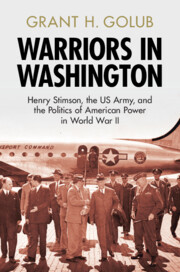
How did the US Army emerge as one of the most powerful political organizations in the United States following World War II? In this book, Grant H. Golub asserts that this remarkable shift was the result of the Army's political masters consciously transforming the organization into an active political player throughout the war. Led by Henry Stimson, the Secretary of War and one of the most experienced American statesmen of the era, the Army energetically worked to shape the contours of American power throughout the war, influencing the scope and direction of US foreign policy as the Allies fought the Axis powers. The result saw the Army, and the military more broadly, gain unprecedented levels of influence over US foreign relations. As World War II gave way to the Cold War, the military helped set the direction of policy toward the Soviet Union and aided the decades of confrontation between the two superpowers.
Over the years, the US has intervened covertly in many countries to remove dictators, subvert elected leaders, and support coups. Explanations for this focus on characteristics of target countries or strategic incentives to pursue regime change. This Element provides an account of domestic political factors constraining US presidents' authorization of covert foreign-imposed regime change operations (FIRCs), arguing that congressional attention to covert action alters the Executive's calculus by increasing the political costs associated with this secretive policy instrument. It shows that congressional attention is the result of institutional battles over abuses of executive authority and has a significant constraining effect independent of codified rules and partisan disputes. These propositions are tested using content analysis of the Congressional Record, statistical analysis of Cold War covert FIRCs, and causal-process evidence relating to covert interventions in Chile, Angola, Central America, Afghanistan, etc.
In this article, we analyse the implications of the end of the Cold War for US non-proliferation policy and the non-proliferation regime. Contrary to widely held expectations, we show that the end of bipolarity did not undercut the pursuit of non-proliferation but supercharge it. While bipolarity had afforded non-proliferation hold-outs opportunities to evade superpower pressure, the structural condition of unipolarity both incentivised and enabled the United States to pursue a more robust non-proliferation policy than before. Against the view that contemporary unipolar power is severely circumscribed by the need to make compromises and adhere to social norms, unipolarity allowed the United States to entrench a regime that was widely considered unjust. We support this argument with an analysis of non-proliferation dynamics in the early 1990s, focusing in particular on the process that culminated with the indefinite extension of the Non-proliferation Treaty (NPT) in 1995.
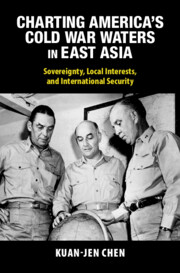
Shifting the focus from land to sea when considering the Cold War in East Asia, Kuan-Jen Chen sheds light on the importance of the 'oceanic' lens as a structural imperative in grand strategic thinking. Despite extensive scholarship on postwar US-East Asia relations, questions about the relationship between maritime space, national sovereignty, and geopolitics have not been fully explored. Drawing on archives in Chinese, English, and Japanese, Chen uses the western Pacific as a historical platform, illustrating the relationship between the geopolitical value of the sea and the strategic deliberations of American and East-Asian decision making. The recent deterioration of US-China relations has turned maritime East Asia into a powder keg, with no country in the region able to remain neutral. By anchoring today's maritime East Asia in the past, this book traces the evolution of historical factors that led to the current status quo in the western Pacific, and shows the origins of controversial issues in the region.
Nominally, the policy of the United States towards the People’s Republic of China (PRC) and Taiwan is governed by the ‘One China’ Policy (OCP). However, the conditions under which OCP was originally formulated have long since given way to substantial growth in the economic and military power of the PRC and the democratisation of Taiwan. These changes raise several questions regarding the viability and applicability of OCP. Drawing on securitisation theory, this article examines discourses across three US presidential administrations to assess the trajectory of socio-political constructions of the PRC, Taiwan, and OCP. Three case studies suggest substantial challenges for OCP as a basis for maintaining desecuritised relations between the United States and the PRC. While discourses of ‘engagement’ prominent in the 1990s have lost ground, with presidential administrations increasingly but inconsistently drawing on OCP, in Congress OCP plays no role, while Taiwan is increasingly constructed as akin to the American self, serving as an identity proxy that highlights the otherness of the PRC. Polling supports the idea that OCP is not rooted in general American understandings of the region and consequently cannot serve to ground policy in a crisis.
This chapter examines how oil wealth has fueled authoritarian resilience – dictatorship without significant outbreaks of civil war – in oil producers (petrostates) exposed to Muslim conquest. While the chapter’s analysis corroborates existing research that oil rents can hurt democracy, it makes four original contributions relevant for understanding why oil wealth has engendered authoritarian resilience in conquest petrostates. First, it identifies a tension in existing scholarship: the negative relationship between oil wealth and democracy but positive relationship between oil wealth and civil war, particularly in dictatorships. Second, this clarification is important in understanding why greater oil wealth in conquest petrostates has hurt democracy but has not fostered civil war. Third, the chapter introduces a new type of rent that is intricately tied to oil production in many conquest petrostates. The chapter argues that an implied security guarantee from the United States government has comprised an additional geopolitical rent which has augmented the military capacity of conquest petrostates to thwart insurgency. Finally, the chapter that oil wealth has not hindered a trajectory towards greater democracy in non-conquest petrostates.
This chapter illustrates the forms and dynamics of contractual hybridity in American wars using the case of Blackwater. Blackwater’s contractual hybridity was visible in its formal contracts with public funding. Contractual relations created power payoffs by deploying a contractor force for American wars and raised Weberian legitimacy dilemmas from limited contractor oversight and distributed accountability. Security contractors also disturb civilmilitary relations by posing as “civilian combatants” or “unlawful combatants,” depending on the preferred definition under international law. The chapter also follows bureaucratic debates on defining "inherently governmental functions" given contracting, which reveal the effort it takes to balance Idealized and Lived Sovereignty. By being attentive to formalized and publicized hybrid relations, the chapter thus wrestles with unique problems in sovereign governance that challenge the legitimacy of a sovereign authority that contracts itself.
What is the essence of group decision-making? How does group dynamics affect policy outcomes? This chapter contributes to foreign policy analysis and national security decision-making by advancing a comparative group dynamic perspective. Specifically, we examine three models of group decision-making: Groupthink, Polythink, and Con-Div, and apply each model to the Kennedy administration’s decision to impose a naval blockade during the Cuban Missile Crisis. We claim that applying different group decision-making models to real-world cases presents a new way of explaining governmental decisions. Based on our comparative analysis of the three models, we find that the Con-Div model performs best in explaining the naval blockade decision.
What will be the contours of the “post-post-Cold War” world? This chapter takes up that question by examining the defining international and domestic characteristics of this new age and assessing their similarities with previous eras. We begin by identifying three defining attributes of the Cold War: ideological clash, limited economic exchange, and nuclear arms racing between the American and Soviet-led blocs. Next, we explore the central feature of the post-Cold War era - namely, American primacy. We then examine the trends that have eroded primacy's material underpinnings and produced new domestic and International conditions — global power shifts, technological change, and sociopolitical fragmentation -- then project forward how those trends are likely to evolve over the next ten to fifteen years. Finally, we examine the extent to which those trends are distinct from, or continuous with, the conditions facing the United States during the Cold War and post-Cold War eras, and find that some important continuities remain even as meaningful discontinuities will disrupt existing patterns of international order. The chapter concludes by arguing that the post-post-Cold War world requires a new strategic approach for the United States — one guided by a principle of openness, rather than Cold War-style containment or post-Cold War-style liberal universalism.
Now that more than thirty years have passed since the fall of the Berlin Wall, it is clear that, while some borders have disappeared, new fronts have appeared as well. And, rather than a “new world order,” a familiar antagonism between Russia and the West is once again asserting itself. Among the central points of dispute is the question of whether the West offered Moscow assurances in 1989-90 in the form of a NATO non-expansion guarantee. Diverging interpretations of this crucial development continue to hinder international understanding and dialogue. In this chapter, Sarotte draws on elements of her historical research into archives in six countries to present evidence on what actually transpired, and to discuss the following questions: To what extent do current challenges for European security policy still have roots in the decisions and commitments of the powers involved in the process of German reunification thirty years ago? How did the Clinton administration come to support full Article 5 NATO enlargement rather than NATO’s Partnership for Peace? And what can we learn from those events to address the challenges of today?
Scholarship on human rights diplomacy (HRD)—efforts by government officials to engage publicly and privately with their foreign counterparts—often focuses on actions taken to “name and shame” target countries because private diplomatic activities are unobservable. To understand how HRD works in practice, we explore a campaign coordinated by the US government to free twenty female political prisoners. We compare release rates of the featured women to two comparable groups: a longer list of women considered by the State Department for the campaign; and other women imprisoned simultaneously in countries targeted by the campaign. Both approaches suggest that the campaign was highly effective. We consider two possible mechanisms through which expressive public HRD works: by imposing reputational costs and by mobilizing foreign actors. However, in-depth interviews with US officials and an analysis of media coverage find little evidence of these mechanisms. Instead, we argue that public pressure resolved deadlock within the foreign policy bureaucracy, enabling private diplomacy and specific inducements to secure the release of political prisoners. Entrepreneurial bureaucrats leveraged the spotlight on human rights abuses to overcome competing equities that prevent government-led coercive diplomacy on these issues. Our research highlights the importance of understanding the intersection of public and private diplomacy before drawing inferences about the effectiveness of HRD.
Julia Lee identifies temporal, spatial, and affective innovation in 21st century transpacific fiction. Locating formally innovative contemporary Asian American writing in the post-1965 contexts of migration, global economies of labor, environmental anxiety, language difference, and racialized violence, Lee shows how writers have represented new technologies of immediate communication across oceanic flows of migrants, commodities, information, and waste in disjointed, parallel, and non-sequential narrative structures. Childhood trauma lingers across time and geography in a story about a Filipino nurse by Mia Alvar, while novels by Min Jin Lee, Ruth Ozeki, and Thi Bui layer Asian and American modernities, postmodernities, and contemporary present-tenses.
Since its formation, the GATT/WTO system has facilitated a worldwide reduction of trade barriers. We return to a founding moment of the regime, the GATT 1947 (GATT47), and look closely at the liberalization process, analyzing exactly what concessions were granted to whom and in return for what. With these data, we evaluate three prominent explanations for the operation of the early GATT. First, we ask whether or not US negotiators granted asymmetric access to the US market to spur post-war recovery. Second, we look at how the rules adopted in GATT47 balanced the interests of import sensitive producers with those of the more nascent exporter interests. Third, we examine specific US concessions and ask whether or not the US used the domestic market to either increase the productive capacity of nations damaged during the war and/or to bolster unstable regimes. Our most general finding is that the US, at least in this first Round of the trade regime, was less a liberal warrior and more a seeker of stability, and that tariff setting was significantly constrained by the institutions governing global tariff negotiations.