To save content items to your account,
please confirm that you agree to abide by our usage policies.
If this is the first time you use this feature, you will be asked to authorise Cambridge Core to connect with your account.
Find out more about saving content to .
To save content items to your Kindle, first ensure no-reply@cambridge.org
is added to your Approved Personal Document E-mail List under your Personal Document Settings
on the Manage Your Content and Devices page of your Amazon account. Then enter the ‘name’ part
of your Kindle email address below.
Find out more about saving to your Kindle.
Note you can select to save to either the @free.kindle.com or @kindle.com variations.
‘@free.kindle.com’ emails are free but can only be saved to your device when it is connected to wi-fi.
‘@kindle.com’ emails can be delivered even when you are not connected to wi-fi, but note that service fees apply.
America’s history and culture wars have escalated at pace since Donald Trump returned to office in January 2025. And while the President’s second term has been marked by a rapid stream of executive orders and supporting remarks, articles, and statements affecting all aspects of life, it has demonstrated a particular interest in the nation’s cultural assets and has coalesced on the Smithsonian Institution. This article argues that Trump’s attention to the Smithsonian Institution has arisen because 2026 is the 250th anniversary of American independence. It presents archival evidence from the Smithsonian alongside contemporary analysis to demonstrate that the political playbook being utilized by President Trump has an extensive history. To make its point, the article offers a case study of The West as America, an exhibition that was shown in 1991 at the Smithsonian and generated such political controversy that it ended up being the subject of extensive questioning in Congress. The article aims to show the clear similarity between political and public responses to the 1991 exhibition—which was designed to commemorate a national anniversary but occurred in a period of heightened history wars—with conservative attempts to regulate culture in 2025, ahead of “America 250.” It exemplifies how important historical inquiry is in informing decisions and responses to processes of cultural production in the current era.
The 2016 election serves as an important case study in understanding how gendered political contexts can shape emotional reactions and engagement, particularly among women. Two important features of that election, Trump’s treatment of women and Clinton’s historic run for office, influenced emotional reactions to politics in distinct ways. We used two experimental designs in which participants were randomly assigned to read vignettes about Trump’s treatment of women or Clinton’s historic run for office. Reading about the former led to higher anger, especially among Democratic women and men, while reading about the latter increased enthusiasm among highly educated women. These elevated emotions increased intended future engagement. We conducted a third study in which we induced anger about Trump’s treatment of women and found that it led to greater intended engagement.
Michael Blake, Yuna Blajer de la Garza, and Alex Zakaras offer insightful critiques of several arguments central to my book Beyond the Law’s Reach? In the process, they raise large questions in political philosophy more generally, especially as it pertains to global affairs. Blake is skeptical about the distinction, driving much of the book, between consolidated liberal democracies and jurisdictions where the “shadow of violence” prevails. Blajer de la Garza worries that the international reparative duties that the book highlights may linger indefinitely, and, consequently, be exploited by cynical political actors. Finally, whereas Beyond the Law’s Reach? argues that liberal democracies’ collective integrity is affected by their entanglement in violence and corruption abroad, Zakaras doubts whether this collective moral problem carries over into the individual level, given individual citizens’ reasonable ignorance of policy details. I offer responses to each of these critiques in turn. I conclude by highlighting the picture of democratic civic responsibility that emerges from these responses.
Transitional justice (TJ) emerged during the consolidation of the liberal international order (the LIO). It was deemed to flow from, and contribute to, the emergence of democracy, human rights and the rule of law in post-authoritarian and post-conflict states. The LIO generated material and discursive support for processes of accountability, truth, repair and guarantees of non-repetition. The LIO is now widely perceived to be under significant threat with the rise of authoritarian states (most notably China and a revanchist Russia) and the erosion of liberal democratic values in the US and Europe. Some worry that TJ may have peaked and is doomed to decline in this more challenging ecology. This article is an attempt to show how the material and discursive environments of TJ have altered with the decline of the LIO and the rise of a multipolar world. In material terms, there are fewer democratic transitions that might facilitate the type of state-level rule of law or rights-promoting impact associated with accountability, truth or reparation processes, while liberal peacebuilding is now far less premised on democratisation and human rights that post-conflict TJ processes built upon. In a world where authoritarian rejections of human rights and the rule of law meet widespread support and where a chastened liberal West resiles from effectively exporting or supporting norms like TJ, there is also a lowering of the argumentative burden for those who want to outright defy, water down or find workarounds for TJ.
Individuals who particularly like or dislike a president or presidential candidate may, through a process of motivated reasoning, personally support or oppose the politician’s policy positions as a consequence. I examine the extent to which attitudes toward Donald Trump shaped public opinion on immigration policy, a case that appears to invite motivated reasoning. I estimate the influence of attitudes about Trump by comparing them directly to views of Barack Obama and trade policy using large reputable national surveys. I find a material, if limited, Trump effect. Trump polarized Americans on immigration considerably. However, the polarization was not along racial or ethnic lines. Moreover, any Trump effect on immigration appears not to have been as large as that he brought to bear on trade. Contrary to some recent work, such an effect also appears to have elevated immigration only marginally in the list of those deemed important.
The two economic superpowers operate increasingly outside WTO norms. China's reliance on non-market practices challenges the competitive equality among WTO members, while the US, under a second Trump administration, has unilaterally raised tariffs in defiance of multilateral rules. This essay examines how the rest of the world is de-risking from the two rogue superpowers while shoring up trade multilateralism. It identifies three interlinked strategies: (1) recalibration – reducing trade dependency through targeted trade remedies against China and narrow bilateral agreements with the US; (2) shielding – collective and unilateral responses to economic coercion of both superpowers; and (3) containment – preventing illegality from spreading to the rest of the world. Together, these modes of governance not only mitigate systemic spillovers from rule-breaking but also help rebalance global trade by addressing structural imbalances in Chinese overproduction and US overconsumption. In doing so, the rest of the world may lay the groundwork for a renewed and more resilient multilateral trading system.
This article presents a short selective history of contemporary collecting at the Smithsonian Institution. I explain what contemporary collecting is and show how contemporary collecting in the 1960s and 1970s produced histories of political reform movements and participatory democracy. I argue that many material records would not exist today if it had not been for a small group of committed curators who pioneered this practice in the absence of policy guardrails—and often despite a lack of institutional support. I present a brief overview of contemporary collecting methods and outcomes to argue that it is more important than ever for us to collect evidence of diverse political activity in our current moment—a moment in which cultural institutions, including the Smithsonian, are being attacked by executive orders issued by President Donald Trump, despite their long-standing reputation for maintaining truth and public trust in times of political change and contestation. The article concludes by suggesting how people can approach this work today.
President Trump embraced economic populism centered on trade protectionism, restrictions on international capital and technology flows, and subsidies for American raw material providers and domestic manufacturers. More innovative US counties roundly rejected this economic paradigm: Voters in innovation clusters of all sizes and across the country repudiated Trumpism in both 2016 and 2020. Trump's tariffs and attacks on global supply chains, restrictions on visas for skilled foreign workers, and his overall hostility toward high-tech sectors threatened the innovative firms that motor these places' economies. Trump was different in degree but not kind from previous American populists such as Jennings Bryan and Perot: they too exploited innovation inequality, but were less successful because, before the digital revolution, the industrial organization of American technological progress was not rooted in vertically disintegrated global supply chains. Thus, populism may not only be about resentment toward elites and experts but threaten innovation.
Fueled in part by the wealth created from digital currencies, major art dealers such as Christie’s and Sotheby’s have embraced the sale of non-fungible tokens (NFTs) attached to unique digital works of art. NFTs, how they are related to the blockchain, and the evolution of the market for digital art is the subject of this chapter. Despite recent decreases in value, it appears that digital art can be added to the growing list of uses for blockchain technology, which is now becoming a part of modern life. This chapter proceeds in five sections. First, the overview of the evolutionary progression of blockchain technology in the form of NFTs. Second, a description of the emergence of the market for digital art. Third, an explanation and historical account of digital art and related recent issues. Fourth, a coverage of the abrupt decline in the market price for many NFTs. And last, a conclusion, which focuses on how the dramatic extension of blockchain and other digital technology to the world of art represents a new and exciting platform for creative expression. This chapter offers a valuable addition to the literature by providing a readable introduction and overview of what is now known about the likely impact of blockchain technology and NFTs to art. Additionally, this important development should have a significant impact on the future of innovation and property law.
Donald Trump was not the first president to favor smaller government, but they understood and respected the need for government even as they favored an adjustment in the mix. Instead of a conversation about the mix, Trump made politics about the distrust and animosity of Americans toward other Americans. His efforts to retain the presidency even though he lost the election based on the “big lie” poisoned trust in elections that continues, and his plan to stop the election of Joe Biden discarded democracy altogether. These tactics made it more difficult to have a national conversation about a change in the mix of government and markets that could renew economic opportunity for those left behind by economic developments and previous decisions of government by both political parties. The government helped to unbuild the middle class when it borrowed money to fight the Vietnam War, ignored how globalization harmed many Americans even as it benefited others, and cut taxes in ways that mostly benefited the wealthy and robbed the government of needed resources.
The International Criminal Court (ICC) seeks to end impunity for the world’s worst crimes to contribute to their prevention. But what is its impact to date? This book takes an in-depth look at four countries under scrutiny of the ICC: Afghanistan, Colombia, Libya, and Uganda. It puts forward an analytical framework to assess the impact of the ICC on four levels: on domestic legal systems (systemic effect); on peace negotiations and agreements (transformative effect); on victims (reparative effect); and on the perceptions of affected populations (demonstration effect). It concludes that the ICC is having a normative impact on domestic legal systems and peace agreements, but it has brought little reparative justice for victims, and it does not necessarily correspond with how affected populations view justice priorities. The book concludes that justice for the world’s worst crimes has no “universal formula” that can easily be captured in the law of the ICC.
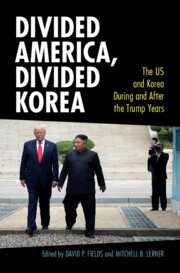
Bringing together leading experts on Korea and US-Korean relations, Divided America, Divided Korea provides a nuanced look at the critical relationship between the US and the two Koreas during and after the Trump years. It considers domestic politics, soft power, human rights, trade, security policy, and more, while integrating the perspectives of those in the US, South and North Korea, Japan, China, and beyond. The authors, ranging from historians and political scientists to policymakers and practitioners, bring a myriad of perspectives and backgrounds to one of the most critical international relationships of the modern world during an unprecedented era of turmoil and change, while also offering critical analyses of the past and present, and somber warnings about the future.
This chapter puts Donald Trump’s populism in comparative perspective by applying the theory developed in chapter 2 and substantiated in chapters 3 to 5 to the US case. My analysis highlights the great institutional strength of US democracy and the unlikelihood of acute and severe crises and of huge windfalls, given the complexity and prosperity of US economy and society. As a result, populism is exceedingly unlikely to suffocate US democracy -- contrary to recent observers’ fears. The chapter substantiates these arguments through an in-depth examination of the Trump experience, which establishes intense partisan and affective polarization as another obstacle to the American populist’s ability to boost his mass support. Trump’s haphazard agency and very mixed governing performance created further limiations. Therefore, despite Trump’s relentless challenges to liberal norms and long-established institutions, US democracy held firm, even during the unprecedented post-electoral crisis of 2020/21. Indeed, the US’s vibrant civil society spearheaded a pro-democratic backlash that brought the electoral defeat of a populist leader who never managed to garner majority support in a highly polarized polity.
The Dwight David Eisenhower administration launched a security reassessment known as Project Solarium. This produced a new grand strategy known as the New Look. Eisenhower wanted to cut the cost of defense and famously warned about the dangers of the “military-industrial complex.” A solution was a reliance on atomic and then nuclear weapons. These were cheaper than standing forces. Eisenhower also stressed economic support abroad, alliance relationships, information operations, and subversion of Communist-leaning states abroad such as Guatemala and Iran. Secretary of State Dean Acheson gave us “brinksmanship” and “massive retaliation.” John F. Kennedy succeeded Eisenhower and criticized him for a supposed “missile gap” with the Soviet Union. Kennedy promulgated no official national security strategy but developed a grand strategy known as Flexible Response. His administration abandoned Eisenhower’s near-total dependence on nuclear weapons for a broader defense strategy. He faced crises in Berlin and particularly in Cuba. Secretary of Defense Robert McNamara gave us MAD – mutually assured destruction. Kennedy moved America from an advising to a combat role in South Vietnam.
Trump and Trumpism were more than mere personality politics. He hijacked the system of minority rule and the alternative media reality created by Republicans since the 1990s while adding innovations of his own to create the Big Lie of #StopTheSteal, which is now the tail that wags the Republican party dog. Control of this machine will determine who wins the Republican nomination in 2024.
Describes the early career and political advent of Donald Trump through his election to the presidency in 2016. Explores the weaknesses in system of presidential nomination and election, and of his opponent Hillary Clinton, that made his victory possible. Explores the investigations integral to story of 2016 election: the Clinton email investigation and Crossfire Hurricane, the investigation into Russian election interference and possible Trump campaign collusion with the Russians.
An interlude exploring Donald Trump’s monetization of the presidency and possible violations of the foreign and domestic emoluments clauses. The chapter addresses whether this conduct is impeachable and why Trump was not impeached on this ground.
Describes the facts of Donald Trump’s effort to extort Ukraine into announcing investigations of his presidential rival Joseph Biden and how exposure of that effort led to a renewed effort to impeach him.
A second interlude introducing the 25th Amendment mechanism for removing a president who is incapable of performing his duties, and explaining unsuccessful initiatives to apply the 25th Amendment to Donald Trump.
The “Afterward” reminds us, via George Orwell, that, like us, democracies in the past have also endured eras when long-standing principles and practices have been severely challenged. Donald Trump is the epitome of that challenge today, and his figurative presence haunted the writing of this book. Moreover, Christopher Achen and Larry Bartels, in their Democracy for Realists, demonstrate that rejecting the national Story today (which they call “the folk theory”), on the basis of empirical research but without providing a replacement, is something that we might decide not to do within the guidelines of choosing, refraining, and dissembling.