To save content items to your account,
please confirm that you agree to abide by our usage policies.
If this is the first time you use this feature, you will be asked to authorise Cambridge Core to connect with your account.
Find out more about saving content to .
To save content items to your Kindle, first ensure no-reply@cambridge.org
is added to your Approved Personal Document E-mail List under your Personal Document Settings
on the Manage Your Content and Devices page of your Amazon account. Then enter the ‘name’ part
of your Kindle email address below.
Find out more about saving to your Kindle.
Note you can select to save to either the @free.kindle.com or @kindle.com variations.
‘@free.kindle.com’ emails are free but can only be saved to your device when it is connected to wi-fi.
‘@kindle.com’ emails can be delivered even when you are not connected to wi-fi, but note that service fees apply.
The fragments on the ancients and the moderns are continued. Arguments are presented for and against the role played by the ancients in establishing a modern culture of genius and taste. The effect of writing on oral poetry is discussed together with the invention of paper, printing, and copper engraving. These had an important effect on poetic expression and public culture, and the advantages and disadvantages are weighed. The Middle Ages ended with the Reformation, the discovery of new lands, changes in the financial system, in war, and class relationships. German literature is discussed in relation to other European traditions, and its shortcomings and merits are considered. In conclusion, it is argued that comparison of the national poetic traditions is difficult, perhaps futile, and that every nation should value its own tradition.
The spirit of the age is defined as the friend, the harbinger, and the servant of Humanity, but also as the ruler of the age. Martin Luther’s writings on education as well as his exegesis of the Psalms are cited to elaborate on his thoughts on government, and the change of government, particularly his denunciation of the tyranny of monarchs and what he called the rabble. Luther’s praise of German honesty and forthrightness is cited in order to position faith and loyalty as the cornerstone of human society. Klopstock’s poem on the naval warfare between Britain and France is cited in order to argue for the necessity of fairness and reason in all aspects of government. The ability of enlightened monarchs to uphold the spirit of the age is called into question, and Frederick the Great’s correspondence with Voltaire is further cited as evidence of a monarch’s struggles with his own human shortcomings. This is answered with a call for reform of education and politics. The inherent nature of human beings is described in its relationship to society and government, and Gotthold Ephraim Lessing’s dialogue on Freemasonry is cited to elaborate on the importance of reason in civil society and the state.
In the first paragraph of the modern translation of the Rationale divinorum officiorum of William Durand (c. 1230–1296) are markers of the change this book seeks to chart. One is immediately visible. The translator, Timothy M. Thibodeau, chose to distinguish through the use of italics what he then identifies, through the use of brackets, as biblical texts. Those italics and those brackets do not simply mark the modern sense of “source,” of a particular relationship between Durand and Scripture, that postdates Durand himself. They distinguish Scripture and, in so doing, obscure Durand’s understanding of revelation and its relationship to “ecclesiasticis officiis, rebus ac ornamentis.” There in the opening paragraph of the Prologue and throughout the Rationale, Durand presents a different relationship entirely among ecclesiasticis officiis, rebus and ornamentis, and biblical history, prophecies, psalms, Gospels, and Epistles.
Religious diversity has had profound consequences in human history, but the dynamics of how it evolves remain unclear. One unresolved question is the extent to which religious denominations accumulate gradually or are generated in rapid bursts associated with specific historical events. Anecdotal evidence tends to favour the second view, but quantitative evidence on a global scale is lacking. Phylogenetic methods that treat religious denominations as evolving lineages can help to resolve this question. Here we apply computational phylogenetic methods to a purpose-built data set documenting 291 religious denominations and their genealogical relationships to derive dated phylogenies of three families of world religions – Indo-Iranian, Islamic, and Judeo-Christian. We model the birth of new denominations along the branches of these phylogenies, test for shifts in the birth rate, and draw tentative links between the shifts we find and religious history. We find evidence for birth rate shifts in the Islamic and Judeo-Christian families, corresponding to at least three separate events that have shaped global religious diversity.
The Statute of Uses enacted radical reform which can still be felt across the common law world. It was from exceptions to the statute’s execution of uses to perform last wills that the modern trust emerged. Our understanding of the passage of the statute has been shaped by the survival of several draft bills and ancillary documents. It has been argued that a draft bill introduced in 1529 was rejected by the Commons in March 1532. This in turn inspired the landmark litigation in Dacre’s Case (1533–35), which paved the way for the subsequent enactment of the Statute of Uses. This chapter challenges that orthodox position by demonstrating that there were in fact three early drafts which were considered. It then considers what this tells us about the role of the crown, parliament and the courts during this pivotal period in our legal history.
Jan Schnell picks up the thread in the formative period of the late Middle Ages and early modernity, the era of the Reformation. She surveys the ways in which Martin Luther, Huldrych Zwingli, Jean Calvin, Thomas Cranmer, and John Knox, among others, brought about substantial adaptations to the traditional liturgies they had inherited from Catholicism, and what motivated them theologically to do so.
Although all these men were Christian, only five of the six who lived during the Reformation (among the eight men who are the central focus of the book) converted to Protestantism. Each represented their religious commitments differently, however, and the single merchant who did not convert (Fürer) spent much of his later career as a vigorous critic of Luther. The chapter also explores the religious commitments of other merchants who left Selbstzeugnisse during the period, some of whom provided richer evidence of their spiritual life and their support of ecclesiastical and charitable institutions.
Douglas Clark reveals how moments of willing and will-making pervade English Renaissance drama and play a crucial role in the depiction of selfhood, sin, sociality, and succession. This wide-ranging study synthesizes concepts from historical, legal, philosophical, and theological studies to examine the dramatic performance of the will as both an internal faculty and a legal document. Clark establishes the diverse connections that Shakespeare, Jonson, Middleton, and a range of overlooked playwrights of the early Elizabethan era made between different types and understandings of the will. By doing so, he reveals the little-understood ethical issues to which they gave rise in relation to the mind, emotions, and soul. Understanding the purpose of the will in its multiple forms was a central concern for writers of the time, and Clark shows how this concern profoundly shaped the depiction of life and death in both Elizabethan and Jacobean drama. This title is part of the Flip It Open programme and may also be available as open access. Check our website Cambridge Core for details.
This article examines the theology of Katherine Parr, sixth and surviving wife of Henry VIII, through a close reading of her mature work, The Lamentation of a Sinner. In particular, I treat Parr’s theological use of the epistle to the Romans to inform and structure her doctrine of the work of Christ within The Lamentation. I argue that Parr follows the structure of Romans in her opening lament over sin, her central discussion of the cross of Christ, and her application of this theology to the Christian lives of the people of England’s church. I also posit Parr’s use of several overlapping motifs for Christ’s work within The Lamentation’s treatment of the atonement and its relationship to the Protestant understanding of justification by faith.
This chapter asks: how did notions and practices of individual equality arise out of the experience of the Reformation and of the religious pluralism that it engendered across Europe?
Two networks transformed the early modern world. The first was the Iberian network of discoverers and conquerors that helped usher in an age of European world domination and colonialism. The second was facilitated by a new technology, printing, which helped unleash the huge religious and political disruption we know as the Reformation. What Niall Ferguson describes as a “religious virus that came to be known as Protestantism” disrupted an ancient ecclesiastical hierarchy, fractured into many pieces Europe’s Catholic Christianity, and ushered in a long era of violent conflict. This chapter investigates religious networks within the Lutheran, Reformed, and Radical wings of the Reformation and highlights the formation, evolution, suppression, and ultimate survival of the Jesuit Order as a classic transnational network within Catholic Christianity.
Whenever the story of lollardy has been told, that story has been shaped by the prevailing historical, theological and intellectual climate. This chapter surveys how lollardy has been narrated, looking at the terminology, people and communities, practices and texts, and beliefs associated with the lollard or Wycliffite movement of late medieval England.
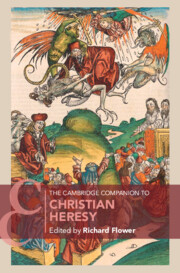
The concept of heresy has played a major role across Christian history. Traditionally, heretical sects have been regarded as distinct, real-life groups of people who had departed from the stable orthodox traditions of Christianity and who posed a threat that needed to be addressed, sometimes through violent repression. More recently, scholarship has focused on the notion of heresy as discourse, placing particular emphasis on its literary construction and the social and cultural contexts in which it was deployed. This literature has generated significant debates about the nature and historicity of many heresies. The Cambridge Companion to Christian Heresy provides a systematic and up-to-date guide to the study of this topic and its methodological challenges. The opening chapters explore different forms of written material that have played vital roles in historical disputes and in modern scholarly accounts. These are followed by case studies of thirteen notable heresies, ranging from the Gnostics through to the Hussites at the dawn of the Reformation.
The Reformation and Counter-Reformation had a profound effect on the treatment of unchristianised peoples in Europe, intensifying efforts to convert them to Christianity, while Protestants and Catholics vied to establish their own version of the faith as the true one. The theme of paganism, intensely polemicised, occupied a central place in the religious rhetoric of the Reformation, with Protestants accusing Catholics of being little more than pagans while Catholics in turn denounced Protestants as infidels with no respect for the holy. The result was the effective reinvention of the concept of paganism, which came to be identified with folk religion (and, more specifically, folk Catholicism). ‘Paganism’ became both a greedy and a fuzzy concept, blurring the lines between those who were poorly catechised and those who were wholly unchristianised. Furthermore, ideas of infidels and idolaters formed in the New World were reimported to Europe in this period. This chapter seeks to dispel the fog of Reformation polemic in order to determine what we can know of unchristianised peoples in Europe during this period, when Orthodox Muscovy was also expanding eastward into unchristianised areas of Europe’s far east.
In the Middle Ages kingdoms could nominally reach very far, although kings typically did not have more resources than the most powerful feudal lords. Their mystical, sacred power ensured their right to rule over vast lands. The king obtained these attributes during the coronation, during which he simultaneously had to subjugate himself to the pope and the emperor. The coronation was an anchoring representant that enacted the God-given hierarchy in the cathedral: the laity was in the nave, the king in between the laity and the clergy, and the archbishop as the representative of the pope performed the unction with the holy balm through which the sacred entered the ceremony. It was the universal monarchy on stage. To rid themselves of papal and imperial superiority, while simultaneously maintaining their standing above feudal lords, kings modified the coronation and adapted other representants. This fundamental struggle led to a change in the early modern European order. During the Reformation, iconoclasms destroyed Catholic representants that upheld the hierarchical order. Simultaneously, kings adapted and repurposed existing Catholic representants for their own needs. The resulting dynastic divine right absolutism resembled the authority of pope and emperor, but it was territorially constrained.
The relationship of Catholic hierarchies with the medium of printing has always been multifarious, and even in early modern times it was far more complex than most current studies maintain. This chapter attempts to draw a concise and unbiased picture of the papacy’s publishing and censoring practices from the 1460s to the 1630s. It starts with the arrival of the first printers in Italy on the outskirts of Rome and ends with the Galileo Galilei affair, analyzing all intervening attempts to use moveable type in support of papal policy and the development of the Index of Forbidden Books. Highlighting the interconnections between prohibition and promotion, it proposes a unified interpretation of these two lines of action rather than present them in opposition, as is often the case.
The Cambridge History of the Papacy is organized to provide readers with a critical–historical survey of the structural development of the papacy as an institution and as an actor in Church history, and in world history. It is hard to imagine a sphere of human activity over the past two millennia that has not been influenced by, and influenced in turn by, papal action – be it in the domains of religious belief and practice; social, cultural, and political thought; art, science, medicine, ethics, diplomacy, and international relations. Four questions – each addressed throughout the three volumes of the present work – have framed that vision across vast chronological and geographical expanses: the pope’s centrality within the Catholic Church, the primacy of papal power as an instrument of governance, the papacy’s cultural influence in society and culture, and the implications of secularity for its place in the lives of believers and non-believers alike. Each question – and the search for answers – converges around the fundamental question of papal authority: its original claims; the ebbs and flows of its effective reach; and the numerous ways in which claims, and expressions of papal authority and supremacy, have been contested within the Catholic tradition, and from without.
During the sixteenth century, the King in Parliament terminated the jurisdiction of the Papacy in England and established by law the Church of England, with the King as its head. One task was to institute a new system of canon law for the national Church. Parliamentary statute provided for a commission to reform the canon law. In the meantime, pre-Reformation Roman canon law was to continue to apply to the Church of England if it was not repugnant to the royal prerogative and the laws of the realm. The commission was never appointed. The Roman canon law continued to apply on the basis of both statute and custom as part of the King’s ecclesiastical law. This chapter explores how the post-Reformation English ecclesiastical lawyers understood this continuing Roman canon law, its legal basis, and the role of the doctrine of reception in all this.