To save content items to your account,
please confirm that you agree to abide by our usage policies.
If this is the first time you use this feature, you will be asked to authorise Cambridge Core to connect with your account.
Find out more about saving content to .
To save content items to your Kindle, first ensure no-reply@cambridge.org
is added to your Approved Personal Document E-mail List under your Personal Document Settings
on the Manage Your Content and Devices page of your Amazon account. Then enter the ‘name’ part
of your Kindle email address below.
Find out more about saving to your Kindle.
Note you can select to save to either the @free.kindle.com or @kindle.com variations.
‘@free.kindle.com’ emails are free but can only be saved to your device when it is connected to wi-fi.
‘@kindle.com’ emails can be delivered even when you are not connected to wi-fi, but note that service fees apply.
A fictional covenant is established to inquire into humanity. Benjamin Franklin’s writings help define the tasks of the covenant. The fragmentation of the German nation is lamented. Frederick the Great’s correspondence with Voltaire is cited at length to provide insight into the problems facing a monarch confronted with German disunity, war, and the ideal of Humanity. The personal and political failures of Emperor Joseph II are the subject of discussion, introduce by Friedrich Gottlob Klopstock’s ode to Joseph. Contemporary German poetry is described in prophetic terms, but it fails to address contemporary political issues. The chapter closes with Friedrich Leopold Graf zu Stolberg’s Ode to the Crown Prince of Denmark.
“The Poet” is what Adorno calls a “carpet essay,” which weaves its announced topics of the poet and poetry into a host of other subjects: character and expression; reception and abandonment; beauty and love; the present, new, and near; the Neoplatonic One or “whole”; and a fundamental “flowing” or “metamorphosis.” Chapter 8 focuses on Emerson’s romantic and proto-existentialist pronouncement that “the man is only half himself, the other half is his expression”; his theory that language “is fossil poetry”; and the proto-pragmatic picture of language in his statement that “all language is vehicular and transitive, and is good, as ferries and horses are, for conveyance, not as farms and houses are, for homestead.” Other topics treated are the place of what Kant calls “unbounded” ideas in Emerson’s account of poetry, thinking as a mixture of reception and activity, and the connections and differences of “Experience” and “The Poet.”
In the People’s Republic of China, according to Mao Zedong himself, literature was to serve politics. But where did the ideas of politics come from, and how did they circulate throughout the state? This book is an exploration of the literary aspects of a political campaign and how literary practice shaped Maoism and the Chinese state. The spring of 1957 found China in the midst of a great bloom. Floral themes and imagery permeated texts across genres of poetry, journalism, political speeches, and fiction. They decorated covers of literary journals, fabric for dresses, and even architecture. Where did these flowers come from? What happened to them in the second half of the year during the Anti-Rightist campaign? This chapter introduces the major questions of the book through the story of the young Shanghainese poet Xu Chengmiao. Through Xu’s poetry and life we explore the flowering of China and the broader question of how individuals participated in Maoism.
This chapter considers what kind of utopian articulations can be glimpsed in contemporary British experimental poetry. Three experimental poets writing in the 2010s are analysed in detail: Sean Bonney, Verity Spott, and Callie Gardner. The chapter situates these poets within the British experimental poetry scene, tracing an ecosystem of small-scale independent publishing. DIY poetry magazines such as Zarf (produced in Cardiff, Leeds, and Glasgow) and presses such as the87press, Aquifer, DATABLEED, Sad Press, and many others operated outside of formalised spheres of paid labour. In the 2010s, communities of British poets, publishers, audiences, and readers sustained themselves through a non-commercial ethos of gift exchange. This ethos was explicitly utopian in its attempt to construct an alternative to capitalism through non-alienated economic and social structures. Whilst Herbert Marcuse’s utopian theorisation of the 1960s counterculture feels relevant to this moment in the British experimental poetry scene, the chapter explores how many of these poets expressed scepticism about the form’s inherent political potential. For them, politics, rather than aesthetics, contained the germs of utopian possibility. Their experimental works offer precursors to a futurity that is not yet here, but the arrival of which is necessary for the survival of progressive politics.
Widening the perspective offered by the traditional canon, this history reveals the poetry of Italy between 1200 and 1600 as a site of plurality of genre, form and even language, including not just written texts but also those presented in performance. Within this inclusive framing, poetry's content, its cultural and geographical contexts and its material media of transmission are given equal weight. Decentring major figures and their texts while recognising their broad influence, the innovative theoretical and methodological framework complements the variety and liveliness of poetic activity on the Italian peninsula over four centuries, from the first manuscript experiments in verse through to sophisticated print productions and elaborate performance media. Offering original, multidisciplinary insights into current debates and discoveries, this history enlarges the scope of what we understand Italian premodern poetry to be.
This chapter focuses on some representations of the people in some of the literary productions of the 1640s, the decade of the English Civil Wars. The people were seen by some writers as dangerous, unruly, and driven by passions rather than reason. But they were thought by others to be essential to the politics of the country. The chapter traces the tensions between these contrary representations of the people across courtly dramatic performances, political pamphlets, and in poetry and prose connected to the execution of Charles I.
This chapter discusses certain ways that literature represented ‘the people’, and the idea of national community, during the Thatcher years in Britain. Literature essays a range of strategies to evoke collective life: using specific characters as representative of general trends, depicting groups, or making explicit statements about the state of the nation. Nonetheless, in the literature of the 1980s evocations of ‘the people’ prove difficult to sustain: an observation supported by the social and political analysis offered by Stuart Hall. In reflecting a single ‘people’, writers often register the strain, frame the task with irony, or eschew the attempt altogether, and seek to evoke the collective experiences of particular communities. Writers considered in this chapter include Seamus Heaney, Margaret Drabble, Ted Hughes, Tony Harrison, Jackie Kay, Geoff Dyer, and Martin Amis.
This chapter asks how ‘the people’ has been mobilised in contemporary literature as an anti-hegemonic category for imagining collective life in times of crisis. Reading a handful of poems written by Sean Bonney, D. S. Marriot, and Andrea Brady, the chapter’s hypothesis is that poetic address – the axis of communication, the deictic situation that obtains between articulation and understanding – acts as a cipher for the people in moments of social upheaval. Specifically, this chapter shows how poetic form bears witness to the people as an antagonistic social force defined by class, race, and gender, but also as a category that disarticulates – or has been forcefully disarticulated from – labour and its traditions and cultures.
This chapter examines the “verse politics” of eighteenth-century Asia. It explores how Anglophone authors used epics and ruin poetry to advance imperialism, assess governmental policy, and reimagine the role of India in the British Empire. To demonstrate poetry’s role in politics and imperial policymaking, this chapter focuses on the career of Eyles Irwin, a colonial administrator stationed in Madras during the 1770s and 1780s and one of the earliest authors to publish English poetry while in India. The chapter analyzes his collection of travel poems, the Occasional Epistles (1783), and his lengthy poetic epistle, “The Ruins of Madura, or, the Hindoo Garden” (c. 1785–92), which versifies the holy sites and gardens of an ancient southern Indian city, Madura (Madurai), and the decayed palace of one of its Hindu rulers, Tirumala Nayaka. From these details, and Madura’s ruins, Irwin reanimates a South Indian culture and polity. Epics and ruin poetry reimagined writing about empire not as an attempt at personal fame but as an extension of imperial policy, and in ruin poetry Anglophone authors sought to reconcile the obvious oppression of India with the supposed liberty of Britain’s empire.
This chapter tracks the way the accumulation of capital in the colonial metropole enabled a cross-cultural dialogue among certain poets from the East and the West in London in the 1920s and 1930s, one that gradually diminishes in the postcolonial period. Poetry, in the modernist period, sought to dismantle the binary between authenticity and derivation, a binary which has been given new life in our own moment and has, therefore, blinded us from seeing these poets as participating in a common enterprise, even if it is one beset with many conceptual pitfalls resulting from the colonial relation. Nevertheless, poets as distinct as Rabindranath Tagore, Sarojini Naidu, and Una Marson – and thinkers such as C. L. R. James – wished to construct a universal humanism out of the uneven terrain of imperial modernity, an impulse they shared with such complicated figures as W. B. Yeats and even the violently reactionary Ezra Pound. Ultimately, this unstable humanism gives way to the starker divides of the period of decolonization.
This article centres a poem concerned with the de-extinction of the thylacine (Tasmanian tiger) to make a wider claim for the importance of poetry as a distinct contribution to thinking about de-extinction. While de-extinction is well understood as a scientific practice, it is also a cultural event. It involves communities with distinct histories who are diversely invested in the idea of extinction, which evoke a range of emotions and embodied responses. A poetry of de-extinction is well placed to situate the science within its complex cultural history while evoking the resistance and multiple temporalities of recorded Indigenous experience. In the instance of the efforts towards the de-extinction of the thylacine (Tasmanian tiger), the colonial acts that led to the original extinction were one part of the violence perpetrated against Indigenous peoples and country.
This contribution includes an original poem, “Benediction” in tribute of Valentin-Yves Mudimbe and the first translation in English of selections from Les Fuseaux, parfois (1974). Mudimbe authored several collections in the 1970s, and this translation is intended to draw more scholarly attention to his poetic output.
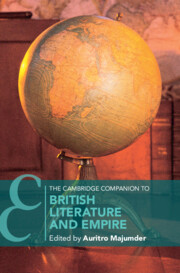
The volume outlines modern British literature's relation to global empire from the 16th century to the present. Spanning the interactions between Britain, Europe, and the world outside, in Asia, Africa, Australasia, North America, and the Caribbean, it suggests the centrality of colonial-capitalist empire and global exchanges in the development of major genres of literary fiction, poetry, drama, and non-fiction. Illuminating the vital role of categories such as race, class, gender, religion, commerce, war, slavery, resistance, and decolonization, the twenty-one chapters of the book chart major aspects of British literature and empire. In rigorous yet accessible prose, an international team of experts provides an updated account of earlier and latest scholarship. Suitable for a general readership and academics in the field, the Companion will aid readers in familiarizing with Britain's imperial past and its continuing relevance for the present.
Before the twentieth century, to be literate in the Western Sahel meant to be literate in Arabic—or in other African languages written with the Arabic script. Yet works by West African Muslim scholars, composed largely in Arabic, are often overlooked in discussions of West African literature. This chapter highlights this gap by reconstructing the history of the region’s ‘Islamic literature’ and its relationship to print. Focusing on the literary production of two of the region’s major Sufi orders, the Tijaniyya and Muridiyya, it shows that printed works of Islamic erudition became increasingly important elements of public life across the twentieth century and continued to serve as one of the most frequent and readily available means of experiencing ‘literature’, even alongside the expansion of colonial and postcolonial educational institutions that employed European languages of instruction. Comprising some of the most common forms of reading material in West Africa today, they are the fruit of an encounter between a well-established Sufi literary tradition and newfound access to the affordances of print.
Poetry played a unique role in disseminating anti-colonial thought and solidarity. I argue that the Anthology of Black Poetry in Portuguese (1958), and its circulation in Brazil, strengthen our understanding of this process. By tracing the production and circulation of this anthology as a cultural underground of decolonization, I demonstrate how its poetry articulated a grammar of blackness that resonated with the Brazilian, Thereza Santos. This grammar provided the foundation for Santos’s political solidarity with the African struggles for independence from Portugal. In the end, I reflect on the legacy and limits of poesia negra as a basis for solidarity.
Chapter 2 turns to loco-descriptive lyric poetry, read in the context of expanding highway infrastructure. It opens with a consideration of oil maps deposited in Ezra Pound’s Cantos, some of which critique the expropriation of former Ottoman territories by Anglo-American cartels. At that very locus, the Iraqi modernist poet Nazik al-Malā’ikah envisioned a very different kind of energy poetics, where the dividing line between oil’s extractive and consumptive spheres is decidedly smudged. In postcolonial counterpoint, the chapter closes by reading the automotive aesthetics in Marianne Moore, William Carlos Williams, and Wallace Stevens. The US highway system provides them with a conflicted linguistic resource, where the trace of oil’s violent extraction is smeared by the exhilarations of their lyrics.
This chapter addresses the diverse modes in which poetry is found in and around Bloomsbury by focusing on three different aspects. First, it charts the presence of poetry and poets across different Hogarth Press series (the Hogarth Essays, the Hogarth Lectures on Literature, and Hogarth Living Poets). Second, it considers poetry both as a genre and as a critical issue in the debate on form in art, for example in Woolf’s numerous essays on prose and on the novel, in which her discourse on the subject is inextricably linked to her reflections on poetry, or in the work of Roger Fry, Charles Mauron, and Julian Bell on Mallarmé. Third, it focuses on Julian Bell’s practice of and critical discourse on poetry as they develop in crucial moments for the Bloomsbury group more at large. By addressing these points, the chapter outlines a network of people across generations whose discourse on, or writing of, poetry intersected in one way or another with the cultural and aesthetic practices of the group, thus illuminating some of the fertile tensions and contradictions within it.
Throughout the third Critique Kant repeatedly stresses the importance of communication for human sociability, but he does not link communication to any particular view of language, making it uncertain how he thought of it and its importance for our cognition, rationality, and ethical sensibility. Against such uncertainty, my aim here is to show that there is at least one important form of linguistic expression – the poetic one – that is of paramount importance for Kant’s overall view of humanity’s progress towards the kingdom of ends. In developing my account, I start by explicating the importance of communication in Kant’s overall system, and I then focus on poetic expression, understood as a particular kind of communication. The emerging view of the centrality of the particular poetic expression generated by genius grounds Kant’s aesthetic cognitivism and brings to the fore the two main functions of poetic expression: the one related to development of human cognitive and moral capacities, and the one related to the role of poetry, and aesthetic judgments regarding poetry, in promoting our humanity.
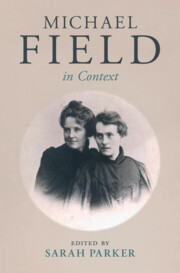
Few authors attract as much fascination as 'Michael Field', thecollaborative pseudonym of Katharine Bradley (1846–1914) and Edith Cooper (1862–1913), an aunt and niece living and working together in devoted fellowship. As Michael Field, Bradley and Cooper published over thirty volumes of poetry and verse drama across a career lasting from the 1880s to the 1910s. Here, chapters by thirty-six experts introduce the historical and cultural contexts crucial to understanding Field's work, including the late-Victorian aesthetic and decadent movements, fin-de-siècle poetry, and debates around gender and sexuality. Michael Field's connections with other authors, including Wilde, Pater, and New Women writers are also explored. Experimental in lyric poetry, ekphrasis, verse drama, and the prose poem, and fascinated by the ancient worlds of Greece, Rome and Egypt, the Renaissance, and the Romantic era, Michael Field's work remains profoundly relevant to current debates, including ecology, race, empire, and gender non-conformity.
The preface considers why historical context is such a rich and complicated lens through which to approach Michael Field and their work, given the complexity of Katharine Bradley and Edith Cooper’s lives and collaborative identity as Michael Field, and the startling range of past historical periods with which their work engaged, including Ancient Greece, Rome, Egypt, and Renaissance Italy, among other periods. The Preface approaches Michael Field as firmly situated within the cultures of the fin de siècle or 1890s, and discusses how their work develops in the twentieth century or modernist era. Finally, the Preface approaches the more difficult aspects of Michael Field’s identity, addressing issues of gender, sexuality, and the incestual dimension of Bradley and Cooper’s relationship.