To save content items to your account,
please confirm that you agree to abide by our usage policies.
If this is the first time you use this feature, you will be asked to authorise Cambridge Core to connect with your account.
Find out more about saving content to .
To save content items to your Kindle, first ensure no-reply@cambridge.org
is added to your Approved Personal Document E-mail List under your Personal Document Settings
on the Manage Your Content and Devices page of your Amazon account. Then enter the ‘name’ part
of your Kindle email address below.
Find out more about saving to your Kindle.
Note you can select to save to either the @free.kindle.com or @kindle.com variations.
‘@free.kindle.com’ emails are free but can only be saved to your device when it is connected to wi-fi.
‘@kindle.com’ emails can be delivered even when you are not connected to wi-fi, but note that service fees apply.
What is classical relief? Can “relief” ever be spoken of as a single category? Is it a “medium” in itself? If so, what exactly does it “mediate”? And how does the notion of artistic medium (which art history tends to use in relation to materials) relate to the more theoretical concept of “media” as tools or channels for the storage and transmission of information? This chapter attempts to crack open such questions by examining the terminology that is applied to relief work in Greek and Roman texts, focusing in particular on the problematic term typos, which is applied to relief sculpture, repoussé metalwork, terra-cotta moldings, engraved gems and (perhaps) sculptors’ models. Developing J. J. Pollitt’s foundational chapter on typoi in The Ancient View of Greek Art, it explores how technologies of making, materiality, and dimensionality contribute to the particular instability of the typos as a category of object and, in turn, the peculiar ontology of relief as a category of ancient art.
The article argues for an emendation in Plin. HN 9.126. Modern editors are accustomed to print the text cum testa uiuas, adopting J. Hardouin’s conjecture for cum terra uitis, the reading transmitted in most manuscripts. Nevertheless, the overlooked manuscript reading contritis conchis allows us to deduce a palaeographically neater solution contritis if conchis is considered a gloss which entered the text.
The concepts of progress and decline play a dominant role in ancient views on literary history. Roman culture inherited from Aristotle the idea that the arts gradually mature. Whereas archaic and classical Greek literature was generally known to the Romans as a corpus of canonical works that represented the acme of each genre, Latin literature gave the Romans the image of a long march of advancement towards the Greek models’ perfection. From Aristotle onwards, progress is conceived as an addition of pertinent procedures. The attainment of maturity does not entail decadence, but rather the possibility of creating works fully corresponding to the nature of the genre. If an acme is thought to have been reached, later authors may aim at what they regard as a more authentic acme; the process thus continues. Various Latin texts show that a continuous progress towards an ideal perfection is not excluded. The idea of decadence, in Cicero’s Brutus and in post-Augustan texts, relates to reasons that do not concern ‘internal’ dynamics of artistic development, but the distrust in the conditions and prospects of politics and morality in the ‘external’ context, including the lack of self-discipline in an excessive display of increasingly sophisticated formal virtuosity.
This paper discusses an earlier emendation to fr. 54 GRF Funaioli from Varro's De bibliothecis and argues that, while the text et citro refers to cedar oil, it should not be emended to et cedro. A comparison with a passage from Pliny the Elder (HN 13.86) is used to support the view presented in the article.
The anonymous early medieval compilers of recipe collections in Latin manuscripts are not often thought of as curious about new medical information. While the stereotype of medieval Latin stagnation in medicine has been countered, recipe compilers remain as recyclers of the ancient past. Close analysis of early medieval medical recipes, however, suggests that we should reconsider this view. This chapter focuses on a series of dental recipes found in related medieval adaptations of the medical portions of Pliny’s Natural History which suggests several changes over time, including a growing attention to precision and quantification, the deployment of a diverse range of new ingredients, and a link between claims of efficacy and ingredients identified as coming from Africa, Arabia, and India. These recipes reveal shifting uses for materia medica described in classical sources and provide insight into new ways that medieval medical writers were interpreting and adapting their source materials.
This chapter analyses the relationship between the two Plinys by examining how the Younger integrates subjects known from the Elder’s Naturalis Historia in his Epistles. The Younger Pliny adapts the miracle stories to the epistolary genre by selecting individual ones from his uncle’s long lists. One elaborate example replaces scientific completeness and remains in the readers’ mind because of its emotional value for Pliny and the addressee. By presenting the miracles of Italy (a volcanic eruption, dolphins, lakes, and fountains in Ep. 4.30; 6.16; 6.20; 8.20; 9.33) and repeatedly highlighting his close relationship with his hometown Comum, Pliny shows alternatives to the wondrous phenomena of the world described in the Naturalis Historia and thereby distinguishes himself from his uncle. The Younger Pliny also reflects his uncle’s habit of writing at night (lucubratio) and serving the emperor by day. The chapter shows that the Younger Pliny choses his own time of day to write literature and unite the claims of otium and negotium, of leisure and work, which have a different importance for the two Plinys. In doing so, the Younger Pliny also underlines the differences that arise from his senatorial career and his uncle’s military success.
Cato’s de Agricultura was an important source for Pliny’s Naturalis Historia. Cato himself appears sixteen times in Pliny’s lists of sources, and in the text proper (Pliny tells us explicitly more than eighty times that he is reproducing Catonian material; most of it comes from the de Agricultura. A dozen or so passages are or purport to be direct quotations, but most are paraphrases; Catonian content in Plinian words. The present paper is a study of the linguistic features of Cato’s text that Pliny rewrites. Especially interesting features include cases in which concrete expressions are replaced by abstract nouns, simple verbs become compound (or the compounding prefix changes), a term is replaced by a synonym or synonymous expression, or the syntax is made more compact. Pliny’s adaptations of Cato’s language is read in light of his several general remarks about Cato’s style: he comments, for example, on Cato’s verbosity, diction and habitual censoriousness. The discussion shows how one ancient reader reacted to Cato’s early Latin.
This chapter focuses on grafting of fruit trees and the development of new cultivars of fruits, exploring the ways in which grafting came to occupy a prominent metaphorical and symbolic place in elite intellectual discourse. It is argued that such ideological constructs ultimately rested on the fact that grafting is a fundamental technique in arboriculture (since propagation of plants to maintain them true to type occurs by grafting). Grafting lent itself easily to be used as the symbol of the ingenuity and control humans could exercise over nature, but also as a possible source of hubris. The emphasis literary texts give to the involvement of prominent Roman families in the development and naming of new fruit varieties suggests that this symbolic discourse was rooted in practical considerations about the economic implications of running agricultural estates for market-oriented arboriculture.
In “Natural History,” Ashton Nichols traces the development of natural history in literature and scientific writing from the ancient works of Pliny the Elder and Aristotle to the later ideas of Buffon, Humboldt, and Darwin. Nichols examines how eighteenth-century colonial expansion influenced the spread of ideas about nature as well as how new ideas of nature were represented by Romantic authors like Mary Shelley. Culminating in analysis of the works of Erasmus Darwin and his grandson Charles Darwin, the chapter explores the paradigm shift away from a static and unchanging nature and toward a more modern understanding of nature as dynamic, interconnected, and indifferent to human needs and desires.
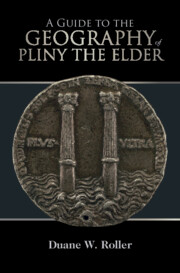
This is the first thorough English commentary on the geographical books of Pliny the Elder, written in the AD 70s. Pliny's account is the longest in Latin, and represents the geographical knowledge of that era, when the Roman Empire was the dominant force in the Mediterranean world. The work serves both cultural and ideological functions: much of it is topographical, but it also demonstrates the political need to express a geographical basis for the importance of the Roman state. In five books, Pliny covers the entire world as it was known in his era and includes some of the first information on the extremities of the inhabited region, including Scandinavia and the Baltic, eastern Asia, and sub-Saharan Africa. The commentary provides a detailed analysis of all the points Pliny raises: his sources, toponyms, and understanding of the place of the earth in the cosmos.
The fifth chapter is chiefly concerned with the creative instantiations of Hyperborea in the Hellenistic and later periods, studied there as examples of a more thoroughly textualised, literary process of worlding. It looks at changing strategies of composing worlds through an archive of libraries and canons. The first section of the chapter starts with an overview of the transformations of the Hyperborean material in geographical literature after Herodotus, from Eratosthenes and Strabo to Pliny the Elder. The second section examines two equally productive, creative strategies of appropriation of the Hyperborean nexus in the post-Classical archive: Solinus' De mirabilibus mundi and the Philippica of Theopompus. The third section is concerned with the distinctive cosmographical usages of Hyperborea in early Hellenistic utopias, and their deep engagement with the archive: Hecataeus of Abdera's On the Hyperboreans, Callimachus' Hymn to Delos, and Simias of Rhodes' Apollo. All support the wider considerations of the chapter on the continued relevance of Hyperborea for thinking the worlds of the Ptolemaic and Seleucid kingdoms. The fourth section brings us back to Athens, with detailed study of two cosmographical texts written over and through the archive: the Delian Oration of Lycurgus and the pseudo-Platonic Axiochos.
This note adduces three passages in Seneca the Elder to reinforce a demonstration in CQ 69 (2019), 793–8001 that the text of Plin. HN 7.117 has suffered corruption in one of its clauses and requires emendation to restore Pliny's intent. This additional evidence concerns a trope employed by declaimers which could have predisposed a scribe to alter Pliny's text to state that Cicero proscribed Mark Antony. Such a statement has no place in a list of achievements that otherwise all belong to Cicero's consulship twenty years earlier in 63 b.c.
This chapter looks at two interconnected texts which were published within two or three decades of each other: Aelianus Tacticus’ Tactical Theory (addressed to Trajan) and Arrian’s Tactics, published two or three decades later under Hadrian. Both texts appear to draw on the same source material, and it is reasonable to suppose that Arrian was aware of Aelian’s earlier treatise, although there is no direct interaction between them. Their different approaches to the same material offer an opportunity to explore different models of literary and cross-cultural interaction, and also to examine our go-to metaphors and interpretative models for analysing them. While Aelian establishes a series of polemical comparisons between age-old Greek military theory and currently effective Roman military practice, Arrian hints at overlaps between Greek and Roman traditions, both by incorporating a section on Roman cavalry manoeuvres and by interacting with a speech delivered by Hadrian to the Roman army at Lambaesis in 128. Both approaches are equally tactical; and both are revealing of the complex dynamics of cross-cultural interaction, which took place on and off the page, and in literary and less literary forms of writing.
This chapter assesses Phlegon of Tralles’ paradoxographical works Peri Thaumasion and Peri Makrobion, and demonstrates that Phlegon’s use of source citation and other strategies of authentication in these works is designed to appeal to a range of readers and reading cultures in the cosmopolitan Roman empire. In the tradition of Greek paradoxography that dates back to the Hellenistic era, Phlegon offers many citations from literary sources for the marvels he reports; these are all Greek authors, and predominantly Hellenistic or earlier in date, and would fulfil Greek-speaking readers’ expectations for the traditions of paradoxography. Other strategies, however, seem designed to appeal to Roman expectations. Phlegon’s use of autopsy as an authenticating trope echoes what Latin authors (Mucianus, Pliny the Elder) brought to the genre. Finally, Phlegon’s citation of documents such as census records is designed to appeal to inhabitants from across the empire who would have had personal experience of Imperial record-keeping. By combining all three of these authenticating methods so that they mutually reinforce one another, and dovetail in a believable way with readers’ extratextual experiences, Phlegon updates what was originally a Hellenistic, highly literary genre for the contemporary era and his boundary-crossing readers.
Chapter 10 pursues Pliny’s project of Quintilianic ethopoeia further, showing how – against all expectations – the most intimate passages of the Institutio are integrated into his collection. We begin with Quintilian’s two ‘inner prefaces’, on his imperial appointment (Institutio 4.pr.) and the deaths of his wife and sons (Institutio 6.pr.): Pliny reworks the first in Epistles 2.9 (senatorial electioneering) and 8.4 (Rufus’ epic Dacian war), the second in Epistles 5.16 (laments for Minicia Marcella) – two remarkable transformations which also raise macrostructural questions about Pliny’s grand designs. The rest of the chapter is devoted to another touching moment, Quintilian’s closing reflections on the orator’s retirement (Institutio 12.11). A divided imitation across Epistles 3.1 and 9.3 – by way of an excursus on Pliny the Elder in Epistles 3.5 – takes us deep into the textualisation of life, death and posterity.
Barnabas 10 offers an allegorical discussion of kashrut. The writer addresses dietary laws in two groups of three: prohibitions against the eating of pig, vulture and eel, followed by prohibitions against eating hare, hyena and weasel. In each case, the allegorical interpretation construes diet as comportment (e.g. one should not behave like a pig, vulture etc.). Concerning the hare, readers are admonished not to emulate its corruption of children – a behaviour linked to its annual acquisition of an anus. Parallel allegorical interpretations of the Jewish food laws can be found in the Letter of Aristeas and Philo, De specialibus legibus 4 and similar quasi-scientific observations about animals occur in texts ranging from the rabbis to Physiologus. However, the rabbit poses a particular problem since no known precedent exists for either its behaviour or its physiology. The present investigation thus focuses on the rabbit, attempting to reconstruct the literary and historical background for its unusual characterisation.
Africa is not only a geographical region but an idea which Westerners, including modern Anglicans, have used ‘to think with’. This includes how accounts of recent Christian growth and decline used by Westerners and Africans alike, and which may require nuance in themselves, have been used questionably in debates about other issues. The real diversity of African Anglican thought and experience offers more complex and enriching possibilities, and should be engaged more directly and fully.
This paper examines the political content and context of Seneca's Natural Questions. It argues that, on the one hand, Rome is marginalized in the context of the immensity of the cosmos; and philosophy is elevated above traditional Roman pursuits, including political activity and historical writing. But at the same time the work is firmly anchored in its Roman geo-political context; Seneca situates himself in a long and continuing tradition of investigation of the natural world, where Roman writers can stand alongside Greeks and others; and the current emperor Nero is presented not just as princeps and poet, but as sponsor of geographical and scientific investigation.
Recommend this
Email your librarian or administrator to recommend adding this to your organisation's collection.